


 Home
HomeBulgaria Verila Solar Park 124MW PV Plant
 GERITEL
 Apr 23,2026

Bulgaria's photovoltaic (PV) industry is experiencing explosive growth, with new installed capacity exceeding 1GW for three consecutive years. In 2025, the new installed capacity reached approximately 1.4GW, and it is expected to hit over 2GW in 2026, of which more than 90% are utility-scale ground-mounted PV plants. As practitioners deeply engaged in the PV cable field for many years, we, Dongguan GERITEL Electrical Co., Ltd., are honored to participate in the cable supply for the Bulgaria Verila Solar Park 124MW ground-mounted PV plant (completed and delivered in 2024). Today, combining this real project, we will popularize the cable selection logic and loss control skills for different scenarios of PV plants, and share the practical problems and solutions we encountered in the project, hoping to provide some reference for peers and developers who are advancing PV projects.
I. Core Cable Requirements for Large-Scale Ground-Mounted PV Plants in Bulgaria
Different from small-scale distributed PV, large-scale ground-mounted PV plants (especially those above 100MW) have more stringent requirements for cables, which is closely related to the market characteristics and project scenarios in Bulgaria. Verila Solar Park is located in central Bulgaria, covering a vast area, mainly renovated from idle agricultural land. It is a commercially driven, subsidy-free project equipped with a BESS energy storage system to solve the problems of electricity price decline caused by excessive midday power generation and grid connection dispatching.
Combined with the actual situation of this project, we first sort out the core cable requirements of large-scale ground-mounted PV plants—in essence, there are three pain points, which are also common problems in the industry: first, loss control. Due to the large scale of the plant and the long cable laying distance, even a small line loss will affect power generation revenue in the long run; second, reliability. Bulgaria has large temperature differences between day and night and strong ultraviolet radiation, so the cables laid outdoors must be able to withstand extreme environments to avoid aging, breakdown and other problems in a short period of time; third, construction convenience. The project involves some mountainous areas and wastelands. If the cables have poor flexibility, the laying difficulty will be greatly increased, and damage is likely to occur, delaying the construction period.
Some peers may ask why this project ultimately chose our products. In fact, there are no complicated marketing tactics. The core is that our products have a high matching degree—not only do we have complete international certifications, but we can also provide implementable selection solutions for project pain points. In addition, we have practical experience in multiple large-scale PV projects, which can help avoid many hidden dangers in construction and use in advance.
II. Understand the Selection Logic from the Product Itself
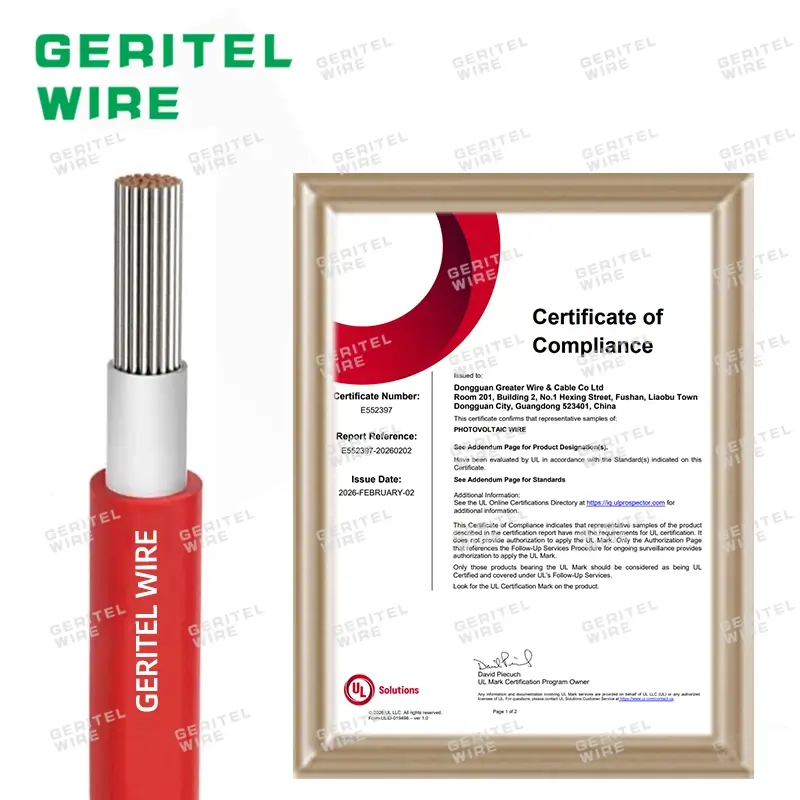
Many people tend to ignore the importance of cables when doing PV projects, thinking that "as long as the specifications are correct, any brand is the same". However, in practical applications, the material, structure and certification of cables will directly affect the long-term operation of the PV plant. The cables we provided for Verila Solar Park cover DC side, AC side and control & communication cables. All products comply with international standards, among which the PV cables hold TUV authoritative certification (Certificate No.: B 126326 0001 Rev.00), and other cables have also passed IEC national standard certification, which is the basic threshold for entering the European market.
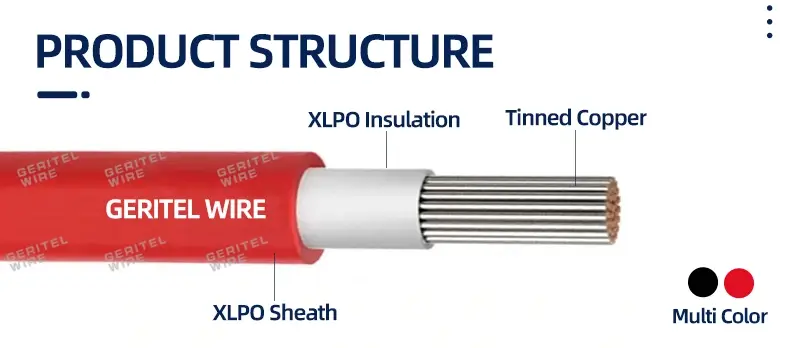
From the perspective of product details, our cables have several core characteristics, which are precisely these characteristics that adapt to the needs of large-scale ground-mounted PV plants in Bulgaria: the conductor adopts tinned copper flexible conductor, which has good conductivity and oxidation resistance, and can reduce losses during current transmission; the insulation and sheath are made of XLPO double-layer cross-linked polyolefin material, which has extremely strong weather resistance after electron beam cross-linking treatment, and can adapt to extreme environments from -40℃ to 90℃. The maximum operating temperature of the conductor can reach 120℃, and it will not break down under the test voltage of AC 6.5KV/5min or DC 15KV/5min. The expected service life is as long as 30 years, 5 years longer than the industry average, which can reduce later maintenance costs.
In terms of color, DC side cables are mainly red and black, while AC side and control cables adopt standard color matching, which is convenient for construction personnel to distinguish quickly and avoid wrong connection; in terms of structure, it adopts multi-strand fine copper wire stranding design, with excellent flexibility and a bending radius greater than 4D. Even in complex scenarios such as mountainous areas and wastelands, it can be laid easily without additional special tools. In terms of specifications, from string-level 1×4 mm², 1×6 mm² to backbone-level 1×35 mm², 3×240 mm², it basically covers all scenario needs of large-scale ground-mounted PV plants, and supports 1500V system, which can further improve power generation efficiency.
III. Cable Selection and Pain Point Resolution in Different Scenarios
Combined with the actual laying scenario of Verila Solar Park, we will share the cable selection ideas and how we solved the practical problems encountered in the project by scenario. These practical experiences are believed to be valuable for many peers.
(I) The Key to Loss Control, Accounting for 65%
DC side cables are the core of PV plant loss control because they cover the widest range, with a total length of 8.2km in the project, accounting for 65% of the total cable volume. The reason why many projects fail to meet the expected power generation efficiency is largely due to improper selection of DC side cables.
1. Module → String (String Cable): Here we selected PV DC Cable, which strictly complies with EN 50618 / IEC 62930 standards. The mainstream specification is 1×4 mm²—this is also the standard selection for large-scale power plants, because the current of each string is stably between 10–15A, and the 1×4 mm² specification can meet the transmission needs while controlling costs. However, in the long-distance laying area of the project, we took the initiative to suggest optimizing to 1×6 mm². Many peers may think that "increasing the specification will increase costs", but according to actual calculations, this optimization can reduce the loss of this section of cable by more than 23.5%, while the cost only increases by 3%. In the long run, it can greatly improve power generation revenue, and the customer also approved this plan.
2. String → Combiner Box (String to Combiner): DC Array Cable is adopted, with 1×6 mm² in conventional areas and upgraded to 1×10 mm² in long-distance combiner areas. It should be noted that current superposition will occur during string combination, and ordinary cables are prone to heat loss. Our cables adopt high-purity oxygen-free copper conductors with low resistivity, which can effectively withstand the impact of superposed current. At the same time, the sheath is wear-resistant, suitable for outdoor exposed laying, and avoids damage caused by long-term wind and sun.
3. Combiner Box → Inverter (DC Main Cable): DC Main Cable is selected, with specifications including1×16 mm², 1×25 mm², and 1×35 mm² in large array areas, which can withstand high current above 100A and adapt to long-distance transmission of tens to hundreds of meters. The core advantage here is the XLPO double-layer insulation solar cable design. Compared with conventional single-layer insulation cables, it has better insulation performance, can effectively prevent high-voltage breakdown, and has more precise line loss control, helping to improve the overall power generation efficiency of the power plant by more than 1.5%.
(II) The "Main Artery" of Stable Transmission
AC side cables are mainly responsible for power transmission after the inverter, which directly affects the grid connection stability of the power plant. Especially for large-scale power plants, if there is a problem with the AC side cables, the entire power plant may be forced to shut down, resulting in huge losses.
1. Inverter → Step-up Transformer: Low-voltage AC Cable (LV AC Cable) is selected, which is a multi-core copper cable (XLPE insulation) with specifications of 0.6/1kV 4×70 mm², 4×95 mm², and 4×120 mm² in some high-current areas, adapting to the hundreds of amperes high-current transmission needs of the three-phase system (+PE). The temperature around the inverter is relatively high, and the insulation layer of our cables is high-temperature resistant and aging resistant, which can adapt to high-temperature environments for a long time. At the same time, it has strong transmission stability, avoiding power loss caused by poor contact.
2. Transformer → Collection Line: Medium-voltage Power Cable (MV Cable) is adopted, with the voltage level of 20kV, the mainstream in Bulgaria and Europe. The specifications include3×70 mm², 3×120 mm², and 3×240 mm² for long-distance backbones, which is equivalent to the "main artery" of the power plant, undertaking long-distance power transmission of several kilometers. Considering that the project is equipped with an energy storage system, our medium-voltage cables have passed strict voltage withstand tests, with strong anti-interference ability, which can effectively avoid signal interference during the operation of the energy storage system and ensure stable power transmission to the power grid.
(III) The Neglected but Critical "Nervous System"
This part of the cable is easily ignored, but it is crucial for the operation and maintenance of the power plant—if there is a problem with the transmission of control signals, it may lead to inverter failure, equipment shutdown, and affect the normal operation of the power plant. We equipped the project with high-quality Control Cable / Instrument Cable, with specifications of KVV 4×1.5 mm² and KVV 7×1.5 mm², mainly used for inverter control and protection signal transmission.
Our control cables adopt shielding design, with strong anti-interference ability, which can accurately transmit control signals and avoid equipment failures caused by signal loss; at the same time, they have good flexibility and can be laid flexibly along with equipment wiring, reducing construction difficulty—which is particularly important in the mountainous areas of the project, reducing the risk of cable damage during dragging.
(IV) Solving Practical Problems in Mountainous Laying
Verila Solar Park involves some mountainous areas and wastelands, making laying difficult, which is one of the initial pain points of the customer. To solve this problem, in addition to providing high-flexibility cables, we also made a lot of preparations in advance: according to the project drawings, the cables were cut and marked in sections according to the laying area, so that on-site construction personnel could take them directly without on-site cutting, which greatly improved construction efficiency; at the same time, our cables can be dragged and laid without special tools. Compared with conventional rigid cables, the construction efficiency is increased by 40%, which not only reduces the labor intensity of construction personnel, but also shortens the construction period by 15 days, ensuring the project is completed on schedule.
IV. Certification and Practice Are Indispensable
For European PV projects, quality and certification are the bottom line. Our PV cables hold TUV authoritative certification (Certificate No.: B 126326 0001 Rev.00), strictly complying with EN 50618 / IEC 62930 standards. Each batch of products has undergone strict testing in three dimensions: electrical performance, mechanical performance and environmental adaptability, including conductor DC resistance, insulation voltage withstand, ultraviolet aging, salt spray test, etc., to ensure compliance with the access standards of the Bulgarian and European markets.
In addition, we have many years of experience in undertaking large-scale PV projects and have established a complete quality control system. From raw material procurement, production and processing to finished product testing, each link is fully controlled by professional personnel to prevent unqualified products from leaving the factory. At the same time, the products are made of low-smoke halogen-free flame-retardant materials, complying with environmental protection requirements, and the fire performance meets EN 60332-1-2 standards, which can effectively reduce the risk of power plant fires—which is also a point highly valued by large-scale commercial power plants.
V. Project Practice Results: Speak with Data
Since the completion and commissioning of Verila Solar Park, our cables have been operating stably for a period of time. The measured data can also intuitively reflect the advantages of the products: the DC side cable loss is 23.5% lower than the customer's expectation, the AC side cable transmission is stable, the control cable signal transmission is accurate, and no equipment failure has occurred; the high-flexibility cables are suitable for mountainous laying, the construction efficiency is increased by 40%, and the construction period is shortened by 15 days; the 30-year service life of XLPO double-layer insulation can also greatly reduce the later maintenance costs of the power plant.
For us, this project is not only a practice of products, but also an accumulation of industry experience; for customers, what we provide is not only cable products, but also an implementable selection and construction solution, helping them solve the core pain points such as loss, construction and reliability.
VI. If You Are Also Advancing European PV Projects
The explosive growth of Bulgaria's PV industry has brought us broad market space, and also made us see the common needs in the industry—what everyone needs is not exaggerated marketing, but high-quality products, professional selection suggestions and implementable solutions.
If you are advancing PV projects in Bulgaria or other parts of Europe, whether it is a 100MW+ large-scale ground-mounted PV plant or a PV + energy storage hybrid project, if you have questions about cable selection, loss control, construction optimization, or need cable solutions adapted to the project, you can communicate with us. We have complete international certifications and rich practical experience, and can provide personalized suggestions and products according to your project scenario, helping your project reduce costs and improve efficiency.
The contact information is listed below. Welcome peers and developers to communicate at any time, and work together to deepen the European PV market and achieve mutual benefit and win-win results.
Dongguan GERITEL Electrical Co., Ltd.
Tel/WhatsApp/WeChat: +86 135 1078 4550 / +86 136 6257 9592
Email: manager01@greaterwire.com
 Belgium Industrial Rooftop Solar PV Cable Solution



 Building 2, No. 40 Luxi 2nd Road, Liaobu Town, Dongguan City, Guangdong Province, China