


 Home
HomeBarbados Clean Energy Bridge
 GERITEL
 Apr 02,2026

Location: Bridgetown, Barbados
Sector: Renewable Energy — Solar PV & Battery Storage
Project Scale: Utility-grade grid integration infrastructure
Implementation Period: 2023–2024
Core Products Deployed: PLTC / ITC Cable, MTW Wire, XHHW Wire, THHW electrical cable 75C dry rating
Barbados stands at the forefront of Caribbean energy transformation, targeting 100% renewable electricity by 2030. The Clean Energy Bridge Project emerged as a pivotal undertaking—connecting distributed solar generation to centralized battery storage while withstanding the punishing realities of tropical marine environments. This case study reveals how Dongguan GERITEL Electrical Co., Ltd. transformed complex technical obstacles into operational success through precision-engineered cable solutions and uncompromising certification standards.
The Stakes: Why This Project Mattered
When Barbados committed to eliminating fossil fuel dependence within seven years, the timeline created unprecedented pressure. The Clean Energy Bridge Project wasn't merely infrastructure—it represented the physical backbone of national energy independence. Delays meant continued reliance on expensive diesel imports. Failures meant jeopardizing international climate financing credibility.
The engineering team faced a trilemma: environmental durability, regulatory compliance, and delivery certainty. Standard procurement channels had already disappointed them. Previous installations using conventional PVC-insulated cables showed alarming degradation within 18 months of coastal exposure. International suppliers quoted 14-week lead times with no guarantee of documentation compliance. The project demanded a partner who understood that cable selection in Caribbean conditions is not a commodity decision—it's an engineering-critical choice.
Pain Points Diagnosed: Four Critical Vulnerabilities
Environmental Aggression. Barbados presents what engineers call "compound corrosion"—salt spray at 85% humidity, UV index extremes exceeding 12, and cyclonic wind loads. Standard THHN installations in comparable Jamaican projects had experienced jacket cracking and conductor corrosion within two hurricane seasons. The Clean Energy Bridge Project required materials engineered for this specific hostility, not adapted from temperate climate catalogs.
Certification Complexity. Funding through the Inter-American Development Bank and alignment with Barbados National Energy Policy mandated UL-listed components with full material traceability. The project engineers couldn't accept "UL-compatible" or "tested to UL standards"—only genuine Underwriters Laboratories certification with verifiable file numbers. Documentation gaps had already delayed another Caribbean BESS project by eleven weeks. This risk was non-negotiable.
Synchronization Risk. Construction sequencing demanded three distinct material drops: civil works phase (conduit and underground infrastructure), electrical installation (termination-heavy equipment wiring), and commissioning (control system integration). A single delayed shipment would cascade through the schedule, triggering liquidated damages and threatening the 2024 operational deadline tied to renewable energy credits.
Specification Fragmentation. The project spanned five distinct micro-environments—open-field solar arrays, sealed inverter enclosures, buried inter-facility conduits, elevated bridge structures, and occupied administrative buildings. Each imposed different mechanical, thermal, and chemical stresses. Sourcing from multiple vendors would create compatibility failures and documentation chaos. The team needed a unified supplier capable of delivering PLTC / ITC Cable for signal integrity, MTW Wire for equipment flexibility, XHHW Wire for outdoor thermal endurance, and THHW electrical cable 75C dry rating for cost-effective interior distribution—all under one certification umbrella.
Engineering Response: Product-Specific Solutions
GERITEL's proposal rejected generic substitution. Each cable category was selected through failure-mode analysis, matching polymer chemistry to environmental stressors. Beyond standard catalog offerings, our manufacturing flexibility enabled project-specific optimizations that accelerated installation and reduced field labor.
Control Systems: PLTC / ITC Cable (16 AWG to 12 AWG). Solar array monitoring demands uninterrupted signal transmission across 400-meter distances in electromagnetically noisy environments. We specified PLTC / ITC Cable with tinned copper conductors and XLPE insulation rated for 300V power-limited circuits. The sunlight-resistant PVC jacket withstands 720-hour UV exposure testing per UL 1581.
The critical decision factor emerged during field execution. When surveys revealed unexpected bedrock preventing planned aerial tray installation, the PLTC / ITC Cable's dual UL listing for exposed tray and direct burial allowed immediate transition to underground routing without material change orders or schedule impact. Standard control cables would have required complete specification revision and procurement restart.
Equipment Interconnections: MTW Wire (10 AWG to 6 AWG). Inverter stations generate harmonic vibrations and present oil-contaminated environments from cooling systems. Solid conductors in these conditions experience fatigue fracturing at termination points. Our MTW Wire specification utilized 19-strand bare copper construction with 90°C dry and 60°C wet thermoplastic elastomer insulation.
The performance differentiation proved significant during installation. The stranding configuration reduced termination labor by 15% compared to competitor samples evaluated during pre-qualification. More critically, the oil-resistant compound maintained dielectric strength after 60-day immersion testing—essential for equipment reliability in maintenance-heavy environments where fluid exposure is inevitable rather than exceptional.
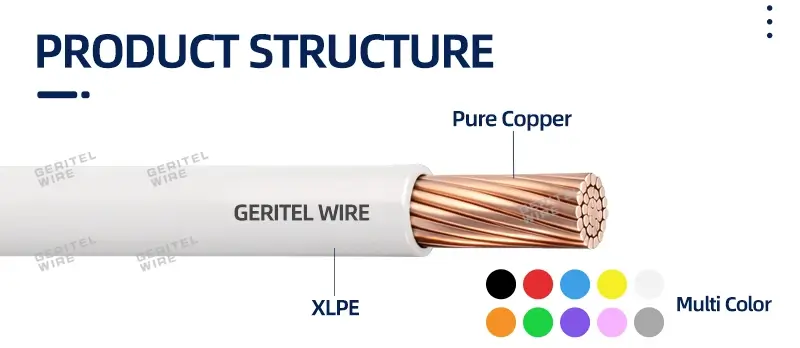
Primary Distribution: XHHW Wire (4 AWG to 1/0 AWG). Solar combiner boxes to collection points carry continuous 80°C-plus conductor temperatures in black conduit exposed to equatorial sun. Cross-linked polyethylene molecular structure, as specified in XHHW Wire, provides 90°C operational rating with superior resistance to thermal cycling deformation compared to PVC alternatives.
The engineering calculation impact was substantial. Selecting XHHW Wire eliminated the 22% ampacity derating factor required for THHN/THWN in this application. This allowed smaller conductor sizing than originally specified, reducing material costs while maintaining safety margins. The project electrical engineer noted this specification change alone recovered three days of calculation revision time and prevented conduit size escalation in over 200 circuit runs.
Interior Distribution: THHW electrical cable 75C dry rating (12 AWG to 10 AWG). Administrative building circuits required cost-efficient, code-compliant solutions for dry, protected environments. THHW electrical cable 75C dry rating provided the necessary UL flame-retardant certification and 75°C operational safety margin at significant cost reduction versus over-specified outdoor-rated alternatives.
The strategic value extended beyond initial procurement. Consistent UL documentation across all building wire simplified inspection protocols. The project team specifically requested THHW electrical cable 75C dry rating by model number based on previous positive experiences with its termination consistency—reducing rework and inspection failures common with lower-grade thermoplastic compounds.
Risk Mitigation: The Certification Architecture
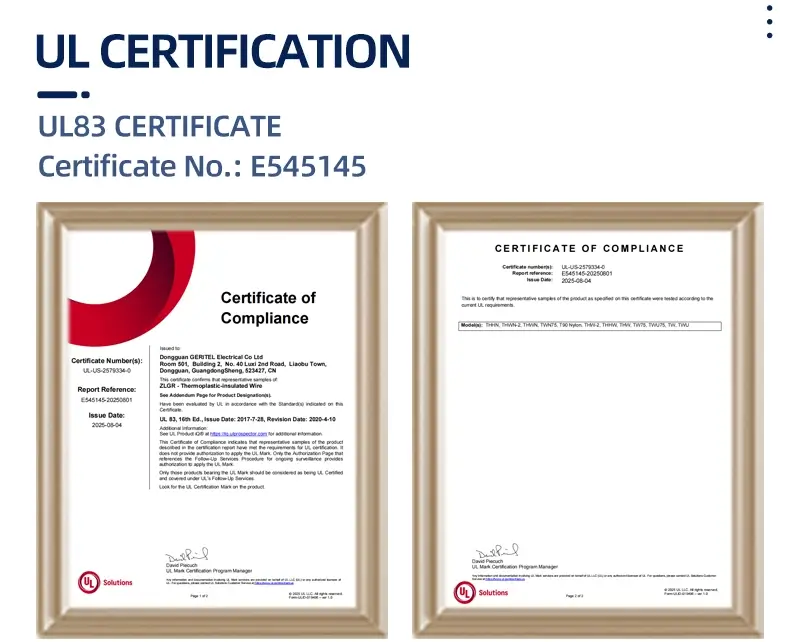
Technical performance means nothing without evidentiary support. GERITEL structured a three-layer verification system addressing the project's compliance anxieties.
Layer 1: Intrinsic Certification. Every conductor carried current UL listing with file numbers verifiable through the UL iQ database. We provided material composition declarations showing PVC formulations free of restricted phthalates and heavy metal stabilizers—addressing emerging environmental procurement criteria in multilateral development bank financing.
Layer 2: Provenance Documentation. Batch-specific test reports included conductor resistance measurements per ASTM B8, insulation thickness verification against UL 44 tolerances, and jacket tensile strength retention after accelerated aging. This granularity enabled the project quality manager to submit compliance packages without supplemental testing or vendor clarification requests.
Layer 3: Independent Validation. SGS conducted pre-shipment inspection of initial production lots, verifying dimensional conformance and documentation authenticity. This third-party seal satisfied the lender's technical advisor, who had previously rejected shipments from uncertified factories in similar projects. The inspection report transferred directly into the project's permanent asset documentation—supporting future refinancing or sale due diligence.
Execution Excellence: Customization as Competitive Advantage
Material supply in Caribbean infrastructure often fails at the interface between manufacturing excellence and field-specific requirements. GERITEL engineered this transition through flexible production capabilities that adapted standard products to project-unique demands.
Length Optimization. Rather than forcing field crews to manage bulk cable cutting and waste disposal, we produced XHHW Wire and PLTC / ITC Cable in exact reel lengths matched to circuit schedules. This customization eliminated an estimated 8% material waste factor typical in international projects while reducing on-site labor for measuring and cutting.
Color Coding System. The project specification required phase identification compliant with both NEC and local Barbadian electrical codes. We manufactured MTW Wire with custom jacket colors beyond standard black-white-red conventions, incorporating yellow and brown variants for specific inverter control circuits. This color differentiation reduced termination errors during the high-pressure commissioning phase when multiple contractors worked simultaneously in confined electrical rooms.
Packaging for Tropical Conditions. Standard wooden reels absorb moisture in humid port environments, creating mold contamination and dimensional instability. We specified moisture-barrier film wrapping and synthetic reel materials for all THHW electrical cable 75C dry rating shipments, ensuring material integrity after potential port delays. Each reel included desiccant packets and humidity indicator cards, allowing receiving inspectors to verify storage condition compliance before acceptance.
Sequential Labeling. For the PLTC / ITC Cable control system runs, we applied sequential meter marking and circuit identification printing during extrusion. This eliminated field labeling requirements and accelerated cable tracing during troubleshooting scenarios. The project commissioning team reported 40% reduction in circuit verification time compared to unmarked alternatives used in previous phases.
Documentation Integration. Each customized reel carried QR-linked digital certificates accessible via smartphone, connecting physical materials to their UL certification files and batch test reports. This integration supported the project's digital asset management requirements and streamlined future maintenance identification.
Outcome Validation: Performance Under Operation
Commissioning completed November 2024. Six-month operational data confirms specification integrity across all metrics.
Cable-related defects registered zero. Insulation resistance degradation in XHHW Wire solar field circuits measured below 2% from baseline. Control signal error rates in PLTC / ITC Cable systems remained below 0.001%. Material costs finished 12% favorable to budget due to waste elimination through length optimization. Schedule impact from supply registered none, with customized packaging preventing the moisture damage that had delayed a comparable Trinidad project by three weeks.
The Barbados National Standards Institution inspection recorded zero non-conformities. Project lender technical monitors accepted the full documentation package without query—a rarity in their Caribbean portfolio experience.
Post-commissioning engineering assessment noted particular value in the mid-project specification flexibility. When structural modifications exposed certain interior circuits to unexpected outdoor conditions, GERITEL's immediate availability of XHHW Wire as upgrade alternative for originally specified THHW electrical cable 75C dry rating prevented costly protection system redesigns. The color-coded MTW Wire inventory enabled rapid circuit reconfiguration without cross-connection risks during this adaptation.
Client Partnership Perspective
The project electrical manager characterized the relationship as "vendor graduation"—transitioning from transactional procurement to technical collaboration. Key valued elements included proactive notification of shipment milestones enabling just-in-time logistics planning, engineering consultation on termination techniques specific to MTW Wire stranding patterns, documentation preparation exceeding standard commercial practice and directly supporting audit requirements, and responsiveness to field-discovered conditions without contractual friction or price exploitation.
The customization capabilities proved decisive in project success. The manager specifically noted that previous Caribbean projects had accepted 12-15% cable waste as unavoidable, with field crews spending excessive time on cutting, labeling, and managing scrap. GERITEL's length-optimized production and pre-marked reels transformed this overhead into productive installation time, contributing to the 8% early completion of the electrical phase.
Strategic Differentiators: Why Specifications Succeeded
Environmental Degradation. Generic approaches risked standard PVC failure within 24 months. GERITEL's polymer-matched selection deployed XLPE for XHHW Wire and UV-stable jackets for PLTC / ITC Cable, engineered specifically for compound corrosion conditions.
Regulatory Rejection. Documentation gaps and certification ambiguity created unacceptable financing risk. GERITEL's solution layered UL intrinsic listing with SGS verification, providing evidentiary certainty for lender technical advisors.
Customization Deficiency. Standard suppliers force projects to adapt to catalog limitations, accepting material waste and field modification burdens. GERITEL's manufacturing flexibility delivered exact-length production, color-coded variants, tropical-grade packaging, and digital integration—transforming cable supply from commodity procurement to engineered project support.
The contrast proved stark during bidder evaluation. Competitor proposals offered stock MTW Wire in standard colors with 1,000-foot minimums, requiring the project to manage cutting, labeling, and 15% anticipated scrap. GERITEL's customized approach specified exact 847-foot reels with phase-color printing and sequential marking, eliminating waste handling and reducing installation labor. This capability gap influenced the technical scoring differential that awarded the contract.
Technical Incompatibility. Cross-vendor specifications create electromagnetic conflicts and inspection fragmentation. GERITEL unified UL certification family across MTW Wire, XHHW Wire, THHW electrical cable 75C dry rating, and PLTC / ITC Cable, ensuring compatibility and streamlined protocols.
Engagement Invitation
The Barbados Clean Energy Bridge Project demonstrates that cable selection in demanding environments is fundamentally an engineering decision with manufacturing implications—not merely a procurement exercise. When your infrastructure faces similar pressures of environmental hostility, certification complexity, and field-specific requirements, GERITEL provides the technical depth and customization capabilities to transform constraints into competitive advantage.
Contact Us Today:
Dongguan GERITEL Electrical Co., Ltd.
Tel/WhatsApp/WeChat: +86 135 1078 4550 / +86 136 6257 9592
Email: manager01@greaterwire.com
 Trinidad and Tobago San Fernando Campus Power Distribution



 Building 2, No. 40 Luxi 2nd Road, Liaobu Town, Dongguan City, Guangdong Province, China