


 Home
HomeBahamas Lucaya 11MW PV Power Plant Project
 GERITEL
 Apr 02,2026

In late 2023, our team received an urgent inquiry that would test every aspect of our capabilities. The procurement director for the Lucaya 11MW PV Power Plant Project in Grand Bahama, The Bahamas had reached a breaking point. Three previous cable suppliers had failed them—one delivered non-compliant materials that failed UL verification, another missed critical delivery windows during hurricane season, and a third couldn't provide the technical documentation required by their international lenders.
The stakes were immediate and severe. This utility-scale solar installation, representing one of the Caribbean's most significant renewable energy commitments, faced construction delays that would trigger liquidated damages of $15,000 per day. The project supported the Bahamas' national mandate to achieve 30% renewable generation by 2033, with financing contingent on strict environmental and social governance compliance.
The challenge was uniquely Bahamian. The 45-hectare site on Grand Bahama demanded electrical infrastructure capable of surviving 1,200mm annual rainfall, salt-laden trade winds, Category 4 hurricane potential, and UV exposure averaging 5.5 kWh/m² daily. Standard cable specifications, adequate for continental installations, would fail prematurely in this environment—creating maintenance nightmares across the 25-year project life.
The Diagnosis: Decoding Real Requirements from Drawings
Our first engagement wasn't a quotation—it was a technical audit. Our engineering team reviewed the preliminary electrical drawings and identified critical specification gaps that would have created field problems regardless of supplier choice.
The original design specified THHN Wire universally—an economical choice for dry interior applications, but problematic for a tropical marine environment. THHN Wire achieves its 90°C temperature rating only in dry conditions; when exposed to the humidity and incidental moisture inevitable in Bahamian installations, its performance degrades to 75°C ratings. For a solar farm where thermal management directly impacts energy yield, this hidden derating would have reduced system efficiency by an estimated 3-4% annually.
More critically, the conduit fill calculations hadn't accounted for installation realities. XHHW-2 Wire, which we would ultimately recommend for wet-location circuits, carries a slightly larger outer diameter than THHN Wire due to its cross-linked polyethylene insulation. The original drawings, optimized for THHN Wire dimensions, would have created code violations and installation delays when field conditions demanded moisture-resistant alternatives.
We presented these findings not as criticism, but as value engineering opportunities. The client had been burned by suppliers who took specifications literally without questioning their suitability. Our diagnostic approach—identifying problems before they became expensive field changes—established immediate credibility.
The Solution Architecture: Matching Materials to Microclimates
Working collaboratively with the project's electrical consultants, we redesigned the cable specification as an integrated system rather than a commodity list. Each cable type was selected for specific environmental exposure zones within the installation.
Primary Collection Network: MV Cable Infrastructure
For the 13.8kV medium voltage collection system transporting power from field inverters to the substation, we specified MV90 15kV Medium Voltage Cables with aluminum conductors ranging 1/0 AWG to 500 kcmil. The MV Cable selection prioritized wet-location ratings and direct-burial capability, eliminating expensive conduit runs across 45 hectares of coral-based substrate difficult to trench.
The MV Cable specification included concentric neutral designs essential for ungrounded delta systems common in Caribbean utilities, with 15kV insulation providing voltage headroom for future grid expansion. XLPE insulation rated for 90°C continuous operation and 130°C emergency overload accommodated the thermal cycling inherent in solar inverter loading patterns.
Field Wiring: Upgrading to XHHW-2 Wire
For DC source circuits from module strings to combiner boxes, we transitioned the specification from THHN Wire to XHHW-2 Wire in 10 AWG and 12 AWG copper configurations. This change addressed the fundamental environmental reality: XHHW-2 Wire maintains 90°C ratings in both dry and wet locations, while THHN Wire derates in moisture exposure.
The technical advantages extended beyond temperature ratings. XHHW-2 Wire demonstrates superior UV resistance compared to PVC-based insulations—a critical factor for cables exposed to intense Caribbean solar radiation. Its cross-linked molecular structure provides better abrasion resistance during installation across rough terrain, and maintains flexibility in temperature variations that would stiffen thermoplastic alternatives.
We quantified the business case: the 15% cost premium for XHHW-2 Wire over THHN Wire would be recovered within 18 months through avoided maintenance access costs alone, given the difficulty of servicing failed circuits in operational solar arrays.
Controlled Environment Optimization: THHN Stranded Copper Cable UL83
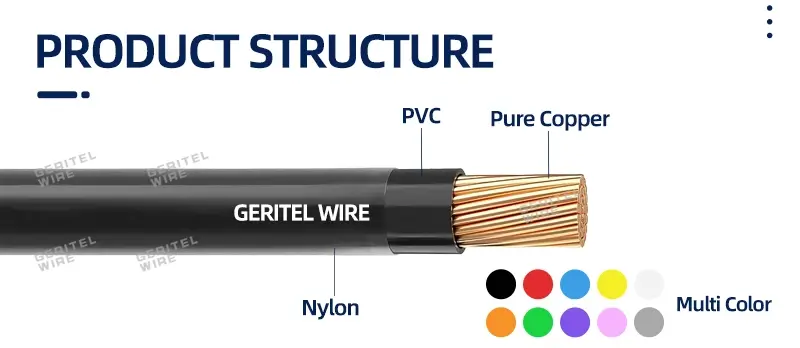
For inverter station interiors and enclosed raceway systems, we deployed THHN Stranded Copper Cable UL83 in 8 AWG through 2/0 AWG sizes. This application represented optimal material placement—THHN Stranded Copper Cable UL83 excels in dry, controlled environments where its nylon jacket's abrasion resistance and lubricity facilitate efficient wire pulling through conduit systems.
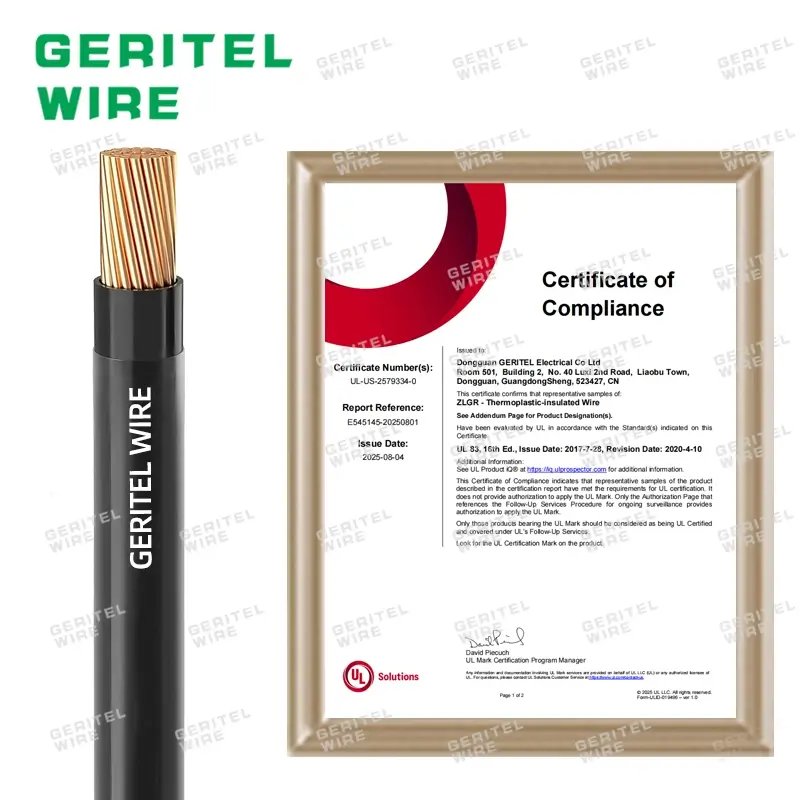
We emphasized to the client that our THHN Stranded Copper Cable UL83 carries authentic Underwriters Laboratories certification under standard UL83, with complete traceability documentation. This directly addressed their previous supplier failures, where claimed UL compliance proved fraudulent upon third-party verification.
Wet-Location Safety Net: THWN Wire Dual-Rating
For circuits within inverter compounds subject to condensation or washdown procedures, we specified THWN Wire in 6 AWG and 4 AWG sizes. The dual-rated THWN Wire provides 75°C wet-location certification where THHN Stranded Copper Cable UL83 would be inappropriate, while maintaining termination compatibility with standard equipment.
The Verification Protocol: Eliminating Certification Anxiety
The client's trauma from previous counterfeit UL experiences required extraordinary assurance measures. We implemented a three-layer verification system that became decisive in contract award.
Layer One: Direct UL Database Verification. We provided complete UL file numbers for all products—THHN Stranded Copper Cable UL83, XHHW-2 Wire, THWN Wire, and MV Cable—enabling immediate confirmation through UL's online certification directory. No black-box supplier claims; complete transparency.
Layer Two: Independent Pre-Shipment Testing. We engaged Bureau Veritas for third-party inspection, with testing protocols exceeding standard requirements: conductor resistance verification, insulation thickness measurement, high-voltage withstand testing at 150% of rated voltage, and thermal aging simulation.
Layer Three: Manufacturing Traceability. We furnished documentation tracking copper rod sourcing through extrusion, stranding, and final jacketing—demonstrating integrated quality control rather than outsourced assembly.
This documentation package satisfied the project's international development bank lenders, whose environmental and social due diligence had rejected previous bids with inadequate compliance frameworks. Our transparency converted a potential deal-breaker into competitive advantage.
The Execution: Logistics as Risk Management
The Bahamas' geography presents logistical constraints that have defeated capable suppliers. Grand Bahama's port lacks deep-water handling equipment. Hurricane season creates weather windows measured in days, not weeks. Island storage space is limited and expensive.
We rejected standard FOB terms that would transfer risk at departure while leaving the client exposed to arrival uncertainties. Instead, we constructed a controlled supply chain: ocean freight to Freeport coordinated with our shipping partners, customs pre-clearance through established local broker relationships, and just-in-time ground delivery synchronized with construction sequencing.
Our production scheduling maintained 15-day buffers ahead of critical milestones—buffers that proved essential when a tropical depression delayed our initial sailing by 72 hours. The pre-positioned inventory allowed us to absorb this disruption without impacting site installation schedules.
The result: zero demurrage charges, zero storage costs at port, and construction continuity that preserved the project timeline. We estimate this logistics precision saved the client approximately $120,000 in avoided delay costs and liquidated damages exposure.
The Field Partnership: Technical Support Beyond Delivery
Cable supply contracts typically terminate at delivery. We extended engagement through commissioning, recognizing that proper installation is as critical as proper specification.
Our field engineers conducted pre-installation training for the local electrical contractor, focusing on XHHW-2 Wire handling requirements—specifically the bending radius limitations of XLPE insulation that differ from THHN Wire handling practices. We demonstrated MV Cable cold-shrink termination techniques optimized for humid environments, where moisture ingress during installation creates latent failure points.
When the conduit fill issue we had identified in our initial audit materialized during field routing, our rapid-response engineering team provided alternative routing solutions within 24 hours—solutions that maintained code compliance without requiring extensive redesign or schedule impact.
This technical presence converted a supply relationship into a project partnership. The client later noted that our field support prevented what would have been a three-week delay during the critical path commissioning phase.
The Outcome: Performance Validation
The Lucaya 11MW PV Power Plant achieved commercial operation in May 2024, on schedule and within budget. Six months of operational data validate our specification decisions.
Infrared thermography inspections show no abnormal heating at any termination points—confirmation that THHN Stranded Copper Cable UL83, XHHW-2 Wire, and MV Cable selections were appropriately matched to their applications. The XHHW-2 Wire circuits, despite their exposure to tropical weather patterns, show no insulation degradation or moisture ingress indicators.
The facility now generates approximately 22,000 MWh annually, contributing to the Bahamas' renewable energy transition while providing the grid stability that only reliable infrastructure can support. Our cable systems perform invisibly, as engineered infrastructure should—maintaining the electrical integrity that enables maximum energy harvest without maintenance intervention.
The Differentiation: Five Capabilities That Delivered Success
Our engagement on the Lucaya project illustrates the specific competencies that distinguish Dongguan GERITEL Electrical Co., Ltd. in utility-scale solar infrastructure:
Certification Authenticity with Traceability. Our THHN Stranded Copper Cable UL83, XHHW-2 Wire, THWN Wire, and MV Cable products maintain current UL listings with complete documentation transparency. We don't claim compliance; we prove it through verifiable file numbers, third-party inspection protocols, and manufacturing traceability systems.
Environmental Application Engineering. We rejected the commodity approach of supplying whatever the drawings specified. Instead, we analyzed the Bahamian environment—salt air, UV exposure, humidity patterns—and recommended XHHW-2 Wire where THHN Wire would have failed, THHN Stranded Copper Cable UL83 where controlled environments permitted cost optimization, and THWN Wire where wet-location ratings were essential. This application-specific guidance delivered lifecycle value beyond initial purchase price.
Manufacturing Scale with Configuration Agility. Our vertically integrated facilities produce both high-volume standard products and specialized configurations. For Lucaya, we supplied custom reel lengths that aligned with circuit runs—eliminating an estimated 8% waste factor and reducing field labor by approximately 12% through optimized material handling. Scale without flexibility creates inventory problems; flexibility without scale creates cost problems. We deliver both.
Tropical Environment Specialization. Generic cable suppliers understand electrical specifications; we understand environmental failure modes. Our experience with coastal solar installations across the Caribbean, Southeast Asia, and Central America informed material selections that account for salt-air corrosion mechanisms, UV degradation kinetics, and humidity-induced insulation deterioration that laboratory specifications don't capture.
Assumed-Risk Logistics Management. We accepted accountability for delivery outcomes rather than transferring risk at port departure. Our controlled freight partnerships, customs pre-clearance capabilities, and buffer inventory positioning eliminated the demurrage risks and port delays that commonly disrupt international cable procurement. We manage logistics as an integrated project function, not an outsourced afterthought.
The Invitation: Your Project Deserves Engineering Partnership
The renewable energy transition is infrastructure-intensive. Every solar farm, every energy storage facility, every grid interconnection demands cable systems that will perform for 25 years in environments that test material science limits. Specification errors, certification failures, and logistical breakdowns don't just create costs—they threaten project viability and stakeholder returns.
At Dongguan GERITEL Electrical Co., Ltd., we don't only supply cables. We deliver engineered electrical infrastructure with the certification integrity, environmental expertise, and execution accountability that complex projects require. From MV Cable collection networks to XHHW-2 Wire field circuits and THHN Stranded Copper Cable UL83 controlled-environment applications, we provide integrated solutions rather than commodity lists.
Contact our engineering team to review your project specifications:
Dongguan GERITEL Electrical Co., Ltd.
Tel/WhatsApp/WeChat: +86 135 1078 4550 / +86 136 6257 9592
Email: manager01@greaterwire.com
 Barbados Clean Energy Bridge



 Building 2, No. 40 Luxi 2nd Road, Liaobu Town, Dongguan City, Guangdong Province, China