


 Home
HomeAngola Luanda Solar PV Plant
 GERITEL
 Apr 11,2026

In the sun-drenched outskirts of Luanda, Angola, a transformative 50MW utility-scale solar photovoltaic plant stands as a testament to the nation's commitment to energy diversification. Commissioned in early 2024, this ground-mounted solar farm represents one of the most significant renewable energy investments in the region, designed to supply clean electricity to over 80,000 households while reducing the capital's reliance on diesel-powered generation.
The Luanda Solar PV Plant spans 120 hectares of semi-arid terrain, featuring high-efficiency bifacial modules mounted on single-axis tracking systems. For our team at Dongguan GERITEL Electrical Co., Ltd., this project presented both an opportunity and a challenge: delivering a comprehensive cable infrastructure capable of withstanding Angola's harsh coastal climate—characterized by intense UV exposure, high humidity, and temperatures ranging from 25°C to 45°C—while meeting stringent international standards and an aggressive construction timeline.
Understanding the Client's Core Challenges
When the EPC contractor first approached us in mid-2023, they were grappling with three critical pain points that threatened project viability. First, cable procurement from European suppliers involved lead times exceeding 16 weeks, creating unacceptable delays for a project with fixed grid-connection deadlines. Second, previous experiences with generic cable suppliers had resulted in premature insulation degradation in similar climatic conditions, raising concerns about long-term system reliability. Third, the project required multiple cable types with varying specifications, and managing multiple vendors would introduce logistical complexity and quality inconsistency risks.
The client's engineering team specifically emphasized the need for H1Z2Z2-K cable 6 mm² configurations for the DC string connections, recognizing that undersized conductors would lead to resistive losses, while oversized cables would unnecessarily increase material costs and installation difficulty. They needed a partner who could provide not just products, but technical consultation to optimize the entire cable architecture.
Engineering a Tailored Cable Solution
Our response began with a comprehensive site assessment and system analysis. Working closely with the client's electrical engineers, we mapped the complete power journey from module to grid, identifying five distinct cable applications requiring specialized solutions.
DC Array to Inverter: The Critical Link
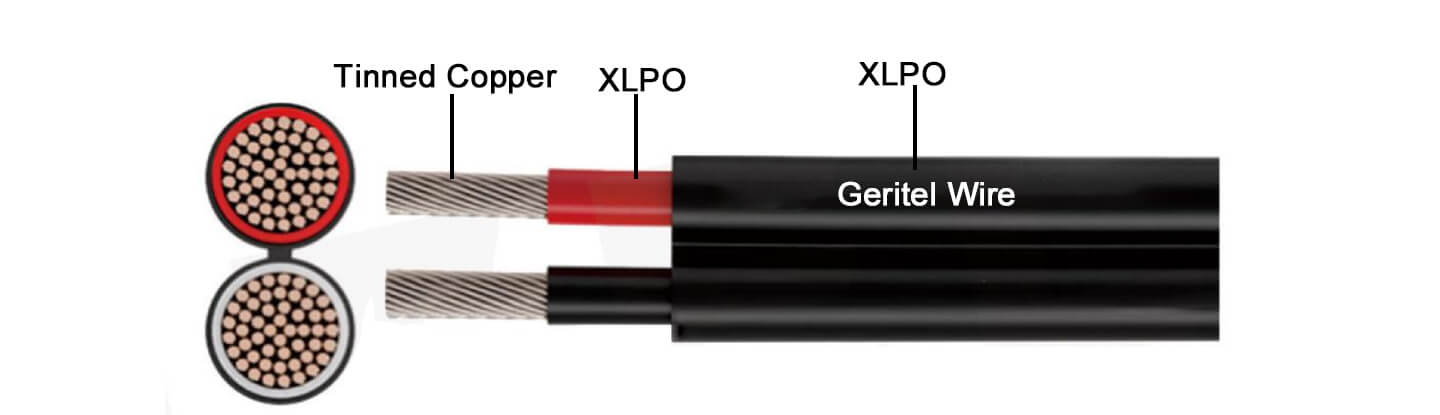
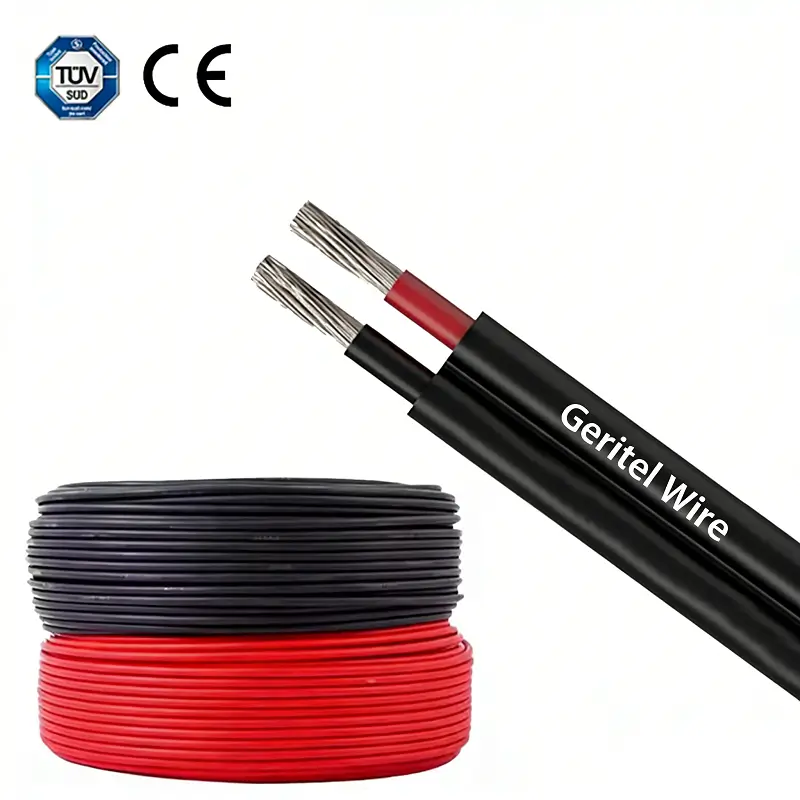
For the photovoltaic array connections, we supplied H1Z2Z2-K photovoltaic-rated cables in both 2×4 mm² and 2×6 mm² configurations. The H1Z2Z2-K cable 6 mm² specification was specifically deployed for longer string runs exceeding 80 meters, where voltage drop calculations demanded larger conductor cross-sections. These double-insulated, halogen-free cables feature electron-beam cross-linked XLPO compounds that maintain dielectric integrity at conductor temperatures up to 120°C—critical for Angola's high ambient temperatures.
Unlike standard PVC-insulated alternatives, our H1Z2Z2-K cables carry TÜV Rheinland certification to EN 50618 and IEC 62930 standards, ensuring 25-year service life expectancy even under continuous UV exposure. The tinned copper conductors resist corrosion in the salty coastal air, while the AD8 water resistance rating provides protection against occasional flooding during the rainy season.
Internal Power Distribution: Flexibility Meets Safety
Within the inverter stations and battery storage compounds, we deployed H07V-K flexible cables in 16 mm² and 25 mm² cross-sections. The 16 mm² H07V-K cables handled interconnections between smaller battery racks and DC combiner boxes, where space constraints required tight bending radii. For medium-sized battery clusters and auxiliary power distribution, the 25 mm² H07V-K configuration provided the necessary current capacity while maintaining installation flexibility.
These single-core, PVC-insulated conductors offer excellent chemical resistance against the dust and industrial pollutants common in developing solar sites, with voltage ratings of 450/750V AC suitable for auxiliary systems.
AC Transmission: Grid-Ready Power Delivery
For the inverter output to the 33kV substation, we supplied non-armored YJV power cables in 4×16 mm² and 4×35 mm² configurations. The 4×16 mm² YJV cables served shorter runs to local transformer stations, while the 4×35 mm² YJV specification handled the main feeders carrying aggregated power from central inverters to the point of interconnection.
These XLPE-insulated, PVC-sheathed cables feature copper conductors and are designed for direct burial in the sandy soil conditions prevalent at the site. Their flame-retardant properties and resistance to mechanical stress make them ideal for both underground trench installation and aerial sections where required.
Protection and Control: Ensuring System Integrity
Safety infrastructure relied on H07V-U single-core solid conductors in 16 mm² and 25 mm² specifications for equipment grounding and lightning protection systems. The rigid construction of H07V-U cables ensures secure terminations in grounding busbars, maintaining low-impedance paths for fault currents.
For monitoring and control systems, we supplied multi-core instrumentation cables with 2–12 core configurations and 1.5–2.5 mm² cross-sections, enabling reliable data transmission between inverters, meteorological stations, and the SCADA system. These shielded cables prevent electromagnetic interference from high-power AC circuits, ensuring accurate system monitoring.
Certifications and Quality Assurance: Why Standards Matter
What distinguished our solution from competing bids was our comprehensive certification portfolio. Every cable shipped to Luanda carried IEC conformity documentation, with the H1Z2Z2-K range specifically certified to TÜV standards. These certifications weren't merely bureaucratic checkboxes—they represented verified performance against accelerated aging tests, flame propagation resistance, and mechanical durability benchmarks.
Our manufacturing facilities maintain ISO 9001 quality management systems, with in-process testing including high-voltage withstand tests, conductor resistance measurements, and insulation thickness verification. For the Angola project, we provided batch-specific test reports and material traceability documentation, enabling the client to satisfy lender technical advisors and grid code compliance requirements.
Logistics Excellence: Delivering Scale with Precision
The sheer scale of this project demanded exceptional logistical precision, with the final bill of materials encompassing a complete cable ecosystem spanning from DC power generation through AC transmission to signal control, totaling over 430,000 meters, specifically comprising 180,000 meters of H1Z2Z2-K 1×6 mm² photovoltaic-rated cables for long-distance DC string connections to minimize resistive losses, 120,000 meters of H1Z2Z2-K 1×4 mm² for shorter string runs optimizing cost-effectiveness, 45,000 meters of H07V-K 1×16 mm² flexible single-core cables for internal battery rack wiring requiring tight bending radii, 30,000 meters of H07V-K 1×25 mm² for power distribution backbone circuits carrying higher current loads, 15,000 meters of YJV 4×16 mm² four-core AC power cables for short-distance distribution to local transformer stations, 8,000 meters of YJV 4×35 mm² heavy-duty four-core configurations for high-capacity main feeder transmission from central inverters to the grid interconnection point, 12,000 meters of H07V-U 1×16 mm² rigid grounding cables for equipment earthing protection, 10,000 meters of H07V-U 1×25 mm² for comprehensive station grounding networks ensuring low-impedance fault current paths, 6,000 meters of 4×1.5 mm² multi-core instrumentation cables for basic monitoring signal transmission between inverters and meteorological stations, and 6,000 meters of 8×2.5 mm² multi-core instrumentation cables for complex SCADA control loops requiring higher conductor capacity, all meticulously scheduled for production and packed across 12 high-cube containers with specialized drum handling, shock-resistant securing, and moisture-proof sealing to ensure maritime transport integrity, while our phased delivery strategy precisely aligned with construction milestones, enabling the first containers to arrive at Luanda port within 28 days of purchase order confirmation—a dramatic reduction from the 14-16 week lead times quoted by European competitors—thereby securing critical time advantages for the project's fixed grid-connection deadline and preventing costly construction crew idle time.
Installation Support and Technical Collaboration
Beyond supply, we provided on-site technical consultation during the installation phase. Our engineers conducted training sessions for local electrical contractors on proper cable pulling techniques, emphasizing the importance of maintaining bending radius limits for H1Z2Z2-K cables (minimum 5× outer diameter) to prevent insulation damage. We also advised on gland selection and sealing methods to maintain the IP rating of junction boxes in the dusty environment.
When the client encountered unexpected terrain challenges requiring additional cable lengths for certain array blocks, our flexible manufacturing capacity enabled expedited production and air freight of supplementary H1Z2Z2-K cable 6 mm² quantities within 10 days—preventing construction crew idle time and maintaining the critical path schedule.
Project Outcomes and Performance Validation
The Luanda Solar PV Plant achieved commercial operation in March 2024, with the cable infrastructure performing flawlessly during commissioning and the initial six months of operation. Independent testing confirmed DC string losses below 1.5%, validating our conductor sizing calculations. Thermal imaging during peak summer conditions showed cable surface temperatures remaining within design parameters, confirming the adequacy of our H1Z2Z2-K specifications for the local climate.
The client reported zero cable-related defects or warranty claims—a significant improvement from previous projects where insulation degradation had necessitated costly replacements. The EPC contractor specifically noted that our single-source supply approach reduced procurement administrative burden by approximately 40% compared to multi-vendor scenarios, while our technical documentation package streamlined grid connection approval processes.
Strategic Value and Long-Term Partnership
This project exemplifies how strategic cable selection impacts renewable energy project economics. By choosing certified, high-quality cables over lower-cost alternatives, the project developer secured:
Operational reliability: 25-year cable lifespan matching the power purchase agreement duration
Risk mitigation: Reduced probability of downtime losses and replacement costs
Financing advantages: Comprehensive documentation satisfying international lender requirements
Installation efficiency: Consistent product quality enabling faster commissioning
For Dongguan GERITEL Electrical, the Luanda project reinforced our capabilities in large-scale solar infrastructure supply. It demonstrated our ability to combine manufacturing scale—evidenced by the 430,000-meter delivery—with technical sophistication and responsive service.
Your Solar Project Deserves a Proven Partner
The global energy transition demands suppliers who understand that cables are not commodities but critical system components. Whether you're developing a utility-scale solar farm in Africa, a commercial rooftop installation in Europe, or a hybrid storage project in Asia, cable selection directly impacts system performance, safety, and lifetime returns.
At Dongguan GERITEL Electrical Co., Ltd., we bring together IEC and TÜV-certified manufacturing, comprehensive product ranges from H1Z2Z2-K solar cables to YJV power distribution, and project execution experience spanning multiple continents. Our technical team stands ready to support your engineering specifications, cable sizing optimization, and logistics planning.
Contact us today to discuss your next solar project:
Dongguan GERITEL Electrical Co., Ltd.
Tel/WhatsApp/WeChat: +86 135 1078 4550 / +86 136 6257 9592
Email: manager01@greaterwire.com
Let us help you build solar infrastructure that lasts—cable by cable, connection by connection, megawatt by megawatt.
 Kenya New Nairobi International Airport Terminal Wire Export



 Building 2, No. 40 Luxi 2nd Road, Liaobu Town, Dongguan City, Guangdong Province, China