


 Home
HomeA Buyer’s Guide to American Standard PVC Jacketed MC Cable
 GERITEL
 May 26,2026

1. A Buyer’s Guide to American Standard PVC Jacketed MC Cable
For North American electrical contractors, distributors, and project buyers sourcing wiring for wet‑location commercial construction and outdoor power distribution engineering, choosing the right metal clad cable with PVC jacket directly impacts project longevity, compliance, and long‑term maintenance costs. Standard bare metal‑clad (MC) cables often fall short in damp, humid, or coastal environments, creating avoidable project delays and premature wiring failures. This practical buying guide cuts through generic cable marketing to deliver specification‑focused selection advice for XHHW‑2 galvanized steel armor PVC jacket MC cable, 14/3 aluminum armor MC cable PVC jacket, 14/4 THHN/THWN‑2 PVC jacketed MC cable, and other critical PVC‑jacketed MC cable variants tailored to harsh outdoor and moisture‑prone commercial applications.
2. Why Bare Standard MC Cable Struggles in Wet‑Location Commercial Installations
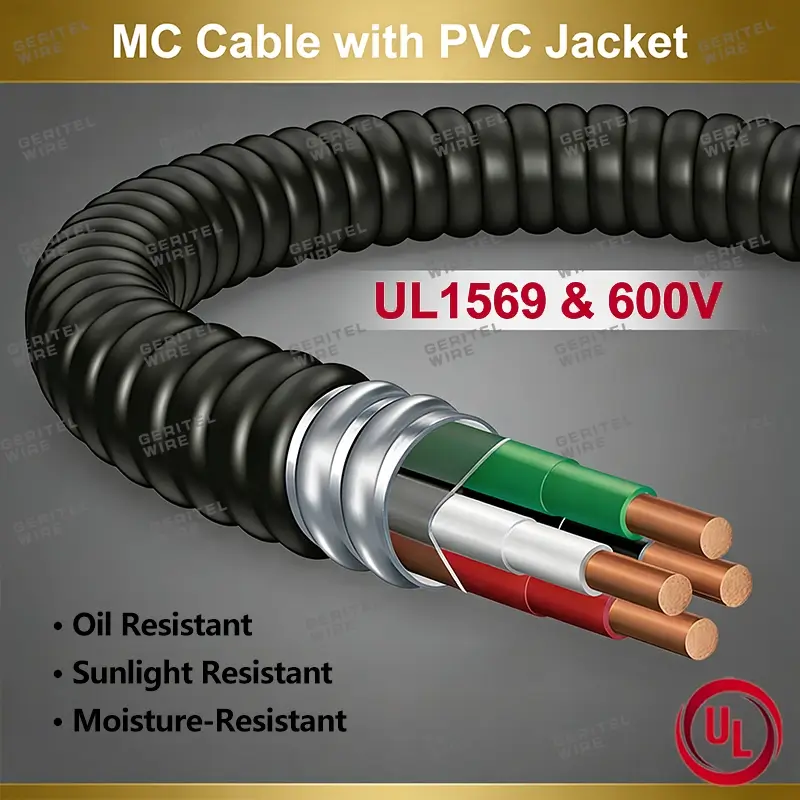
A core pain point shared by most electrical teams is that ordinary unjacketed MC cables lack robust anti‑corrosion protection. In wet‑location commercial buildings, wastewater facilities, or open‑air power distribution runs, unprotected galvanized steel or aluminum armor is exposed to humidity, rain, and airborne contaminants. Over time, this exposure triggers rust, armor degradation, and insulation damage, leading to shortened service life, unexpected outages, and costly rework mid‑project.
Unlike basic bare MC cable, a metal clad cable with PVC jacket adds a durable outer layer designed specifically to combat these environmental threats. This extra PVC jacket delivers three non‑negotiable advantages for outdoor commercial builds: reliable moisture proofing, corrosion resistance for coastal or high‑humidity sites, and abrasion resistance during installation and long‑term use. For project stakeholders prioritizing compliance and durability, PVC jacketing is not an optional upgrade but a requirement for consistent performance in harsh wet‑location settings.
3. Critical Spec Breakdown for American‑Standard PVC Jacketed MC Cable
When sourcing XHHW‑2 galvanized steel armor PVC jacket MC cable or 14‑gauge aluminum armor alternatives, buyers must distinguish between armor types, insulation ratings, conductor configurations, and grounding designs—details generic cable guides overlook. Below are the most widely specified variants for North American wet‑location power distribution engineering:
· Armor Material: Galvanized Steel vs. Aluminum Interlocked Armor
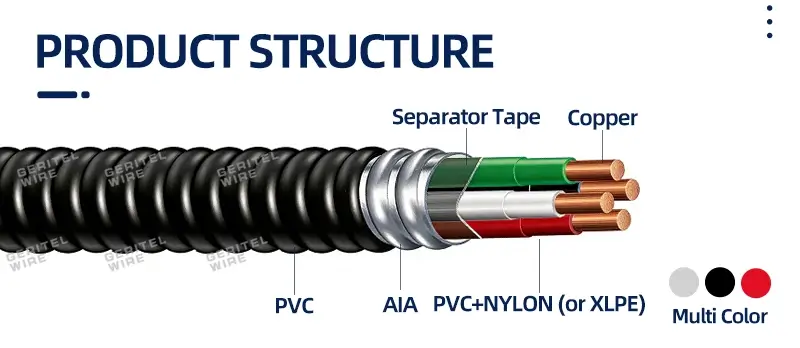
XHHW‑2 Type MC feeder cable PVC jacket most commonly uses galvanized steel armor, ideal for heavy‑duty industrial outdoor runs where mechanical impact resistance is critical. For lighter commercial wet‑location wiring, 14/3 aluminum armor MC cable PVC jacket is a popular choice; aluminum interlocked armor offers lighter weight for easier installation, paired with a PVC outer jacket to prevent oxidation in damp air. Both armor styles rely on the PVC jacket to block moisture penetration that would otherwise corrode exposed metal shielding.
· Insulation & Conductor Configurations for Wet‑Location Compliance
600V is the standard voltage rating for all PVC‑jacketed MC cable covered in this guide. Two dominant insulation types dominate wet‑location projects:
1. XHHW‑2: The go‑to insulation for XHHW‑2 galvanized steel armor PVC jacket MC cable, optimized for feeder cable applications in outdoor commercial power distribution.
2. THHN/THWN‑2: Found in 14/4 PVC jacketed MC cable and 14/4 THHN/THWN‑2 PVC jacketed MC cable, suited for branch circuit wiring in damp commercial spaces.
Conductor setups follow standard North American sizing: 3/C and 4/C configurations (such as 14/3 and 14/4 variants) pair with either bare ground or insulated green ground conductors. Insulated green ground is strongly recommended for wet‑location builds, as it adds an extra layer of moisture protection compared to bare ground wiring.
4. Non‑Negotiable Buying Checks for PVC Jacketed Metal Clad Cable
To avoid costly specification errors for your wet‑location commercial project, stick to three core selection reminders when ordering galvanized steel armor PVC jacketed MC cable or aluminum‑armored alternatives:
· Confirm armor material first: Match galvanized steel armor for high‑impact industrial outdoor runs, or aluminum interlocked armor for standard commercial wet‑location builds, always paired with a continuous PVC jacket.
· Verify conductor insulation type: Align XHHW‑2 for feeder cables and THHN/THWN‑2 for branch circuits to your project’s power load requirements.
· Align with project‑specific NEC standard requirements: Cross‑reference your local NEC wiring codes for wet‑location grounding rules, choosing between bare ground and insulated green ground based on regional project mandates.
The core product advantage remains consistent across all variants: the extra PVC jacket provides the moisture‑proof, corrosion‑resistant, and abrasion‑resistant protection that standard bare MC cable cannot deliver in harsh damp environments.
5. Practical Model Matching for Real‑World Wet‑Location Projects
For electrical contractors and distributors ordering for specific commercial builds, these targeted model recommendations simplify specification decisions:
· Use 14/3 aluminum armor MC cable PVC jacket for mid‑size commercial wet‑location branch circuits, such as retail store outdoor lighting or restroom power runs.
· Select 14/4 THHN/THWN‑2 PVC jacketed MC cable for multi‑circuit commercial wiring requiring separate grounding in damp indoor‑outdoor transition spaces.
· Specify XHHW‑2 galvanized steel armor PVC jacket MC cable and XHHW‑2 Type MC feeder cable PVC jacket for main power feeder runs in outdoor commercial power distribution systems and heavy‑use industrial wet‑location facilities.
6. Frequently Asked Questions (FAQs) for PVC Jacketed MC Cable Buyers
· Which armor type is better for coastal high‑humidity wet‑location projects?
A: Aluminum interlocked armor with a thick PVC jacket resists salt‑air corrosion better than standard galvanized steel armor for coastal builds, while galvanized steel armor is preferred for inland heavy‑impact outdoor sites.
· What insulation should I choose for wet‑location feeder cables?
A: XHHW‑2 insulation is the industry standard for XHHW‑2 Type MC feeder cable PVC jacket, engineered to handle higher continuous power loads in outdoor feeder applications.
· Is insulated green ground required for all PVC jacketed MC cable wet‑location installations?
A: Requirements depend on local NEC standards, but insulated green ground is strongly advised for all damp commercial builds to minimize ground conductor corrosion risks.
7. Get Tailored PVC Jacketed MC Cable Solutions for Your North American Projects
Whether you need bulk orders of XHHW‑2 galvanized steel armor PVC jacket MC cable, 14/3 aluminum armor variants, or custom 14/4 THHN/THWN‑2 PVC jacketed MC cable, working with a manufacturer that understands North American wet‑location wiring needs saves time and avoids specification missteps.
Dongguan GERITEL Electrical Co., Ltd.
Tel/WhatsApp/Wechat: +86 136 6257 9592
Tel/WhatsApp/Wechat: +86 135 1078 4550
Email: manager01@greaterwire.com
Website: www.geritelgroup.com
 PVC Coated MC Cable: Construction, Ratings, and Typical Uses



 Building 2, No. 40 Luxi 2nd Road, Liaobu Town, Dongguan City, Guangdong Province, China