


 Home
HomeWhy Process Control Cable Is Essential in Chemical and Water Treatment Facilities
 GERITEL
 Jun 16,2026

Chemical manufacturing plants and wastewater treatment sites operate around-the-clock automated process control systems that rely on precise sensor feedback, PLC logic signals and motor interlock data. Corrosive fumes, constant moisture, temperature swings and electromagnetic interference pose severe threats to ordinary wiring, leading to signal loss, false equipment trips, chemical process imbalance and unplanned facility shutdowns. Specially engineered process control wiring solves these critical risks, with instrumentation TC-ER cable standing out as the top open-tray certified solution for both chemical and water treatment industrial sites. This guide breaks down the core value of dedicated process control cables, covering multi-core signal 7/C TC-ER cable, medium-power feed 2 AWG TC-ER cable, heat-resistant XHHW-2 TC-ER cable, anti-interference individually shielded TC-ER cable, corrosion-proof tinned copper TC-ER cable, moisture-resistant wet location TC-ER cable, and customized wiring standards exclusive to TC-ER cable for chemical plants.
1. Unique Harsh Operating Conditions in Chemical & Water Treatment Facilities
Process control wiring in these two industries faces three unavoidable harsh hazards that standard cables cannot withstand long-term: First, persistent dampness and standing water vapor. Wastewater tanks, filtration rooms and chemical washing areas maintain high humidity year-round, penetrating unprotected cable jackets to corrode internal conductors. Second, corrosive chemical mist and acidic residues. Chemical production lines release acid, alkali and solvent fumes that eat away ordinary copper strands and low-grade insulation. Third, heavy EMI interference from large pump motors, agitators and variable frequency drives. Unshielded control wiring distorts pressure, flow and pH sensor signals, breaking accurate automated process regulation. Without purpose-built process control cables, facilities suffer frequent instrumentation failures, unstable dosing systems and costly safety compliance violations.
2. Instrumentation TC-ER Cable: The Foundation of Reliable Process Control Signals
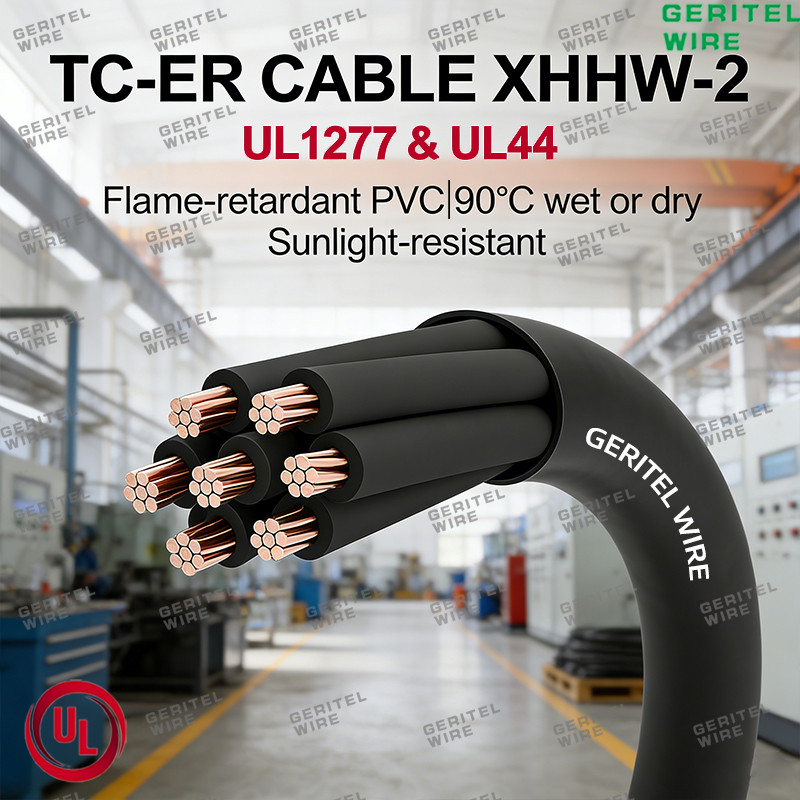
Instrumentation TC-ER cable is custom manufactured for low-voltage process signal transmission, built to carry delicate monitoring data from flow meters, level sensors, pH probes and analytical transmitters. Unlike generic power cables, it prioritizes signal integrity, corrosion resistance and shielding performance—three non-negotiable requirements for chemical and water treatment process control. As a tray-rated wiring product, it allows exposed overhead installation without rigid conduit, simplifying layout above process tanks, pump banks and chemical reaction vessels. All variants meet strict industrial safety standards, making it the universal process control wiring choice for TC-ER cable for chemical plants and municipal wastewater facilities.
3. Core Spec Options for Process Control Distribution Circuits
Chemical and water treatment control networks combine multi-signal branch loops and medium-power auxiliary feeds, requiring matched TC-ER cable specifications:
7/C TC-ER cable
This seven-conductor multi-core cable integrates multiple independent signal pairs and auxiliary low-power cores within one compact jacket. For dense control trays serving clusters of sensors, dosing pumps and monitoring transmitters, 7/C TC-ER cable consolidates dozens of separate signal lines, reduces wiring clutter and cuts installation labor for process control cabinets.
2 AWG TC-ER cable
Many agitator motors, recirculation pumps and control panel power supplies require stable medium-current power alongside signal wiring. 2 AWG TC-ER cable delivers balanced ampacity for auxiliary control power loops, pairing seamlessly with instrumentation lines on shared overhead trays without overheating risks.
XHHW-2 TC-ER cable
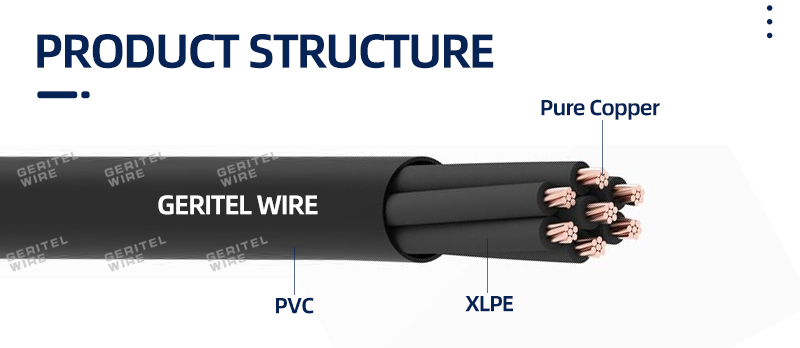
Chemical reaction zones and heat-drying wastewater treatment sections generate sustained high ambient temperatures. Standard insulation softens and degrades under constant heat, while XHHW-2 TC-ER cable cross-linked polyethylene insulation retains full electrical stability at elevated temperatures, preventing insulation melting and short-circuit hazards near heat-generating process equipment.
4. Individually Shielded TC-ER Cable Blocks EMI That Distorts Process Signals
Large rotating machinery and high-power drives create strong electromagnetic noise across facility cable trays. Single overall shield cables fail to isolate crosstalk between adjacent sensor lines, causing fluctuating sensor readings and unstable automated dosing control. individually shielded TC-ER cable wraps every single conductor pair with independent metal shielding layers. This layered isolation eliminates signal interference between flow, pressure and liquid level monitoring circuits, guaranteeing consistent, accurate data transmission critical for safe chemical reaction and wastewater treatment process regulation.
5. Tinned Copper TC-ER Cable Stops Conductor Corrosion in Corrosive Atmospheres
Bare copper conductors oxidize rapidly when exposed to chemical vapors and continuous water vapor inside treatment facilities. Oxidation builds resistance over time, weakening signal transmission and triggering intermittent control system faults. tinned copper TC-ER cable coats all internal strands with a protective tin barrier, resisting oxidation, acid corrosion and moisture erosion. It extends wiring service life drastically in damp, chemically active zones, lowering maintenance and cable replacement costs for long-term facility operation.
6. Wet Location TC-ER Cable for Permanently Humid Process Zones
Wastewater basins, filter galleries and chemical rinse bays maintain near-saturated humidity 24/7. Non-rated cables absorb moisture through jacket gaps, leading to leakage current and instrument malfunctions. wet location TC-ER cable adopts water-blocking fillers and fully sealed outer jackets to block vapor penetration. Installed on trays surrounding water tanks and liquid processing equipment, it safeguards the entire process control signal network from moisture-induced failure.
7. Customized Process Control Wiring Solutions for Chemical Plants
Chemical facilities feature the harshest combined environment of heat, chemical corrosion, humidity and heavy motor interference, demanding a full matched TC-ER wiring system:
Main multi-sensor signal branches: 7/C TC-ER cable with individual shielding
Auxiliary pump and agitator control power: 2 AWG TC-ER cable
High-temperature reaction workshop trays: XHHW-2 TC-ER cable
All tank-side exposed wiring: tinned copper, wet location rated instrumentation TC-ER cable This complete system eliminates the majority of process control signal faults and enables facilities to pass all industrial electrical safety inspections without costly rework.
8. FAQs About Process Control Cable for Chemical & Water Treatment Facilities
Q1: What cable is designed for sensor and monitoring signal transmission in process plants? A: instrumentation TC-ER cable is purpose-built for low-accuracy process instrumentation signals in chemical and water treatment facilities.
Q2: Which multi-core cable simplifies multi-sensor branch wiring on control trays? A: 7/C TC-ER cable integrates multiple signal cores to organize dense instrumentation wiring efficiently.
Q3: Why use individually shielded TC-ER cable for process sensor lines? A: individually shielded TC-ER cable eliminates crosstalk and motor EMI, preventing unstable sensor readings during automated process control.
Q4: What conductor type resists chemical and moisture corrosion in treatment facilities? A: tinned copper TC-ER cable adds anti-corrosion tin coating to avoid strand oxidation in damp, fume-filled process zones.
Q5: Which cable handles high-heat areas near chemical reactors and drying equipment? A: Heat-resistant XHHW-2 TC-ER cable maintains stable insulation performance under continuous high ambient temperatures.
Q6: What wiring works for permanently damp wastewater and liquid chemical processing areas? A: Certified wet location TC-ER cable features water-blocking construction to stop moisture damage to control circuits.
Reliable Instrumentation TC-ER Wiring for Chemical & Water Treatment Process Control
Uninterrupted, accurate process control is the core safety and production priority for chemical and water treatment facilities. High-performance instrumentation TC-ER cable acts as the vital signal transmission backbone, supported by application-specific variants including multi-signal branch 7/C TC-ER cable, medium-power auxiliary feed 2 AWG TC-ER cable, heat-resistant XHHW-2 TC-ER cable, anti-interference individually shielded TC-ER cable, anti-corrosion tinned copper TC-ER cable, and moisture-proof wet location TC-ER cable. This full suite of tray-rated wiring resolves EMI distortion, conductor corrosion, high-temperature degradation and moisture damage—the top four root causes of process control failure in TC-ER cable for chemical plants and wastewater treatment sites. Reach out to our engineering team for customized process control cable layout designs and accurate bulk TC-ER cable quotations for your chemical or water treatment facility construction and upgrade projects.
Contact us
Dongguan GERITEL Electrical Co., Ltd.
Tel/WhatsApp/Wechat: +86 136 6257 9592
Tel/WhatsApp/Wechat: +86 135 1078 4550
Email: manager01@greaterwire.com
Website: www.geritelgroup.com
 Industrial Electrical System Design: Choosing the Right Cable for Long-Term Reliability



 Building 2, No. 40 Luxi 2nd Road, Liaobu Town, Dongguan City, Guangdong Province, China