


 Home
HomeMotor Power Cable Selection Guide for Pumps, Compressors, and HVAC Equipment
 GERITEL
 Jun 16,2026

If you’ve ever specified power cables for pump stations, compressor rooms, or rooftop HVAC units, you know the drill. The environment is wet, hot, or both. The equipment runs continuously or cycles heavily. And the cable has to survive vibration, chemical exposure, and the occasional washdown.
Many contractors default to THHN in conduit. It works – but it’s expensive to install, and conduit adds labor and material costs. Others choose MC armored cable for protection, but it’s heavy and stiff in tight bends. For pumps, compressors, and HVAC equipment, there’s a smarter option: TC‑ER cable with XHHW‑2 insulation.
This guide walks you through why TC‑ER is a strong choice for motor power circuits, what specifications to look for, and how to size the cable for small, medium, and large motor loads.
1.Why Motor Power Cables Fail Prematurely in Pump and HVAC Applications
Pump stations are wet. Condensation, washdowns, and flooded floors are routine. HVAC units sit on rooftops under direct sun, rain, and temperature swings. Compressors vibrate constantly and draw heavy inrush currents every time they start.
Standard THHN insulation is rated 90°C dry, but drops to 75°C wet. That means if moisture finds its way in – and it often does – you lose ampacity. The insulation becomes brittle over time. Ground faults follow.
Another common failure: unshielded cables on VFD‑driven pumps or compressors. The VFD output generates noise that can trip sensors or cause nuisance overcurrent alarms. Without a shield, you’re leaving that risk on the table.
And then there’s the installation cost. Pulling individual conductors through conduit adds hundreds of feet of pipe, fittings, and labor. On a tight project schedule, that’s not ideal.
TC‑ER cable addresses all three issues: insulation durability, EMI protection (when shielded), and faster installation via exposed run rating.
2.What Makes TC‑ER Cable Suited for Motor Power Circuits
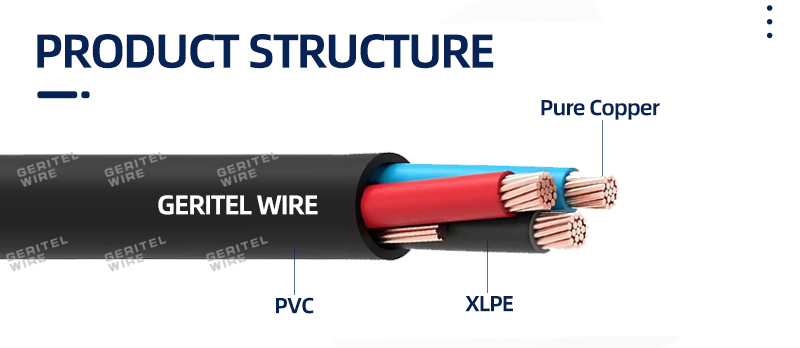
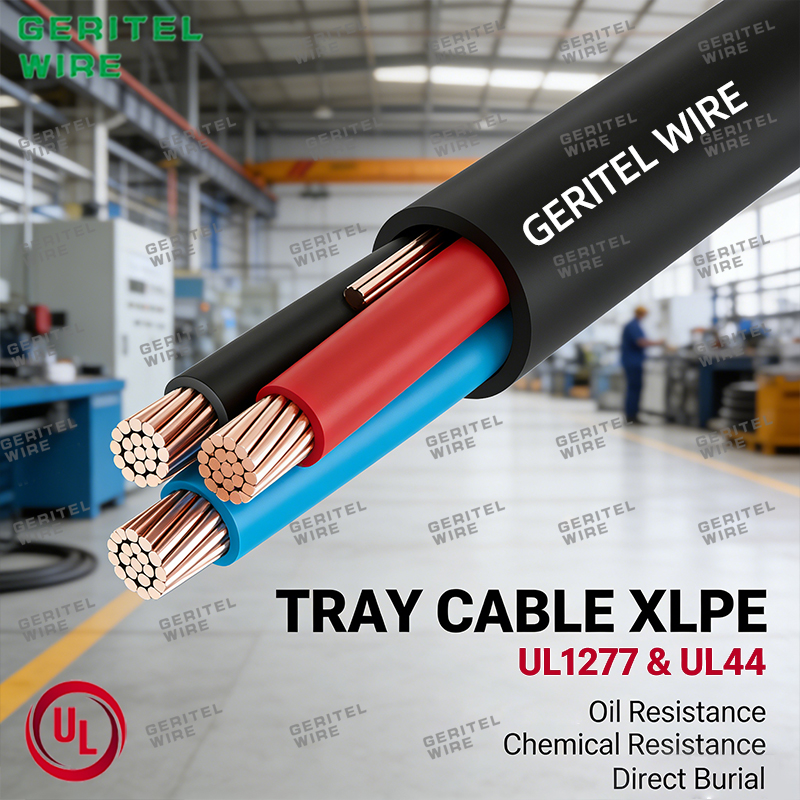
TC‑ER stands for Tray Cable with Exposed Run rating. It is certified under UL 1277 – the standard for Power and Control Tray Cable. Here’s why TC‑ER works well for pumps, compressors, and HVAC:
XHHW‑2 insulation – Cross‑linked polyethylene rated 90°C in both dry and wet locations. It resists moisture, oil, chemicals, and abrasion better than THHN. For pump rooms and rooftop HVAC units, this is a significant advantage.
Sunlight‑resistant black PVC jacket – Outdoor installations don’t crack the jacket. Indoor trays don’t worry about chemical drips. The jacket seals out moisture.
Exposed Run (ER) rating – This is the game‑changer for contractors. TC‑ER cable can be installed in cable trays without conduit, per NEC requirements. That means no pipe bending, no pulling through long conduit runs – just lay it in the tray and secure it. Labor savings are substantial.
Shielding options – For VFD‑driven motors, an overall shield (foil plus drain wire) reduces electromagnetic interference. For direct‑online starters, unshielded versions work fine and cost less.
Multiple conductor configurations – Available in 3/C, 4/C, 5/C, and more, with bare or insulated ground. For three‑phase motors, 3/C + ground (4/C total) is the most common.
Compared to THHN in conduit, TC‑ER saves installation time. Compared to MC cable, TC‑ER is lighter and more flexible, easier to route in trays. For motor power circuits in industrial and commercial buildings, TC‑ER hits the sweet spot between protection, cost, and ease of installation.
3. Three Recommended TC‑ER Cable Configurations for Motor Power
Motor loads vary widely. A small 5 HP pump is very different from a 150 HP chiller compressor. Here are three common TC‑ER cable configurations that cover the majority of pump, compressor, and HVAC installations.
Configuration 1: 12 AWG 4/C TC‑ER Cable – Small Motors (up to 5 HP)
- Typical loads: Small recirculating pumps, condenser fans, makeup air units.
- Conductors: 4 conductors (3 phase + ground), or 3/C + ground as 4/C.
- Insulation: XHHW‑2.
- Shielding: Optional – use shielded if the motor is VFD‑driven and the run exceeds 50 feet.
- Why this works: 12 AWG is easy to handle, fits in small trays, and provides adequate ampacity for fractional to 5 HP motors at 480V.
Configuration 2: 6 AWG 4/C TC‑ER Cable – Medium Motors (10–30 HP)
- Typical loads: Larger pumps, screw compressors, rooftop package units.
- Conductors: 4 conductors (3 phase + ground).
- Insulation: XHHW‑2.
- Shielding: Recommended for any VFD application. For across‑the‑line starters, unshielded is acceptable.
- Why this works: 6 AWG carries higher current without excessive heat. It’s still flexible enough for tray installation and moderate bends.
Configuration 3: 1/0 AWG 3/C TC‑ER Cable – Large Motors (50–100 HP)
- Typical loads: Large chilled water pumps, centrifugal compressors, big air handling units.
- Conductors: 3 conductors (3 phase) plus a separate ground – either bare or insulated. Some applications use 4/C with an insulated ground.
- Insulation: XHHW‑2.
- Shielding: Recommended for VFD drives over 50 HP.
- Why this works: 1/0 AWG handles high continuous currents. The larger conductor reduces voltage drop over longer runs from the panel to the rooftop or pump house.
When selecting between these configurations, consider the motor nameplate full‑load amps, the distance from the starter or VFD to the motor, and whether the cable runs through a high‑ambient‑temperature space. For longer runs, upsizing one gauge may be worth considering to manage voltage drop – but that decision should be based on actual site conditions.
4. Installation Considerations for Motor Power TC‑ER Cable
Installing TC‑ER cable for motor power circuits is straightforward, but a few points deserve attention.
Support the cable properly. For exposed runs, TC‑ER must be supported at intervals that comply with local electrical codes. Cable trays, ladder racks, and J‑hooks are all acceptable methods.
Protect against physical damage. TC‑ER is not armored. If the cable runs where it could be hit by forklifts, falling objects, or foot traffic, use additional mechanical protection – conduit sleeves or guard rails.
Shield grounding for VFDs. For shielded TC‑ER cables on VFD‑driven motors, follow the drive manufacturer’s grounding recommendation. In many cases, grounding the shield at the drive end only helps avoid circulating currents. Always verify the specific drive manual.
Keep power and signal separated. If the motor cable runs in the same tray as control or instrumentation cables, maintain reasonable separation to avoid interference. The TC‑ER cable itself may have shielding, but separation adds an extra layer of reliability.
Check jacket markings. Verify that the cable is marked “TC‑ER” and “Sunlight Resistant” for outdoor use. The UL mark and certificate number (E545150) should be printed on the jacket for traceability.
Avoid tight bends. While we don’t specify exact bend radius multipliers here (refer to the manufacturer’s data sheet for precise values), a good rule of thumb in the field is to avoid kinking and to use appropriate bending radius to prevent insulation or shield damage.
5. Common Mistakes in Motor Power Cable Selection
| Mistake | Consequence | Better approach |
| Using THHN in wet pump rooms | Insulation degradation, faults | Use XHHW‑2 TC‑ER, rated 90°C wet |
| Skipping shield on VFD motors | EMI trips, sensor noise | Specify overall shielded TC‑ER |
| Undersizing cable for long runs | Voltage drop, motor overheating | Calculate voltage drop and upsize if needed |
| Installing TC‑ER where physical impact is likely | Cable damage, downtime | Add conduit sleeves or guards |
| Not checking sunlight resistance for rooftop | Jacket cracking | Ensure “Sunlight Resistant” marking |
A common field complaint we hear: “We ran unshielded tray cable to a VFD pump and had nuisance trips for weeks.” The fix is simple – use shielded TC‑ER and ground it properly. That mistake costs time and money. It’s avoidable.
FAQ – Motor Power Cable Selection
Q1: What is the difference between TC‑ER and standard tray cable (TC)?
TC‑ER adds the Exposed Run rating. Standard TC cable requires conduit for exposed runs. TC‑ER can be installed in cable trays without conduit, saving installation time and material costs.
Q2: Can TC‑ER cable be used outdoors for pumps and HVAC?
Yes, if the cable jacket is marked “Sunlight Resistant”. The black PVC jacket on TC‑ER cable typically meets this requirement. UL 1277 certification includes sunlight resistance for outdoor‑rated cables.
Q3: Should I choose shielded or unshielded TC‑ER for motor power?
If the motor is started across‑the‑line (direct‑online), unshielded is sufficient. If the motor is driven by a VFD, shielded TC‑ER is recommended – especially for runs over 50 feet or where sensitive controls are nearby.
Q4: Is 4/C cable always required for three‑phase motors?
Most three‑phase motors require a ground conductor in addition to the three phase conductors. That makes 4/C the standard choice (3 phases + ground). Some installations use 3/C with a separate ground wire run outside the cable – but 4/C is cleaner and more common.
Q5: Does GERITEL provide UL 1277 certified TC‑ER cable for motor power?
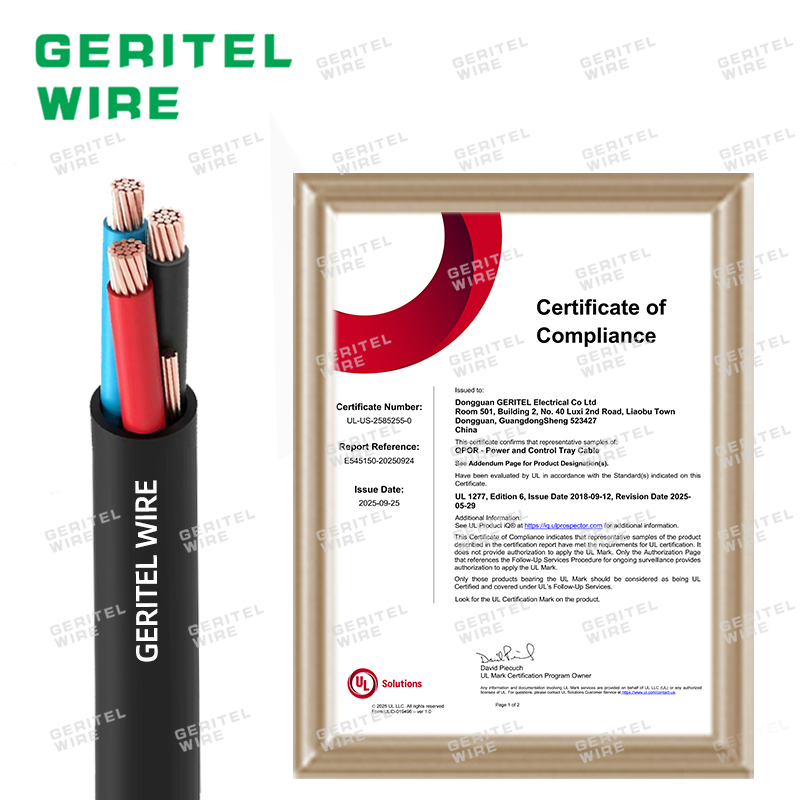
Yes. We hold UL certificate number E545150 for Power and Control Tray Cable, including TC‑ER constructions.
Need a Quote for Your Motor Power Cable Project?
Our UL 1277 certified TC‑ER cable is available in all standard gauges – from 12 AWG to 500 kcmil, shielded or unshielded, with sunlight‑resistant black PVC jacket and XHHW‑2 insulation. We supply cables for pump stations, compressor rooms, HVAC rooftop units, and industrial motor control centers.
Tell us your motor horsepower, voltage, distance, and environment (wet, dry, indoor, outdoor, VFD). We’ll recommend the right gauge and construction – and send you a quick quote.
Contact us
Dongguan GERITEL Electrical Co., Ltd.
Tel/WhatsApp/Wechat: +86 136 6257 9592
Tel/WhatsApp/Wechat: +86 135 1078 4550
Email: manager01@greaterwire.com
Website: www.geritelgroup.com
 Why Process Control Cable Is Essential in Chemical and Water Treatment Facilities



 Building 2, No. 40 Luxi 2nd Road, Liaobu Town, Dongguan City, Guangdong Province, China