


 Home
HomeWhy Control Circuit Cable Matters in Modern Industrial Automation Systems
 GERITEL
 Jun 15,2026

If you have ever spent hours troubleshooting an intermittent PLC signal fault that vanished as soon as you opened the cabinet door, you are not alone. Over 20 years of supplying control system cable for automation projects, we have found that roughly 60% of these mysterious, hard-to-reproduce failures trace back to one overlooked component: the control circuit cable.
For most automation teams, PLC hardware, robots and controls software get all the attention, while control wiring is treated as a commodity. On a modern factory floor, this is a costly mistake. High levels of electromagnetic interference from VFDs and motors, combined with constant flexing in robotic motion systems, will destroy cheap, generic control cables in months, causing unplanned downtime that costs tens of thousands of dollars per hour.
This guide is written for automation integrators, PLC engineers and control panel builders who work with 600V control systems every day. It skips basic definitions and focuses on the selection rules that eliminate signal errors and extend cable service life.
1. The Overlooked Root Cause of Intermittent Automation Downtime
Customers consistently face two recurring, expensive problems with control system cable: signal distortion and equipment malfunction caused by electromagnetic interference, and frequent cable breakage in high-flex robotic applications. Both are almost always preventable with correct specification.
· EMI Signal Distortion: The Silent Threat to PLC/DCS Control Accuracy
In a typical plant environment, VFDs, servo drives and large motor loads generate constant electromagnetic noise. When unshielded control cables run parallel to power cables, this noise couples into the signal conductors. For digital signals, this causes false triggers and communication dropouts. For 4-20mA and 0-10V analog signals, it creates measurement drift that throws off process accuracy — a problem that can take weeks to diagnose because the readings look almost correct.
Most teams try to fix this by tuning PLC parameters or replacing sensors, when the real fix is specifying the right shielded control circuit cable from the start.
· Conductor Fatigue: Why Standard Cables Fail Prematurely in Robotic Motion Systems
For robotic and drag chain applications, standard solid-core or coarse-stranded control cables will fail from metal fatigue, usually within 3 to 12 months of continuous operation. Each bend cycle stresses the copper conductors, and over thousands of cycles, individual strands break. The result is intermittent connection loss that gets worse over time, until the cable must be replaced mid-production.
This is not a wear-and-tear issue — it is a specification issue. Cables designed for fixed installation are simply not built for repeated bending, even if they carry the same voltage rating.
2. Core Selection Rules for Industrial Automation Control Circuit Cable
Reliable industrial automation wiring depends on three non-negotiable selection criteria, aligned with UL 44 and UL 1277 standards.
· Shielding Specification: Match Cable Design to Your Signal Type
Always use shielded cable for analog signal circuits, and match the shielding type to your noise environment. For general digital control circuits, a single foil shield provides sufficient protection for most factory environments. For high-precision analog signals in high-noise areas, a combination foil + braid shield delivers superior attenuation across both high and low frequency interference bands.
Shielded construction minimizes EMI for stable signal transmission, and when properly grounded at one end for analog circuits, it eliminates the vast majority of intermittent signal faults.
· Flex Rating Validation: Prevent Premature Failure in Moving Applications
Always confirm flex rating for drag chain or robotic applications to avoid premature conductor fatigue. Fine-stranded copper conductors deliver high flexibility for repeated bending, with strand counts engineered specifically for continuous flex cycles. For fixed control panel wiring, standard stranding is sufficient, but any cable installed on a moving arm, robot joint or drag chain must carry a verified flex cycle rating.
· Environmental Protection: Jackets & Armor for Factory Floor Conditions
Factory floors expose control cables to oil, abrasion, mechanical impact and moisture. Oil-resistant jackets extend service life in harsh factory environments, preventing the cracking and swelling that occurs when standard PVC is exposed to cutting fluids and lubricants.
For cable tray runs and exposed field wiring, additional protection options include:
· PVC jacket: The standard for control panel and general indoor field wiring
· Aluminum interlocked armor: For exposed tray runs requiring extra mechanical protection
· Galvanized steel armor: For high-traffic floor areas and installations at risk of physical damage
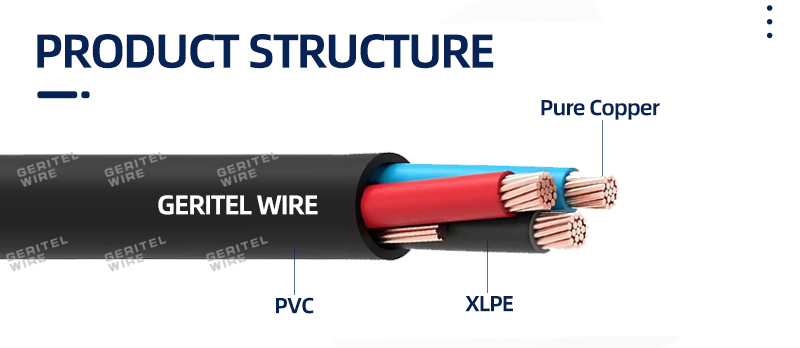
Grounding conductor options include bare ground for standard panel wiring, or insulated green ground for specifications requiring full insulation on all conductors. For higher-power control circuits, conductors may use THHN/THWN-2 or XHHW-2 insulation, all rated for 600V operation.
3. TC-ER Cable Solutions for Industrial Automation Wiring
To understand type TC-ER cable meaning for automation projects: TC-ER (Tray Cable – Exposed Run) is a UL 1277 listed multi-conductor cable approved for installation in approved cable trays without additional conduit. This makes it the most efficient solution for field-level industrial automation wiring, cutting installation labor significantly compared to conduit-based wiring.
For TC-ER cable for industrial automation, three standard gauge sizes cover nearly all control and auxiliary power applications:
· 12 AWG TC-ER cable: The most common size for PLC I/O circuits, sensor wiring, and low-power control signals, typically used in 3/C or 4/C configurations for general automation field wiring.
· 8 AWG TC-ER cable: Used for higher-power control circuits, small motor control loads, and auxiliary power distribution on automated production lines.
· 6 AWG TC-ER cable: Specified for larger control power feeds, machine main control circuits, and heavy-duty auxiliary power connections on large robotic cells.
All TC-ER constructions are available with shielded conductors for EMI-sensitive circuits, and with oil-resistant jackets for factory floor environments. UL 1277 listed TC-ER designs meet industrial automation safety standards, ensuring compliance with North American electrical codes.
4. Pre-Sourcing Validation Checklist for Control System Cable
Before requesting a TC-ER cable quotation, confirm these four details with your supplier:
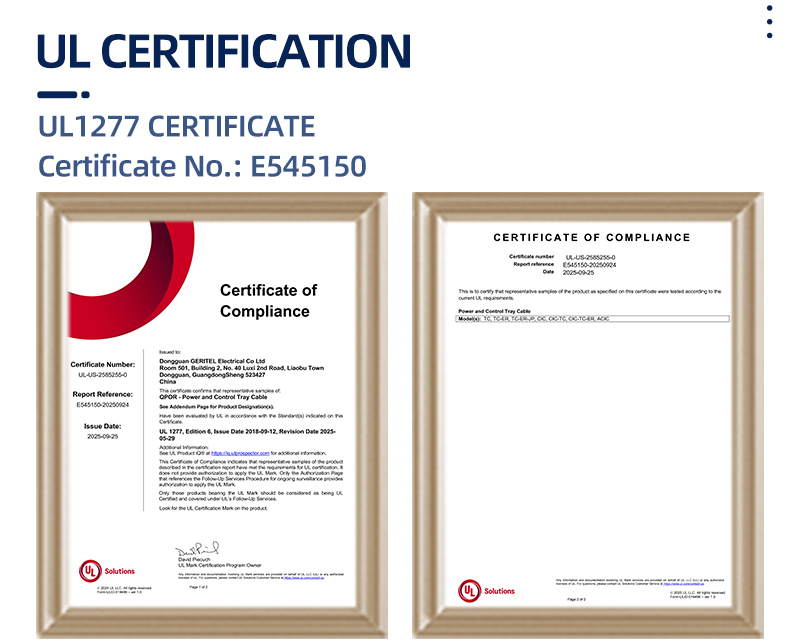
· Valid UL 1277 and UL 44 certification with traceable file numbers
· Verified flex rating for any moving or drag chain applications
· Shield construction and conductor stranding matching your signal requirements
· Jacket material rated for oil and environmental exposure on the factory floor
5. Frequently Asked Questions
Q: What does type TC-ER cable mean for automation installations?
A: TC-ER stands for Tray Cable – Exposed Run. It is a UL 1277 listed multi-conductor cable approved for installation in approved cable trays without conduit, making it ideal for efficient industrial automation field wiring.
Q: Do all control circuit cables need shielding for PLC systems?
A: Shielding is mandatory for analog signal circuits and recommended for all digital circuits in high-noise factory environments. For low-noise control panel interior wiring, unshielded cable may be sufficient.
Q: Can TC-ER cable be used for robotic motion applications?
A: Standard TC-ER cable is designed for fixed tray installation. For robotic and drag chain applications, specify a high-flex TC-ER construction with fine-stranded conductors and a flex-rated jacket.
Q: What voltage rating applies to TC-ER control cables?
A: UL 1277 listed TC-ER cables carry a 600V rating, suitable for nearly all industrial control and auxiliary power applications.
6. Get a Custom TC-ER Cable Quotation for Your Automation Project
As a control circuit cable manufacturer with over 20 years of production experience and full UL 44 and UL 1277 certifications, we supply shielded, flex-rated and oil-resistant TC-ER solutions tailored to industrial automation projects.
Send us your project specifications, gauge requirements and application details today, and we will provide a competitive TC-ER cable quotation with fully verified UL-compliant specifications.
Dongguan GERITEL Electrical Co., Ltd.
Tel/WhatsApp/Wechat: +86 136 6257 9592
Tel/WhatsApp/Wechat: +86 135 1078 4550
Email: manager01@greaterwire.com
Website: www.geritelgroup.com
 Best Industrial Wiring Solutions for Manufacturing Plants and Processing Facilities



 Building 2, No. 40 Luxi 2nd Road, Liaobu Town, Dongguan City, Guangdong Province, China