


 Home
HomeWhat Distinguishes THHN/THWN-2 from XHHW/XHHW-2?
 GERITEL
 Mar 23,2026

When buyers search for “THHN vs XHHW differences,” “THHN/THWN-2 vs XHHW/XHHW-2 comparison,” or “which building wire is better,” what they truly need is not vague recommendations but a clear, side-by-side understanding of how these two cable types differ in structure, performance, and application, because only by focusing strictly on their technical distinctions can engineers, contractors, and procurement professionals make accurate and confident decisions.
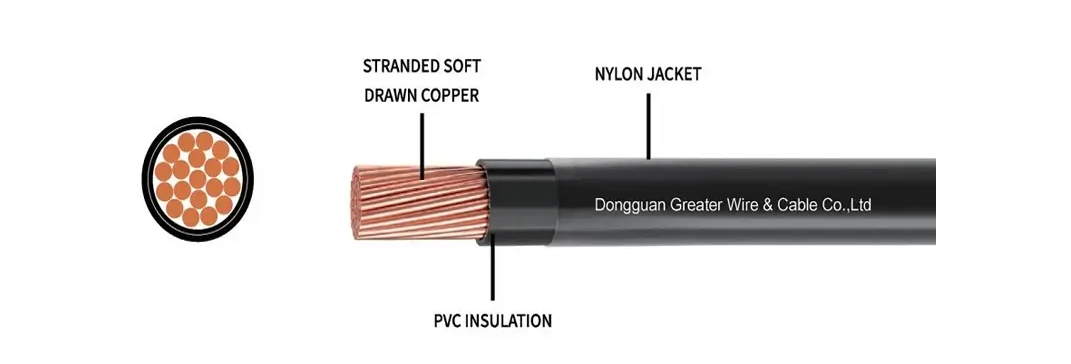
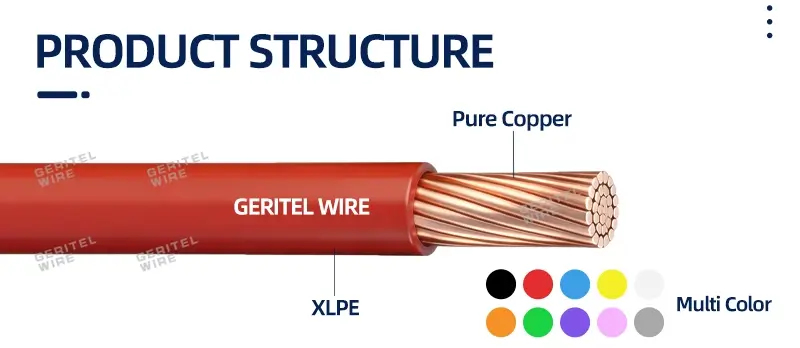
Insulation Structure: PVC + Nylon vs XLPE
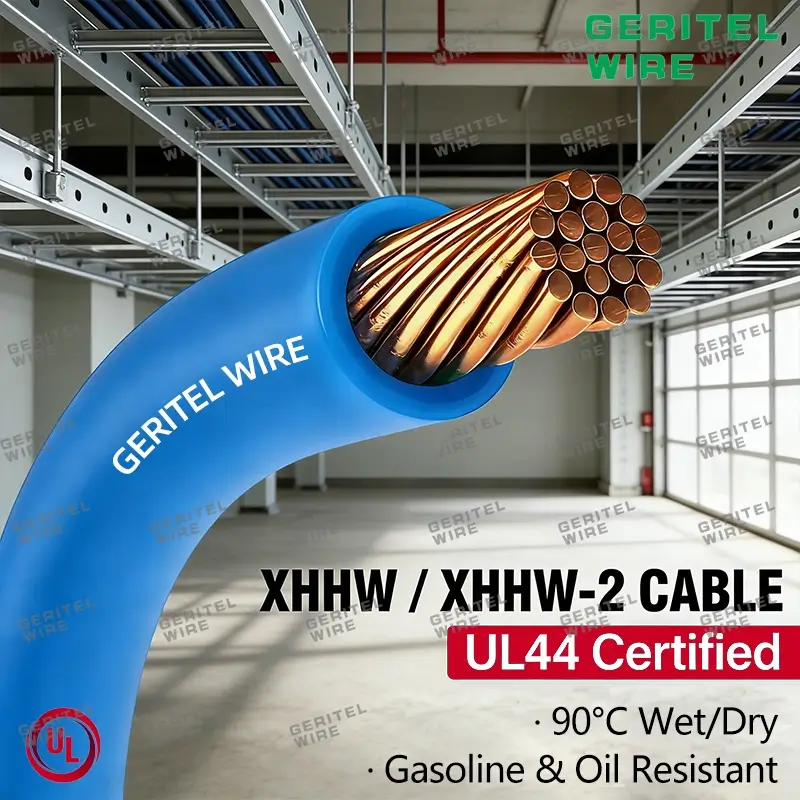
The most direct difference between THHN/THWN-2 wire and XHHW/XHHW-2 cable lies in their insulation systems, because THHN/THWN-2 uses polyethylene chloride (PVC) insulation combined with a nylon outer jacket, which provides good abrasion resistance and flexibility, while XHHW/XHHW-2 uses cross-linked polyethylene (XLPE) insulation, which is thermoset rather than thermoplastic, meaning it does not melt under high temperatures and offers stronger molecular stability, resulting in better resistance to heat, chemicals, and environmental stress.
Temperature Ratings: Similar Numbers, Different Behavior
Although both cable families often appear similar when viewed only from rating labels, their actual thermal performance differs in practical use, because:
THHN is rated for 90°C in dry locations
THWN-2 is rated for 90°C in both wet and dry locations
XHHW is typically rated for 90°C dry and 75°C wet
XHHW-2 is rated for 90°C in both wet and dry locations
However, the key distinction is that XLPE insulation in XHHW-2 maintains its electrical and mechanical properties more consistently under prolonged heat exposure, whereas PVC-based THHN/THWN-2 may experience gradual degradation over time in high-temperature environments.
Flexibility and Handling: Ease vs Rigidity
From an installation standpoint, THHN/THWN-2 wire is more flexible, primarily due to its PVC insulation and nylon jacket, allowing it to be pulled through conduits more easily and making it suitable for complex routing paths, while XHHW/XHHW-2 cable is comparatively stiffer, because XLPE insulation is thicker and more rigid, which can make installation slightly more demanding but also contributes to greater mechanical strength and resistance to deformation.
Moisture Resistance: Comparable Ratings, Different Protection Mechanisms
Both THWN-2 and XHHW-2 are designed for wet locations, but the way they achieve moisture resistance differs significantly, because THWN-2 relies on its PVC insulation and nylon jacket to resist water penetration, while XHHW-2 uses XLPE insulation, which has inherently lower water absorption and superior resistance to moisture migration, making it more stable in long-term wet or underground conditions.
Chemical and Environmental Resistance
A major point of differentiation appears in harsh environments, because XLPE insulation in XHHW/XHHW-2 provides stronger resistance to chemicals, oils, and corrosive substances, whereas PVC insulation in THHN/THWN-2, although adequate for general applications, is more susceptible to chemical degradation over time, which means XHHW-2 is better suited for industrial settings where exposure to aggressive substances is more likely.
Electrical Performance and Insulation Integrity
From an electrical standpoint, both cable types perform reliably under standard conditions, but XHHW/XHHW-2 typically offers higher insulation resistance and better dielectric strength, due to the cross-linked structure of XLPE, which reduces energy loss and enhances overall system efficiency, especially in high-load or long-distance power distribution scenarios, while THHN/THWN-2 remains fully adequate for typical building wiring applications.
Typical Applications: General Use vs Harsh Environments
The differences in material and performance naturally lead to different application preferences, because:
THHN/THWN-2 wire is commonly used in
- Residential wiring
- Commercial buildings
- Conduit systems
- General-purpose electrical installations
XHHW/XHHW-2 cable is more commonly used in
- Industrial facilities
- Underground installations
- Power distribution systems
- High-temperature or chemically exposed environments
Service Life and Durability
Another important distinction is lifespan, because XHHW/XHHW-2 cable generally provides longer service life in demanding conditions, due to its to heat, oxidation, and environmental stress, whereas THHN/THWN-2 wire, while durable under normal conditions, may experience faster aging when exposed to continuous high temperatures or harsh environments.
Conclusion: Core Differences in One View
In summary, while THHN/THWN-2 wire and XHHW/XHHW-2 cable may appear similar in voltage rating and general use, their key differences are clearly defined by insulation material, thermal behavior, flexibility, environmental resistance, and durability, with THHN/THWN-2 offering flexibility and suitability for standard installations, and XHHW/XHHW-2 providing enhanced stability and performance in more demanding conditions, making the distinction straightforward when evaluated from a purely technical perspective.
Contact Us
Tel/Wechat/WhatsApp: +86 136 6257 9592
Email: manager01@greaterwire.com
Website: www.greaterwire.com
 Differences Between XHHW-2, RHW-2, and SIS Wire



 Building 2, No. 40 Luxi 2nd Road, Liaobu Town, Dongguan City, Guangdong Province, China