


 Home
HomeUnderstanding the Electrical Code Requirements for XHHW Wire
 GERITEL
 Jul 03,2026

1. Why Misinterpreted XHHW Wire Codes Are the Top Cause of Inspection Rejections
Veteran electrical teams know that most inspection failures do not come from poor craftsmanship, but from misread code clauses around wiring materials. For commercial buildings, industrial facilities and multi-unit residential projects, XHHW-series wire is ubiquitous in low-voltage systems, yet its code requirements are frequently misapplied—leading to drawing revisions, on-site rework, delayed project handovers and unexpected budget overruns.
A core source of confusion is the line between product standards and installation codes. Many teams assume that a wire marketed as “XHHW-2” automatically meets NEC rules. In reality, code compliance relies on two layers: the product must meet recognized safety standards, and it must be installed according to NEC scenario-specific rules. This guide demystifies both layers, with actionable checks for every stage of a project.
2. NEC XHHW-2 Wire Code Requirements: Separating Product Eligibility from Installation Rules
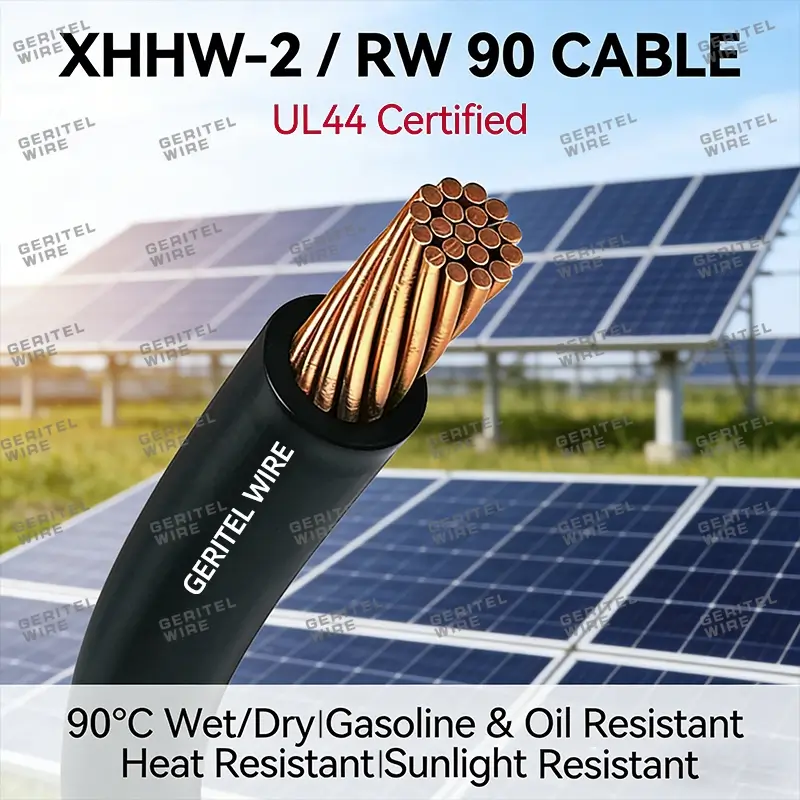
Under NEC regulations, XHHW-2 wire is classified as a general-use building wire, with clear provisions covering voltage rating, temperature limits, conductor types and application boundaries. For most 600V and below distribution systems, three core rules define its eligible use:
· Voltage scope compliance: Standard XHHW-2 600V Copper Wire aligns with NEC requirements for low-voltage power distribution, feeder circuits and branch circuits. It is approved for use in 3/C and 4/C configurations, matching the vast majority of commercial lighting, receptacle and equipment circuit designs, with options for bare ground or insulated green ground conductors to satisfy NEC grounding articles.
· Temperature and ampacity framework: NEC bases ampacity calculations on the wire’s insulation temperature rating. For example, 10 AWG XHHW-2 Copper Wire carries a 90°C base rating, which gives it a higher baseline ampacity than lower-temperature alternatives when calculated per NEC tables.
· Flame and raceway compatibility: XHHW-2 meets NEC flame performance requirements for in-building wiring, and is approved for installation in conduit, raceways and cable trays. For high-abuse industrial environments, variants with aluminum interlocked armor or galvanized steel armor add mechanical protection while remaining code-compliant.
It is important to distinguish this from THHN/THWN-2 wires with a standard PVC jacket. While both are common in commercial work, XHHW-2 has broader approved temperature and moisture ranges under NEC, making it a more versatile choice for projects with mixed dry and humid zones.
3. The UL 44 Standard for XHHW Wire: The Non-Negotiable Baseline for NEC Compliance
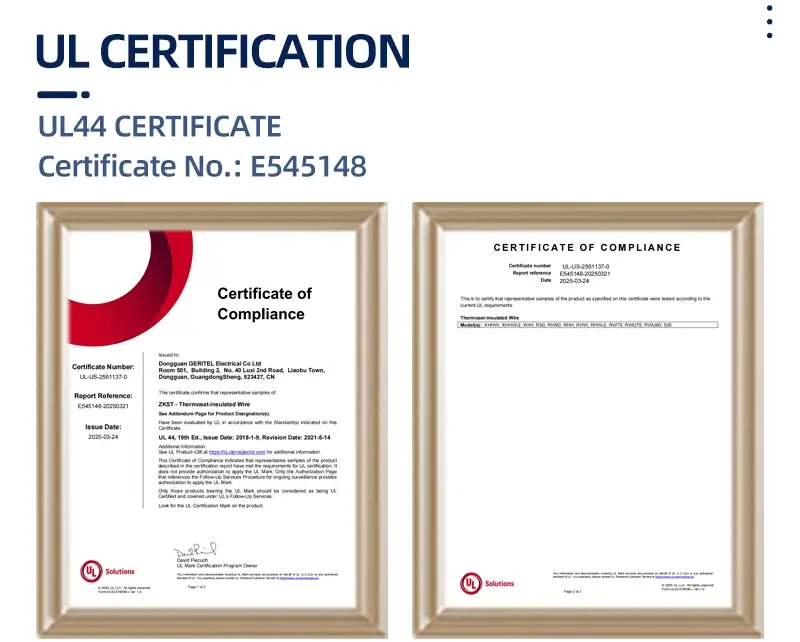
NEC does not approve wire products directly; it references nationally recognized testing standards to define acceptable products. The UL 44 standard for XHHW wire is the primary recognized benchmark for XHHW-series wire, covering conductor construction, insulation material properties, voltage withstand, temperature endurance and flame resistance.
This means UL 44 Listed XHHW-2 Wire is not a premium upgrade—it is the minimum requirement for a product to be legally installed under NEC rules. Unlisted products, even if they match the physical appearance of XHHW-2, do not satisfy code requirements and will cause immediate inspection failure. For design teams, specifying UL 44 listed product is the first and most critical step to building a code-compliant design.
Beyond basic eligibility, the parameters defined in UL 44 set the upper limits for installation. A wire’s 90°C rating, wet location approval and 600V voltage class, as verified under UL 44 testing, are exactly the values that designers use to apply NEC installation rules correctly.
4. XHHW-2 Wire Wet Location Rating: Clearing Up the Most Misapplied Code Clause
Few code topics cause more disputes than XHHW-2 wire wet location rating. Many designers and installers are unsure whether it requires derating in humid environments, or exactly which locations qualify as “wet” under code.
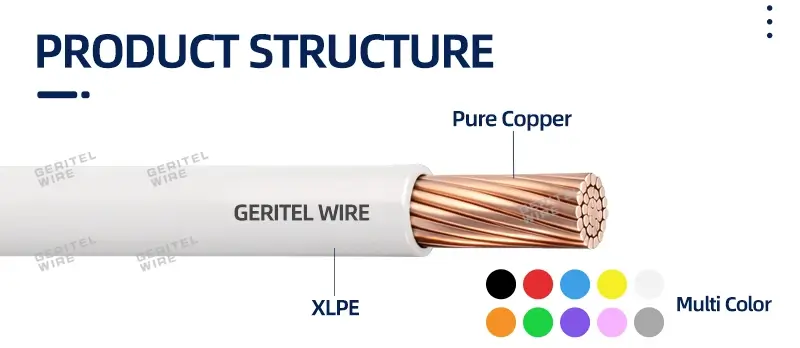
Under UL 44 and NEC alignment, 90°C Wet/Dry XHHW-2 Wire is formally approved for both dry and wet locations, with three key details that teams often get wrong:
· No automatic temperature derating for wet use: Unlike some PVC-jacketed wires that require reduced ampacity in humid conditions, 90°C rated XHHW-2 retains its full temperature rating in approved wet locations per code. This simplifies load calculations and eliminates unnecessary wire upsizing that inflates project costs.
· Approved installation scenarios: It is code-compliant for outdoor exposed runs, underground conduit runs, damp basement mechanical rooms, and commercial ceiling plenum areas prone to condensation. It is also suitable for industrial facilities with regular water washdown procedures.
· Local code amendments matter: NEC provides the national baseline, but many state and municipal jurisdictions add supplementary rules for wet location wiring. For cross-regional projects, always verify local adoption amendments to avoid rejection during jurisdiction-specific inspections.
5. Role-by-Role Compliance Checklist for Design, Procurement and On-Site Inspection
Code compliance fails when responsibility is vague. Use this role-specific checklist to embed compliance into every project stage:
· For design engineers: Confirm that specified wire matches NEC article requirements for the application; verify wet/dry rating against project environment; account for any local code amendments; specify UL 44 listing as a mandatory procurement requirement.
· For procurement teams: Only source UL 44 Listed XHHW-2 Wire; confirm that ordered gauges (such as 10 AWG XHHW-2 Copper Wire) and configurations match drawing specifications; request traceable certification documentation before delivery.
· For site supervisors and inspectors: Verify wire surface markings before installation; confirm that installation methods (raceway fill, routing, bending radius) follow NEC rules; document certification information for acceptance files.
6. How to Verify UL Listed XHHW-2 Wire Certification During Walkthrough Inspections
Inspectors and site leads do not need to dig through thick binders to confirm certification. Use this 3-step on-site verification process:
· Inspect the wire body marking: Genuine UL listed XHHW-2 wire has durable, permanent printing on the insulation that includes the UL mark, wire type designation, voltage rating, temperature rating and conductor AWG size.
· Cross-check against project specs: Confirm that the marked parameters match the drawing requirements. For example, a circuit specified as XHHW-2 600V Copper Wire should show all three values clearly on the wire surface.
· Validate traceability: For formal project acceptance, cross-reference the manufacturer’s UL certificate file to confirm the exact model falls within the active listing scope.
7. FAQ: XHHW Wire Code Questions That Trip Up Even Experienced Teams
Q1: Is XHHW-2 wire approved for underground conduit installation under NEC?
A1: Yes. 90°C Wet/Dry XHHW-2 Wire is approved for installation in underground conduit systems per NEC, as it meets the required wet location and 600V voltage qualifications.
Q1: What is the code difference between XHHW and XHHW-2 wire?
A1: XHHW has a lower maximum temperature rating and more restricted wet location eligibility. XHHW-2 has an upgraded 90°C wet/dry rating that covers a wider range of NEC-approved applications, making it the standard specification for most modern commercial projects.
Q1: Can XHHW-2 and THHN/THWN-2 wires be installed in the same raceway per code?
A1: Yes, as long as all wires in the raceway have insulation ratings appropriate for the application, and all meet NEC raceway fill requirements. The lowest temperature rating among the conductors will govern the overall circuit ampacity.
8. Get Code-Validated XHHW-2 Wire Documentation & Specification Support
If you are preparing for an upcoming inspection, updating project drawings, or sourcing wire for a code-critical project, our team can help. We supply full-specification UL 44 Listed XHHW-2 Wire, including XHHW-2 600V Copper Wire, 90°C Wet/Dry XHHW-2 Wire and 10 AWG XHHW-2 Copper Wire, with complete, traceable certification documentation. Contact us today to request specification sheets and certification files tailored to your project’s code requirements.
Dongguan GERITEL Electrical Co., Ltd.
Tel/WhatsApp/Wechat: +86 136 6257 9592
Tel/WhatsApp/Wechat: +86 135 1078 4550
Email: manager01@greaterwire.co
Website: www.geritelgroup.com
 What Contractors Should Know About XHHW-2 Wire Ampacity Calculations



 Building 2, No. 40 Luxi 2nd Road, Liaobu Town, Dongguan City, Guangdong Province, China