


 Home
HomeRecommended Lengths and Specifications of Common THHN/THWN-2 Cables
 GERITEL
 Mar 27,2026

When selecting THHN/THWN-2 cables for your residential, commercial, or industrial project, understanding their recommended lengths and key specifications isn’t just a matter of compliance—it’s the foundation of a safe, efficient, and cost-effective wiring system. These dual-rated cables are the industry standard for a reason, but choosing the right length, size, and specs for your specific use case is critical to avoiding mistakes, reducing waste, and ensuring long-term reliability. In this guide, we’ll break down the recommended packaging lengths, core specifications, parameter differences between THHN and THWN-2, specific use scenarios paired with matching specs, and the risks of incorrect selection—all centered on helping you master the lengths and specifications that make THHN/THWN-2 the right choice for any project.
Core Specifications of THHN/THWN-2 Cables (Non-Negotiable Basics)
Before diving into lengths, it’s essential to understand the core specifications that define THHN/THWN-2 cables—these specs dictate where, how, and how well the cable performs. Below are the critical details you need to know, including key parameter differences between THHN and THWN-2 (a common source of confusion for many professionals):
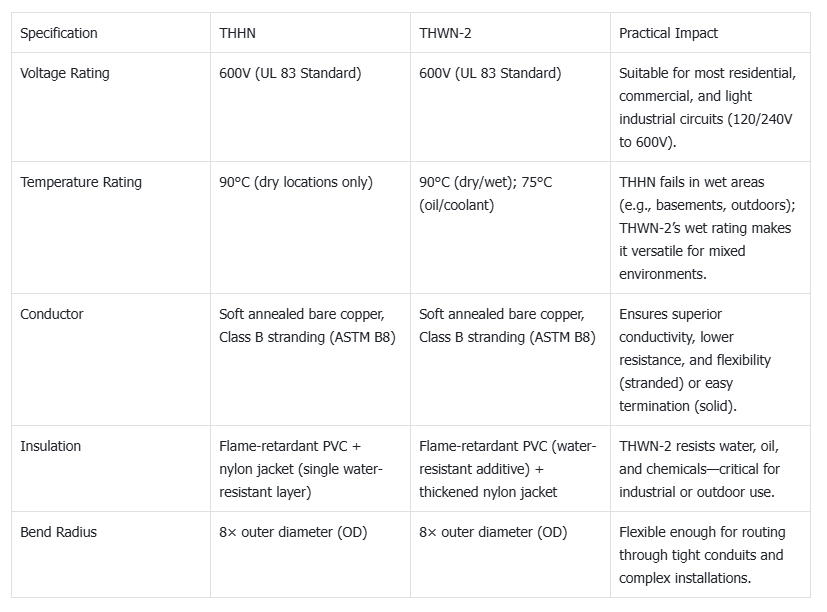
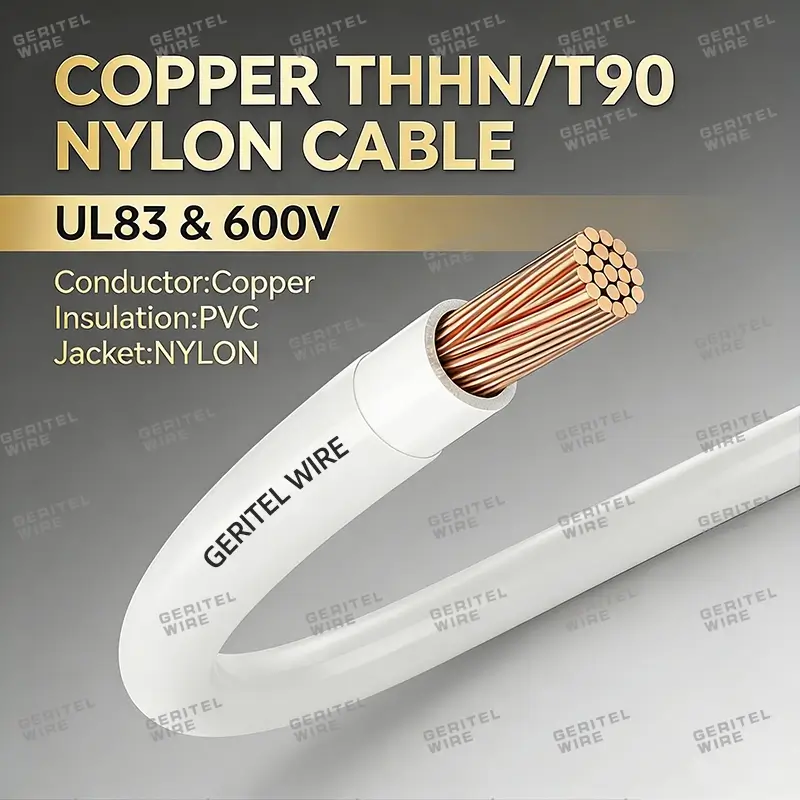
The dual rating of THHN/THWN-2 means you get the best of both worlds: the heat resistance of THHN wire dry location rated 90C for dry indoor spaces and the durability of THWN-2 copper wire wet dry rated, harsh, or oil-exposed environments—all in one cable. This versatility is why these cables are the go-to for professionals, but pairing this with the right length and size is key to maximizing their value.
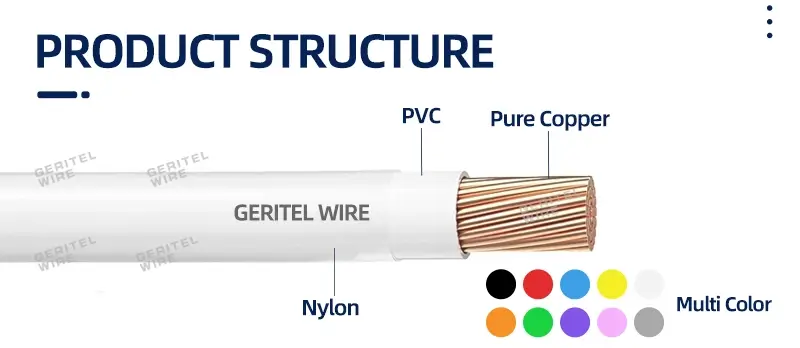
Recommended Packaging Lengths of Common THHN/THWN-2 Cables
Choosing the right packaging length is just as important as selecting the correct size—it reduces waste, cuts inventory costs, and ensures you have enough cable for your project without overspending. THHN/THWN-2 cables are available in standard lengths tailored to different project sizes, with packaging options designed for ease of storage and installation. Below are the recommended lengths for common cable sizes:
1. Small Sizes (14–10 AWG) – Ideal for Residential & Light Commercial Use
These sizes are most commonly used for residential lighting, outlets, and small appliance circuits, as well as light commercial branch circuits. Recommended lengths:
• 500 ft (Carton/Small Reel): Perfect for small residential projects (e.g., rewiring a single room, adding outdoor lighting) or small commercial jobs (e.g., a small retail space). Reduces waste for projects with limited cable needs.
• 1000 ft (Carton/Reel): The most popular length for residential renovations (e.g., whole-home rewiring) and small commercial builds. Balances value and practicality, with enough cable to cover most standard projects without excess.
• 2000 ft (Reel): Ideal for larger residential projects (e.g., multi-family homes) or small commercial buildings (e.g., offices under 5,000 sq. ft.). Reduces the number of reels needed, saving time on installation.
2. Medium Sizes (8–2 AWG) – Ideal for Commercial & Light Industrial Use
These sizes are used for commercial feeder circuits, HVAC systems, and light industrial machinery. Recommended lengths:
• 2500 ft (Reel): Suitable for medium commercial projects (e.g., office buildings, retail centers) and light industrial facilities (e.g., small manufacturing plants). The standard length for contractors working on mid-sized jobs.
• 5000 ft (Reel): For large commercial projects (e.g., warehouses, multi-story offices) or industrial feeder lines. Reduces downtime from reel changes and offers better value per foot.
3. Large Sizes (1/0 AWG–1000 kcmil) – Ideal for Industrial & Heavy-Duty Use
These sizes are designed for heavy-duty industrial applications, main service lines, and high-load machinery. Recommended lengths:
2500 ft (Reel): For industrial branch circuits, machinery wiring, and medium-sized industrial facilities (e.g., chemical plants, food processing plants).
5000 ft (Reel): The industry standard for large-scale industrial projects, main service lines, and high-power applications (e.g., large manufacturing plants, industrial complexes). Offers the best value for high-volume, heavy-duty use.
Key Tip: Always choose a length that slightly exceeds your project’s measured needs (5–10% extra) to account for routing, cuts, and mistakes. Using the recommended lengths above ensures you avoid overstocking (wasting money) or understocking (delaying projects).
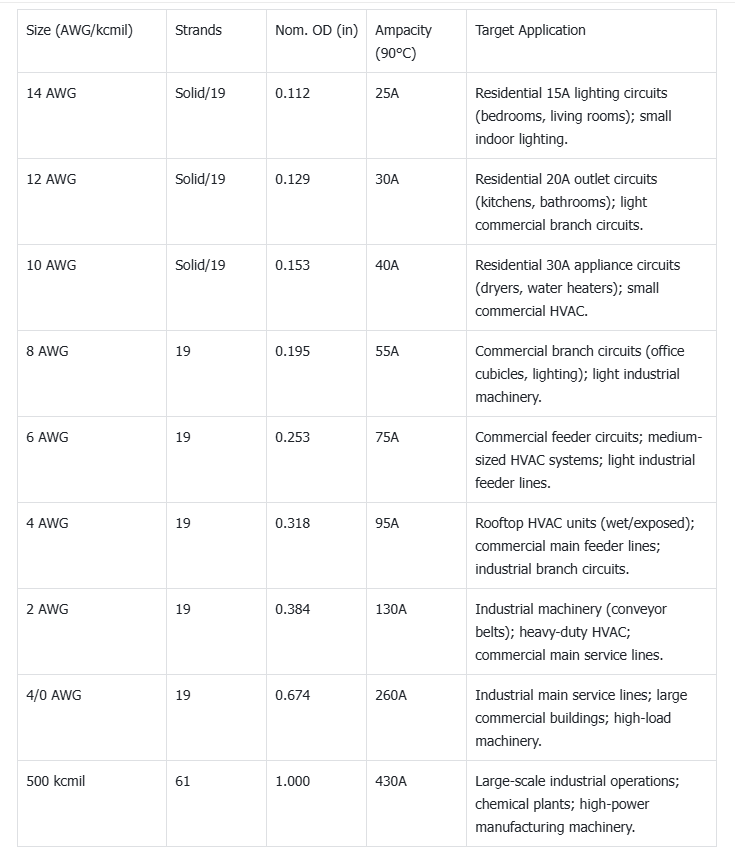
Common Sizes, Specs, and Their Target Applications
To get the most out of THHN/THWN-2 cables, you must match the cable size (AWG/kcmil) to your project’s load and environment. Below are the most common sizes, their key specifications, and the exact applications they’re designed for—ensuring you select the right spec for the job:
Risks of Incorrect Length & Specification Selection
Choosing the wrong length or specification for THHN copper conductor PVC nylon/THWN-2 copper conductor PVC nylon cables can lead to costly mistakes, safety hazards, and project delays. Below are the most common risks, tied directly to length and spec errors, and how to avoid them:
1. Insufficient Length – Delays & Rework
Risk: Ordering a length that’s too short (e.g., 500 ft for a whole-home rewiring that needs 800 ft) forces you to stop installation, reorder cables, and delay the project. This adds labor costs and damages your reputation with clients.
How to Avoid: Measure your project’s cable needs carefully, add 5–10% extra for cuts and routing, and use the recommended lengths above (e.g., 1000 ft for whole-home rewiring) to ensure you have enough.
2. Excess Length – Waste & Higher Costs
Risk: Ordering a 5000 ft reel for a small residential project (e.g., rewiring a single room) wastes money on unused cable and takes up unnecessary storage space. Unused cable is rarely reusable, leading to direct financial loss.
How to Avoid: Match the length to your project size—use 500–1000 ft for small residential jobs, 2500 ft for medium commercial jobs, and 5000 ft for large industrial projects.
3. Wrong Size (Ampacity/OD) – Safety Hazards & Code Violations
Risk: Using a cable with insufficient ampacity (e.g., 14 AWG for a 30A dryer circuit) leads to overheating, short circuits, and fires. Using a cable with the wrong OD (e.g., too large for a conduit) causes installation issues and fails NEC inspections.
How to Avoid: Refer to the size-spec-application table above—match the ampacity to your project’s load (e.g., 30A circuits need 12 AWG) and ensure the OD fits your conduit size.
4. Confusing THHN vs. THWN-2 – Premature Failure
Risk: Using THHN (dry-only) in wet or harsh environments (e.g., outdoor conduit, industrial chemical areas) causes insulation breakdown, leading to premature cable failure and costly replacements.
How to Avoid: Always choose THHN/THWN-2 for mixed environments—its dual rating ensures it performs in both dry and wet/harsh conditions, eliminating the need to switch cable types.
Why Following Recommended Lengths & Specifications Matters
THHN/THWN-2 cables are designed to deliver maximum safety, efficiency, and durability—but only if you choose the right length and specifications for your project. By following the recommended lengths, matching sizes to applications, and understanding the key parameter differences between THHN and THWN-2, you’ll:
- Reduce waste and inventory costs (no overstocking or understocking).
- Ensure compliance with UL 83 and NEC standards (pass inspections on the first try).
- Avoid safety hazards (fires, electrical shocks) and premature cable failure.
- Save time on installation (fewer reel changes, no rework).
Whether you’re a contractor, electrician, or project manager, mastering the recommended lengths and specifications of THHN/THWN-2 cables is the key to delivering successful, cost-effective projects. These cables are the industry standard for a reason—but their true value comes from using them correctly.
Ready to select the perfect THHN/THWN-2 cable for your project? Contact us today to get a custom quote for your desired length and size (14 AWG to 1000 kcmil), request samples, or speak with our experts to confirm the right specifications for your use case. With the right length and specs, THHN/THWN-2 cables will keep your project safe, compliant, and built to last.
Why Choose Us?
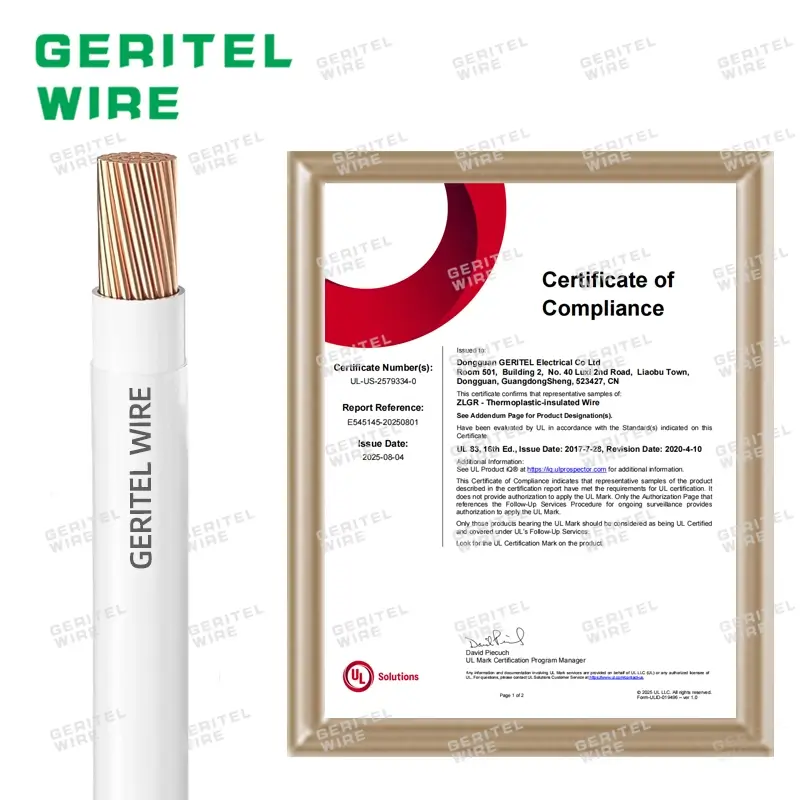
At Dongguan GreaterWire & Cable Co., Ltd., we operate state-of-the-art production equipment and implement a strict quality control system, ensuring every cable meets the highest global standards.
Contact Us:
Phone: +86 136 62579592
Email: managero1@greaterwire.com
Website: www.greaterwire.com
 Installation Tips and Safety Guidelines for THHN/THWN-2 Cables



 Building 2, No. 40 Luxi 2nd Road, Liaobu Town, Dongguan City, Guangdong Province, China