


 Home
HomeOrange Electrical Cables for Solar Installations: Key Considerations
 GERITEL
 Mar 19,2026

As the global solar market continues to expand, higher standards are being placed on the safety and reliability of electrical systems in photovoltaic projects. In real-world applications, orange electrical cables are increasingly used in solar installations, particularly on the AC side and in power distribution systems.
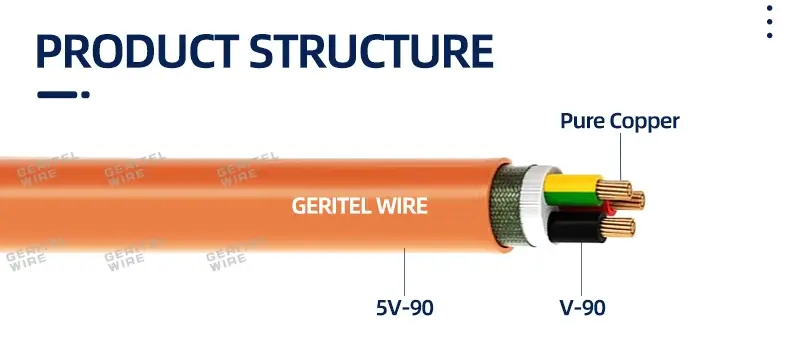
From a structural perspective, high-quality orange electrical cables are typically composed of copper conductors, XLPE insulation, and a weather-resistant outer sheath. This construction ensures excellent conductivity, strong insulation performance, and durability under harsh environmental conditions—making them well-suited for long-term outdoor solar applications.
However, with so many options available, choosing the right cable for solar installations remains a key challenge for installers, EPC contractors, and procurement professionals.
1. Why Orange Electrical Cables Are Used in Solar Systems
In solar projects, not all cables are PV DC cables. While DC cables connect panels, solar cable are widely used for AC transmission, such as connections from inverters to distribution boards.
Their bright orange sheath provides high visibility and easy identification, reducing wiring errors during installation and maintenance. More importantly, these cables are engineered for power transmission, making them more suitable for handling stable loads and long-term operation.
In practice, combining PVC cables for solar installation with properly selected electrical power cables ensures both performance and safety across the entire system.
2. Key Considerations When Selecting Orange Solar Cables
2. 1 Weather Resistance and Environmental Durability
Solar installations are exposed to sunlight, rain, and temperature fluctuations for decades. Therefore, cables must offer strong resistance to UV radiation, moisture, and heat.
High-quality orange solar cables feature durable outer sheaths designed to withstand harsh outdoor conditions without cracking or degrading. This directly contributes to the long-term reliability of the solar system.
2. 2 Electrical Safety Performance
On the AC side of a solar system, electrical cables must handle continuous voltage and current loads safely. Poor insulation or substandard construction can lead to overheating, short circuits, or even fire hazards.
When selecting orange electrical cables, it is essential to evaluate insulation quality, current-carrying capacity, and thermal stability to ensure safe long-term operation.
3. 3 Material Quality and Conductivity
The conductor material plays a critical role in system efficiency. High-purity copper is preferred due to its excellent conductivity and low resistance, which minimizes energy loss.
For insulation, XLPE is widely used because of its superior thermal resistance and electrical properties. Premium materials not only enhance performance but also reduce maintenance and replacement costs over time.
3. 4 Certification and Compliance (SAA Certification)
When sourcing cables for international projects, solar wiring certifications are a key factor in ensuring compliance and project approval.
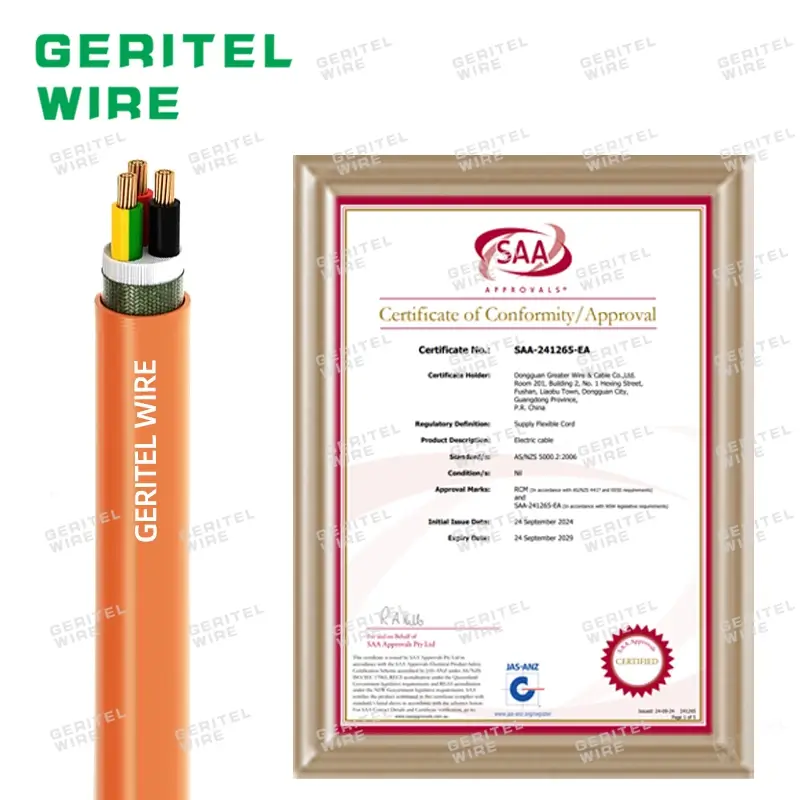
For projects targeting Australia and related markets, SAA certification is especially important. Cables with SAA certification meet strict requirements for electrical safety, durability, and performance, ensuring they are suitable for regulated solar installations.
3. 5 Ease of Installation
Installation efficiency is another important consideration, especially in rooftop or complex layouts.
Flexible and well-constructed orange electrical cables are easier to route, bend, and secure, reducing installation time and minimizing the risk of damage during handling.
4. Risks of Using Low-Quality Cables
Choosing low-cost, low-quality cables may reduce upfront expenses but often leads to significant long-term risks:
- Reduced system efficiency due to higher resistance
- Increased safety hazards, including overheating and fire risks
- Higher maintenance costs from premature aging or failure
- Compliance issues that may delay or fail project approvals
In the long run, investing in high-quality cables is far more cost-effective and reliable.
5. A Reliable Choice for High-Quality Orange Electrical Cables
In today’s competitive solar market, more professionals are prioritizing long-term reliability and compliance.
Dongguan GERITEL Electrical Co., Ltd. specializes in exporting high-quality electrical cables, including SAA-certified orange electrical cables designed for solar installations. Our products are manufactured using premium copper conductors and weather-resistant materials, ensuring stable performance even under extreme environmental conditions.
Whether for residential or commercial solar projects, our solutions provide dependable power transmission and long service life.
FAQ
Q1: Can orange electrical cables be used directly in solar systems?
A: Yes. They are mainly used on the AC side (post-inverter) and in power distribution, while DC connections typically require dedicated PV cables.
Q2: Why are orange cables preferred?
A: The orange color improves visibility and helps installers quickly identify specific circuits, enhancing safety and efficiency.
Q3: Is SAA certification necessary?
A: For projects in Australia and related markets, SAA certification is essential for compliance and approval.
Take Action: Choose Reliable Cables for Your Solar Projects
Whether you are a solar installer, EPC contractor, or procurement manager, selecting the right cables is critical to project success.
If you are looking for durable, compliant, and SAA-certified orange solar cables, we are here to help.
Email: manager01@greaterwire.com
Tel / WhatsApp / WeChat: +86 135 1078 4550 / +86 136 6257 9592
Dongguan GERITEL Electrical Co., Ltd.
Contact us today for expert advice and competitive quotations tailored to your solar installation needs.
 How Environmental Conditions Affect PVC Insulated Power Cable Performance



 Building 2, No. 40 Luxi 2nd Road, Liaobu Town, Dongguan City, Guangdong Province, China