


 Home
HomeMarshalls Renewable Energy Generation and Access Increase Project
 GERITEL
 Apr 08,2026

In late 2024, the Republic of the Marshall Islands embarked on one of the most ambitious renewable energy infrastructure projects in the Pacific region. The Renewable Energy Generation and Access Increase (REGAIN) Project, funded by the World Bank with a historic $60 million grant and implemented by the Marshalls Energy Company (MEC), represents a six-year commitment to transform the nation's energy landscape.
The project spans the main grids of Majuro and Ebeye—home to approximately 75% of the nation's population—as well as six outer islands including Arno, Ine, Jaluit, Wotje, Rongrong, and Kili. With goals to install 6.9 MW of distributed solar PV capacity and 11 MWh of battery energy storage systems (BESS), REGAIN aims to increase renewable energy share from 2% in 2017 to 20% by 2030, reducing heavy dependence on costly diesel generation.
For a nation where the average altitude is merely two meters above sea level and climate resilience is not optional but essential, every component of this infrastructure must withstand corrosive salt air, intense UV exposure, and the ever-present threat of tropical cyclones. This is where specialized cable infrastructure becomes not just important, but critical to project success.
Client Challenges
When MEC's engineering team began detailed planning for REGAIN in early 2024, they faced a procurement dilemma that many Pacific island utilities know all too well. The project required multiple cable categories—from high-voltage transmission to delicate instrumentation—all needing to comply with stringent Australian and New Zealand electrical standards (AS/NZS), yet sourced within tight construction timelines that would make even mainland projects sweat.
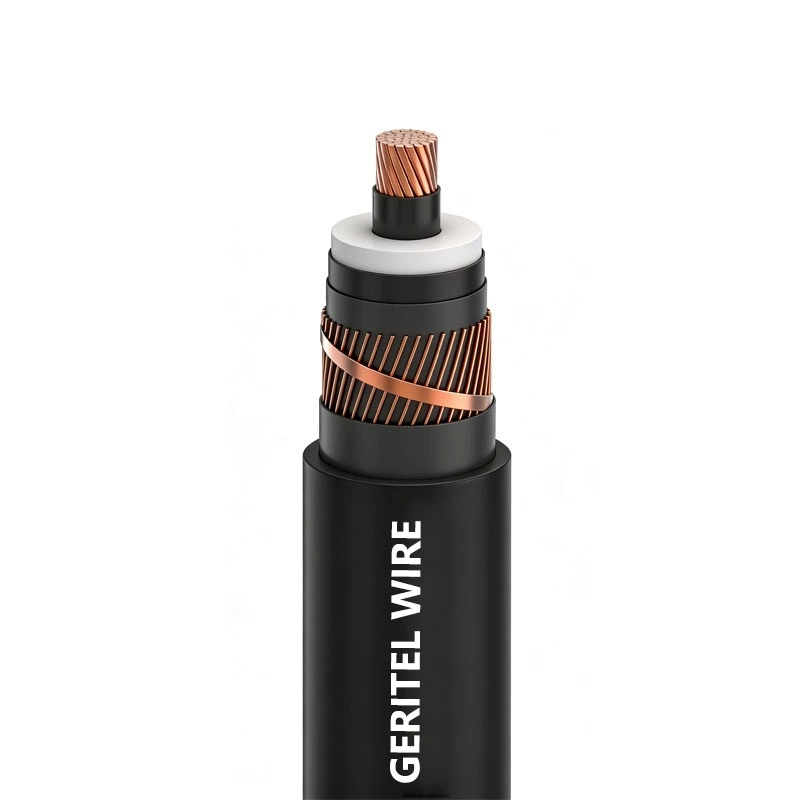
The specific pain points were threefold. First, the 6.35/11kV Medium Voltage Cable needed for solar farm grid connections and generator integration had to withstand the Marshall Islands' aggressive marine environment while maintaining voltage stability across distributed generation sites. Second, the diversity of cable types required—from 1×4mm² Solar Cable connecting panels to combiner boxes, to complex Instrumentation and Control Cables for BESS and EMS systems—demanded a supplier capable of manufacturing across the entire product spectrum without compromising quality. Third, with construction activities scheduled to commence in late 2024 and run through 2030, any supply chain delays would cascade into expensive installation setbacks and prolonged diesel dependency.
MEC needed a partner who understood that in island nations, logistics are as critical as product quality. A delayed shipment doesn't just mean waiting a week—it potentially means waiting for the next monthly vessel, or worse, paying exorbitant air freight costs that could consume the project's contingency budget.
Technical Solutions
Our engineering team approached the REGAIN project not as a simple product sale, but as an infrastructure partnership requiring deep technical alignment with the project's environmental and operational demands. The solution centered on four distinct cable categories, each engineered for specific functions within the renewable energy ecosystem.
For the backbone of the distribution network, we supplied 6.35/11kV Medium Voltage Cable with XLPE insulation and HDPE sheathing specifically formulated for UV and salt spray resistance. Unlike standard medium voltage cables rated for temperate climates, these featured enhanced moisture barriers and semi-conductive screens optimized for tropical marine environments. The three-core construction with copper conductors ensured efficient power transmission from the 3.5 MW solar installation in Majuro and 2 MW system in Ebeye back to the main grids, while the 11kV rating provided the necessary headroom for voltage fluctuations common in distributed generation systems.
The photovoltaic infrastructure demanded Solar Cable in both 1×4mm² and 1×6mm² configurations. These double-insulated, cross-linked cables were selected over standard building wire for their ability to withstand 25-year outdoor exposure without degradation. The electron-beam cross-linked insulation maintains flexibility in installation while resisting the thermal cycling that occurs as panels heat during the day and cool at night. In a project where solar arrays would be installed on school rooftops, basketball court canopies, and hospital facilities across multiple islands, using dedicated solar-rated cable rather than repurposed building wire represented a critical reliability decision.
For the Battery Energy Storage Systems and Energy Management Systems (EMS), we provided Instrumentation Cable and Control Cable with individually shielded pairs. The BESS installation includes 5.5 MWh in Majuro and 1 MWh in Ebeye, requiring precise signal transmission for state-of-charge monitoring, temperature sensing, and rapid shutdown protocols. These cables feature polyethylene insulation with overall aluminum/polyester shielding to prevent electromagnetic interference between power conversion equipment and sensitive monitoring circuits—a crucial consideration when managing lithium-ion battery banks in densely populated areas.
Finally, the internal distribution and building infrastructure utilized TPS Cable and 0.6/1kV Building Cable for the power station upgrades, distribution line rehabilitation between Airport and Laura, and the prepaid meter installations across the outer island mini-grids. These PVC-insulated, armored where necessary, cables provided the final link between renewable generation and end-users.
SAA Certification Advantage
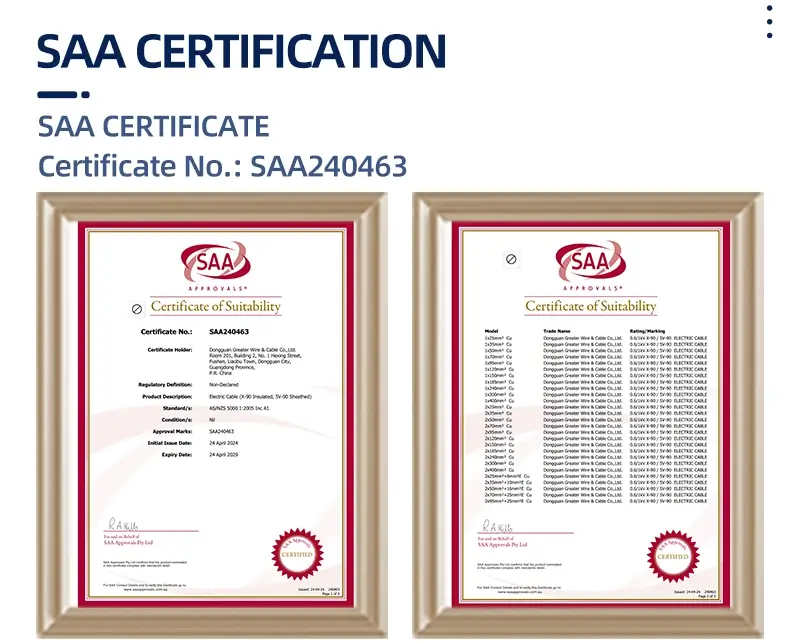
What distinguished our proposal in MEC's competitive procurement process was our comprehensive SAA certification covering the entire AS/NZS standard suite applicable to the REGAIN project. While many suppliers claim compliance with international standards, holding current SAA certification for 6.35/11kV Medium Voltage Cable under AS/NZS 1429.1, Solar Cable under AS/NZS 5033, and Control Cable under AS/NZS 3191 provided MEC with the regulatory certainty required for World Bank-funded infrastructure.
This certification wasn't merely bureaucratic checkbox compliance—it represented a fundamental quality assurance that aligned with the project's Environmental and Social Management Plan requirements. The World Bank's Environmental and Social Framework mandates that all materials meet recognized international standards, and our SAA certification streamlined the approval process, eliminating the need for costly third-party testing or extended technical evaluations that could delay procurement timelines.
Our manufacturing processes undergo regular SAA audits, ensuring that every drum of cable shipped to the Marshall Islands meets the same specifications as those installed in Australian grid-scale renewable projects. This consistency mattered to MEC's engineers, who needed to trust that cable performance in the field would match laboratory specifications, particularly for the underground installations along the Ebeye causeway where replacement would be prohibitively expensive.
Proven Project Experience
Our demonstrated track record in Pacific island renewable energy projects informed every aspect of the logistics planning. Understanding that the Marshall Islands relies on limited shipping routes, we coordinated with MEC's procurement team to consolidate shipments with critical path items, ensuring that 6.35/11kV Medium Voltage Cable arrived precisely when trenching and duct bank installation were completed, minimizing on-site storage requirements in a corrosive coastal environment.
We anticipated the bottleneck of limited shipping routes in the Marshall Islands, locking in舱位 three months in advance and reserving emergency air freight options for outer island delivery. This proactive risk management stemmed from lessons learned in previous projects—passive response comes at a high cost in the Pacific.
During the installation phase, we dispatched technical teams to guide Medium Voltage Cable termination handling and Instrumentation Cable bend radius control on-site, preventing signal degradation in BESS control systems. We provided AS/NZS standard training for local electricians, enhancing indigenous technical capabilities as part of project sustainability.
Rapid Delivery Capability
Our manufacturing agility and rapid delivery capability proved decisive during the project's initial phase. When preliminary site assessments revealed the need for additional cable quantities for the Power Station 1 building completion and the Airport-to-Laura distribution line upgrade, our manufacturing flexibility allowed us to adjust order volumes without extending lead times. This responsiveness prevented construction crew idle time—a significant cost savings in a project where skilled labor is imported and accommodation costs are substantial.
Specifically, the original order for 6.35/11kV Medium Voltage Cable increased by 30%, and Solar Cable was adjusted from primarily 1×4mm² to primarily 1×6mm² to accommodate longer array spacing. These changes were completed in production within four weeks and incorporated into the original shipping schedule. This response speed stems from our vertically integrated manufacturing system and priority production scheduling for Pacific projects.
For the six-year project concluding in 2030, this delivery reliability means MEC can confidently plan subsequent phases without needing to reserve excessive inventory or contingency budgets for cable supply.
Project Outcomes
As installation progresses through 2025 and beyond, the cable infrastructure we supplied forms the nervous system of the Marshall Islands' energy transformation. The 6.35/11kV Medium Voltage Cable now carries clean solar power from the rooftop arrays at Marshall Islands High School and the hospital facilities into the Majuro grid, while the Solar Cable in 1×6mm² connects thousands of panels across multiple sites with the reliability needed for 20-year asset lifespans.
The outer island mini-grids in Arno and Ine—previously dependent on intermittent solar home systems that had largely failed—now feature robust hybrid systems where our Control Cables manage the integration of 400kW solar PV with diesel backup generators, providing reliable electricity to 130 households, fish processing facilities, and emerging tourism infrastructure.
Most significantly, the project has achieved its procurement milestones on schedule, with our cable deliveries contributing to the overall timeline adherence that keeps the Marshall Islands on track to meet its 2030 renewable energy targets. The avoided diesel consumption—projected to be substantial once all systems are operational—represents not just economic savings, but a reduction in the fuel import vulnerability that has long challenged this Pacific nation.
Partnership Value
Reflecting on the REGAIN project collaboration, MEC's project implementation team has emphasized that the value delivered extended far beyond the cable products themselves. The technical consultation during the design phase—advising on cable sizing for the 11kV distribution loops, recommending appropriate Instrumentation Cable shielding configurations for the SCADA systems, and coordinating with the project's international engineering consultants—demonstrated a partnership approach that reduced implementation risks.
The decision to specify our cable solutions over alternatives ultimately rested on three pillars that addressed MEC's core concerns: the SAA certification that satisfied World Bank procurement standards and eliminated regulatory uncertainty; our demonstrated experience in similar Pacific renewable energy infrastructure that translated into realistic delivery schedules and logistics solutions; and our manufacturing agility that accommodated project adjustments without compromising the critical path.
For a utility managing the transition from diesel dependency to renewable integration, these assurance factors proved more valuable than marginal cost savings that might have introduced supply chain or quality risks.
Contact Us
The Marshall Islands REGAIN project demonstrates that successful renewable energy infrastructure in challenging environments requires cable partners who understand the intersection of technical standards, logistical complexity, and long-term reliability. Whether you're developing solar farms, battery storage systems, or grid modernization projects across the Pacific or beyond, the right cable infrastructure is fundamental to realizing your energy transition goals.
Dongguan GERITEL Electrical Co., Ltd. specializes in manufacturing certified cable solutions for renewable energy projects worldwide. From 6.35/11kV Medium Voltage Cable for grid integration to specialized Solar Cable, Control Cable, and Instrumentation Cable for energy storage systems, we deliver the quality certifications and project execution experience that infrastructure developers demand.
Contact us today to discuss your project requirements:
Tel/WhatsApp/WeChat: +86 135 1078 4550 / +86 136 6257 9592
Email: manager01@greaterwire.com
 Samoa Solar & Battery Energy Storage System Project (REGF1 & REGF2)



 Building 2, No. 40 Luxi 2nd Road, Liaobu Town, Dongguan City, Guangdong Province, China