


 Home
HomeLibya Tripoli International Airport Reconstruction
 GERITEL
 Apr 14,2026

Between 2019 and 2021, Tripoli International Airport in Libya's capital embarked on a large-scale post-conflict reconstruction initiative. As a critical aviation hub serving North Africa, the project encompassed rebuilding the passenger terminal, runway lighting systems, air traffic control centers, and supporting electromechanical facilities under exceptionally complex conditions.
The client—a European engineering contractor serving as the reconstruction general contractor—faced multiple severe challenges that threatened project viability.
First, regulatory compliance complexity. Operating in the North African market, Libya's electrical infrastructure needed to satisfy both IEC (International Electrotechnical Commission) standards and European EN standards, while additionally meeting specific desert climate adaptation requirements. The client's previous cable supplier delivered products with incomplete certifications, causing the first shipment to be detained at customs for two months and directly delaying the overall construction schedule.
Second, compressed delivery timelines. The airport reconstruction involved multi-national funding oversight, with project milestones monitored by international authorities. Any delay would trigger substantial penalty clauses. The client required a cable supplier capable of completing the entire process—from production to customs clearance—within 45 days.
Third, environmental adaptation demands. Tripoli sits at the northern edge of the Sahara Desert, where summer ground temperatures reach 70°C and daily temperature swings exceed 30°C. Standard cable insulation layers are prone to aging and cracking under such thermal stress. Additionally, the airport zone presented high salt-fog corrosion risks, imposing stringent requirements on cable sheath materials.
Fourth, multi-voltage integration needs. The project simultaneously involved 11kV medium-voltage backbone networks, 380V low-voltage distribution, fire emergency systems, and precision equipment power supplies. The client sought to reduce supplier count to minimize coordination costs, yet struggled to identify a single specialized manufacturer capable of covering the full voltage spectrum.
Requirements Analysis and Customized Solution Development
During initial project engagement, our technical team avoided rushing to quotation. Instead, we dispatched engineers to the client's Dubai office for three days of intensive technical alignment. Reviewing over 200 pages of technical specifications provided by the client, we identified three critical details that shaped our approach.
The client's technical team hesitated regarding medium-voltage cable installation methods—whether to use three-core integrated cables or single-core phase-separated installation. Considering Libya's extreme summer temperatures, we recommended 11kV 1×240mm² single-core medium-voltage cables with XLPE insulation in a three-phase separated installation configuration. This recommendation was based on the technical characteristic that single-core cables demonstrate 40% superior heat dissipation compared to three-core alternatives, maintaining rated current capacity even at 50°C ambient temperatures and preventing premature insulation aging from overheating.
For high-density passenger areas within the terminal building, the client initially planned to use standard PVC-sheathed cables. We raised objections: as an enclosed public space, airports require stringent control of fire smoke toxicity. The final solution was adjusted to WDZ-YJY 4×120mm² low smoke zero halogen (LSZH) cables, which achieve 60% lower smoke density than traditional PVC cables during combustion and contain no halogen corrosive gases—complying with ICAO (International Civil Aviation Organization) fire safety guidelines for airport facilities.
Regarding fire pumps, emergency lighting, and other life-safety systems, budget constraints led the client toward standard fire-resistant cables. We insisted on recommending NH-YJV 4×70mm² fire-resistant cables, which maintain power supply for 90 minutes at 950°C flame temperatures, ensuring critical systems remain operational during initial fire stages. This investment ultimately gained recognition from the client's insurance provider, reducing overall project premium costs.
Comprehensive Cable Configuration Solution
Medium-Voltage Backbone Power Network
The airport reconstruction adopted a dual-circuit ring network power supply architecture, introducing two independent sources from the municipal substation. We supplied 11kV 1×240mm² single-core medium-voltage cables totaling 12 kilometers of installation, featuring XLPE cross-linked polyethylene insulation with continuous operating temperature ratings of 90°C and short-circuit withstand of 250°C for 5 seconds. The single-core structure, combined with compact triangular bundling installation, saved 15% of cable gallery space compared to traditional three-core cables while facilitating future fault location and single-phase replacement.
Low-Voltage Main Distribution System
From the airport substation to various distribution rooms, we implemented tiered configuration using YJV 4×300mm² and YJV 4×500mm² low-voltage power cables. The 4×500mm² specification served main incoming lines carrying the entire terminal building's primary distribution load, while 4×300mm² specifications fed individual functional zones. The YJV series cable PVC sheaths incorporated UV stabilizers to adapt to Libya's intense solar exposure, extending expected service life to 25 years.
For sections crossing airport roadways, apron areas, and other zones vulnerable to mechanical damage, we specifically selected SWA 4×300mm² steel wire armored cables. The double-layer galvanized steel wire armoring withstands vertical pressures exceeding 5 tons, eliminating the need for additional conduit protection and reducing construction complexity and costs.
Building Interior Distribution and Equipment Connection
Terminal interior wiring employed a layered design approach:
Lighting circuits utilized H07V-K 1×2.5mm² single-core flexible cables, with conductors employing Class 5 stranded copper wire offering 300% superior flexibility compared to solid conductors—enabling easy installation within ceiling frameworks. Socket and small-power circuits were upgraded to H07V-K 1×6mm², satisfying loads up to 16A for office equipment and cleaning machinery.
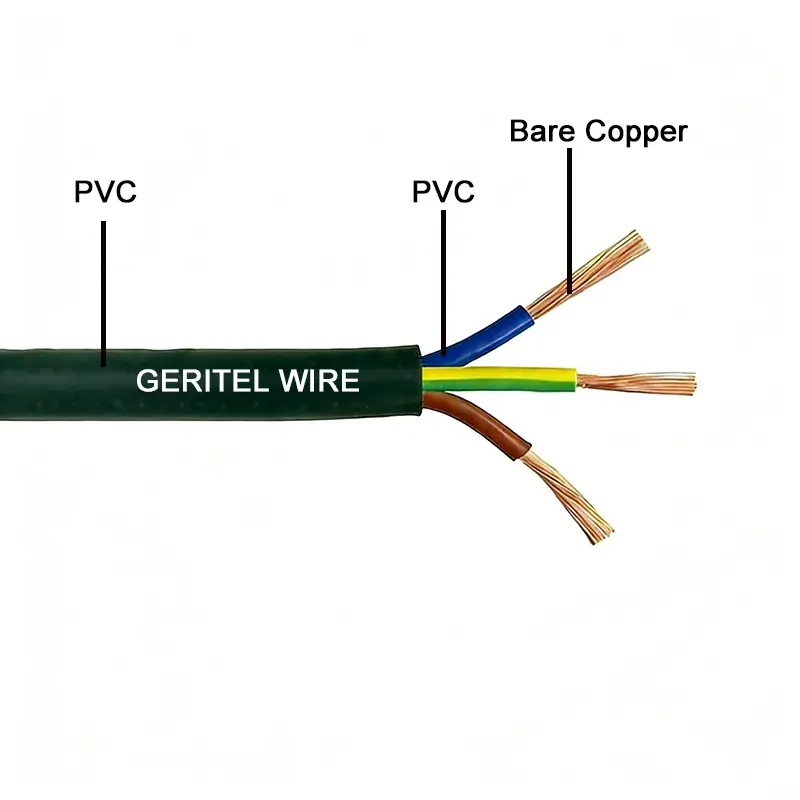
Mobile equipment and temporary power applications employed H05VV-F 3×2.5mm² multi-core flexible cables, with oil-resistant, abrasion-resistant sheaths suitable for baggage conveyors, passenger boarding bridges, and other frequently moving scenarios. High-power electromechanical equipment such as air handling units and fresh air systems received H05VV-F 5×4mm² configuration, with five-core structure (three-phase plus neutral and ground) achieving integrated power and grounding that reduces on-site wiring error risks.
The extensive application of H05VV-F multi-core flexible cables in this project resolved client concerns regarding flexible wiring reliability. Compared to ordinary rubber cables, their thermoplastic elastomer sheaths maintain flexibility across -25°C to +60°C temperature ranges while reducing weight by 20%, decreasing labor intensity for elevated installation work.
High-Security Zone Special Configurations
Critical nodes including fire control rooms and diesel generator rooms were wired with NH-YJV 4×70mm² fire-resistant cables, with mica tape wrapping insulation layers ensuring circuit integrity under fire conditions. High-density occupancy areas including check-in halls, security screening zones, and departure lounges comprehensively employed WDZ-YJY 4×120mm² low smoke zero halogen cables, passing IEC 60754 halogen-free acid gas release testing and IEC 61034 low smoke density testing—securing precious time windows for emergency evacuation.
Delivery Execution and Quality Assurance
Following contract execution, we activated a three-tier delivery assurance mechanism:
Production Phase: Our Dongguan factory opened a dedicated Libya project production line with priority scheduling. All cable conductors employed high-purity oxygen-free copper (copper content ≥99.95%), with insulation and sheath materials sourced from tier-one suppliers including Borealis and Dow Chemical. Production processes followed ISO 9001 quality management systems, with 100% inline inspection at critical processes including XLPE cross-linking and steel wire armoring.
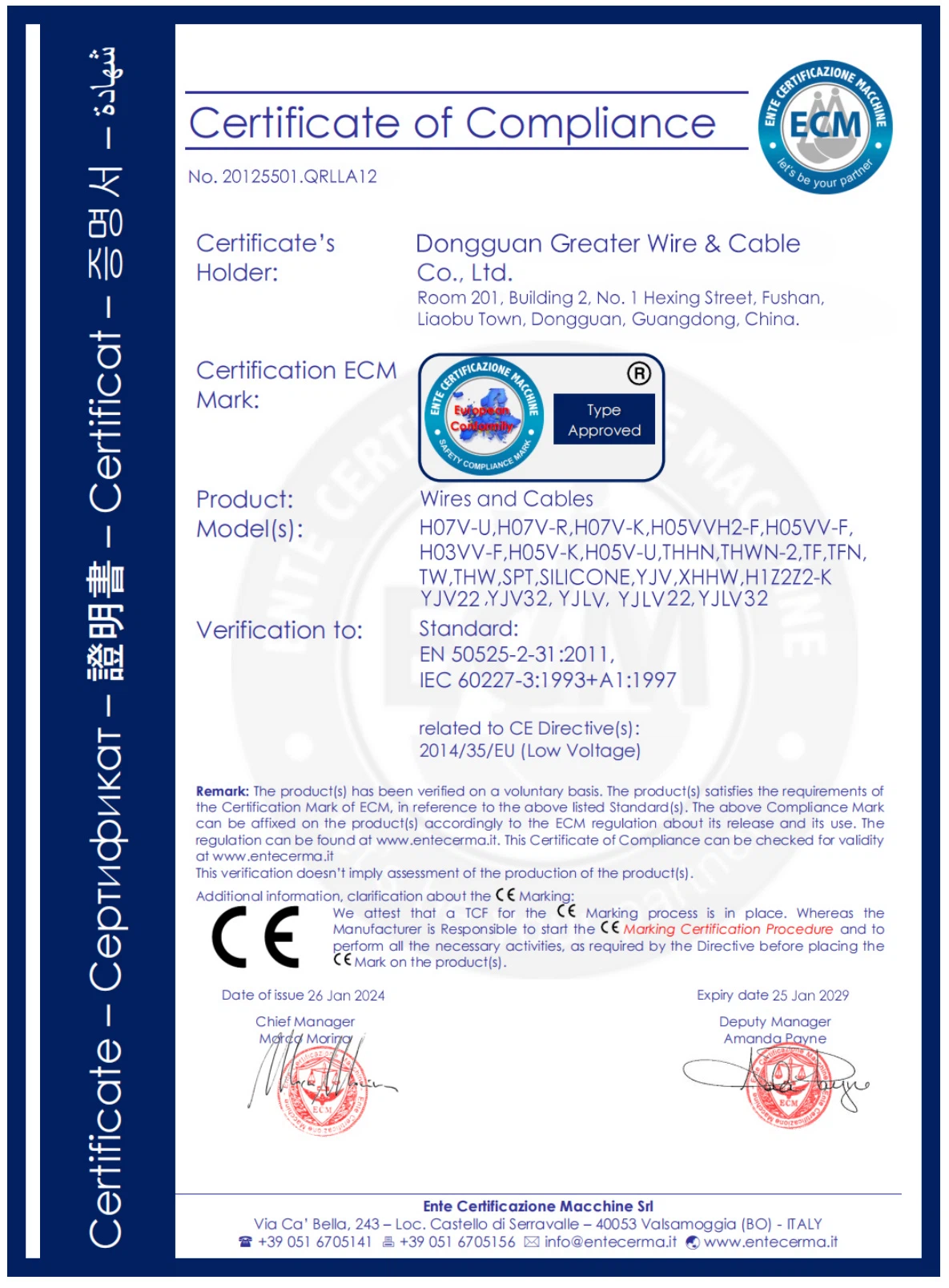
Certification Phase: Addressing strict Libyan customs supervision of electrical products, we pre-arranged type test reports for IEC 60502 (medium-voltage cables), IEC 60227 (low-voltage cables), and IEC 60332 (flame retardancy testing), engaging international agencies DEKRA and SGS for third-party inspection reports. Complete certification documentation completed embassy authentication before cargo loading, ensuring zero customs clearance delays.
Logistics Phase: We adopted a "production-complete-to-shipment" model, achieving 40 days for production and 5 days for port consolidation and customs declaration. The complete cable shipment traveled via Mediterranean route direct to Tripoli port. Upon client receipt, three days remained within the contracted 45-day delivery deadline.
Project Outcomes and Client Value
By late 2021, the Tripoli International Airport reconstruction project completed phase acceptance, with our cable systems passing joint testing by Libya's Electricity Ministry and European supervision companies on the first attempt:
Medium-voltage cable AC withstand voltage testing (2.5U0, 5 minutes) showed zero breakdown
Low-voltage system insulation resistance testing exceeded 1000MΩ across all circuits
Fire simulation exercises demonstrated fire-resistant cable continuous power supply for 92 minutes under preset fire conditions, exceeding design specifications
The client's project manager noted in internal summaries that selecting Dongguan GERITEL Electrical's core value lay in "full-category coverage capability"—eliminating the need to coordinate five different suppliers, a single procurement window addressed the complete chain from 11kV medium-voltage to equipment flexible cables, reducing coordination costs by 40%. Additionally, our "certification pre-positioning service" anticipated Libya's market access requirements, avoiding customs technical barriers, and our "extreme environment adaptation experience" provided material selection recommendations for desert climates that prevented hidden replacement costs.
This project became our benchmark case in North African airport infrastructure, subsequently leading to participation in Tripoli urban grid renovation, Benghazi port expansion, and other projects—all applying this project's quality control and delivery models.
Our Core Competencies
Comprehensive IEC/EN Certification Portfolio: Holding type test reports for IEC 60502, IEC 60227, IEC 60332, EN 50525, and other core standards, covering medium-voltage, low-voltage, control, fire-resistant, and low-smoke zero-halogen cable categories—satisfying market access requirements for Europe, the Middle East, and North Africa.
Extreme Environment Application Database: Cumulative exports exceeding 8,000 kilometers of cables to high-temperature desert regions including Saudi Arabia, UAE, Iraq, and Libya, establishing material selection models covering high-temperature aging, UV radiation, and salt-fog corrosion scenarios—providing engineering recommendations transcending standard documentation.
Flexible Delivery Response Mechanism: Standard delivery windows of 30-45 days, with emergency orders compressible to 20 days; supporting phased delivery and phased settlement to alleviate client capital pressure; providing destination port customs clearance assistance and on-site technical support value-added services.
Initiate Your Project Partnership
Whether you are contracting airports, ports, power stations, or industrial facilities, cable system reliability directly determines overall project success. We understand the compliance complexity, delivery urgency, and cost control pressures facing international engineering contractors—this is precisely where GERITEL delivers value.
Dongguan GERITEL Electrical Co., Ltd.
Tel/WhatsApp/WeChat: +86 135 1078 4550 / +86 136 6257 9592
Email: manager01@greaterwire.com
 Madagascar Ambatolampy Solar Power Plant



 Building 2, No. 40 Luxi 2nd Road, Liaobu Town, Dongguan City, Guangdong Province, China