


 Home
HomeIndustrial Equipment Cable Selection Guide for OEM Machinery Manufacturers
 GERITEL
 Jun 12,2026

Every piece of industrial machinery – from conveyors to CNC machines to packaging systems – relies on internal wiring that withstands heat, oil, vibration, and electromagnetic interference. TC-ER cable (Tray Cable with Exposed Run rating, UL 1277 listed) has become a preferred choice for OEMs because it combines flexibility, durability, and code compliance. But not all TC-ER cables are equal. This guide helps you match cable construction to your equipment’s operating conditions and explains when off‑the‑shelf is enough versus when you need custom OEM cable.
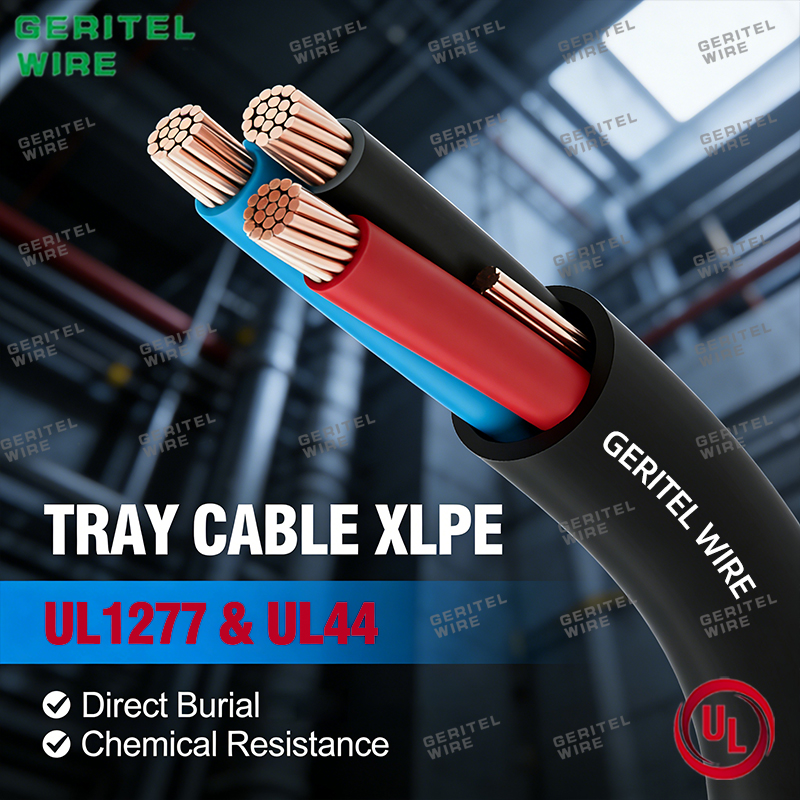
1. Why TC-ER Cable Is the Right Foundation for OEM Machinery
TC-ER cable is designed for industrial environments. Its key features directly address common failure points in factory equipment.
- Oil resistant jacket – Machinery often leaks lubricants or coolants. Standard PVC jackets can swell and crack. TC-ER with oil‑resistant compound stays intact.
- Exposed run rating (ER) – Inside a machine cabinet or along moving arms, you often cannot use conduit. TC-ER is rated for open exposure without conduit.
- Flexible stranding – Repeated motion and vibration require cables that don’t work‑harden. TC-ER’s fine‑stranded copper (or optional tinned copper) provides long‑term flex life.
- Shielding options – VFDs, servos, and contactors generate EMI. Shielded TC-ER with foil and drain wire protects sensitive signals.
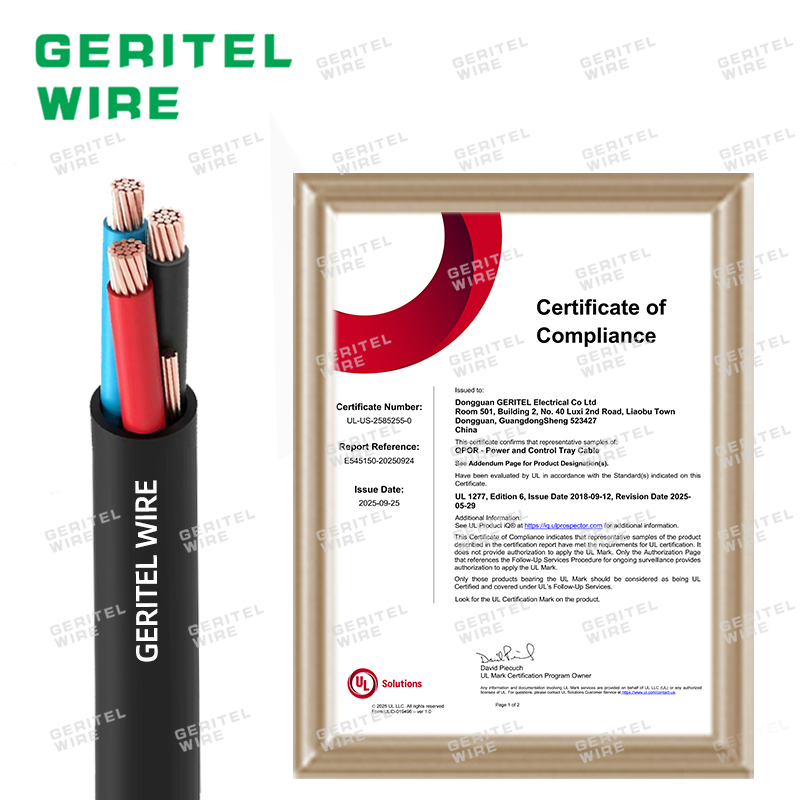
- UL 1277 listing – Validated for flame retardance, crush resistance, and impact resistance – essential for machinery approvals.
For OEMs, using a UL‑listed TC-ER cable simplifies end‑user acceptance and reduces liability.
2. Three TC-ER Cable Specifications for Common OEM Machine Types
Different machine types demand different cable constructions. Here are three typical scenarios.
Scenario A – Control cabinets and dry, clean automation cells
- Recommended cable: 16 AWG 4/C Unshielded TC-ER with THHN/THWN-2 insulation
- Why: Clean, dry environment. No VFD noise. Unshielded saves cost. 4/C provides three control wires plus an insulated ground for reliable PLC signals.
- Typical machinery: Pick‑and‑place robots, assembly stations, test equipment.
Scenario B – Machine tools with coolant mist and VFD-driven spindles
- Recommended cable: 14 AWG 4/C Shielded TC-ER with XHHW-2 insulation and oil‑resistant jacket
- Why: XHHW-2 handles heat and moisture. Oil‑resistant jacket survives coolant exposure. Shield blocks EMI from VFDs. 4/C gives dedicated ground.
- Typical machinery: CNC mills, lathes, grinding machines, machining centers.
Scenario C – Heavy conveyor systems with long runs and vibration
- Recommended cable: 12 AWG 4/C Unshielded TC-ER with XHHW-2 insulation, extra flexible stranding
- Why: Larger gauge reduces voltage drop over long conveyor distances. XHHW-2 resists temperature swings. Unshielded is fine if no VFDs. Flexible stranding extends flex life.
- Typical machinery: Belt conveyors, roller tables, automated warehouse shuttles.
These are starting points. For custom machinery, always evaluate the worst‑case environment – temperature, oil exposure, motion cycles – and select the cable that exceeds those demands.
3. Product Advantages That OEM Engineers Value Most
Oil resistance – Not all PVC jackets resist industrial oils. Our TC-ER cable uses an oil‑resistant compound that passes ASTM oil immersion tests. This prevents swelling, softening, and premature cracking.
Temperature rating – XHHW-2 insulation is rated 90°C wet and dry. In a hot machine cabinet near motors or hydraulics, this margin prevents insulation breakdown.
Shielding integrity – Foil shield with drain wire provides 100% coverage. The drain wire makes grounding simple and reliable – crucial for analog encoder feedback or 4‑20 mA signals.
Flex life – Fine copper stranding (Class I or II) resists metal fatigue from continuous flexing. For moving machine parts like cable carriers, this is non‑negotiable.
UL 1277 certification – The complete cable assembly has passed flame test (UL 1685 or IEEE 1202), crush, and impact tests. This gives OEMs a defensible specification.
4. When Do You Need OEM Custom Cable Instead of Stock?
Standard TC-ER cable works for many applications, but custom OEM cable becomes necessary when:
- Special lengths – Your machine requires exact cut lengths with custom markings. Stock reels waste material.
- Custom jacket printing – You need your brand name, part number, or CE mark on the cable.
- Mixed conductor sizes – Power conductors in 10 AWG and control conductors in 16 AWG inside one jacket. Standard cables don’t offer this.
- Unique color combinations – To match your machine’s wiring scheme or safety standards.
- Special packaging – Reel‑less coils, specific put‑ups, or sequential metering marks.
Greater Wire offers OEM services: from custom striping and printing to bespoke conductor counts. If your annual volume justifies it, we can engineer a cable that exactly matches your Bill of Materials – reducing installation time and preventing field errors.
5. Selection Reminder – Four Factors for OEM Success
From our engineering team: When selecting Industrial Equipment Cable for your OEM machinery, always evaluate:
- Environmental exposure – Oil? Coolant? UV? Temperature extremes? Choose XHHW-2 and oil‑resistant jacket for harsh conditions; THHN/THWN-2 for clean, dry areas.
- Electromagnetic noise – VFDs, servos, contactors? Use shielded TC-ER with foil + drain wire. Ground drain wire at one end only.
- Mechanical stress – Flexing, vibration, or pulling? Use fine‑stranded copper and maintain proper bend radius (6× diameter for shielded, 4× for unshielded).
- Regulatory requirements – Does your machine need UL, CSA, or CE markings? Our TC-ER carries UL 1277 and can be customized for other marks.
OEM specific tip: Order a sample spool before committing to large volumes. Test the cable under your actual machine conditions – flex cycle, oil immersion, temperature – and verify terminations.
6. UL Certifications – What the Markings Mean
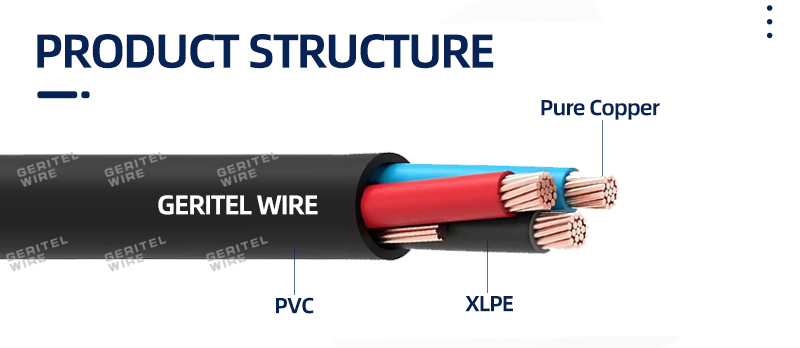
Our TC-ER cables are UL 1277 listed for Tray Cable with Exposed Run rating. Conductors with XHHW‑2 insulation comply with UL 44 for thermoset‑insulated wires. Conductors with THHN/THWN‑2 comply with UL 83 for thermoplastic‑insulated wires. The UL markings are printed on the jacket at regular intervals. These certifications ensure that the cable has passed flame, crush, and impact tests required for industrial machinery. For our UL file numbers, request the certificate from our technical team.
FAQ
Q1: Can I use standard TC-ER cable for continuous flex applications like cable carriers?
A: Not all TC-ER cables are rated for continuous flex. Look for “flexible” or “continuous flex” ratings. Our standard TC-ER works for occasional flex; for high‑cycle applications (millions of cycles), ask about our specialty flex cables.
Q2: What is the minimum bending radius for shielded TC-ER cable?
A: For shielded, minimum is 6× cable diameter. For unshielded, 4×. Exceeding this can damage the shield or insulation, leading to premature failure.
Q3: How do I ground the shield correctly in a VFD‑driven machine?
A: Ground the drain wire at the drive (controller) end only. Grounding both ends creates ground loops. Use a 360° EMC gland for best high‑frequency performance.
Q4: Does Greater Wire offer custom printing with my OEM part number?
A: Yes. We can imprint your logo, part number, and other markings onto the cable jacket. Minimum order quantities apply. Contact us with your specifications.
Need a Quote for Your OEM Machinery Cable?
Tell us your machine environment, flex requirements, conductor count, gauge, and estimated annual volume. We will recommend the right OEM Cable – from stock TC-ER to fully custom constructions – and provide a sample or quotation.
Contact us
Dongguan GERITEL Electrical Co., Ltd.
Tel/WhatsApp/Wechat: +86 136 6257 9592
Tel/WhatsApp/Wechat: +86 135 1078 4550
Email: manager01@greaterwire.com
Website: www.geritelgroup.com
 Choosing the Right Low Voltage Power Cable for Commercial and Industrial Projects



 Building 2, No. 40 Luxi 2nd Road, Liaobu Town, Dongguan City, Guangdong Province, China