


 Home
HomeImproving Factory Efficiency with Reliable Equipment Connection Wiring
 GERITEL
 Jun 18,2026

Every minute a machine sits idle costs money. Sometimes it is a breakdown. Sometimes it is a jam. And sometimes – more often than plant managers like to admit – it is a failed cable.
Cables connect the equipment. If the connection fails, the equipment stops. No production, no output, no profit. This is why reliable equipment connection wiring is not just a technical detail – it is a production priority.
This article looks at how the right wiring keeps factory equipment running and how TC-ER cable fits the needs of modern production floors.
1. The Real Cost of Unreliable Connections
When a cable fails, the visible cost is the replacement cable. The invisible cost is much larger.
- Lost production during downtime
- Labor time for diagnosis and replacement
- Disruption to downstream processes
- Overtime to catch up on missed production
Over a year, a single unreliable connection can cost thousands in lost output. Good wiring prevents these losses.
Equipment connection wiring must handle vibration, heat, oil, and movement. Cables that cannot handle these conditions fail prematurely. The machines keep running – the cables don't.
2.Three Equipment Connection Scenarios
Different equipment has different connection needs. Here are three common scenarios.
Scenario 1: Conveyor Systems
Conveyors run continuously. They vibrate. They flex. Cables must withstand constant movement and mechanical stress.
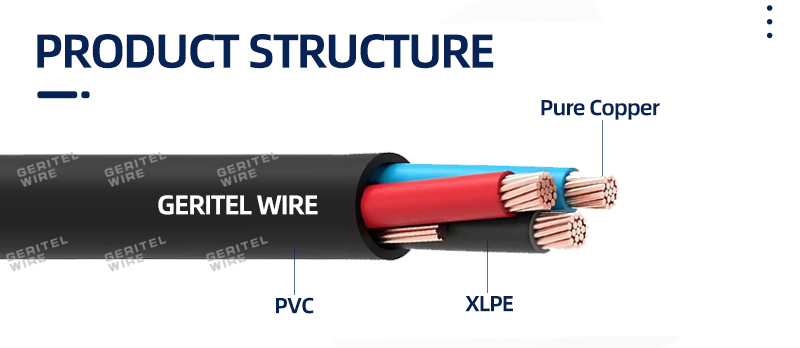
For conveyor systems, a reliable cable like TC-ER cable for conveyor systems ensures consistent power delivery to drive motors and control signals to sensors along the line. The exposed run rating allows installation directly in cable trays – no conduit needed.
TC-ER cable for conveyor systems: This configuration is designed for the continuous operation and vibration common in conveyor applications.
Scenario 2: Automated Workstations
Robotic arms, pick-and-place units, and automated assembly stations require flexible cabling that moves with the equipment. Stiff cables fight the movement and fail at connection points.
For these applications, TC-ER cable for industrial automation provides the flexibility needed. Fine-stranded conductors bend easily. The XHHW-2 insulation resists oil and abrasion from nearby machinery.
TC-ER cable for industrial automation: This cable is built for the flexibility and durability that automated equipment demands.
Scenario 3: Heavy Production Equipment
Large machines – presses, injection molders, heavy mills – draw high current over longer distances. The cable must handle the load without voltage drop or overheating.
For these applications, TC-ER cable for power cable delivers high ampacity with reliable performance. The XHHW-2 insulation maintains 90°C in wet or dry conditions, handling the heat these machines generate.
TC-ER cable for power cable: This configuration provides the ampacity needed for heavy production equipment.
3.How TC-ER Cable Improves Equipment Reliability
TC-ER cable addresses the common failure points in equipment wiring.
It flexes. Stranded conductors bend repeatedly without breaking. Equipment movement does not stress the connection.
It resists oil. XHHW-2 insulation stands up to cutting fluids, lubricants, and hydraulic oils. The jacket stays intact.
It handles heat. 90°C wet/dry rating means the cable works in warm machine environments without losing capacity.
It installs fast. The exposed run rating allows tray installation without conduit. When equipment moves or needs reconnection, the cable can be rerouted quickly.
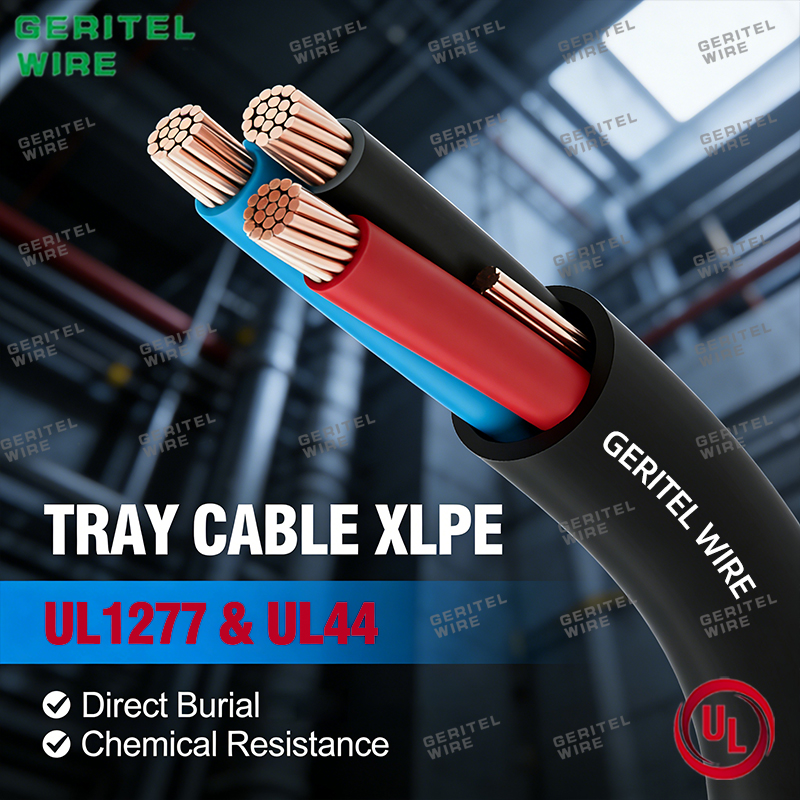
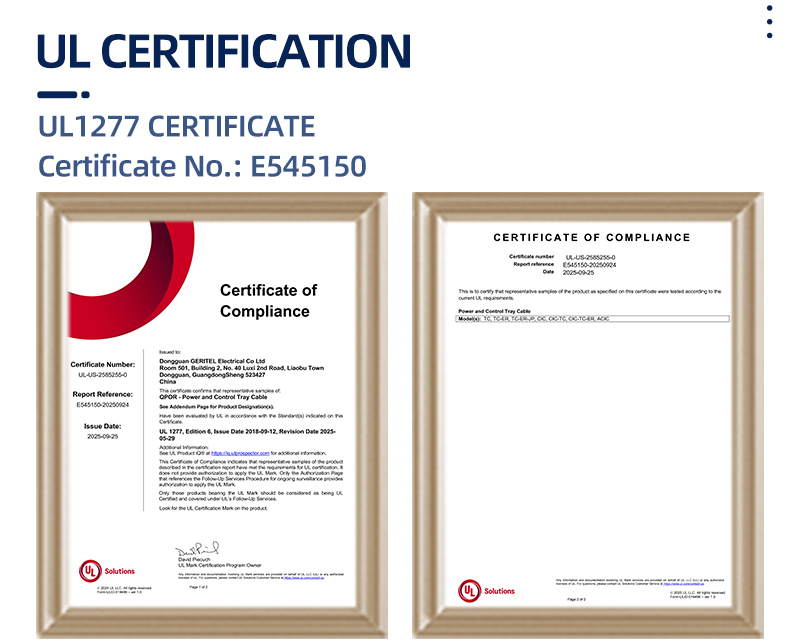
It meets standards. UL 1277 certification means the cable has been tested and approved.
4.Three Recommended Specifications
12 AWG 3/C TC-ER – Control and Small Power
Three conductors in one jacket. Used for control circuits and low-power equipment. Small size makes routing easy.
Applications: Conveyor controls, sensor power, small motors.
6 AWG 5/C TC-ER – Multiple Circuits
Five conductors in one cable. Runs power and multiple control signals together. Reduces the number of cables needed.
Applications: Automated workstations, robotic cells, packaging equipment.
1/0 AWG 4/C TC-ER – Heavy Equipment Power
Three phase conductors plus an insulated ground. Handles large loads. Manages voltage drop.
Applications: Large presses, injection molding machines, main feeders to production equipment.
FAQ
Q1: How does reliable wiring improve factory efficiency?
Reliable wiring prevents unplanned downtime. Fewer failures mean more production hours and lower maintenance costs.
Q2: What makes TC-ER cable suitable for equipment connection?
Flexibility, oil resistance, heat tolerance, and exposed run rating. It handles real factory conditions.
Q3: Can TC-ER cable be rerouted when equipment moves?
Yes. The exposed run rating allows tray installation. When equipment moves, the cable can be relaid quickly.
Q4: Does GERITEL provide UL 1277 TC-ER cable?
Yes. Dongguan GERITEL Electrical Co., Ltd. holds UL 1277 certification.
Choose the right cable for each application – 12 AWG 3/C for control, 6 AWG 5/C for automated workstations, or 1/0 AWG 4/C for heavy equipment. Keep the machines running and the output flowing.
Need a Quote?
Tell us your equipment types and connection requirements. We will recommend the right cable and send a quick quote.
Contact us
Dongguan GERITEL Electrical Co., Ltd.
Tel/WhatsApp/Wechat: +86 136 6257 9592
Tel/WhatsApp/Wechat: +86 135 1078 4550
Email: manager01@greaterwire.com
Website: www.geritelgroup.com
 Electrical Infrastructure Upgrades: Choosing the Right Cable for Industrial Expansion



 Building 2, No. 40 Luxi 2nd Road, Liaobu Town, Dongguan City, Guangdong Province, China