


 Home
HomeElectrical Infrastructure Upgrades: Choosing the Right Cable for Industrial Expansion
 GERITEL
 Jun 18,2026

For every greenfield factory build or existing plant capacity upgrade, Electrical Infrastructure Upgrade decisions directly determine whether the project stays on schedule, stays on budget, and delivers reliable performance for decades. Cable selection is often treated as a low-priority detail, but the wrong cable strategy can create cascading delays, inflated inventory costs, and uneven service life across Facility Electrical Systems. For teams managing Industrial Expansion Cable sourcing and design, shifting from fragmented multi-product setups to a standardized solution is one of the highest-impact choices you can make.
1. Why Traditional Cable Setups Derail Industrial Expansion Timelines & Budgets
Most industrial expansion projects still rely on a piecemeal cable approach: THHN/THWN-2 conductors in conduit for indoor runs, XHHW-2 for outdoor direct burial, and separate control cables for equipment connections. This model was designed for an era when each installation scenario required a dedicated product, but it creates measurable friction for modern expansion projects.
· The Hidden Complexity of Mixed Conduit & Cable Systems
Traditional tray + conduit installations require coordinating multiple material streams and trade teams. Conduit installation, wire pulling, and termination happen in sequential phases, so any delay in one step pushes back the entire electrical commissioning timeline. For tight expansion schedules, this sequential workflow is one of the top causes of missed production launch dates. The problem grows worse on sites with mixed indoor, outdoor and direct burial runs, as each segment requires different installation methods, inspection points, and quality checks.
· Multi-SKU Inventory: The Overlooked Cost of Fragmented Cable Procurement
When you source one cable for tray use, another for direct burial, and a third for equipment feeders, you multiply administrative work, warehouse space, and spare parts inventory. Beyond higher purchasing overhead, mixed cable types create uneven aging across your electrical system: one cable family may reach end of life in 15 years while another lasts 25, forcing partial system replacements and unplanned downtime. For plant operations teams, this fragmentation also complicates maintenance training and repair workflows.
2. How TC-ER Tray Cable Fixes Core Pain Points in Facility Electrical Systems
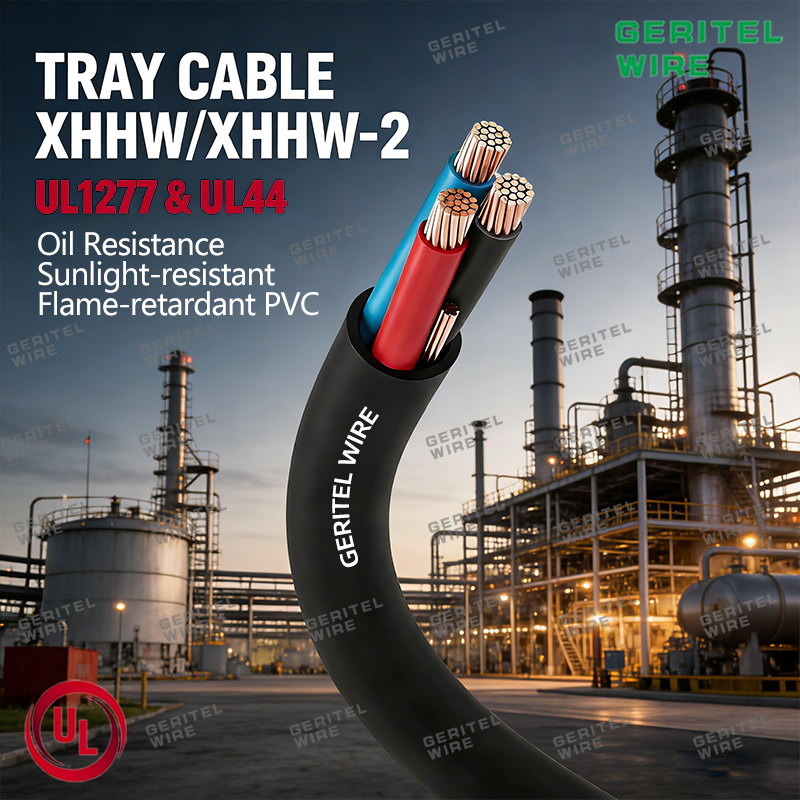
TC-ER Tray Cable was engineered to address exactly these expansion-era challenges. As a purpose-built Industrial Expansion Cable, it consolidates the performance of multiple traditional cable types into a single product family, creating value across construction, procurement and operation phases.
· One Cable for Indoor Tray, Outdoor Aerial and Direct Burial Deployments
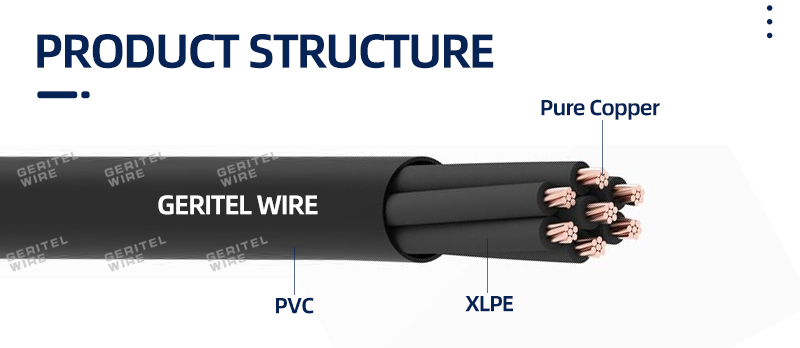
The biggest advantage of TC-ER tray cable is its multi-environment versatility. High-quality PVC jacketed TC-ER cable with appropriate armor is rated for indoor tray installation, outdoor aerial runs, and underground use as direct burial TC-ER cable. This means you can use the same product family for the entire site: from the main switchgear room, through outdoor cable runs, to machine-level connections.
For underground segments, options with aluminum interlocked armor or galvanized steel armor deliver mechanical protection without the need for full conduit runs. For above-ground outdoor sections, UV resistant TC-ER cable formulations maintain jacket integrity under long-term sun exposure. This consolidation eliminates the need to manage separate SKUs for different zones, streamlining purchasing and reducing safety stock requirements.
· Reduced Conduit Labor to Accelerate Project Commissioning
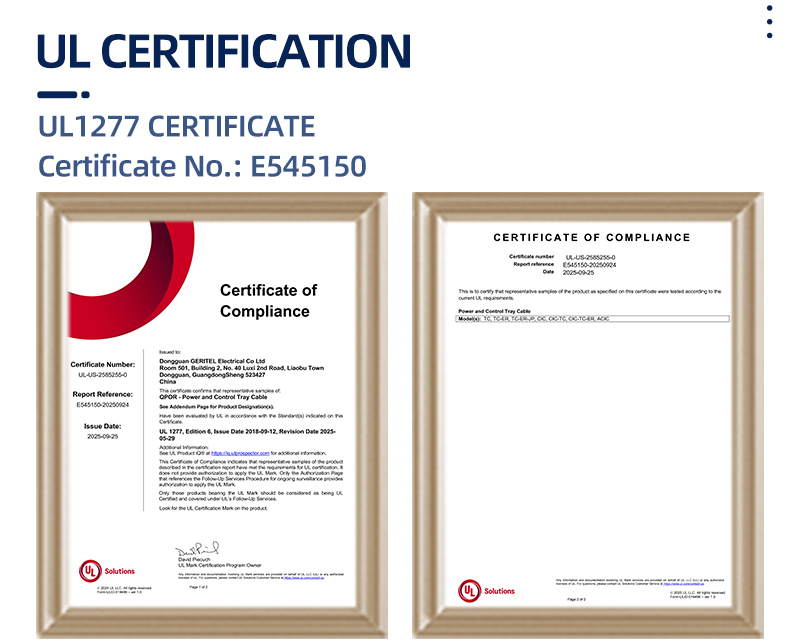
TC-ER cables with reinforced jackets are designed for open installation under UL 1277 standards, which eliminates the need for conduit in most tray and exposed run applications. For electrical contractors, this cuts installation labor dramatically: there is no conduit fabrication, no wire pulling, and fewer inspection checkpoints. For project managers, this compresses the electrical construction schedule, allowing earlier commissioning and faster time-to-production for the expanded facility. For tight expansion deadlines, this labor reduction alone often justifies the switch from traditional conductor-and-conduit setups.
· Full Voltage Range Coverage for Standardized Electrical Design
A complete multiconductor TC-ER cable portfolio covers 600V to 1000V ratings, so you can standardize on one cable family from main feeders down to branch circuits. For high-capacity main distribution runs, 500 kcmil TC-ER cable delivers the ampacity required for large switchgear feeds. For machine and panel connections, 4/C TC-ER cable configurations with bare ground or insulated green ground provide power and grounding in a single run.
With 1000V TC-ER cable available for higher-voltage distribution, engineering teams can design a fully standardized electrical architecture using one cable platform. This simplifies design work, reduces specification errors, and creates a more maintainable system for long-term plant operations.
3. Practical TC-ER Selection Framework for Greenfield & Retrofit Projects
Choosing the right TC-ER cable goes beyond picking a voltage rating. Use this structured approach to match the product to your project needs.
· Start by Mapping Your Full Distribution Architecture
Before selecting cable specs, define your full distribution hierarchy: main feeders, sub-distribution, and branch circuits. For each tier, document voltage level, required ampacity, and conductor count. As a rule of thumb, large main feeder runs will use larger multi-conductor sizes like 500 kcmil TC-ER cable, while machine and control panels typically use 3/C or 4/C TC-ER cable with an integrated ground conductor.
Confirm whether your system operates at 600V or requires a 1000V TC-ER cable rating, and align all segments to avoid mixing voltage classes across the same distribution path.
· Match Cable Construction to Site Environment Requirements
Not all TC-ER cables are built for every environment. For outdoor exposed runs, specify UV resistant TC-ER cable to prevent premature jacket degradation. For direct burial installations, select direct burial TC-ER cable with appropriate armor: aluminum interlocked armor works for most standard soil conditions, while galvanized steel armor is preferred for high-abrasion or high-stress underground paths.
For indoor tray runs in dry locations, standard PVC jacketed TC-ER cable will meet performance and cost targets. Always match the jacket and armor to the harshest segment of the cable run, rather than selecting a lower grade to save upfront cost.
· Common Specification Mistakes That Raise Long-Term Costs
The most frequent error is mixing cable grades across a single project to save per-meter cost: using non-UV TC-ER for outdoor sections or non-armored cable for direct burial. This creates weak points in the system that fail early, leading to costly repairs and production downtime.
A second mistake is over-fragmenting procurement: buying different cable brands or constructions for different building zones. While this may seem to save money on individual segments, it increases inventory cost, training complexity, and spare parts management over the facility lifecycle.
4. FAQ: TC-ER Cable for Industrial Infrastructure Upgrades
Q1: Can TC-ER tray cable be used for direct burial in industrial expansion projects?
A: Yes, properly rated direct burial TC-ER cable with appropriate armor (aluminum interlocked or galvanized steel) is designed for underground installation without full conduit enclosure, making it suitable for outdoor site runs in expansion projects.
Q2: What’s the difference between 600V and 1000V TC-ER cable for facility upgrades?
A: 600V TC-ER covers standard low-voltage branch circuits and machine feeds, while 1000V TC-ER cable supports higher-voltage main distribution and longer cable runs with lower voltage drop. Standardizing on 1000V-rated cable across the site adds future scalability for load growth.
Q3: Why choose 4/C TC-ER cable over 3/C for industrial equipment connections?
A: 4/C TC-ER cable includes three phase conductors plus a dedicated ground (either bare ground or insulated green ground) in a single cable, which simplifies installation and ensures consistent grounding for machine and panel connections. 3/C configurations require a separate grounding conductor.
Q4: Does TC-ER cable eliminate the need for all conduit in tray installations?
A: TC-ER cable with a reinforced jacket is rated for open tray installation under UL 1277, eliminating conduit for most exposed and tray runs. Conduit may still be required for specific high-risk mechanical damage zones or local code exceptions.
5. Get a Custom Cable Specification for Your Expansion Project
If you are planning an Electrical Infrastructure Upgrade for a new factory build or existing plant expansion, our technical team can help you build a standardized TC-ER cable specification tailored to your distribution architecture, site environment and timeline. Send us your project scope and single-line diagram, and we will provide a detailed cable selection proposal with construction, cost and delivery details.
Dongguan GERITEL Electrical Co., Ltd.
Tel/WhatsApp/Wechat: +86 136 6257 9592
Tel/WhatsApp/Wechat: +86 135 1078 4550
Email: manager01@greaterwire.com
Website: www.geritelgroup.com
 How to Choose a Reliable XHHW/XHHW-2 Wire Manufacturer for Your Project



 Building 2, No. 40 Luxi 2nd Road, Liaobu Town, Dongguan City, Guangdong Province, China