


 Home
HomeHow to Select the Correct XHHW Wire Size for Industrial Projects
 GERITEL
 Jul 06,2026

Industrial electrical projects are different from commercial or residential work. The environments are tougher. The loads are heavier. The conditions are more demanding. And the wire you choose has to handle all of it—not just on paper, but year after year in real-world conditions.
XHHW wire is a proven choice for industrial projects. Its XLPE insulation stands up to heat, moisture, chemicals, and physical abuse better than most alternatives. But selecting the right size is about more than just current capacity—it is about matching the wire to the application.
This guide covers the key factors in selecting the correct XHHW wire size for industrial projects, with practical guidance for common applications.
1. Why XHHW Wire Belongs in Industrial Projects
Before diving into sizing, it is worth understanding what makes XHHW wire suitable for industrial environments.
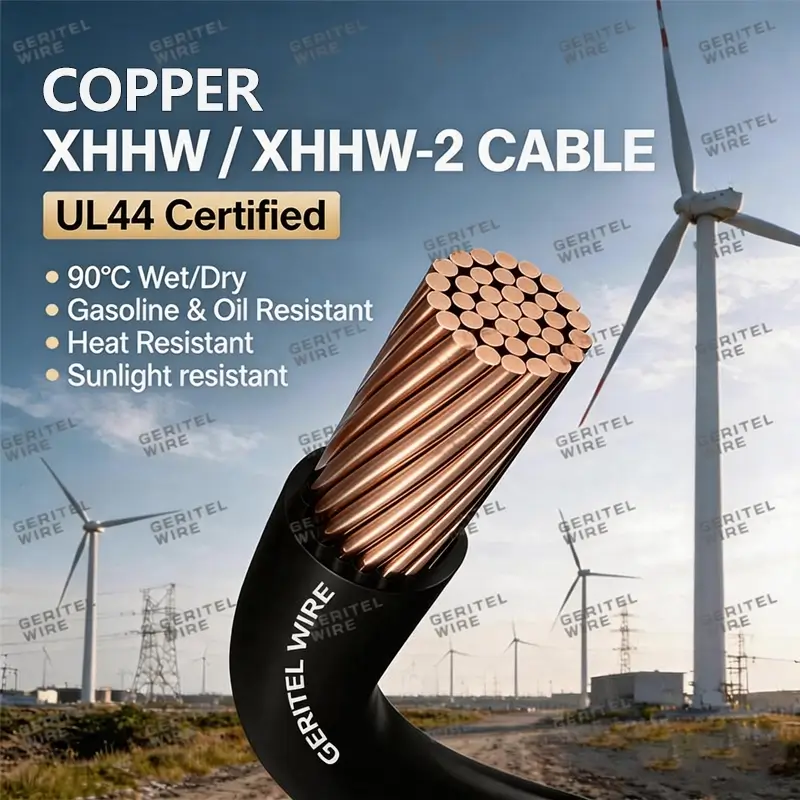
- Thermal performance. XHHW insulation is rated 90°C in dry locations and 75°C in wet locations (XHHW-2 is 90°C both). In industrial settings—boiler rooms, processing areas, outdoor equipment—temperatures can be high. XHHW's XLPE insulation retains its integrity where PVC-based insulations would soften and degrade.
- Moisture resistance. Industrial plants have water, steam, washdowns, and condensation. XHHW handles wet locations without losing its insulating properties. This makes it suitable for underground conduits, washdown areas, and outdoor installations.
- Chemical resistance. Oils, coolants, solvents, and cleaning agents are common in industrial facilities. XHHW's thermoset insulation resists chemical attack better than thermoplastic alternatives, meaning longer service life.
- Abrasion resistance. Cables are pulled through conduits, laid in trays, and routed around equipment. XHHW insulation stands up to the mechanical stress of installation and daily operation.
- Wide temperature range. XHHW performs reliably in extreme cold as well as extreme heat. It meets cold bend tests at low temperatures, making it suitable for outdoor installations in cold climates.
These performance characteristics make XHHW a practical choice for industrial power distribution, equipment feeders, and control circuits—where reliability matters and downtime is not an option.
2. Start with the Application: What Are You Powering?
The right wire size starts with understanding what the wire will power.
- Motors and motor control centers. Motors draw high starting currents. The wire must handle both the running load and the startup surge. For motor circuits, the wire size is typically based on the motor full-load current plus a safety margin.
- Welding equipment and heavy machinery. These loads are intermittent but can be very high. Wire sizing must account for the peak demand, not just the average.
- Distribution panels and sub-panels. Feeders to panels carry the sum of all downstream loads. The wire must be sized for the total connected load with appropriate demand factors.
- Lighting and HVAC. These are continuous loads. The wire must handle sustained current without overheating.
The key is to determine the continuous load—the current the circuit will carry for three hours or more. For continuous loads, the wire size should include a margin above the measured load to account for normal variations and to ensure long-term reliability.
3. Match the Environment to the Wire
Industrial environments vary widely. The same load in a climate-controlled electrical room versus a hot, dusty processing area may require different wire sizes.
- High ambient temperature. Heat is the enemy of wire insulation. In high-temperature environments—boiler rooms, foundries, rooftop installations in hot climates—the wire's ability to dissipate heat is reduced. This typically requires using a larger wire than would be needed in a cooler location.
- Bundled conductors. In cable trays and conduits, multiple conductors running together generate more heat than individual conductors in free air. The more conductors in a bundle, the more the ampacity must be reduced.
- Long runs. Voltage drop becomes a concern on long feeders. When the distance from the power source to the load is significant, upsizing the conductor may be necessary to maintain adequate voltage at the equipment.
- Wet or damp locations. XHHW performs well in wet locations, but the temperature rating in wet locations (75°C for XHHW) affects the ampacity. XHHW-2 (90°C wet) provides more capacity in damp conditions.
For a XHHW wire selection guide, understanding the installation environment is as important as knowing the load current.
4. Three Common XHHW Sizes for Industrial Applications
Here are three XHHW sizes frequently used in industrial projects, with practical guidance on where they fit.
10 AWG XHHW Wire – Branch Circuits and Small Equipment
This size is commonly used for 30A branch circuits feeding smaller equipment—motors up to a few horsepower, control panels, lighting circuits, and small pumps. It is also used for control wiring in motor control centers. The 10 AWG size is easy to terminate and flexible enough for most installation conditions. In industrial settings, 10 AWG XHHW is often specified for circuits where 12 AWG would be marginal due to voltage drop or temperature.
2 AWG XHHW Wire – Sub-Feeders and Medium Equipment
This is a workhorse size for sub-feeders in industrial plants. Typical applications include feeding 100A sub-panels, powering medium-sized motors (20-30 HP range), and supplying HVAC equipment. The 2 AWG size provides good ampacity while remaining manageable for installation crews. It is often specified for feeders that run from the main distribution panel to equipment or sub-panels in different areas of the plant.
4/0 AWG XHHW Wire – Large Feeders and Main Distribution
This size is used for main feeders and large equipment connections. Typical applications include 200A main feeders, large motors (50+ HP), service entrances, and connections from transformers to switchgear. The 4/0 AWG size carries heavy loads with minimal voltage drop, making it suitable for long feeder runs. In large industrial plants, 4/0 AWG is commonly found in main distribution systems feeding multiple sub-panels or large equipment.
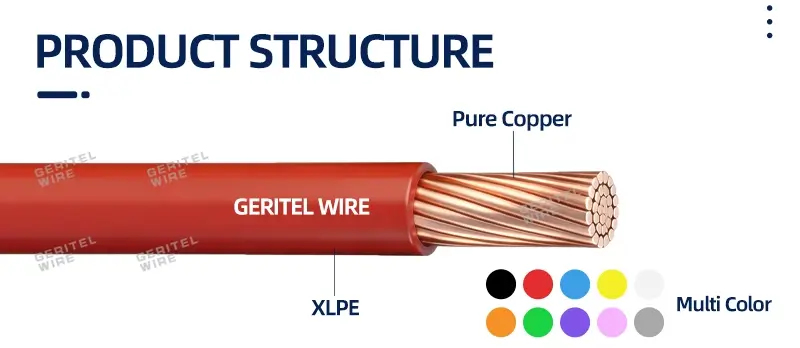
A XHHW wire size chart will show these sizes alongside their ampacity ratings. A XHHW wire ampacity table provides the detailed current ratings for each gauge under different conditions. Together, these tools help you select the right size for your application.
5. Practical Sizing Considerations
Beyond the basic factors, here are practical considerations for industrial XHHW wire sizing.
- Future expansion. Industrial plants change. Equipment is added. Processes are upgraded. When sizing feeders, consider whether future loads may be added. Upsizing the feeder now is cheaper than replacing it later.
- Voltage drop on long runs. For runs over 100 feet, voltage drop can affect equipment performance. Motors may not start reliably. Control circuits may malfunction. When in doubt, calculate voltage drop and upsize if needed.
- Termination compatibility. Larger wires require larger lugs and termination hardware. Make sure the equipment terminals can accept the wire size you select.
- Maintenance access. Consider how the wire will be accessed for maintenance and future modifications. Leave sufficient slack at termination points.
FAQ
Q1: What is the most common XHHW size for industrial branch circuits?
10 AWG is frequently used for 30A industrial branch circuits, including small motors, control panels, and lighting circuits.
Q2: Why choose XHHW over THHN for industrial applications?
XHHW's XLPE insulation offers better heat resistance, moisture resistance, chemical resistance, and abrasion resistance than THHN's PVC. It lasts longer in harsh industrial environments.
Q3: How does XHHW-2 differ from standard XHHW for sizing?
XHHW-2 is rated 90°C in both dry and wet locations. Standard XHHW is 90°C dry and 75°C wet. In wet locations, XHHW-2 provides higher capacity.
Q4: What size XHHW is typical for a 100A sub-panel feeder?
2 AWG copper XHHW is commonly used for 100A sub-panel feeders in industrial applications, providing reliable capacity with manageable installation characteristics.
Need Help Selecting XHHW Wire for Your Industrial Project?
Tell us about your project—application, environment, load, and distance. We will recommend the right XHHW/XHHW-2 wire size and provide the documentation you need.
Contact us
Dongguan GERITEL Electrical Co., Ltd.
Tel/WhatsApp/Wechat: +86 136 6257 9592
Tel/WhatsApp/Wechat: +86 135 1078 4550
Email: manager01@greaterwire.com
Website: www.geritelgroup.com
 XHHW-2 Wire for Commercial Electrical Contractors: Full Guide



 Building 2, No. 40 Luxi 2nd Road, Liaobu Town, Dongguan City, Guangdong Province, China