


 Home
HomeHow to Select Industrial Equipment Wiring for Reliable Long-Term Performance
 GERITEL
 Jun 18,2026

Most plant engineers don’t lose sleep over industrial equipment wiring — until a production line goes down for 6 hours and the root cause turns out to be cracked insulation on a 2-year-old motor feed. In industrial electrical systems, the right equipment connection cable is not a commodity; it is a direct driver of uptime, maintenance labor cost and code compliance. Too many facilities default to standard THHN/THWN-2 in conduit, only to deal with repeated failures, intermittent signal faults and expensive rework. This guide breaks down how to select wiring built for real factory conditions, with a focus on production line and VFD applications.
1. Why Standard Equipment Wiring Fails Early (And Costs You More Than You Think)
Standard building wire like THHN/THWN-2 works fine for office lighting and commercial power, but it was never designed for the stress of heavy industrial equipment. Three failure patterns account for the vast majority of premature wiring replacements and unplanned downtime.
· Oil splash, impact and thermal cycling: the silent killers of THHN/THWN-2 insulation
On a production floor, cable near machinery sees constant exposure to cutting fluids, lubricants and occasional bumps from tooling or forklift traffic. The thin nylon jacket on standard THHN/THWN-2 turns brittle and cracks after 18–24 months of regular oil contact. On top of that, every motor start ramps conductor temperature from ambient to operating heat in seconds; over thousands of start-stop cycles, low-grade insulation breaks down like a repeatedly bent paperclip. Most teams only notice the damage once a fault occurs — by which point production is already stopped.
· VFD electrical noise: why intermittent sensor faults keep costing you production hours
Variable frequency drives are standard on modern motors, but their high-frequency switching generates electromagnetic interference (EMI) that bleeds into nearby control and sensor wiring. When unshielded power and signal cables run side by side, the resulting noise causes false sensor readings, drive faults and random machine shutdowns. The worst part? These faults are intermittent. You can spend an entire shift troubleshooting a sensor or PLC, only to find the real problem is electrical noise from an adjacent VFD. For high-volume lines, a single unplanned stoppage can cost thousands of dollars per hour in lost output.
· The hidden labor tax of conduit-based equipment hookups
Almost every traditional equipment connection requires pulling individual conductors through metal conduit from the cable tray down to the machine terminal box. That means more materials, more labor and slower installs. It also means slower repairs: tracing a fault requires pulling conductors out, and modifying a circuit means rerouting conduit. For facilities that reconfigure lines regularly, this inflexibility slows changeovers and ties up electrical teams on work that adds no real value.
2. How UL 1277 Industrial TC-ER Cable Fixes These Reliability Gaps
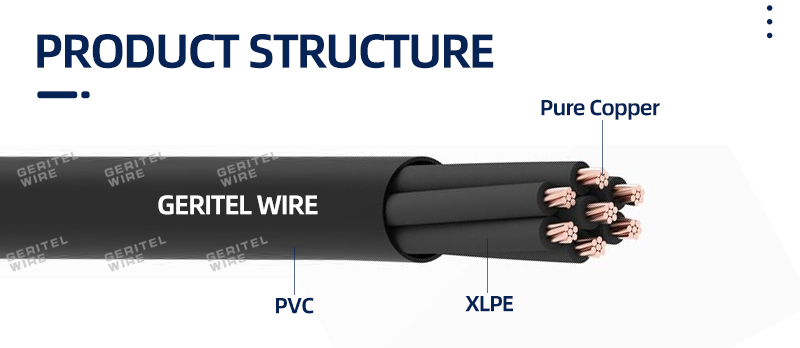
Industrial TC-ER cable, listed under UL 1277, was engineered specifically to solve the exact failure patterns that plague standard equipment wiring. Built as a complete multi-conductor assembly with a rugged outer jacket, it delivers higher mechanical durability, environmental resistance and installation flexibility than single conductors in conduit.
· Exposed run rating: eliminate the last 10 feet of conduit from tray to machine
The biggest practical advantage of industrial TC-ER cable is its exposed run (ER) rating. Under NEC Article 336, cables with three or more conductors may be installed without conduit between cable trays and equipment terminals. That means a single 3/C TC-ER cable can run directly from the tray down to a motor terminal box — no fittings, no threading, no wasted labor.
Unlike aluminum interlocked armor or galvanized steel armor MC cable, TC-ER achieves its impact and crush resistance through a thick, tested PVC jacket and robust core construction, without the added cost and weight of metal armor. For maintenance teams, this also simplifies fault tracing and circuit replacement, cutting mean time to repair during outages. Important note: only 3-conductor and larger configurations carry TC-ER exposed run approval; 2-conductor tray cable does not meet this NEC requirement.
· Built for the factory floor: oil resistance, impact strength and thermal durability
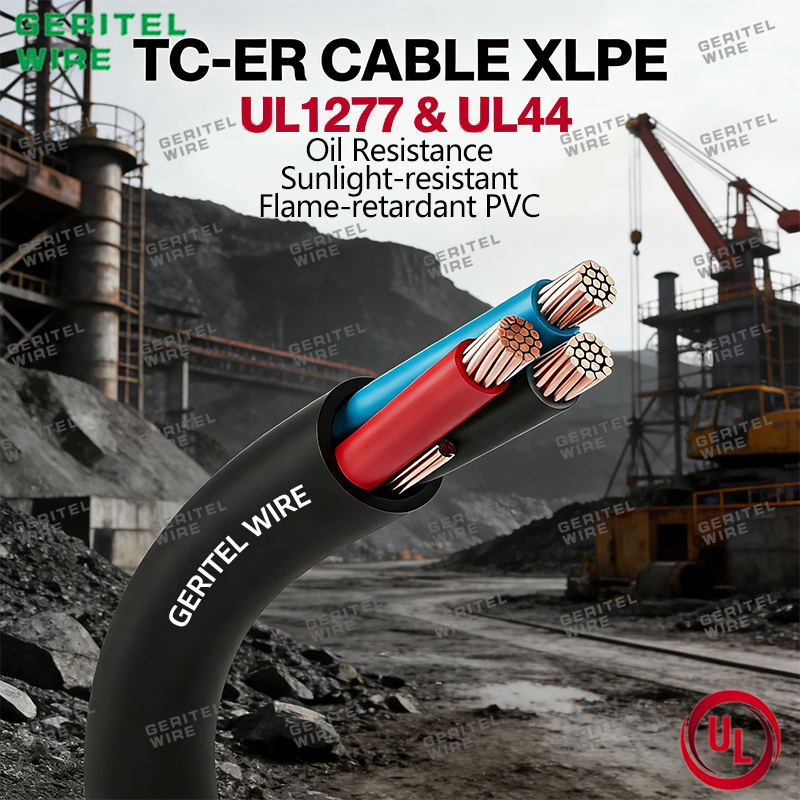
Oil resistant TC-ER cable uses a heavy-duty modified PVC jacket formulated to withstand prolonged contact with industrial lubricants and cutting fluids, so it does not crack or swell when placed directly on or near production machinery. Beneath the jacket, individual conductors use XLPE or XHHW-2 insulation rated for 90°C continuous operation in both wet and dry locations. This combination handles the thermal cycling of frequent motor starts far better than standard thermoplastic insulation, stretching service life from 2 years to 10+ in heavy-oil environments. A 600V TC-ER cable covers nearly all standard industrial equipment power and control circuits, giving you broad design flexibility across one facility.
· Shielded options: stop chasing EMI faults on VFD and control circuits
For noise-sensitive circuits, overall shielded TC-ER cable adds a metallic shielding layer that contains EMI from power conductors and blocks incoming interference from nearby VFDs and heavy equipment. This is a critical upgrade for control and instrumentation circuits, where even minor signal disruption can cause process errors or safety faults. Shielded TC-ER cable is also the standard choice for VFD control wiring, where clean signal integrity protects drive performance and prevents nuisance tripping.
3. Spec-by-Spec Selection: Match TC-ER Cable to Each Equipment Type
Picking the right configuration balances reliability and cost. Below are practical selection rules for the most common industrial equipment applications.
· TC-ER cable for motor connections: 3/C, 4/C and gauge rules
For standard three-phase motor hookups, 3/C TC-ER cable with a bare ground or insulated green ground conductor is the default choice. Smaller conveyor motors, fans and auxiliary equipment typically use 12 AWG TC-ER cable or 10 AWG sizes — always confirm full-load amperage first. Larger production motors that need a separate neutral or dedicated ground path move up to 4/C TC-ER cable. For nearly all general-purpose equipment, 600V TC-ER cable is the correct voltage rating.
· TC-ER cable for control panels: when shielding is worth the extra cost
TC-ER cable for control panels comes in both shielded and unshielded versions, and choosing the right one saves you money without risking performance. Use unshielded multi-conductor TC-ER for basic power feed to panel disconnects and relay circuits — it is reliable and lower cost. Specify overall shielded TC-ER cable for PLC I/O circuits, sensor wiring and instrumentation signals, where low-voltage signals are vulnerable to plant electrical noise. As a rule of thumb: if the panel sits within 10 feet of a VFD or welding station, shielded construction is strongly recommended to prevent hard-to-diagnose intermittent faults.
· TC-ER cable for VFD: shielding and grounding rules most teams get wrong
TC-ER cable for VFD applications requires attention to more than just gauge. For VFD power circuits running between the drive and motor, overall shielded TC-ER cable helps contain common-mode noise and reduces radiated EMI that can disrupt adjacent equipment. For VFD control and feedback circuits, shielded TC-ER is standard practice to maintain precise speed and torque control. The most common mistake is grounding the shield at only one end — for full noise reduction performance, always terminate shielding at both ends per manufacturer guidelines.
4. 5 Non-Negotiable Checks Before You Issue a Purchase Order
· Confirm system voltage matches the cable rating; 600V TC-ER cable covers most general industrial equipment applications.
· Match jacket material to the environment: specify oil resistant TC-ER cable for machinery areas with regular lubricant exposure.
· Evaluate EMI risk: select shielded TC-ER cable for VFD, sensor and instrumentation circuits.
· Verify NEC compliance: only 3-conductor and larger TC-ER cables carry exposed run approval; confirm applicable exposed run length limits for your project.
· Confirm conductor count and grounding type: choose bare ground or insulated green ground based on your project specification.
5. Frequently Asked Questions
Q1: Can all tray cable be installed without conduit?
A: No. Only TC-ER rated tray cable with 3 or more conductors is approved for exposed run installation under NEC Article 336 and UL 1277. Standard TC tray cable requires full support and protection.
Q2: What is the difference between TC-ER cable and MC cable?
A: MC cable uses aluminum interlocked armor or galvanized steel armor for mechanical protection, while TC-ER achieves impact and crush resistance through a heavy-duty PVC jacket and tested core construction. For most indoor industrial equipment hookups, TC-ER is lighter, lower cost and faster to install.
Q3: When should I use shielded vs. unshielded TC-ER cable?
A: Use unshielded TC-ER for general power circuits with low EMI risk. Use overall shielded TC-ER cable for VFD circuits, control panels, sensor wiring and any application where signal stability is critical.
6. Get a Matched Cable Spec & Formal Quote for Your Project
Selecting the right industrial equipment wiring directly impacts your facility’s uptime, maintenance cost and compliance standing. If you are upgrading production line wiring, specifying cable for OEM equipment, or bidding on a plant wiring project, our team can help you match the exact TC-ER configuration to your application.
Send us your project specs — including equipment types, voltage, environment and quantity requirements — and we will provide a tailored cable recommendation and formal quotation.
Dongguan GERITEL Electrical Co., Ltd.
Tel/WhatsApp/Wechat: +86 136 6257 9592
Tel/WhatsApp/Wechat: +86 135 1078 4550
Email: manager01@greaterwire.com
Website: www.geritelgroup.com
 Best Electrical Distribution Solutions for Large Industrial Facilities



 Building 2, No. 40 Luxi 2nd Road, Liaobu Town, Dongguan City, Guangdong Province, China