


 Home
HomeHow Industrial Electrical Contractors Evaluate Cable Performance and Compliance
 GERITEL
 Jun 18,2026

For industrial electrical contractors, cable selection doesn't start at the supply house. It starts on the job site, with a spool of cable and a set of questions: "Is this going to pull easy? Will it pass inspection? Is it going to fail in six months and cost me a callback?"
Contractors evaluate cable differently than engineers. Engineers design to specifications. Contractors install to reality. Their evaluation is practical, hands-on, and rooted in experience.
This guide breaks down how experienced contractors evaluate cable performance and compliance – and what they look for when the cable arrives on site.
1. First Look – What Contractors Check Before the First Foot is Pulled
Before a single foot of cable is installed, experienced contractors do a "receiving inspection." This is not about testing electrical properties. It is about verifying what they ordered is what they got.
- Markings. The cable jacket must be clearly printed with the manufacturer name, cable type (TC-ER), voltage rating, and UL listing mark. Faded, incomplete, or missing markings are an immediate red flag. Inspectors check these marks. If they are unreadable, the cable fails before installation begins.
- Jacket condition. The PVC jacket should be smooth and uniform. Scratches, gouges, or thin spots indicate poor manufacturing or handling damage. A compromised jacket invites moisture and contaminants.
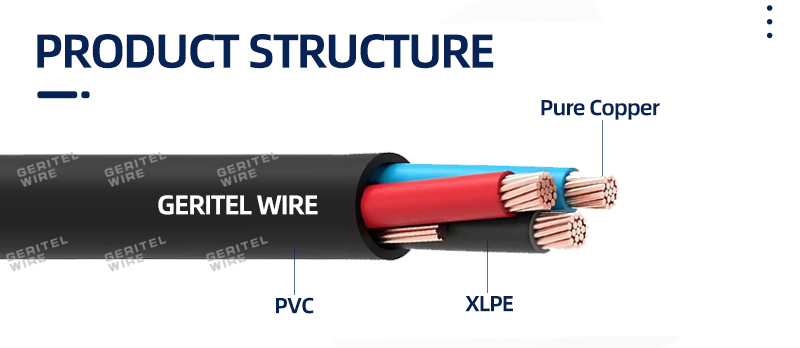
- Abrasion resistance. Contractors run cable through trays, over edges, and across supports. The jacket must survive. XHHW-2 insulation provides excellent abrasion resistance – a feature contractors quickly appreciate after wrestling with cheaper insulation that tears easily.
- Flexibility test. Contractors bend a short sample with their hands. Stiff cable slows down installation and adds labor. Flexible cable with fine-stranded conductors pulls faster, bends easier, and reduces crew fatigue. This is the "feel test" – subjective but essential.
For UL listed TC-ER cable, these markings and physical characteristics are verified during UL's follow-up inspections. Contractors who have been burned by counterfeit or substandard cable know to check every spool before it goes to the floor.
2. Installation Performance – The Real Test
A cable can look perfect on the spool and perform terribly in the tray. Contractors judge cable quality by how it behaves during installation.
- Pulling tension. Cable that pulls smoothly through conduits and around bends is worth the extra cost. Cable that drags, kinks, or twists makes for a long day. Stranded conductors and the right jacket lubrication make a noticeable difference.
- Flexibility in tight spaces. Tray runs are rarely straight. Cable must navigate bends, obstacles, and existing bundles. Flexible TC-ER cable with XHHW-2 insulation bends without fighting. Contractors remember which cables make the job easier.
- Termination ease. Stripping insulation should be clean and consistent. Jacket that sticks to the insulation or tears unevenly slows down termination. Good cable strips cleanly, saving time on every termination point.
- Shield handling. For shielded cable, the shield (foil and drain wire) should be easy to fold back and terminate. Poorly designed shielding complicates grounding and costs time.
- Resistance to site conditions. Construction sites are tough. Oil, moisture, and dust are everywhere. Cable that stays flexible in cold weather and resists oil staining earns contractor loyalty. TC-ER cable with XHHW-2 is designed for these realities.
On industrial projects, contractors often work alongside equipment that is already running. The cable must handle vibration and incidental contact without damage. Good cable survives; cheap cable shows wear within weeks.
3.Compliance Verification – What Contractors Must Confirm
Compliance is not optional. Every contractor knows that a failed inspection means lost time, lost money, and a damaged reputation. Here is what contractors verify.
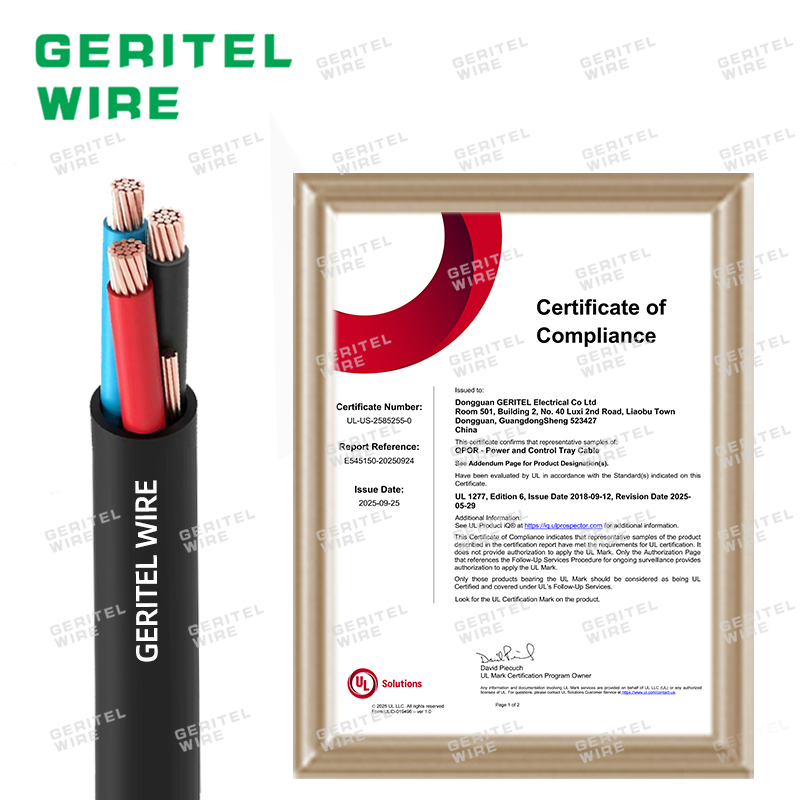
- UL listing. The UL mark on the cable jacket must match the manufacturer's UL file. Contractors with large jobs often request the manufacturer's UL certificate and verify the file number. This is especially important for jobs with strict specifications.
- Voltage rating. The printed voltage rating must match the system voltage. For 480V systems, 600V cable is standard. For longer runs or VFD applications, contractors may specify 1000V rated cable for additional margin.
- Temperature rating. XHHW-2 at 90°C wet/dry gives contractors flexibility for diverse installation environments. Confirm the rating on the jacket matches the specification.
- Sunlight resistance. If the cable runs outdoors, it must be marked "Sunlight Resistant." Without this marking, inspectors will flag it – even if the jacket looks identical.
- Exposed run (ER) rating. For tray installations without conduit, the "TC-ER" marking is mandatory. This is one of the most common compliance checks contractors perform before tray installation begins.
To minimize compliance risk, many contractors standardize on UL listed TC-ER cable from established manufacturers. The certification provides documented proof that the cable has been tested and inspected. For larger projects, some contractors request the UL file number and verify it before ordering.
4.Three Cable Specifications Contractors Evaluate Most Frequently
Every contractor has a set of go-to cables – the ones they trust, the ones that have never let them down. Here are three that appear on contractor order lists for good reason.
Specification 1: 8 AWG 5/C TC-ER – Multi-Circuit Runs
For projects with multiple control circuits running to a single piece of equipment, this is a time-saver. Five conductors in one jacket means one pull instead of five. The 8 AWG conductors handle moderate loads while remaining flexible enough for easy installation.
Why contractors specify it: Saves pull time, reduces tray congestion, and simplifies termination. Especially valuable when multiple sensors or controls are clustered in one area.
Where it is used: Control panel feeders, sensor clusters, packaging equipment, smaller conveyor systems.
Specification 2: 4 AWG 4/C TC-ER – Medium Power and Control
A balanced spec for medium-sized equipment. Four conductors provide three-phase power plus ground. Unshielded construction keeps cost down. XHHW-2 insulation handles heat and moisture in typical industrial settings.
Why contractors specify it: Versatile. Works for both power and control. Reliable. Fast to install. No complicated shielding to terminate.
Where it is used: HVAC units, pumps, compressors, manufacturing equipment power feeds.
Specification 3: 1/0 AWG 3/C TC-ER – Heavy Power Feeders
For larger loads, 1/0 AWG provides the ampacity needed without stepping up to much heavier gauges. Three conductors for three-phase power. Separate ground conductor. Unshielded for straight power runs.
Why contractors specify it: Handles high current, manages voltage drop on longer runs, and is still manageable for installation crews.
Where it is used: Large motors, main feeders to production equipment, sub-panels in industrial plants.
5.The Callback Factor – Why Contractors Choose Quality
Experienced contractors have learned the hard way: cheap cable is expensive. A callback to replace failed cable costs time, travel, and reputation. It eats into profit and strains relationships with clients.
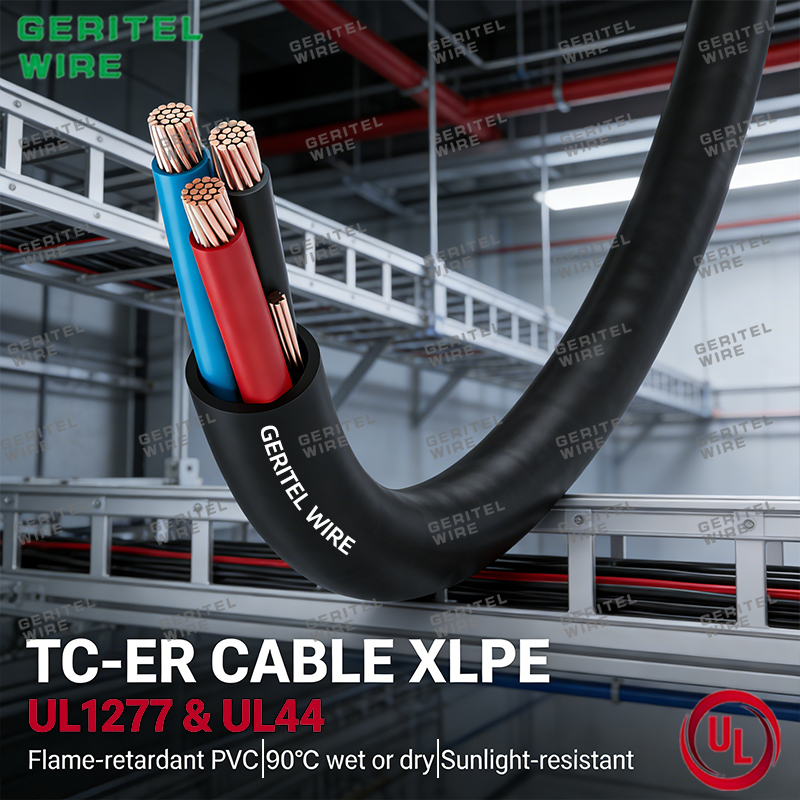
Quality cable like TC-ER with XHHW-2 insulation reduces callback risk. It resists the conditions that cause early failure – heat, moisture, oil, vibration. Contractors who have been burned by inferior cable know this lesson well.
One callback can wipe out the savings from buying cheaper cable. Good contractors factor this into their evaluation from day one.
H2: FAQ
Q1: What is the most common compliance issue contractors see?
Missing or illegible jacket markings. Without clear markings, inspectors can reject the installation. Always check every spool before installation.
Q2: How can contractors verify UL listing on site?
Check the jacket for the UL mark and manufacturer name. For critical projects, request the UL certificate or file number from the supplier before ordering.
Q3: What makes TC-ER cable easier to install than MC?
TC-ER is lighter and more flexible without interlocked armor. It pulls easier, bends tighter, and terminates faster, saving labor time.
Q4: Does GERITEL provide UL listed TC-ER cable?
Yes. Dongguan GERITEL Electrical Co., Ltd. holds UL 1277 certification. We can provide the certificate and file number upon request.
For your next project, evaluate with a contractor's eyes. Choose cable that installs fast, passes inspection, and stays in service.
Need a Quote?
Tell us your project requirements and installation conditions. We will recommend the right TC-ER cable and send a quick quote.
Contact us
Dongguan GERITEL Electrical Co., Ltd.
Tel/WhatsApp/Wechat: +86 136 6257 9592
Tel/WhatsApp/Wechat: +86 135 1078 4550
Email: manager01@greaterwire.com
Website: www.geritelgroup.com
 How to Select Industrial Equipment Wiring for Reliable Long-Term Performance



 Building 2, No. 40 Luxi 2nd Road, Liaobu Town, Dongguan City, Guangdong Province, China