


 Home
HomeHow to Properly Maintain UL83 THHN/THWN-2 Cables for Longer Lifespan
 GERITEL
 Mar 26,2026

If your project involves electrical wiring across commercial buildings, industrial facilities, or residential developments—whether in conduit systems, outdoor routing, or underground installations—long-term cable reliability depends not only on initial selection but also on how those cables are maintained over time.
Many engineers and procurement teams focus heavily on choosing the right cable type at the beginning, yet overlook the fact that incorrect selection directly increases maintenance frequency, while poor maintenance accelerates insulation failure, overheating, and unexpected downtime.
This guide focuses on a practical engineering perspective:
- How to select the right UL83 THHN/THWN-2 cable for easier maintenance
- How operating conditions affect aging and failure cycles
- What maintenance actions actually extend service life and reduce cost
1. Selection First: Reducing Maintenance Starts at the Specification Stage
1. 1 THHN vs. THWN-2: Choose Based on Environment, Not Habit
The most common root cause of premature cable failure is environment mismatch, not product quality.
THHN (Thermoplastic High Heat-resistant Nylon)
- Designed for dry locations only
- 90°C rating (dry)
- Lower cost, easier installation
- Best for:
- Office buildings
- Residential interiors
- Dry industrial workshops
THWN-2 (Thermoplastic Heat and Water-resistant Nylon)
- Designed for both wet and dry environments
- 90°C rating in both conditions
- Resistant to moisture, oil, and mild chemicals
- Best for:
- Outdoor conduit systems
- Underground installations
- Basements, utility rooms
- High-humidity industrial zones
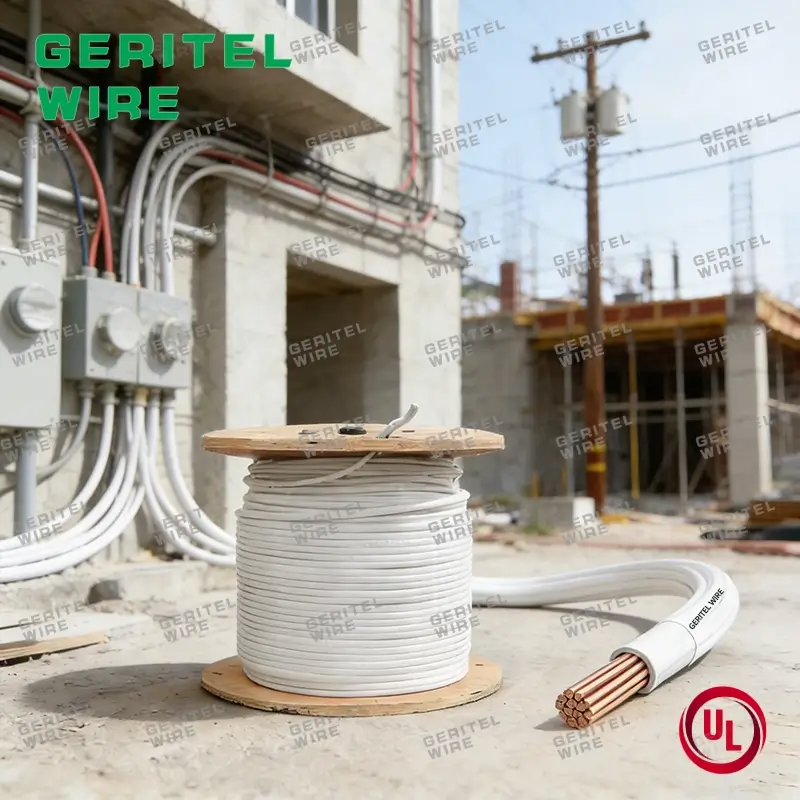
Engineering insight:
If moisture exposure is even possible (not constant), THWN-2 electrical building cable should be selected.
Choosing THHN solid copper conductor wire in such cases guarantees higher maintenance frequency.
1. 2 AWG Size Selection: The Hidden Driver of Maintenance Costs
Cable lifespan is heavily influenced by thermal stress, which is directly tied to conductor sizing.
| AWG Size | Typical Application | Risk if Undersized |
| 14 AWG | Lighting circuits | Insulation cracking |
| 12 AWG | General outlets | Overheating |
| 2 AWG | Industrial loads | System instability |
Key principle:
- Undersizing → overheating → insulation degradation → frequent replacement
- Oversizing → higher cost, no maintenance benefit
1. 3 Installation Parameters That Affect Long-Term Reliability
Even correct cables fail early if installation is ignored:
- Minimum bending radius: ≥ 4× cable diameter
- Avoid excessive pulling tension
- Prevent conduit overcrowding
Poor installation creates internal conductor stress, leading to:
- Intermittent faults
- Hidden insulation damage
- Difficult troubleshooting later
2. Practical Maintenance Strategies That Actually Extend Lifespan
2. 1 Inspection Strategy Based on Installation Type
Not all systems require the same inspection frequency:
- Exposed cables: Monthly inspection
- Concealed/underground: Quarterly inspection
Focus on:
- Jacket cracks or discoloration
- Abrasion or mechanical damage
- Corrosion at terminals
- Moisture ingress (especially THWN-2 systems)
Early-stage insulation damage is repairable; late-stage failure is not.
2. 2 Environmental Control: The Most Overlooked Factor
Although rated at 90°C, continuous exposure near this limit accelerates aging.
Avoid:
- Direct contact with heat sources
- Long-term UV exposure (use UV-resistant conduit)
- Standing water or flooded conduits
Important reality:
THWN-2 is water-resistant—not waterproof.
Submersion drastically shortens lifespan.
2. 3 Connection Integrity: Where Most Failures Begin
Statistically, most electrical failures occur at termination points, not along the cable.
Maintenance actions:
- Tighten terminals periodically
- Check for oxidation or corrosion
- Use compatible connectors
- Avoid over-tightening (prevents conductor deformation)
For wet environments:
- Use sealed junction boxes
- Apply moisture barriers where necessary
2. 4 Load Management and Electrical Stability
Thermal degradation is cumulative and often invisible.
Prevent:
- Continuous overloading
- Frequent breaker trips
- Voltage fluctuations
Recommended:
- Proper circuit protection (breakers/fuses)
- Surge protection systems
- Load balancing across circuits
Stable electrical conditions = slower insulation aging
3. Avoiding Wrong Cable Choices That Increase Maintenance
3. 1 THHN/THWN-2 vs. XHHW-2
| Feature | THHN/THWN-2 | XHHW-2 |
| Flexibility | Better | Lower |
| Cost | Lower | Higher |
| Chemical resistance | Moderate | Strong |
| Extreme environments | Limited | Excellent |
Choose XHHW-2 only when:
- High temperature extremes
- Aggressive chemicals
- Long lifecycle > cost priority
3. 2 THHN/THWN-2 vs. TW
TW cables (75°C rating):
- Lower heat tolerance
- Faster insulation aging
- Higher maintenance frequency
For modern systems, TW is generally not recommended.
3. 3 When THHN/THWN-2 Should NOT Be Used
Avoid these scenarios:
- Continuous temperatures above 90°C
- Direct contact with hot machinery
- Submersible or underwater installations
- Applications requiring frequent flexing
4. Maintenance Checklist (Quick Reference)
- Inspect insulation condition regularly
- Check all connection points
- Keep cables within temperature limits
- Prevent moisture intrusion
- Avoid overloading circuits
- Protect against mechanical damage
Conclusion: Maintenance Is a Result of Correct Decisions
Long cable lifespan is not achieved through maintenance alone—it is the result of:
- Correct type selection (THHN vs. THWN-2)
- Proper parameter sizing (AWG, load)
- Controlled installation and environment
- Consistent preventive maintenance
Projects that align these four factors typically experience:
- Lower failure rates
- Reduced downtime
- Lower total lifecycle cost
Need Help Selecting the Right Specification?
At Dongguan GERITEL Electrical Co., Ltd., we help contractors and distributors choose the exact UL83 THHN/THWN-2 specification based on:
- Load requirements
- Installation environment
- Maintenance expectations
Tel / WhatsApp / WeChat: +86 135 1078 4550 / +86 136 6257 9592
Email: manager01@greaterwire.com
Reach out today for tailored cable solutions that reduce maintenance and extend service life.
 Compatibility of THHN/THWN-2 Cables with Industrial Control Systems



 Building 2, No. 40 Luxi 2nd Road, Liaobu Town, Dongguan City, Guangdong Province, China