


 Home
HomeCompatibility of THHN/THWN-2 Cables with Industrial Control Systems
 GERITEL
 Mar 26,2026

In industrial control projects, where system stability depends heavily on wiring reliability, selecting the wrong cable type or specification often leads to hidden failures such as signal instability, overheating, or premature insulation degradation, which can significantly increase maintenance costs and downtime risks over time. This is exactly why understanding the compatibility of THHN/THWN-2 cables with industrial control systems is not just a technical detail, but a critical decision factor for electrical engineers, system integrators, and procurement teams working on control panels, PLC systems, and power distribution units.
1. Why Compatibility Matters in Industrial Control Wiring
Industrial control systems typically involve complex wiring structures, including PLC cabinets, sensor networks, relay circuits, and secondary distribution loops, where cables must handle not only electrical loads but also environmental stress such as heat, humidity, oil exposure, and confined installation conditions within conduits (protective pipes for cable installation).
When cable compatibility is overlooked, even a technically “correct” cable can become unsuitable for the actual working environment, leading to issues such as insulation cracking in humid environments, voltage drop in undersized conductors, or electromagnetic interference affecting signal transmission in control loops. Therefore, THHN/THWN-2 cable selection must always be aligned with real system conditions rather than generic specifications.
2. THHN vs THWN-2: Compatibility Differences in Industrial Environments
Understanding the difference between THHN and THWN-2 cables is the foundation of proper cable selection for industrial controls, especially when environmental conditions vary across installation areas.
2. 1 THHN Cable: Best for Dry, Controlled Environments
THHN cables are designed primarily for dry locations, with a heat resistance rating up to 90°C, making them highly suitable for indoor industrial control environments where humidity is controlled and exposure to water or oil is minimal.
Typical compatible scenarios include:
- Internal wiring of PLC control panels
- Dry indoor distribution cabinets
- Control circuits for automation systems in clean workshops
The advantage of THHN UL83 compliant electrical wire in these applications lies in its relatively lower cost and sufficient thermal performance, which meets the requirements of most low to medium load control circuits without over-specification.
However, using THHN in environments with moisture or oil exposure can lead to insulation degradation over time, which directly impacts system reliability.
2. 2 THWN-2 Cable: Designed for Harsh and Variable Conditions
THWN-2 copper conductor nylon cable offer dual-rated performance for both dry and wet environments, while maintaining a 90°C operating temperature rating even under wet conditions, which makes them significantly more versatile for industrial control systems exposed to environmental uncertainties.
Typical compatible scenarios include:
- Outdoor control equipment wiring
- Underground conduit installations
- Machine control systems with oil exposure
- Industrial workshops with high humidity or washdown conditions
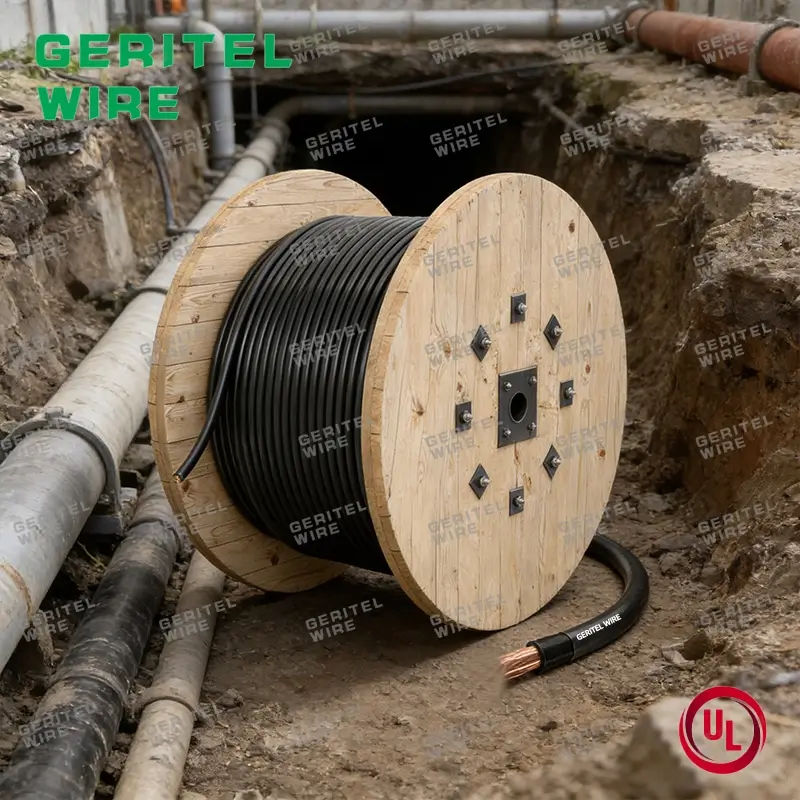
The improved water resistance and durability of THWN-2 cables make them the safer choice when environmental conditions are unpredictable or harsh, even if the initial cost is slightly higher.
3. Matching Cable Parameters to Industrial Control Scenarios
Choosing between THHN and THWN-2 is only the first step, while selecting the correct cable parameters is what ultimately determines system compatibility and performance.
3. 1 Conductor Size (AWG) and Load Requirements
The American Wire Gauge (AWG) directly affects current-carrying capacity, voltage drop, and heat generation, all of which are critical in industrial control systems.
Typical selection guidelines include:
- 14 AWG: Suitable for low-current applications such as lighting control circuits and small sensor connections, where signal integrity is more important than power delivery.
- 12 AWG: Commonly used in PLC I/O wiring and relay control circuits, offering a balance between flexibility and current capacity.
- 10–2 AWG: Designed for higher load requirements such as feeder lines in industrial equipment or main control system power distribution.
If the conductor size is too small for the load, excessive heat buildup can occur, which not only reduces cable lifespan but also increases the risk of insulation failure and system shutdown.
3. 2 Temperature Rating and System Stability
Both THHN and THWN-2 cables are rated for 90°C, but the key difference lies in environmental adaptability, especially under wet conditions.
In industrial control cabinets where heat accumulation is common due to densely packed components, selecting a cable with insufficient temperature tolerance can result in accelerated insulation aging and unstable system performance. Therefore, even in dry environments, engineers often prefer THWN-2 copper electrical conductor for added safety margins.
3. 3 Conductor Type and Insulation Structure
THHN/THWN-2 cables typically feature:
- Bare copper conductors for conductivity and corrosion resistance
- PVC insulation with a nylon outer layer, providing mechanical protection and chemical resistance
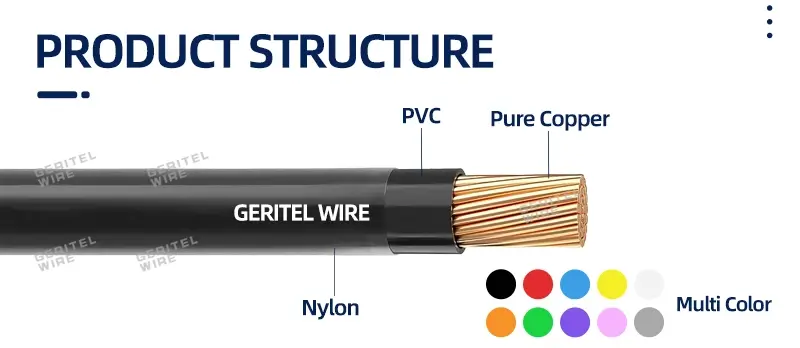
This structure enhances durability during conduit installation and reduces the risk of mechanical damage, especially in tight routing conditions within control panels.
3. 4 Compliance and Quality Assurance
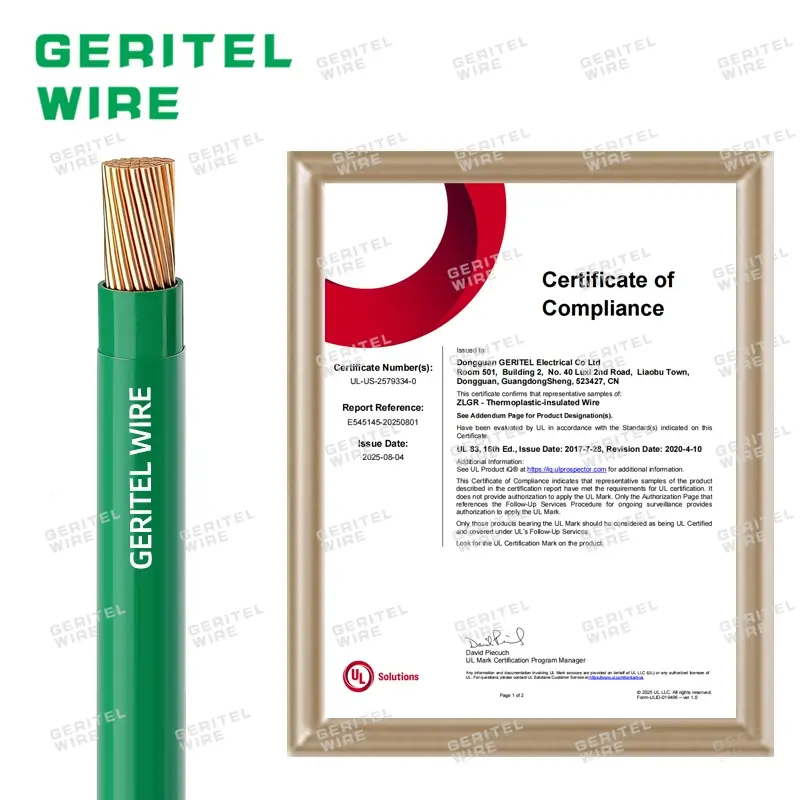
THHN/THWN-2 cables are generally manufactured in compliance with UL standards such as UL83 and follow NEC installation guidelines, ensuring that they meet safety and performance requirements in industrial applications.
While certification is not the primary selection factor, it provides an additional layer of confidence in product reliability and consistency.
4. Comparison with Alternative Cable Types
Understanding how THHN/THWN-2 compares with other cable types helps clarify why they are widely used in industrial control systems.
- Compared to standard PVC cables: THHN/THWN-2 offers higher heat resistance and better mechanical strength, making it more suitable for confined and high-temperature control panel environments.
- Compared to XHHW/XHHW-2 cables: While XHHW-2 provides superior insulation thickness and durability, THHN/THWN-2 is often more cost-effective and flexible, making it ideal for medium and low-load control systems where extreme conditions are not present.
This balance between performance and cost is one of the key reasons why THHN/THWN-2 cables are preferred in industrial control wiring.
5. Boundaries: When THHN/THWN-2 Is NOT Suitable
Despite their versatility, THHN/THWN-2 cables are not universal solutions, and understanding their limitations is essential for avoiding misapplication.
They are not recommended for:
- Environments exceeding 90°C continuously
- Highly corrosive chemical exposure conditions
- High-voltage systems above 600V
- Specialized signal transmission systems requiring shielding
Using these cables outside their intended range can compromise both safety and system performance.
6. Consequences of Incorrect Cable Selection
Incorrect cable selection in industrial control systems often leads to issues that are not immediately visible but become critical over time.
Typical consequences include:
- Using THHN in wet environments: Leads to insulation deterioration, increasing the risk of leakage currents and short circuits in outdoor control systems.
- Undersized conductors: Cause overheating in control circuits, especially in relay loops or feeder lines, potentially leading to unexpected system shutdowns.
- Poor compatibility with control signals: In sensor wiring, improper cable selection can introduce signal interference, affecting system accuracy and response time.
For example, in a PLC-controlled production line, unstable wiring caused by incorrect cable selection can result in intermittent faults that are difficult to diagnose, leading to costly downtime.
7. Practical Selection Strategy for Industrial Control Projects
To ensure optimal compatibility of THHN/THWN-2 cables with industrial control systems, a structured selection approach is recommended:
Evaluate the installation environment
Determine whether the cable will be exposed to moisture, oil, or outdoor conditions, and prioritize THWN-2 when uncertainty exists.
Define load requirements clearly
Calculate system current and select appropriate AWG size to prevent overheating and voltage drop.
Consider system layout and routing
For complex conduit installations, choose cables with better mechanical durability and flexibility.
Match cable type to system scale
- Small control systems: prioritize cost-effective THHN solutions in dry environments
- Large industrial systems: prefer THWN-2 for reliability and environmental adaptability
Allow safety margins
Selecting slightly higher-rated cables can significantly improve long-term system stability.
8. Conclusion: Making Compatibility a Strategic Advantage
The compatibility of THHN/THWN-2 cables with industrial control systems is not simply about meeting basic specifications, but about aligning cable performance with real operational conditions, load demands, and long-term reliability expectations. By understanding how environmental factors, conductor size, and system requirements interact, engineers and procurement teams can make informed decisions that reduce risk and optimize system performance.
If you’re not sure which THHN/THWN-2 specification fits your industrial control system, we can provide personalized recommendations based on your project’s load requirements, installation environment, and system parameters. Contact Dongguan GERITEL Electrical Co., Ltd. today to get a detailed selection guide and quotation.
Tel / WhatsApp / WeChat: +86 135 1078 4550 / +86 136 6257 9592
Email: manager01@greaterwire.com
 Top Applications of THHN Copper Wire



 Building 2, No. 40 Luxi 2nd Road, Liaobu Town, Dongguan City, Guangdong Province, China