


 Home
HomeHow Electrical Distribution Cable Supports Reliable Industrial Operations
 GERITEL
 Jun 12,2026

Uninterrupted industrial operation relies entirely on a stable, code-compliant electrical distribution system. Factories, processing plants, and heavy industrial sites face continuous operational challenges, including heavy cyclic loads, mechanical vibration, oil contamination, and long-span overhead wiring layouts. Low-quality or mismatched distribution cables frequently cause overheating, insulation degradation, unexpected tripping, and failed electrical inspections, resulting in costly unplanned downtime. To eliminate these risks, professional electrical designers prioritize standardized, certified tray wiring solutions. UL 1277 TC-ER cable has become the preferred industrial distribution wiring due to its verified performance, flexible mechanical structure, and harsh-environment durability. By following official TC-ER cable specification, standardized TC-ER cable installation procedures, and scientific TC-ER cable sizing guide, plant managers can build a robust power distribution system that supports long-term stable industrial production.
1. Why Industrial Distribution Cable Quality Directly Impacts Plant Uptime
Industrial electrical distribution differs greatly from conventional commercial building wiring. Unlike static, low-load commercial circuits, factory distribution cables operate under persistent full-cycle loads, support multiple high-power motors, pumps, and automated production lines, and endure harsh onsite conditions including continuous mechanical vibration, industrial dust, chemical residues, and oil mist accumulation. These rigorous operating conditions demand industrial-grade wiring with superior mechanical toughness and environmental stability.
Many hidden operational failures stem from improperly specified distribution cables. Using generic non-certified multi-conductor wires for open-tray layouts creates three major risks that threaten production continuity. First, undersized conductors generate excessive heat under heavy loads, accelerating insulation aging and triggering intermittent short circuits or breaker tripping. Second, rigid cables cannot withstand long-term equipment vibration, leading to internal conductor breakage and unstable power delivery. Third, standard cable jackets degrade rapidly in oil-rich workshop environments, causing swelling, peeling, and exposed wiring hazards. Investing in qualified industrial wiring eliminates these root causes and maintains consistent power distribution across all production zones.
2. UL 1277 TC-ER Cable: Certified Foundation for Industrial Power Distribution
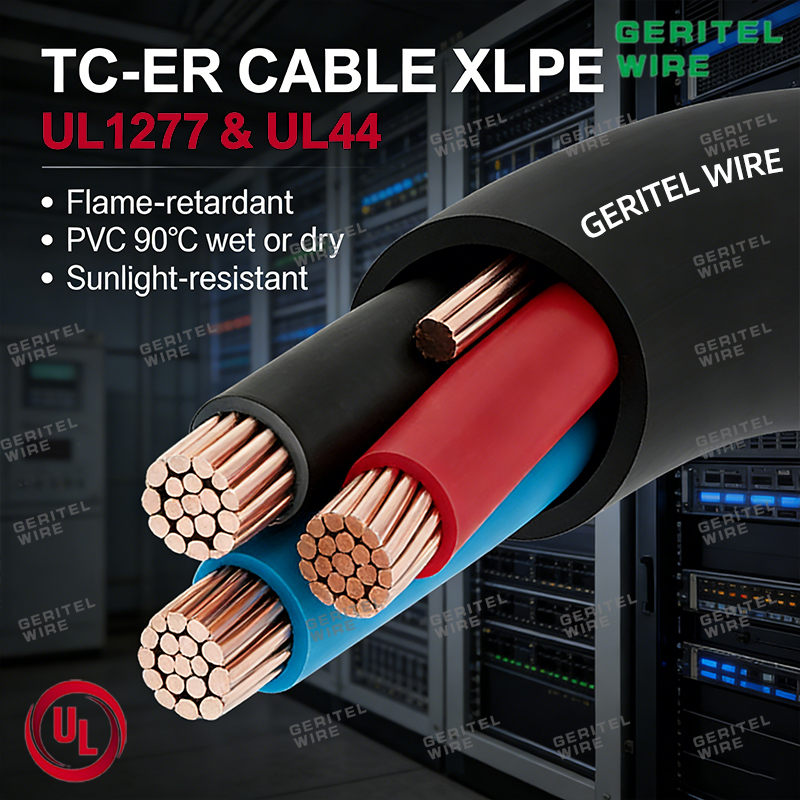
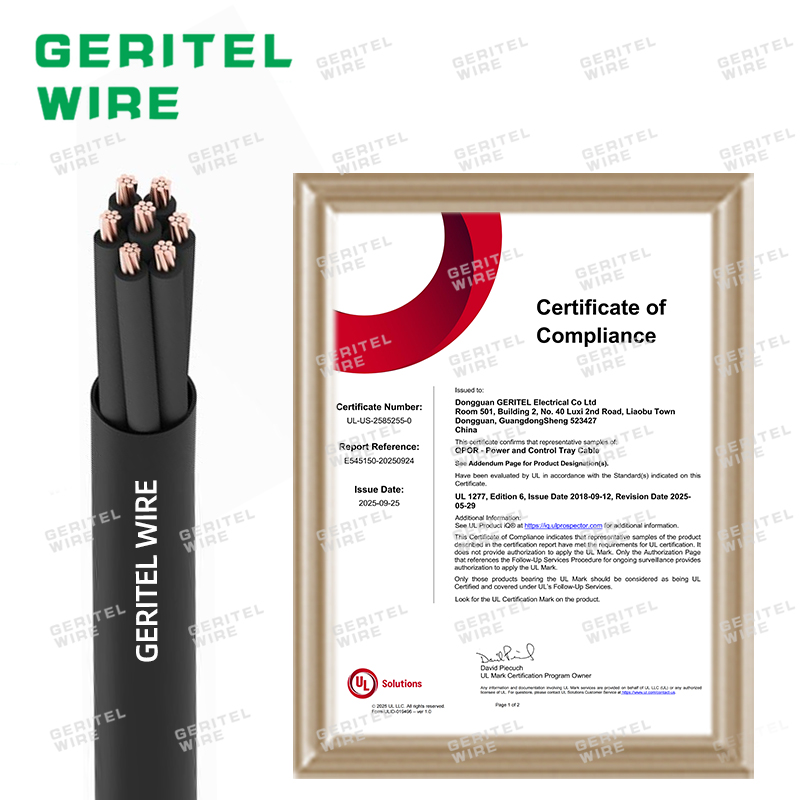
UL 1277 TC-ER cable serves as the standardized, code-compliant backbone for modern industrial open-tray distribution systems. The UL 1277 certification establishes strict industrial benchmarks for cable ampacity retention, flame retardancy, insulation integrity, tensile strength, and long-term thermal stability, ensuring every reel of cable meets rigorous industrial safety and durability requirements.
A core advantage of certified UL 1277 TC-ER cable is its allowance for exposed open-run tray installation. Unlike uncertified wires that require full conduit protection, this industrial tray cable can be directly routed on overhead cable trays, drastically cutting material costs, shortening construction cycles, and simplifying future system maintenance, upgrades, and troubleshooting. For large-scale manufacturing, chemical, and mining facilities, standardized UL 1277 TC-ER cable unifies distribution system specifications, avoids third-party inspection failures, and eliminates unplanned production shutdowns caused by non-compliant wiring rework.
3. Key Performance Parameters from Official TC-ER Cable Specification
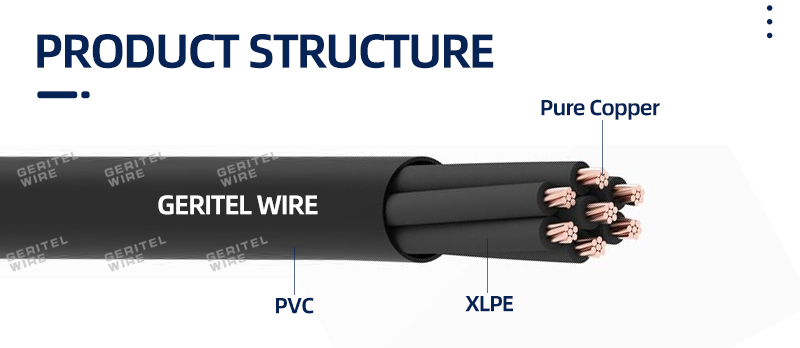
Professional industrial distribution design depends entirely on accurate adherence to authoritative TC-ER cable specification standards. Complete technical specifications cover core indicators including conductor structure, high-performance insulation materials, industrial-grade outer jackets, rated voltage, flame resistance grade, and mechanical flexibility, providing precise guidance for engineers to select matching cables for different distribution circuit types and load levels.
These standardized specifications define the reliable operating boundaries of industrial TC-ER wiring. Qualified TC-ER cables maintain stable electrical performance during years of continuous full-load operation, resist thermal aging in high-temperature production areas, and retain structural integrity under repeated bending and micro-vibration. Strict compliance with official specifications prevents performance attenuation, insulation failure, and premature cable aging, effectively reducing factory maintenance frequency and long-term operational risks.
4. Scientific Circuit Matching Following TC-ER Cable Sizing Guide
Blind cable sizing is one of the most common and costly mistakes in industrial distribution design. Without referencing the professional TC-ER cable sizing guide, mismatched conductor gauges and core counts lead to unreasonable current distribution, severe voltage drop, and continuous overheating, which directly undermine operational stability. The dedicated sizing guide provides accurate ampacity charts, voltage drop calculation rules, and load-matching standards for all mainstream TC-ER cable models.
500 kcmil TC-ER cable is the ideal large-gauge solution for ultra-heavy-load main distribution trunks. Designed for long-span power transmission in large manufacturing campuses, mining sites, and chemical plants, this high-capacity cable efficiently carries aggregated high current with minimal voltage drop, ensuring stable and safe power delivery for core industrial equipment groups across extensive factory layouts.
7/C TC-ER cable specializes in multi-functional factory branch distribution circuits. Featuring seven integrated insulated conductors, it seamlessly combines three-phase power supply and low-power control signal transmission for multiple interconnected devices. This multi-conductor design simplifies tray wiring layouts, eliminates redundant cable clutter, and significantly improves the neatness, safety, and maintainability of complex workshop distribution systems.
5. Standardized TC-ER Cable Installation for Open-Tray Distribution Systems
Premium-specification cables cannot deliver stable performance without standardized construction and routing. Professional TC-ER cable installation regulations are customized for industrial open-tray distribution scenarios, covering critical construction standards such as maximum tray filling ratio, minimum cable bending radius, fixed support spacing, and layered power and signal partitioning.
Strict implementation of these installation rules avoids excessive cable stacking and accumulated heat, prevents mechanical extrusion and tensile damage during wiring, and achieves effective isolation between high-power distribution circuits and precision weak-signal control circuits. Standardized construction eliminates common hidden dangers including local overheating, electromagnetic signal interference, and loose wiring terminals, making the entire industrial distribution system fully code-compliant and long-term stable.
6. Flexible & Oil Resistant TC-ER Cable for Harsh Industrial Workshop Conditions
Industrial workshop environments pose unique challenges for distribution wiring, requiring both excellent mechanical fatigue resistance and strong environmental adaptability. Ordinary rigid cables and standard-jacket cables struggle to adapt to vibrating equipment zones and oil-polluted production areas, leading to frequent premature failure.
Flexible TC-ER cable adopts a high-flex fine-stranded conductor structure and durable flexible insulation, which effectively resists fatigue damage caused by long-term equipment vibration and repeated micro-bending. It is specially optimized for distribution wiring near operating production lines, robotic equipment, and reciprocating machinery, greatly extending cable service life and reducing circuit failure rates caused by internal wire breakage.
Oil resistant TC-ER cable is engineered with a specialized anti-oil polymer jacket, resisting swelling, peeling, and insulation degradation after long-term contact with industrial lubricants, hydraulic oil, and floating oil mist. This specialized cable is a must-have solution for machinery processing workshops, food processing facilities, and chemical production zones, solving common wiring failures caused by oil corrosion and ensuring continuous safe operation of on-site distribution systems.
7. Frequently Asked Questions About Industrial TC-ER Distribution Cable
Q1: Why is UL 1277 certification essential for industrial distribution tray cables?
A: UL 1277 certification verifies critical performance including flame resistance, thermal stability, and open-run safety. Only certified UL 1277 TC-ER cable meets industrial electrical code requirements for exposed tray installation and passes official factory safety inspections.
Q2: When should designers choose 500 kcmil TC-ER cable for distribution systems?
A: The 500 kcmil large-gauge model is designed for heavy-load main distribution trunks in large factories, mining projects, and chemical plants, effectively solving voltage drop and overheating issues in long-distance, high-current industrial power transmission.
Q3: What core benefits does 7/C TC-ER cable bring to plant branch wiring?
A: 7/C multi-conductor TC-ER cable integrates multiple power and signal cores, simplifying complex multi-device branch distribution layouts, reducing wiring costs, and improving the overall neatness and maintainability of industrial tray wiring systems.
Q4: Why do oily industrial workshops require dedicated oil resistant TC-ER cable?
A: Ordinary cable jackets swell, soften, and age rapidly in oil-mist environments. Professional oil resistant TC-ER cable maintains stable insulation and structural integrity, preventing short-circuit hazards and extending wiring service life in harsh oil-polluted working conditions.
Q5: What is the advantage of flexible TC-ER cable in industrial workshops?
A: flexible TC-ER cable withstands continuous vibration and repeated bending near production machinery, avoiding internal conductor breakage and intermittent power failures common with rigid standard cables.
Reliable UL 1277 TC-ER Cable Solutions for Industrial Distribution
Consistent and reliable industrial operation is built on standardized, high-performance electrical distribution infrastructure. Adopting certified UL 1277 TC-ER cable and strictly following professional TC-ER cable specification, scientific TC-ER cable sizing guide, and standardized TC-ER cable installation rules eliminates most common distribution system failures. Reasonably matching 500 kcmil TC-ER cable for heavy-duty main trunks, 7/C TC-ER cable for multi-device branch circuits, and flexible & oil resistant TC-ER cable for harsh workshop environments ensures long-term safe, stable, and efficient operation of industrial power networks. Contact our professional engineering team to obtain customized TC-ER cable selection solutions and accurate quotations for your industrial distribution projects.
Contact us
Dongguan Greater Wire & Cable Co., Ltd.
Tel/WhatsApp/Wechat: +86 136 6257 9592
Tel/WhatsApp/Wechat: +86 135 1078 4550
Email: manager01@greaterwire.com
Website: www.greaterwire.com
 Best Automation Wiring Solutions for Smart Factories and Industrial Control Systems



 Building 2, No. 40 Luxi 2nd Road, Liaobu Town, Dongguan City, Guangdong Province, China