


 Home
HomeHaiti Rural Microgrid Electrification Project
 GERITEL
 Apr 03,2026

Country: Haiti, Caribbean Region
Industry: Renewable Energy and Rural Electrification
Project Type: Rural Microgrid Infrastructure Development
Timeline: Initiated Early 2023
Core Products: MV90 Cable, MV105 Cable, XHHW, and THHN Conductor Building Electrical Cable
Certification Standards: UL 1072, UL 83, IEEE 1202
Delivery Performance: Complete shipment delivered within 35 days
Customer Background: A Nation Left in the Dark
Haiti stands as one of the most impoverished nations in the Caribbean, with national electrification rates consistently below 40%. In early 2023, an international renewable energy developer specializing in emerging markets secured a contract to build microgrid infrastructure across three remote mountain communities in northeastern Haiti. These villages, located in the Artibonite and North-East departments, sit more than 50 kilometers from the nearest main grid connection. For generations, residents had relied on expensive diesel generators or lived entirely without electricity.
Funded by international development finance institutions, the project demanded a comprehensive distribution network stretching from solar generation stations to end-user connections, encompassing over 400 structures including residential homes, schools, medical clinics, and small commercial facilities. For the developer, this represented far more than a technical challenge—it was a race against harsh environmental conditions, unforgiving project timelines, and stringent compliance requirements.
The Four Critical Pain Points
During our initial technical consultations, the project developer articulated four core challenges drawn from painful experiences in previous rural electrification initiatives:
1. Environmental Vulnerability: The Brutal Reality of Tropical Climate
Haiti's tropical maritime climate delivers annual humidity exceeding 80%, frequent torrential rains, and intense ultraviolet radiation. The developer had learned hard lessons in an earlier African project where standard PVC-insulated cables suffered mass insulation aging and short-circuit failures within 18 months. They needed cable systems engineered to survive and thrive in these conditions for decades, not years.
2. Certification Barriers: UL Listing as Non-Negotiable
As a project backed by development finance institutions, every electrical component required UL certification accompanied by comprehensive compliance documentation. The developer had previously faced humiliating setbacks when suppliers offered "CE certification alternatives" or delivered incomplete paperwork, resulting in three-month commissioning delays and substantial unplanned warehousing and labor costs.
3. Supply Chain Fragility: Schedule Is Survival
The project financing agreement embedded strict milestone-based payment terms. Any delivery delay exceeding 45 days would trigger penalty clauses and jeopardize subsequent funding tranches. A previous cable supplier's capacity constraints had caused a 67-day delay on a Kenya project, inflicting direct losses exceeding $120,000.
4. Technical Fragmentation: The Integration Nightmare
The microgrid architecture spanned three voltage tiers: 15kV medium-voltage collection, 5kV-8kV distribution, and 600V end-user delivery. Procuring from multiple suppliers would create compatibility risks at transition points, logistical coordination headaches, and quality consistency concerns. The developer desperately sought a single partner capable of delivering harmonized solutions across all voltage classes.
The Solution: An Integrated Cable Ecosystem
Rather than simply supplying products, we engineered a comprehensive cable ecosystem addressing every voltage level from generation to consumption.
Medium-Voltage Arteries: Strategic Deployment of MV90 and MV105 Cable
For 15kV backbone transmission lines, we specified MV90 Cable rated for 90°C continuous operation, featuring TR-XLPE tree-retardant insulation and 133% insulation level to withstand moisture intrusion and electrical stress under direct burial conditions. Conductor sizes ranged from 1/0 AWG to 500 MCM in both copper and aluminum, enabling optimization for ampacity requirements and cost constraints across different circuit segments.
For high-load zones at generation station exits, we upgraded to MV105 Cable rated for 105°C operation. The enhanced current-carrying capacity accommodates solar inverter output fluctuations, preventing thermal overload during peak generation periods. All medium-voltage cables incorporated concentric neutral copper wire shielding and LLDPE jackets with three extruded red identification stripes, meeting UL 1072 and IEEE 1202/CSA FT4 flame resistance standards.
Low-Voltage Distribution: Precision Division Between XHHW and THHN Building Electrical Cable
For outdoor wet locations, we deployed XHHW Cable (Cross-Linked Polyethylene High Heat Water-Resistant). Its XLPE insulation delivers dielectric losses 30% lower than PVC alternatives, reducing energy waste across long distribution runs—a critical consideration for rural solar installations with limited generation capacity.
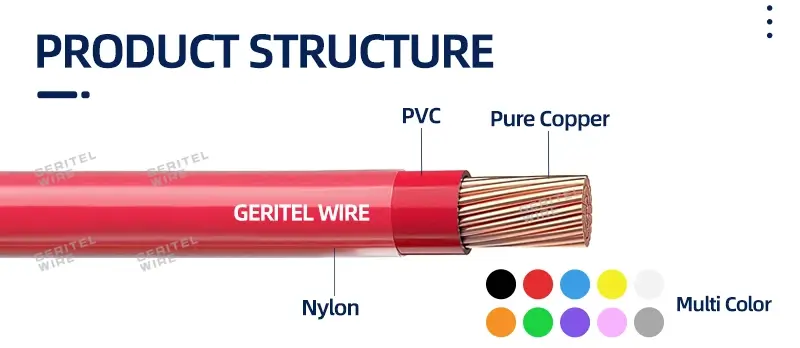
For building interior wiring, we standardized on THHN Conductor Building Electrical Cable spanning sizes from 12 AWG to 4/0 AWG. This product carries dual THHN/THWN-2 ratings, delivering 90°C heat resistance in dry locations and 75°C in wet conditions. The nylon jacket provides superior mechanical protection and pulling ease through conduit systems. The compact diameter of THHN Conductor Building Electrical Cable specifically accommodates the restricted raceway spaces common in Haitian rural construction.
Technical Differentiation: Why Our Solution Over Generic Alternatives
During the technical review meeting, the developer's engineering director challenged us: "Cheaper alternatives exist in the local market. What justifies your premium?" We responded with three technical differentiators backed by laboratory validation and field experience:
Manufacturing Excellence: Triple-Extrusion Dry-Curing Technology
Our
MV90 Cable and MV105 Cable employ simultaneous extrusion processes where conductor shielding, XLPE insulation, and insulation shielding form in a single integrated operation, eliminating interlayer voids that trap moisture. Generic cables using sequential layering develop partial discharge channels in tropical humid environments—a failure mode we have documented through comparative laboratory testing.
Material Science: TR-XLPE Anti-Water-Treeing Mechanisms
Water treeing represents the silent killer of XLPE insulation in moist environments. Our MV105 Cable incorporates specialized tree-retardant additives that, in accelerated aging tests, demonstrate 40% extended insulation lifespan compared to standard XLPE. For maintenance-resource-scarce regions like Haiti, this translates directly to reduced downtime and lower total cost of ownership despite higher initial investment.
Certification Depth: From Label to Full-Chain Traceability
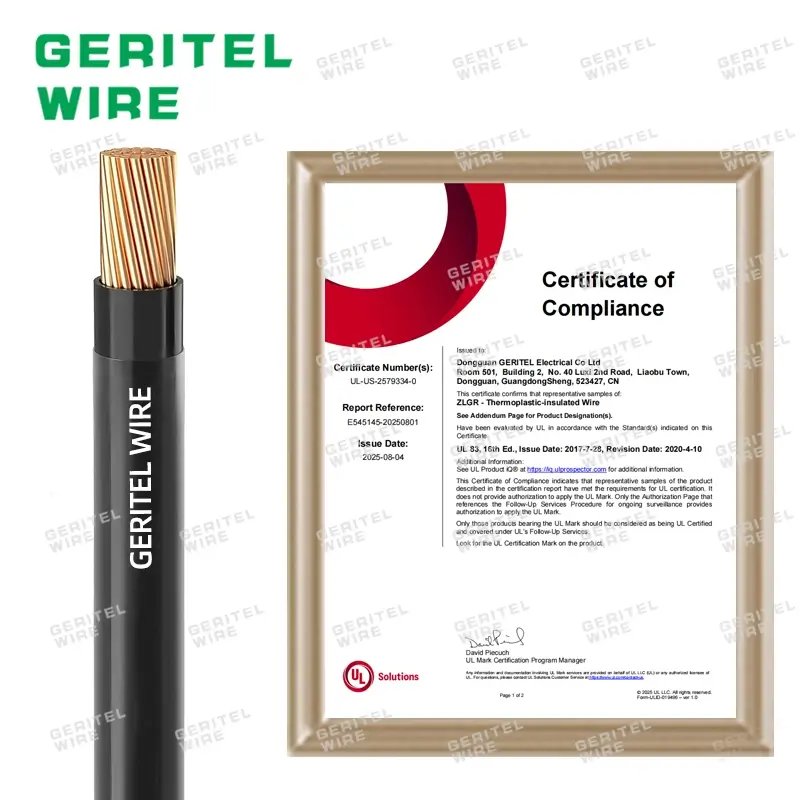
Unlike suppliers who merely attach UL labels, we deliver comprehensive documentation for every reel of THHN Conductor Building Electrical Cable and medium-voltage product: material batch traceability reports, factory high-voltage test data including partial discharge measurements per ICEA S-94-649 standards, and third-party inspection certificates. This documentation depth satisfies the most rigorous compliance audits from development finance institutions.
Delivery Execution: The 35-Day Possible
Upon order confirmation, we activated a three-tier assurance mechanism:
Capacity Assurance: Our vertically integrated manufacturing facilities maintain monthly production capacity exceeding 100 million feet. We produced the entire Haiti order—150,000 feet of MV90 Cable, 80,000 feet of MV105 Cable, and 200,000 feet of THHN Conductor Building Electrical Cable—within a unified production window, eliminating the coordination delays inherent in multi-supplier arrangements.
Logistics Pre-Configuration: Drawing from our experience in Latin American and African rural electrification projects, we pre-labeled every cable reel with destination coordinates and circuit identifiers according to the customer's engineering sequence. This preparation reduced on-site sorting time by approximately 60%.
Compliance Front-Loading: Before containers departed Tianjin Port, we had completed all UL certification documentation, certificates of origin, and customs pre-clearance paperwork, preventing bureaucratic delays upon arrival.
Result: From order confirmation to delivery in Port-au-Prince, total elapsed time was 35 days—five days ahead of the customer's "most optimistic" projection.
Safety Assurance: Trust Beyond Paper Certifications
Certification Authority: Every cable carries UL 1072 (medium-voltage) and UL 83 (THHN Conductor Building Electrical Cable) listings that represent not one-time labels but ongoing factory surveillance and quality commitment.
Engineering Empowerment: We delivered Haiti-specific installation guidelines—trenching depth recommendations for MV105 Cable direct burial in rocky soil, pulling tension calculations for long conduit runs with THHN Conductor Building Electrical Cable, and grounding best practices for concentric neutral systems. These details prevent field installation errors that compromise safety and performance.
Quality Verification: All medium-voltage cables underwent high-voltage withstand and partial discharge testing before shipment, with test reports accompanying every reel to provide the customer's QA team with verifiable data for each deployed segment.
Project Outcomes: Zero-Failure Performance from Commissioning to Operation
Eighteen months after energization, operational data validates the solution's success:
• The MV90 and MV105 Cable backbone survived two tropical storm seasons with zero water ingress or insulation failures in underground segments
• THHN Conductor Building Electrical Cable and XHHW systems achieved safe, code-compliant connections across 400+ structures with zero cable-related fire or short-circuit incidents
• Microgrid voltage stability reached 98.5%, meeting sensitive power quality requirements for medical equipment
• The developer earned community trust through "zero maintenance complaints," achieving electricity fee collection rates exceeding 92%
The project has become a benchmark case study for Caribbean rural electrification, with our cable specifications directly incorporated into tender documents for three subsequent neighboring projects.
Partnership Value: Three Differentiators in the Customer's Words
Reviewing the collaboration, the developer highlighted three unique value dimensions in their project closure report:
Technical Consultation, Not Product Pushing: Our engineering team's ampacity optimization recommendations during the design phase helped the customer adjust from an initial uniform 500 MCM specification to a segmented optimization strategy, directly reducing material costs by 12% while improving system efficiency.
Responsiveness as Competitive Advantage: The ability to deliver detailed technical calculations and installation guidance within 24-48 hours enabled the customer's design team to maintain project momentum without stalling over technical questions.
Single-Accountability Peace of Mind: Full voltage-class coverage from 15kV to 600V eliminated multi-supplier finger-pointing risks. As the customer noted: "Working with you, I know any issue requires just one phone call."
Building on Haiti's success, this developer has already executed cable supply agreements with us for two additional Caribbean microgrid projects.
Why Partner with Dongguan GERITEL Electrical Co., Ltd.?
The Haiti project distills three core advantages we bring to international electrification initiatives:
1. Certification Depth: Where UL Listing Is the Beginning, Not the End
Our MV90 Cable, MV105 Cable, and THHN Conductor Building Electrical Cable carry not merely UL 1072 and UL 83 labels, but complete material traceability, factory testing, and third-party verification systems satisfying the most stringent compliance audits from international development finance institutions.
2. Project Intelligence: Experience Transformed into Delivery Certainty
From Haiti to sub-Saharan Africa, Southeast Asia to Latin America, we have accumulated practical expertise across 30+ rural electrification projects navigating harsh environments, complex logistics, and unforgiving schedules. This experience translates into reliable delivery commitments—when we say 35 days, we deliver in 35 days.
3. Integrated Agility: Balancing Scale with Responsiveness
Vertically integrated manufacturing grants us 100-million-feet monthly capacity, while dedicated project management teams ensure every order receives customized attention. Large-scale procurement never requires sacrificing responsiveness.
Call to Action: Put Your Next Project on the Path to Success from Day One
Whether you are planning off-grid microgrids in Africa, island electrification in Southeast Asia, or rural distribution upgrades in Latin America, your cable system selection will define project performance for the next two decades.
Don't let cabling become your project's weak link. Let our MV90 and MV105 Cable build your robust medium-voltage backbone. Let XHHW and THHN Conductor Building Electrical Cable safeguard every end-user connection—all backed by UL certification, proven project experience, and on-time delivery commitments.
Contact our project team today for customized technical proposals and quotations:
Dongguan GERITEL Electrical Co., Ltd.
Tel/WhatsApp/WeChat: +86 135 1078 4550 / +86 136 6257 9592
Email: manager01@greaterwire.com
 Santo Domingo–Santiago Electric Highway



 Building 2, No. 40 Luxi 2nd Road, Liaobu Town, Dongguan City, Guangdong Province, China