


 Home
HomeDenmark Aalborg University’s Photovoltaic Microgrid Green Energy Project
 GERITEL
 Apr 23,2026

In 2025, our team undertook the wire supply and supporting technical support tasks for the Photovoltaic Microgrid Green Energy Project of Aalborg University in Denmark. Located in Aalborg, Denmark, this project is a wind-solar-storage integrated green energy demonstration and teaching platform built by the university, integrating a rooftop photovoltaic system and small wind power complementary devices. It is not only used to meet part of the campus's daily and teaching electricity needs but also provides a practical carrier for green energy-related majors. As a major wind power country in Europe, Denmark's photovoltaic market is developing steadily. The local area generally adopts a wind-solar complementary model—relying on photovoltaic power generation to supplement the wind power gap during the day, and wind power to support power supply at night and on rainy days. Coupled with the government's feed-in tariff subsidies, green certificates and other policies, it provides a good environment for the project's implementation, but also puts higher requirements on the adaptability and stability of the cables. Combining this project background and various pain points in the promotion process, our team completed the cable selection and supply tasks in a targeted manner. The following is a detailed practical record of this project.
Identifying Key Issues Based on the Danish Market and Project Positioning
The core positioning of Aalborg University's photovoltaic microgrid project is "demonstration + teaching". It not only needs to achieve stable clean energy power supply but also provide students with real green energy system practice scenarios. This requires the entire power supply system to not only adapt to Denmark's outdoor environment but also have long-term reliability and maintainability. Based on this positioning and Denmark's market characteristics, the project faced four core challenges during the preparation phase, which directly affected the progress:
First, the imbalance between power supply and demand. The core of Denmark's wind-solar complementary model is "complementary energy supply", but the intermittent nature of photovoltaic and wind power generation leads to extremely unstable power output; coupled with the obvious peak-valley difference in campus electricity consumption—concentrated electricity demand for teaching and scientific research during the day, and a sharp decrease in electricity demand at night—the superposition of the two makes it difficult to balance power supply and demand, which cannot guarantee the stable power supply for teaching and scientific research activities. This is also a common problem faced by Denmark's wind-solar complementary projects. Second, difficult wiring and cable selection. The project adopts a layout of rooftop photovoltaic modules + small wind turbines. The rooftop installation space is limited, the wiring path is complex, and Denmark has more rain and snow in winter and strong ultraviolet rays in summer, which puts extremely high requirements on the flexibility and weather resistance of the cables; at the same time, unreasonable cable cross-section selection will either cause serious power loss (violating Denmark's green energy policy orientation of "cost reduction and efficiency improvement") or excessively pursue low loss and choose large cross-section cables, which increases the initial project investment and is inconsistent with the budget control needs of university projects. Third, high difficulty in system integration. Various equipment such as photovoltaic, wind turbines, and energy storage come from different supply channels, with inconsistent interface specifications and communication protocols. The commissioning process is cumbersome, making it difficult to achieve coordinated operation of the system and unable to exert the demonstration effect of wind-solar-storage integration. Fourth, insufficient reliability of outdoor equipment. Cables and various connecting components are exposed to Denmark's variable outdoor environment for a long time, and are prone to aging, poor contact and other problems due to ultraviolet rays, high and low temperatures, and mechanical wear, which affect the long-term stable operation of the system and cannot meet the long-term needs of teaching demonstration—after all, as a teaching practice platform, the continuous and stable operation of the system is the foundation for carrying out teaching activities.
Aligning with Project Background and Solving Pain Points Through Adaptability
Combining Denmark's market characteristics, the project's core positioning of "demonstration + teaching", and the above four core pain points, our team determined a complete set of cable solutions suitable for the project after multiple load calculations, voltage drop analyses and on-site investigations—focusing on the selection of photovoltaic DC cables H1Z2Z2-K, matched with AC cables and control cables. It not only meets the technical needs of Denmark's wind-solar complementary projects but also solves project pain points in a targeted manner, while meeting the requirements of the teaching scenario for system stability and maintainability.
The photovoltaic DC cable H1Z2Z2-K we selected is not a blind choice, but fully aligns with the background and needs of this project: First, in response to Denmark's outdoor environment with low temperatures in winter and strong sunlight in summer, the cable has a rated voltage of 1.8kV, a long-term allowable operating temperature range of -40℃ to 90℃, and a maximum short-circuit temperature of 150℃ (lasting no more than 5 seconds), which can perfectly adapt to Denmark's variable climate, avoid cable aging and damage caused by temperature changes, and ensure the reliability of long-term outdoor operation. This also solves the project's pain point of "insufficient reliability of outdoor equipment". Second, the core of the project is the rooftop photovoltaic system, and the cables need to be installed on the rooftop. The cable adopts high-quality oxygen-free copper conductors with low resistance and strong electrical conductivity, which can effectively reduce power loss during power transmission—this not only conforms to Denmark's green energy policy orientation of "cost reduction and efficiency improvement" but also solves the problem of "excessive power loss" in the "difficult wiring and cable selection" pain point; at the same time, its insulation layer and sheath are made of cross-linked polyolefin materials, which are non-toxic and environmentally friendly, and have excellent UV resistance, high and low temperature resistance, and mechanical stress resistance. Equipped with a double sheath and double insulation design, it greatly improves the anti-interference and waterproof performance of the cable. The black appearance can effectively resist solar radiation, slow down the aging speed, and extend the service life. It is fully suitable for the rooftop outdoor installation scenario and can also meet the core demand of the teaching demonstration project for "long-term stable operation".
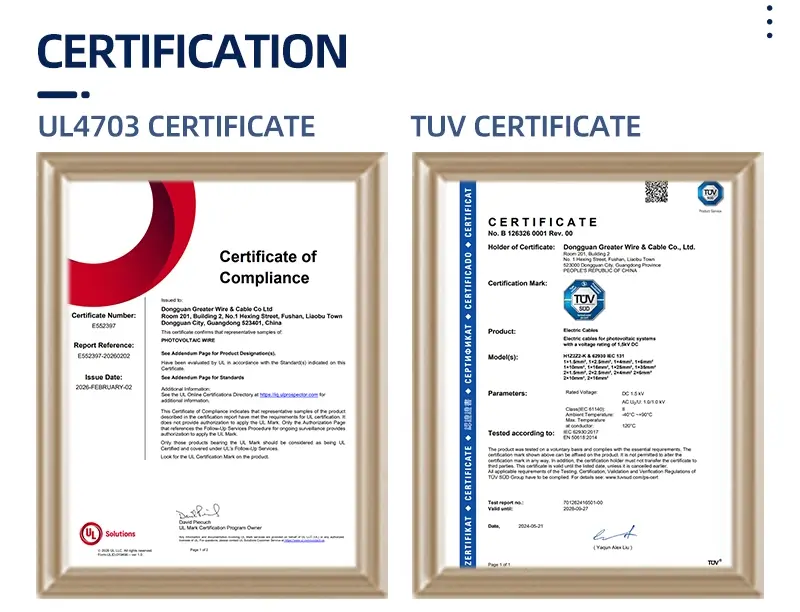
More importantly, as a European country, Denmark has strict standard requirements for the quality of cables used in renewable energy projects. This photovoltaic DC cable H1Z2Z2-K has obtained TUV authoritative certification (Certificate No.: B 126326 0001 Rev.00), which fully meets the strict safety and quality standards of the European renewable energy industry—this is one of the core reasons why our team recommends this product. It not only ensures that the cable can smoothly meet the local project acceptance standards in Denmark but also provides quality support for the "demonstration" attribute of the project, allowing students to come into contact with green energy supporting products that meet international standards in practice. In addition, combined with the "wind-solar complementary" characteristics of the project, the photovoltaic DC cables H1Z2Z2-K we matched are available in two specifications: 4mm² and 6mm². The 4mm² specification is used for power transmission from photovoltaic modules to combiner boxes, adapting to the scattered installation scenario of rooftop modules, balancing flexibility and low loss; the 6mm² specification is used for wiring from combiner boxes to inverters, adapting to the demand for centralized power transmission, avoiding power loss caused by excessive current, and further meeting the power transmission needs of the project.
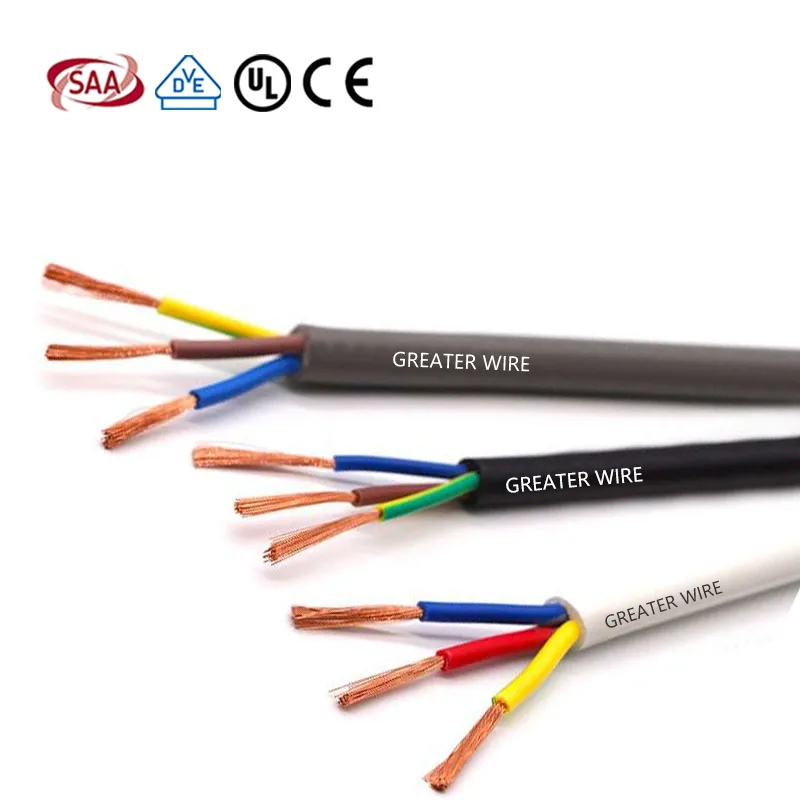
In addition to the core photovoltaic DC cables, other cables we selected also fully align with the project background and pain points, forming a complete power transmission system. In response to the project's demand for fixed installation from inverters to distribution cabinets, combined with Denmark's requirements for AC transmission stability in green energy projects, we selected AC cables NYY 3×10mm²—this cable has excellent insulation performance and mechanical strength, suitable for fixed installation scenarios. The conductor cross-section is accurately calculated, which can not only meet the transmission needs of the power output by the inverter but also avoid cost waste caused by excessive cross-section, conforming to the budget control needs of university projects; at the same time, its weather resistance and anti-aging performance are consistent with those of photovoltaic DC cables, which can adapt to outdoor auxiliary installation scenarios, maintain consistency with the reliability requirements of the entire system, and also meet Denmark's overall quality standards for cables in renewable energy projects.
In response to the demand for wind turbine control signal transmission, combined with the core model of the project's "wind-solar complementarity" and the requirements of the teaching scenario for signal stability, we selected control cables RVV 4×2.5mm². Small wind turbines in Denmark are mostly arranged in open campus areas, and the control lines need to be exposed outdoors for a long time, and the wiring path may cross with power cables. Therefore, the control cables have extremely high requirements for anti-interference, flexibility and reliability. This RVV cable adopts a multi-core structure with excellent flexibility, which is convenient for installation in complex outdoor paths and later maintenance—this is particularly suitable for teaching scenarios, facilitating students to conduct line inspection and maintenance operations in practice; at the same time, it has good anti-interference performance. It is installed in a separate control channel, which can effectively avoid signal interference with photovoltaic and AC cables, ensure the stable transmission of wind turbine control signals, guarantee the coordinated operation of wind turbines and photovoltaic systems, and solve the project's pain point of "high difficulty in system integration". In addition, this cable also has IEC national standard certification, which complements the TUV certification of photovoltaic DC cables, ensuring that the entire cable system meets international and local Danish standards, providing comprehensive support for the demonstration attribute of the project.
Aligning with Project Scenarios and Providing Full-Scale Support
After the cable selection was determined, our team promoted the full implementation of the solution in combination with Denmark's project construction specifications, the particularity of the campus teaching scenario, and project pain points, ensuring seamless connection between cable supply and project construction and commissioning. Considering that the project is located in Denmark and the construction in the campus area needs to take into account the teaching order, we planned the logistics and transportation plan in advance. Relying on mature wire export channels, we strictly controlled the transportation time to ensure that all cables were delivered to the site before the project construction node, avoiding affecting the construction progress—this is also a pre-plan made by our team in advance for cross-border transportation pain points based on international project experience, which meets the requirements of Danish projects for construction efficiency.
During the cable installation phase, our team provided remote technical guidance and gave targeted installation suggestions combined with different scenarios such as rooftop installation, outdoor fixed installation, and separate control line installation: when installing rooftop photovoltaic cables, we guided the construction party to avoid weak load-bearing areas of the rooftop, optimize the wiring path by taking advantage of the cable's flexibility, reduce mechanical wear, and do a good job in waterproof protection to adapt to Denmark's rainy and snowy climate characteristics; when installing AC cables for fixed installation, we guided the construction party to do a good job in line fixing and insulation protection to avoid interference with other equipment; when installing control cables, we strictly followed the requirement of "separate control channels" and arranged them separately from power cables to ensure stable signal transmission. These details not only solved the project's pain point of "difficult wiring" but also provided a standardized line demonstration for later teaching practice, allowing students to intuitively understand the installation standards and precautions of cables in different scenarios.
In response to the project's pain point of "imbalance between power supply and demand", our team cooperated with the project party to complete the configuration of the energy storage system and the commissioning of the intelligent energy management system (EMS) in combination with cable performance: using the low-loss advantages of photovoltaic DC cables and AC cables to improve power transmission efficiency and reduce energy waste; through the intelligent energy management system, real-time scheduling of photovoltaic, wind power and energy storage output, reasonably distributing the electrical energy transmitted by photovoltaic DC cables and the electrical energy regulated by wind turbines through control cables, balancing the peak-valley difference of campus electricity consumption, and ensuring the stable supply of electricity for teaching and scientific research—this plan not only conforms to Denmark's wind-solar complementary market model but also gives full play to the performance advantages of the cables we selected, realizing the coordinated efforts of "cable selection + system commissioning".
In addition, combined with the project's positioning of "teaching + demonstration", our team also sorted out detailed cable parameters, selection basis and maintenance manuals for the university to use in teaching practice. The manual focuses on the TUV certification advantages of the photovoltaic DC cable H1Z2Z2-K, the applicable scenarios of different specifications of cables, and the maintenance points of cables in Denmark's outdoor environment. It not only solves the project's pain point of "long-term maintenance" but also further strengthens the teaching value of the project, which has been recognized by the university.
Aligning with Background Needs and Achieving Win-Win Results
Through the joint efforts of both parties, the photovoltaic microgrid project was successfully completed and put into use at the end of 2025. Combined with Denmark's market characteristics and the core positioning of the project, remarkable achievements have been made. In terms of power supply, through the low-loss and high-stability advantages of the cables we selected, combined with the energy storage system and intelligent scheduling plan, the problem of power supply and demand imbalance in the project has been completely solved, and the self-consumption rate of clean energy has reached more than 85%. It not only conforms to Denmark's green energy policy orientation of "cost reduction and efficiency improvement" but also stably meets the daily teaching and scientific research electricity needs of the campus, realizing the efficient implementation of the wind-solar complementary model.
In terms of system stability, all cables have performed excellently. Especially the photovoltaic DC cable H1Z2Z2-K, in Denmark's outdoor environment with low temperatures in winter and strong sunlight in summer, there have been no problems such as aging, damage, or signal interference. Combined with the synergy of AC cables and control cables, the system operation stability has reached more than 99%, which fully meets the demand for long-term stable operation of the teaching demonstration project. Up to now, the project has been in stable operation for nearly a year, and there have been no system failures caused by cable problems, providing students with a stable and standardized green energy practice scenario and giving full play to the dual value of the project's "demonstration + teaching".
In terms of compliance and demonstration, the TUV certification of photovoltaic DC cables and the IEC national standard certification of other cables ensure that the project has successfully passed the local acceptance standards in Denmark and has become one of the demonstration cases of campus wind-solar complementary microgrid projects in Denmark. The university feedback that the cables we selected not only adapt to the project scenario and solve the core pain points but also their standardized quality and clear selection logic provide vivid practical materials for the teaching of green energy-related majors, allowing students to master the selection, installation and maintenance knowledge of international standard cables in practice, and further improving the teaching quality.
Project Summary and Practical Enlightenment
The practical operation of this photovoltaic microgrid project at Aalborg University in Denmark has made our team more deeply realize that the core of wire export projects is "adaptability"—especially for European countries like Denmark, it is necessary to not only conform to the local market characteristics, policy orientation and quality standards but also align with the specific positioning and pain points of the project. The reason why we can successfully complete the project is that we did not blindly recommend products, but deeply bound the cable selection with Denmark's wind-solar complementary market model, the project's "demonstration + teaching" positioning, outdoor environment characteristics, and the four core pain points: the TUV certification of the photovoltaic DC cable H1Z2Z2-K adapts to Danish standards, the weather resistance adapts to the outdoor environment, and the low-loss characteristics meet the demand for cost reduction and efficiency improvement; the selection of AC cables and control cables specifically solves the pain points such as system integration and wiring, while taking into account the maintainability of the teaching scenario.
For green energy projects in Denmark and other European countries, the quality, certification and adaptability of cables are the foundation for the success of the project, while accurate selection based on the project background and full technical support are the keys to ensuring the project's implementation. The success of this project has also accumulated valuable experience for our team to undertake wire export projects for European green energy in the future—always taking project needs as the core, combining local market characteristics and standards, and providing scenario-appropriate products and services that solve pain points can achieve win-win results with customers.
If you are promoting green energy projects in Denmark or other European regions and facing difficulties related to cable selection, wiring, system integration, etc., please feel free to communicate with our team. We will provide you with targeted cable selection and technical support plans based on the project background, local market characteristics and standard requirements to help your project land smoothly and operate stably.
Contact Information:
Tel/WeChat/WhatsApp: +86 135 1078 4550 / +86 136 6257 9592
Email: manager01@greaterwire.com
 Swiss High-Standard Commercial Rooftop PV 2022



 Building 2, No. 40 Luxi 2nd Road, Liaobu Town, Dongguan City, Guangdong Province, China