


 Home
HomeComplete UL44 Wire Guide: XHHW-2, RHW-2, RHH and SIS Explained
 GERITEL
 Mar 24,2026

In real-world electrical projects, engineers and procurement professionals frequently face a common yet critical challenge: UL44 wire types often look similar in naming but differ significantly in performance and application, especially when comparing XHHW-2 cable, RHW-2 wire, RHH conductor, and SIS wire. Without a clear understanding, this can easily lead to incorrect selection, compliance risks, or costly project delays.
At the same time, North American markets enforce strict requirements on UL certified building wire, where compliance with UL44 is essential not only for safety but also for NEC approval and long-term system reliability. This guide is designed to provide a structured and practical understanding—from UL44 standards to detailed wire breakdowns, enhanced with clear comparison tables—to help you make confident and compliant decisions.
1. In-Depth Understanding of UL44 Standard
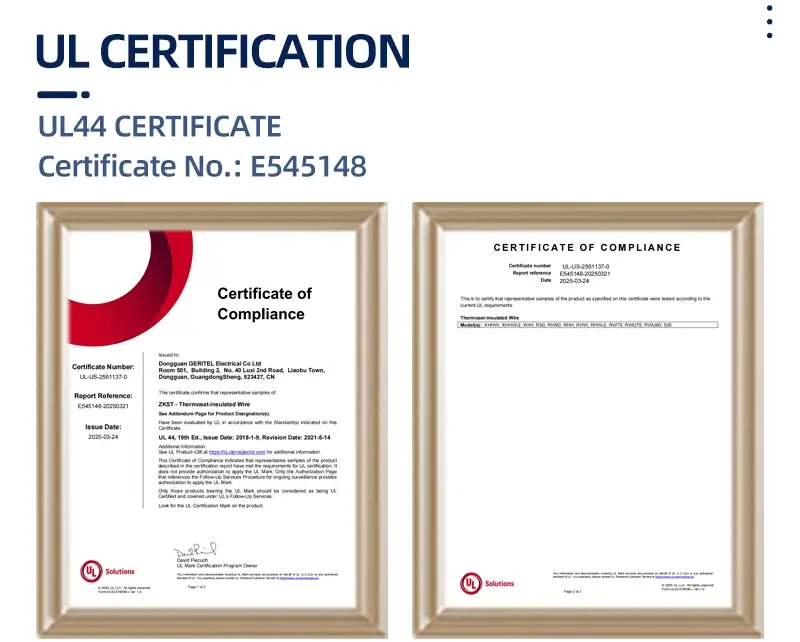
The UL44 standard, developed by Underwriters Laboratories, is a core safety specification for thermoset-insulated building wires widely used in systems compliant with the National Electrical Code (NEC). It primarily applies to wires insulated with cross-linked materials such as XLPE, ensuring superior performance under thermal and environmental stress.
UL44 certification involves rigorous testing across multiple dimensions, including heat resistance, flame retardancy, moisture resistance, insulation integrity, and mechanical durability. These requirements ensure that every UL44 wire maintains stable performance even in demanding industrial or outdoor environments.
For contractors and distributors, choosing UL certified building wire compliant with UL44 not only ensures regulatory approval but also significantly reduces maintenance risks and enhances long-term operational reliability.
2. Quick Comparison Table of UL44 Wire Types
To help you quickly understand the differences, the following table summarizes the key characteristics of the four major UL44 wire types:
| Parameter | XHHW-2 Cable | RHW-2 Wire | RHH Conductor | SIS Wire |
| Full Name |
XLPE High Heat Water-Resistant |
Rubber (modern XLPE) Heat Water-Resistant |
High Heat-Resistant Rubber |
Switchboard Wire |
| Conductor |
Copper / Aluminum (solid or stranded) |
Copper / Aluminum (stranded) |
Copper / Aluminum (stranded) |
Fine-stranded copper |
| Insulation | XLPE | XLPE | XLPE / EPR | XLPE |
| Outer Jacket | No | No | No | No |
| Temp Rating | 90°C (wet & dry) | 90°C (wet & dry) | 90°C (dry only) | 90°C (dry only) |
| Water Resistance | ✔ | ✔ | ✘ | ✘ |
| UL44 Focus | Wet performance | Moisture durability | Heat resistance | Flexibility & flame |
| Typical Use |
General power distribution |
Wet/industrial areas |
Dry high-temp | Control panels |
3. XHHW-2 Cable Explained (Best General-Purpose Option)
XHHW-2 cable is one of the most versatile UL44 wire types, designed for both heat resistance and water resistance, making it suitable for a wide range of installations—including XHHW-2 cable for engineering projects, which is a common application due to its adaptability.
It typically uses copper or aluminum conductors, either solid or stranded, depending on application requirements. The insulation is cross-linked polyethylene (XLPE), which offers excellent dielectric strength and thermal stability. This cable usually has no outer sheath, as the insulation itself provides sufficient protection.
With a 90°C rating in both wet and dry conditions, XHHW-2 passes strict UL44 tests for moisture resistance and thermal deformation, making it highly reliable in conduits, underground systems, and outdoor installations.
It is widely used in commercial buildings, industrial plants, and utility distribution systems where versatility is required.
4. RHW-2 Wire Explained (Best for Wet Environments)
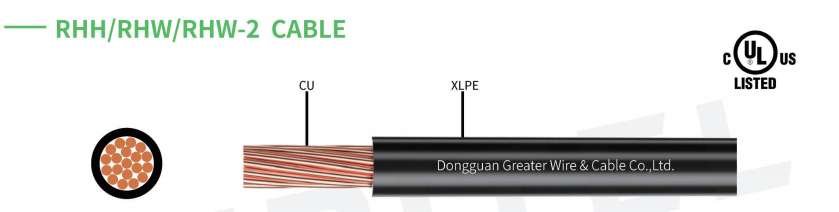
RHW-2 wire is structurally similar to XHHW-2 but is more specifically optimized for long-term moisture resistance, making it highly reliable in wet conditions.
The conductor is typically stranded copper or aluminum, which improves flexibility and installation efficiency. The insulation is XLPE, replacing traditional rubber materials for better performance, and like XHHW-2, it does not include an outer jacket.
Rated at 90°C for both wet and dry environments, RHW-2 undergoes strict UL44 testing focused on moisture durability and insulation stability, making it ideal for underground conduits, industrial facilities, and outdoor cable trays.
If your project involves continuous exposure to humidity or water, RHW-2 is often the safer and more durable choice.
5. RHH Conductor Explained (Dry High-Temperature Applications)
RHH conductor is designed specifically for high-temperature performance in dry environments, making it different from RHW-2 despite similar naming.
It uses stranded copper or aluminum conductors, with insulation made from XLPE or EPR (ethylene propylene rubber). The design does not include an outer jacket, as it focuses on thermal endurance rather than moisture protection.
RHH is rated for 90°C in dry locations only, and UL44 certification emphasizes heat aging resistance, flame performance, and insulation stability.
It is commonly used in indoor conduit systems, switchgear, and high-temperature industrial environments where moisture is not a concern—complementing specialized options like XHHW electric cable for substations, which is tailored for substation-specific high-demand scenarios.
6. SIS Wire Explained (Control Panel Specialist)
SIS wire (Switchboard Insulated Wire) is designed for internal wiring of electrical equipment, where flexibility and compact installation are critical.
It features fine-stranded copper conductors, allowing easy routing in tight spaces, and uses XLPE insulation for high heat resistance and electrical performance. Like other UL44 wires, it typically has no outer jacket.
SIS wire is rated for 90°C in dry conditions, and UL44 certification focuses on flame resistance, mechanical durability, and long-term stability.
It is widely used in control panels, switchboards, automation systems, and industrial equipment.
7. Application-Based Selection Guide
To simplify decision-making, the following table provides scenario-based recommendations:
| Application Scenario | Recommended Wire | Key Reason |
| Dry indoor wiring | RHH / SIS | Cost-effective and sufficient |
| Wet industrial areas | RHW-2 | Strong moisture resistance |
| Outdoor / underground | XHHW-2 / RHW-2 | Versatile and compliant |
| Cable trays / feeders | XHHW-2 | General-purpose flexibility |
| Control panels | SIS | High flexibility |
8. Compliance and Purchasing Tips
When sourcing UL44 wire, always verify the UL marking and file number printed on the cable, and cross-check it through official UL databases to ensure authenticity.
During installation, follow NEC requirements for conduit fill, bending radius, and environmental classification, as improper installation can compromise even the best UL certified building wire.
If you are unsure which wire type fits your project, working with a professional supplier can help you avoid compliance risks and optimize cost-performance balance.
9. Conclusion
Understanding the differences between XHHW-2 cable, RHW-2 wire, RHH conductor, and SIS wire is essential for making informed decisions in UL44-based electrical systems. Each wire type is designed for a specific environment, and selecting the right one ensures safety, compliance, and long-term reliability.
Contact us today:
At Dongguan GERITEL Electrical Co., Ltd., we specialize in exporting high-quality UL certified building wire that meets UL44 standards. Our team is ready to support your project with expert selection guidance and stable supply solutions.
Tel / WhatsApp / WeChat: +86 135 1078 4550 / +86 136 6257 9592
Email: manager01@greaterwire.com
For inquiries or quotations, please contact us, and let us help you build safer and more efficient electrical systems.
 XHH vs XHHW Wire: Dry vs Wet Location Ratings Explained



 Building 2, No. 40 Luxi 2nd Road, Liaobu Town, Dongguan City, Guangdong Province, China