


 Home
HomeCommon Specifications Required When Importing XHHW/XHHW-2 Wire
 GERITEL
 Jul 03,2026

Importing wire is different from buying local. The wire must meet project specifications, pass customs, and satisfy inspector requirements. If something is wrong, it is too late to fix it when the container is at the port.
XHHW/XHHW-2 wire is imported for commercial and industrial projects worldwide. But not all XHHW-2 is the same. Understanding the specifications required for import ensures you get the right wire the first time.
This article covers the common specifications required when importing XHHW/XHHW-2 wire, including certifications, documentation, marking, and quality verification.
1. Certification Requirements
Certification is the most important specification for imported XHHW-2 wire. Without the right certifications, the wire may not pass inspection or be accepted by the project engineer.
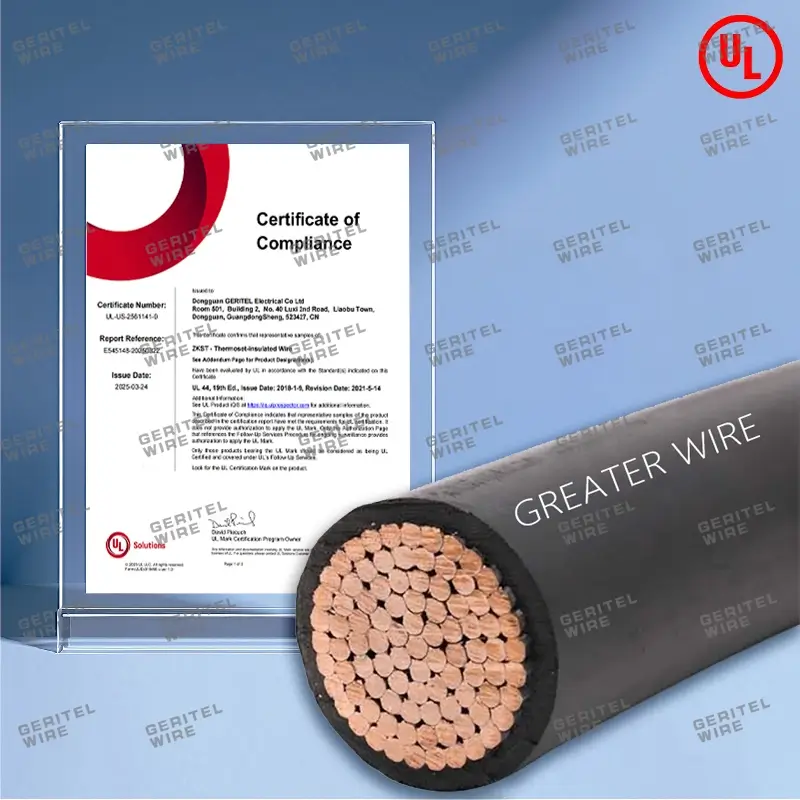
UL 44. XHHW-2 wire must be certified under UL 44, the standard for thermoset-insulated wires. This is the foundational certification. Without UL 44, the wire is not recognized as XHHW-2 in North America.
UL listing mark. The wire jacket must carry the UL listing mark. This is the visual proof of certification. For imported wire, the UL mark is non-negotiable. Always request the UL file number from the manufacturer and verify it on the UL website.
Other certifications. Depending on the project, additional certifications may be required:
CSA for Canadian projects
Sunlight resistance marking for outdoor use
CT use marking for cable tray installations
For XHHW-2 wire import requirements, UL 44 is the starting point. A UL 44 XHHW-2 wire specification sheet should clearly show the UL listing mark.
2. Specification Sheet Requirements
The specification sheet (datasheet) is the document that defines the wire's construction and performance.
What the spec sheet must include:
- Wire type: XHHW or XHHW-2 (the -2 is critical)
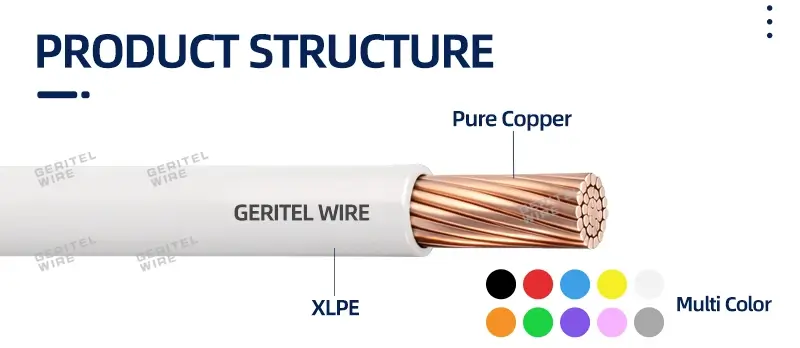
- Conductor material and construction (copper, stranded/solid)
- Voltage rating: 600V, 1000V, or 2000V
- Temperature rating: 90°C wet and dry
- Insulation type: XLPE or thermoset
- UL certification: UL 44 listed
- Gauge sizes available: AWG or kcmil
- Outside diameter and weight
- Ampacity information
Check the spec sheet against the actual wire. When the shipment arrives, verify that the wire matches the spec sheet. Many problems are caught by this simple check.
3. Marking and Labeling Requirements
The wire jacket marking is the first thing inspectors check. It must be legible and complete.
- What the marking must show:
- Manufacturer name or logo
- Wire type: XHHW-2
- Conductor size (AWG or kcmil)
- Voltage rating
- Temperature rating
- UL listing mark
- Sunlight resistance (if outdoor rated)
- CT use (if 1/0 AWG and larger for cable tray use)
- Date code or lot number
Importance of marking. Markings provide traceability. If the wire fails or is questioned, the marking allows the inspector to verify its origin and certification.
XHHW-2 cable marking requirements are defined by UL and the NEC. Missing or illegible markings can cause an entire shipment to be rejected.
4. Packaging and Documentation
Proper packaging and documentation are essential for import compliance.
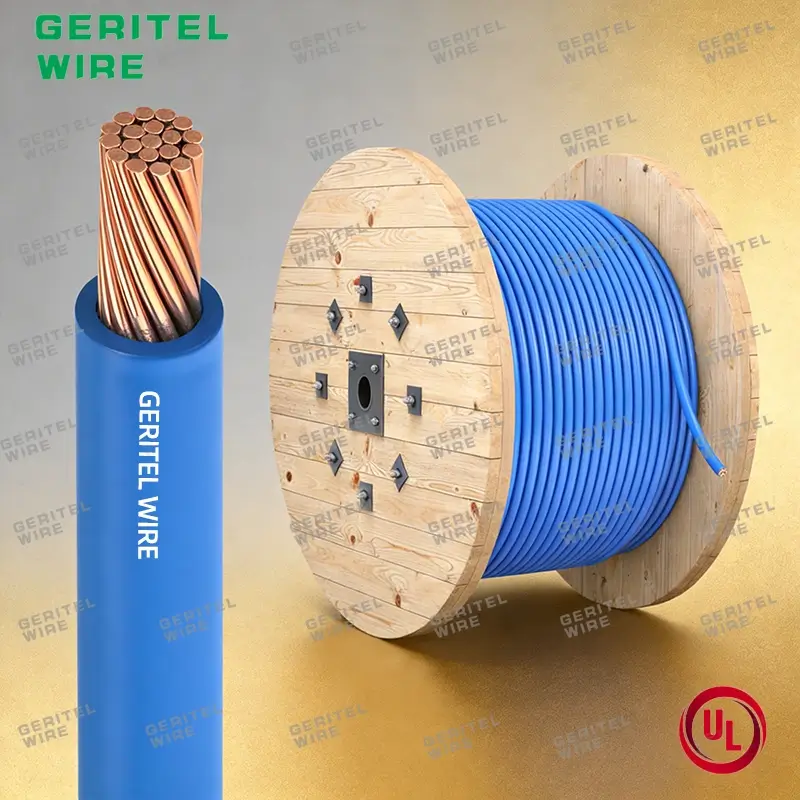
Packaging. XHHW-2 wire is typically packaged on non-returnable wood reels. The reels should be clearly labeled with the wire specifications. The shipping documentation must match the reel labels.
Documents required for import:
Commercial invoice
Packing list
Bill of lading
Manufacturer's certification of compliance
UL certificate (copy)
Test reports (if required)
Request a sample. Before ordering a large quantity, request a sample length. Verify the sample against the spec sheet and the jacket marking. If the sample is wrong, the bulk shipment will be wrong.
5. Common Issues with Imported XHHW-2 Wire
Here are the most common problems encountered with imported XHHW-2 wire.
Issue 1: Incorrect marking. The jacket marking does not match the spec sheet. Missing UL mark, wrong wire type, or missing "-2" designation.
Issue 2: No UL certification. The spec sheet claims UL certification, but the wire does not carry the UL mark. The UL file number cannot be verified.
Issue 3: Wrong insulation. The spec sheet says XLPE, but the insulation is actually PVC. This is a serious problem that compromises performance.
Issue 4: Incorrect gauge. The wire is labeled 2 AWG but measures smaller. This is a quality control failure.
Issue 5: Missing documentation. The required certification and test reports are not provided with the shipment.
How to prevent issues:
- Verify the manufacturer's UL certification before ordering
- Request a sample and inspect it before shipping the full order
- Require the manufacturer to provide a certificate of compliance with every shipment
- Work with suppliers who have a track record of quality and compliance
FAQ
Q1: What certification is required for importing XHHW-2 wire?
UL 44 is the primary certification. The wire jacket must carry the UL mark. CSA may be required for Canadian projects.
Q2: How do I verify UL certification?
Request the UL file number from the manufacturer and verify it on the UL website. Check that the wire type and ratings match the certification.
Q3: What is the most common problem with imported XHHW-2?
Incorrect or missing jacket markings. Always check a sample before accepting a bulk shipment.
Q4: Do I need sunlight resistance for outdoor imported XHHW-2?
Yes, if the wire will be installed outdoors. Look for "Sunlight Resistant" or "SUN RES" marking on the jacket.
Need to Import XHHW/XHHW-2 Wire?
Tell us about your project—wire type, quantity, and required certifications. We will provide complete specifications and documentation for your import order.
Contact us
Dongguan GERITEL Electrical Co., Ltd.
Tel/WhatsApp/Wechat: +86 136 6257 9592
Tel/WhatsApp/Wechat: +86 135 1078 4550
Email: manager01@greaterwire.com
Website: www.geritelgroup.com
 How to Select Between XHHW-2 and THWN-2 Wire for Your Project



 Building 2, No. 40 Luxi 2nd Road, Liaobu Town, Dongguan City, Guangdong Province, China