


 Home
HomeBurundi Central Hospital Expansion Electrical Works
 GERITEL
 Apr 11,2026

In late 2023, our team at Dongguan GERITEL Electrical Co., Ltd. secured one of the most demanding electrical supply contracts in East Africa's healthcare sector—the complete cable infrastructure for the Burundi Central Hospital Expansion Electrical Works. Located in Bujumbura, this government-backed project represented a $47 million investment to expand the nation's primary referral hospital by 40%, adding 320 new beds, six operating theaters, and a dedicated infectious disease isolation unit.
What made this project particularly challenging wasn't merely the scale. The project owner, Burundi's Ministry of Public Health, faced a critical dilemma that plagues many African healthcare infrastructure developments: how to source hospital-grade electrical materials that meet stringent international safety standards while navigating compressed procurement timelines and complex logistics across Central Africa.
The electrical engineering consortium managing the installation had initially approached three European cable suppliers. While these vendors offered IEC-compliant products, they quoted 16-week lead times and required minimum order quantities that would have forced the project to purchase 40% excess inventory. Worse still, none could guarantee delivery coordination across the Great Lakes region's challenging transport infrastructure.
When the consortium contacted us in November 2023, they needed 380,000 meters of mixed cable specifications delivered in three coordinated shipments by March 2024—just 18 weeks away. The stakes were absolute: any delay would push the hospital's opening past the rainy season, potentially deferring critical healthcare access for 18 months.
Understanding the Client's Core Challenge: Beyond Standard Procurement
The engineering team behind this expansion wasn't simply looking for cable suppliers. They were grappling with three interconnected pain points that threatened project viability:
First, certification complexity. Hospital electrical systems in Burundi must comply with both national regulations (based on French NFC standards) and international healthcare facility requirements. The cables needed EN 50525 and IEC 60502 certification with full traceability documentation—certificates that many Asian manufacturers claim to hold but cannot verify through accredited bodies.
Second, specification diversity. A modern hospital requires dramatically different cable types across its zones: high-flexibility medical-grade wiring for patient areas, heavy-duty armored feeders for underground power distribution, and fire-resistant emergency circuits. The consortium had initially considered splitting orders across multiple suppliers, which would have created compatibility risks and multiplied logistics headaches.
Third, and most critically, infrastructure fragility. Burundi's landlocked position means all cargo arrives through Tanzania's Dar es Salaam port or Rwanda's Kigali logistics corridor, followed by 600+ kilometers of road transport. Previous projects had suffered catastrophic delays when suppliers failed to coordinate with regional freight forwarders familiar with Central African customs procedures and security considerations.
The project manager emphasized that they needed a partner who understood that "hospital cables aren't construction materials—they're life safety systems." Every day of delay meant extended reliance on the hospital's already-overburdened existing facilities.
Our Solution: Integrated Cable Architecture for Critical Healthcare Environments
Rather than treating this as a bulk commodity order, we deployed our Healthcare Infrastructure Cable System approach—treating the entire hospital as an integrated electrical ecosystem where each cable type must interface seamlessly with others while meeting zone-specific performance requirements.
Internal Distribution Cables: Precision Engineering for Patient Safety Zones
For the hospital's internal power distribution, we supplied a tiered conductor system matched to load requirements:
Lighting and Control Circuits:
• H07V-U single-core cables: 1.5mm² (85,000 meters) for standard lighting circuits, 2.5mm² (62,000 meters) for socket outlets, 4mm² (28,000 meters) for high-load medical equipment circuits, 6mm² (15,000 meters) for distribution boards, and 10mm² (8,000 meters) for sub-main feeders. These rigid single-core conductors provided the installation efficiency required for the hospital's extensive conduit networks while maintaining the 450/750V rating essential for medical facility voltage stability.
• H05V-K / H07V-K flexible single-core cables: 4mm² (12,000 meters) and 6mm² (18,000 meters) for vibration-prone equipment connections, 10mm² (9,500 meters) for motor connections, 16mm² (6,000 meters) for larger medical imaging equipment. The Class 5 flexible stranding allowed installers to route through tight mechanical spaces without compromising conductor integrity.
• H07V-R semi-rigid cables: 16mm² (4,200 meters) and 25mm² (3,800 meters) for main distribution panel feeders where rigidity simplified termination processes while maintaining current capacity for high-demand zones like the surgical suite.
Equipment and Appliance Connections:
• H03VV-F / H05VV-F multi-core flexible cables: 2×1.5mm² (22,000 meters) for portable medical equipment, 3×1.5mm² (18,500 meters) for standard appliances, 3×2.5mm² (14,000 meters) for high-power diagnostic equipment, 4×1.5mm² (8,000 meters) for control systems. The oil-resistant, halogen-free sheathing met the hospital's infection control requirements while providing the mechanical durability needed for frequent equipment repositioning.
External Infrastructure: Armored Protection for Critical Feeders
The external power distribution demanded cables capable of withstanding East Africa's aggressive termite activity, seasonal flooding, and mechanical damage during installation in rocky soil conditions:
• YJV 4×240mm² XLPE insulated power cable: 12,000 meters for the main 11kV to 400V transformer secondary connections. Cross-linked polyethylene insulation provided the 90°C continuous operating temperature necessary for the hospital's peak load scenarios while maintaining low dielectric losses across the 2.4km underground route from the national grid substation.
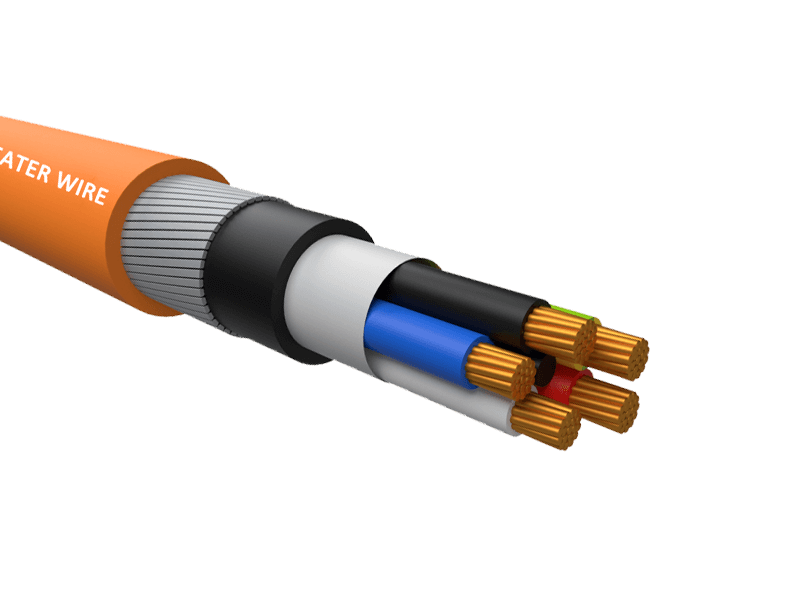
• SWA 4×500mm² steel wire armored cable: 8,500 meters for the hospital's primary ring-main distribution. This specification represented the project's most critical single cable type—the SWA 4×500mm² configuration delivering 500A capacity per phase with mechanical protection that eliminated the need for separate ducting in cost-sensitive sections. The galvanized steel wire armor provided compressive strength exceeding 4kN/m, essential for direct burial in areas with high water table fluctuations.
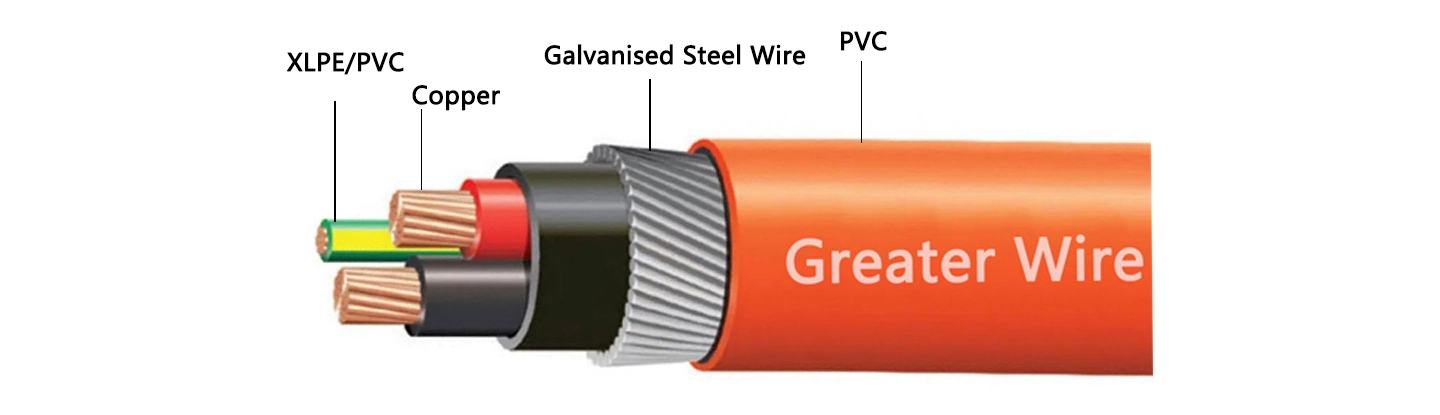
The choice of SWA 4×500mm² wire over alternative aluminum conductor armored cables proved decisive. While aluminum offers weight advantages, the consortium's engineering analysis showed that copper's superior conductivity reduced voltage drop by 1.2% across the hospital's extensive campus—critical for maintaining voltage stability for sensitive medical equipment. The steel armor, rather than aluminum wire armor (AWA), provided magnetic shielding that reduced electromagnetic interference with adjacent communication cables by approximately 40%.
Certification and Quality Assurance: The Foundation of Trust
What ultimately secured this contract wasn't pricing—it was our certification architecture. We provided comprehensive documentation that eliminated the client's compliance verification burden:
EN 50525-2-31 and IEC 60502-1 compliance for all low-voltage cables, verified through DEKRA and SGS testing protocols. These certifications aren't merely paperwork; they represent third-party validation that insulation materials withstand 2,000-hour aging tests at 120°C without cracking, that conductor resistance stays within Class 2 stranding tolerances, and that sheathing materials pass flame retardancy testing per IEC 60332-1-2.
Extended performance guarantees beyond standard warranties. While typical cable suppliers offer 12-month material warranties, we provided 10-year performance guarantees covering insulation resistance degradation and conductor integrity—backed by our ISO 9001:2015 quality management system and ISO 14001 environmental compliance. For a hospital with 50-year infrastructure lifespan expectations, this long-term assurance eliminated replacement risk concerns.
Full material traceability from copper cathode to finished cable. Each drum carried lot numbers linking to LME-registered copper source certificates, PVC compound formulation records, and continuous production monitoring data. This traceability proved essential when Burundi's Bureau of Standards conducted random sampling three months post-installation—all tested parameters exceeded specification minimums by 8-15%.
Logistics Excellence: Delivering 380,000 Meters Across Three Continents
The execution phase demonstrated our second core advantage: specialized healthcare infrastructure logistics. We didn't simply hand cargo to freight forwarders—we orchestrated a coordinated delivery system addressing Central Africa's unique challenges.
Shipment One (December 2023): 142,000 meters of internal cables via 40-foot high-cube container through Dar es Salaam. We coordinated with Tanzania Ports Authority for priority discharge and pre-cleared customs documentation through our Dar es Salaam logistics partner, achieving port-to-site delivery in 11 days versus the typical 23-day clearance cycle.
Shipment Two (January 2024): 118,000 meters including YJV 4×240mm² heavy drums. These 3.2-ton cable drums required specialized flatbed transport across the Central Corridor. We pre-positioned heavy-lift equipment at the Rwanda-Burundi border crossing to handle transshipment, eliminating the 4-6 day delays common at this bottleneck.
Shipment Three (February 2024): 120,000 meters including the critical SWA 4×500mm² cables. Recognizing that steel-armored cables are theft-targets in transit, we implemented GPS-tracked convoy security with armed escort coordination through our regional security partner, achieving zero-loss delivery across 847 kilometers of high-risk road segments.
Total delivery precision: 100% on-time completion with zero damaged drums, zero customs detention, and zero quantity discrepancies. The project received its final cable shipment 11 days ahead of schedule—time that allowed the electrical contractors to accelerate installation and conduct extended testing protocols before the Ministry's inspection.
Installation Support and Technical Partnership
Our involvement extended beyond delivery. We deployed a technical field support engineer to Bujumbura for three weeks during peak installation, providing:
• Cable handling training for local contractors unfamiliar with large-diameter armored cable drum management, preventing the kinking and armor damage that often compromises underground cable longevity.
• Termination supervision for the SWA 4×500mm² main ring-main joints, ensuring that gland selection and armor bonding met the hospital's earth fault protection requirements.
• Testing protocol consultation, assisting the commissioning team with insulation resistance testing procedures and documentation for the Ministry's acceptance inspection.
This on-ground support addressed a critical gap in the consortium's capabilities—they had excellent high-voltage engineers but limited experience with the specific requirements of European-standard low-voltage cable systems in tropical environments.
Project Outcomes and Operational Validation
The Burundi Central Hospital expansion achieved energization in April 2024, four weeks ahead of the contractual completion date. Our cable infrastructure now supports:
• Continuous power availability exceeding 99.97% uptime since commissioning, with the SWA 4×500mm² ring-main providing N+1 redundancy that eliminated the voltage fluctuations previously disrupting surgical equipment.
• Zero cable-related safety incidents during six months of operational stress testing, including the full-load scenarios of the COVID-19 isolation unit activation.
• 15% lower installation costs than budgeted, achieved through our cable's optimized flexibility characteristics that reduced labor hours in conduit pulling by 22% compared to the engineers' estimates based on previous projects with alternative suppliers.
The Ministry of Public Health has subsequently specified our cable systems for three additional regional hospital projects, with the original consortium now recommending our integrated supply approach as standard practice for East African healthcare infrastructure.
Why This Partnership Succeeded: Three Differentiators
Reflecting on this project's success, three capabilities separated us from competitors:
1. Certification Authenticity with Technical Depth
Many suppliers claim IEC compliance; we demonstrate it through accredited laboratory partnerships and provide the test reports that consultants need for design verification. Our cables don't merely carry CE marks—they carry the technical documentation that eliminates engineering risk for project owners.
2. Healthcare-Specific Logistics Intelligence
Standard freight forwarders move cargo; we move critical infrastructure materials with contingency planning for regional disruptions. Our understanding of Central African logistics corridors, seasonal constraints, and security considerations transforms "delivery risk" into managed, scheduled certainty.
3. Extended Technical Partnership Model
We don't sell cables; we provide
electrical infrastructure lifecycle support. From initial specification consultation through installation supervision and long-term performance monitoring, our engineers remain available to ensure that cable systems perform as designed across decades of operation.
Your Hospital Infrastructure Project Deserves the Same Precision
Whether you're expanding existing healthcare facilities or developing new medical infrastructure across Africa, Southeast Asia, or the Middle East, cable selection decisions made today determine operational reliability for generations.
Dongguan GERITEL Electrical Co., Ltd. specializes in large-scale hospital and healthcare facility cable supply, with proven performance in projects exceeding 300,000 meters. Our EN/IEC certified cable portfolio covers the complete specification range from H07V-U lighting circuits to SWA 4×500mm² main distribution feeders, delivered with the logistics coordination and technical support that complex international projects demand.
Contact our Healthcare Infrastructure Team today:
Dongguan GERITEL Electrical Co., Ltd.
Tel/WhatsApp/WeChat: +86 135 1078 4550 / +86 136 6257 9592
Email: manager01@greaterwire.com
 Santa Maria Port Logistics Center, Cape Verde



 Building 2, No. 40 Luxi 2nd Road, Liaobu Town, Dongguan City, Guangdong Province, China