


 Home
HomeAshalim Solar Complex Ongoing expansion (Negev Desert, Israel, 2021–2023)
 GERITEL
 Apr 17,2026

In March 2021, an email landed in my inbox. The sender was a project manager at an Israeli EPC contractor working on the Ashalim Solar Complex expansion—that iconic concentrated solar power and photovoltaic hybrid plant in the Negev Desert. The message was direct: "We need cables that can survive 25 years in the desert, but European suppliers need 20 weeks lead time. Can you do it?"
I stared at the screen for a long while. I'd heard of Ashalim—Israel's flagship renewable energy showcase, undergoing continuous expansion from 2021 to 2023. But the Negev? Summer surface temperatures hot enough to fry an egg. UV radiation that turns plastic to dust. Sandstorms that drop visibility to zero. In this environment, cables don't just carry current. They have to stay alive—and stay alive for a quarter century.
What Really Kept the Client Awake: Not Price, But "Invisible Risk"
Our first video call, their technical lead—let's call him Yaron—flipped through five slides, but his core anxiety boiled down to one sentence: "We cannot afford to fail."
Israel's power market is peculiar. World-class solar resources, cutting-edge tech in energy storage, smart grids, and agrivoltaics—but limited land area and constrained grid capacity. For large ground-mount plants like Ashalim, every equipment delivery is a hard deadline. Cables arrive one day late, civil crews stand idle, and liquidated damages tick by the hour.
The certification maze made it worse. Israel Electric Corporation recognizes TÜV. American investors demand UL. Site engineers think in THHN nomenclature. DC solar cabling must comply with EN 50618. Yaron put it plainly: "I don't want to buy cables from three suppliers and find out the connectors don't mate."
Then there was the unspoken fear—buried infrastructure. Excavating failed cables from desert sand costs ten times the cable itself. He wanted "install and forget" reliability.
Our Response: Not Selling Products, But Mapping a Solution
I didn't rush to quote. Instead, I asked three questions: What inverter brand? What's the substation spacing? Are you running conduit or cable tray?
The answers came back: American-brand inverters, accustomed to THHN/THWN-2 on the AC side. Farthest substation 800 meters from the collector station. No direct burial in desert sand—everything on elevated cable trays, scorching by day, condensation by night.
The picture cleared. We proposed a three-tier architecture:
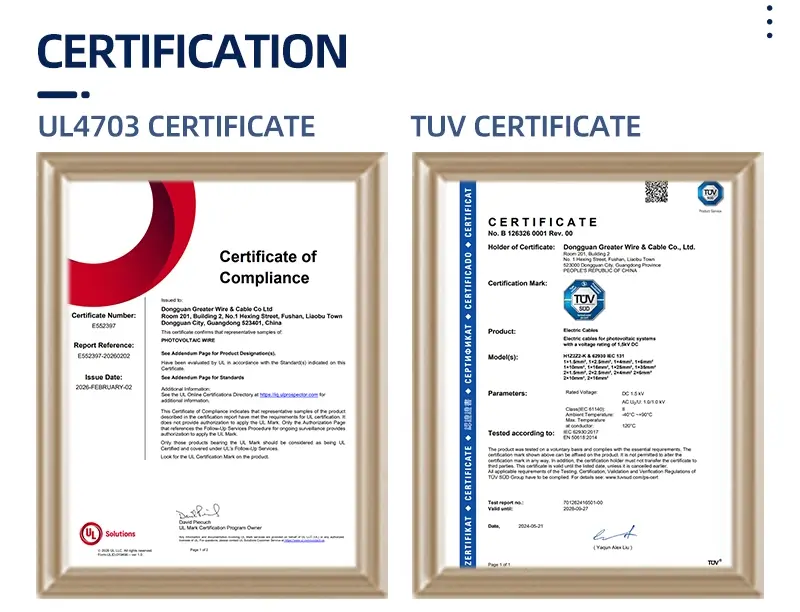
Tier One: PV array DC side—H1Z2Z2-K. Not because the name sounds technical, but because this PV-specific DC cable is genuinely built for deserts—double-layer insulation, inner XLPO rated to 125°C, outer UV-resistant sheath passing 720-hour xenon arc testing. We sent Yaron samples with a field report from a Morocco installation: identical cables running five years at the Sahara's edge, insulation resistance degradation under 3%. For sizing, 1×4mm² for short string runs, 1×6mm² for longer combiner feeds—balanced for ampacity and voltage drop.
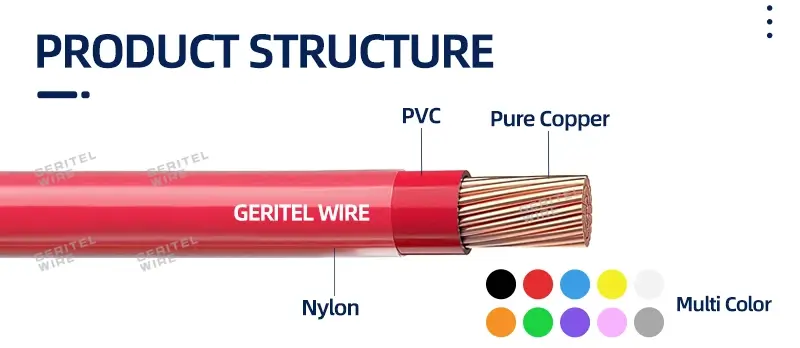
Tier Two: Inverter AC output—THHN/THWN-2. Yaron hesitated initially. Local NYM cable was cheaper. I walked through site conditions: electrical rooms with air conditioner condensate, cable trays cycling between 60°C daytime and potential condensation at night. THHN's nylon jacket outperforms PVC on moisture resistance by a full grade, and the 90°C rating leaves thermal headroom. We sized three tiers: 1×70mm² for smaller inverters, 1×120mm² as the workhorse, 1×185mm² for future-proofing. Crucially, this shipment carried UL 83 certification—no hiccups when American EPC sign-off time came.
Tier Three: Medium-voltage collection—XLPE cable. The project's backbone, from substations to the step-up station, 8.7/15kV and 18/30kV classes. We offered copper and aluminum conductor options. Yaron ran the numbers: aluminum 3×185mm² at 95% load factor stayed within temperature rise limits, cut costs by 15%, and eased cable tray loading. The critical detail was insulation formulation—water tree retardant XLPE, where occasional electrostatic buildup in desert conditions won't slowly erode dielectric strength.
The Summer That Nearly Broke Us
June 2022. The call came. Yaron's voice tight: Israel Electric Corporation had moved up grid connection approval by six weeks. The XLPE medium-voltage cables, originally scheduled for 8-week delivery, had to hit port in 5—or the entire section faced penalties.
I sat in the office until 11 PM that night. MV cables aren't standard stock. Cross-linked polyethylene insulation needs production time. We eventually split two production orders, ran overnight line adjustments at our Dongguan facility, dedicated capacity at our MV partner plant, locked copper and aluminum conductor raw material from bonded warehouse stock, and switched ocean freight to express slots—higher freight cost, but time recovered.
The day containers cleared Haifa Port, Yaron sent a photo: cable drums stacked at the temporary laydown yard, GERITEL labels catching the desert sunset. He noted the labels held up—UV-resistant ink staying legible under harsh light, saving his site engineers from squinting at specifications.
Three Years Later
The project reached phased completion in 2023. No thank-you note arrived—this industry doesn't do those. But Yaron posted on LinkedIn, an aerial shot of Ashalim with a line about "reliable supply chain partners." Three months later, his colleague called from Dubai with an inquiry. Yaron's referral.
The field data proved more valuable than any testimonial. First summer heat season: 45 consecutive days above 40°C surface temperature, H1Z2Z2-K insulation resistance monitoring held steady above spec. Inverter room THHN/THWN-2 installation: nylon jacket flexibility better than expected, saving labor hours on cable tray bends. XLPE MV cables with aluminum conductors: no joint overheating, thermal performance as modeled.
These details don't appear in product brochures. They're why clients decide "these people understand site reality."
If You're Facing Something Similar
Desert solar, high-altitude installations, coastal salt fog—these scenarios share one trait: cable selection has no standard answer, only site-specific answers.
What we offer isn't just TÜV-certified H1Z2Z2-K, UL-listed THHN/THWN-2, or XLPE medium-voltage cables in various sizes. We ask about your inverter brand, substation spacing, tray elevation—then tell you where the breakpoint falls between 4mm² and 6mm², where copper versus aluminum makes economic sense, when certification premiums pay off and when they don't.
Dongguan GERITEL Electrical Co., Ltd. has spent fifteen years in cable export. No advertising budget. All referrals. If you're planning a solar project and need cables that truly "install and forget," let's talk.
Contact:
• Tel/WhatsApp/WeChat: +86 135 1078 4550 / +86 136 6257 9592
• Email: manager01@greaterwire.com
In the desert, outliving the sand matters more than looking pretty.
 Muharraq Sewage Network Construction in Bahrain



 Building 2, No. 40 Luxi 2nd Road, Liaobu Town, Dongguan City, Guangdong Province, China