


 Home
HomeAlten Solar Power Station – Kenya 44MW
 GERITEL
 Apr 24,2026

The energy transition in East Africa is accelerating, and Kenya, as a core member of the East African Community, has become a "leader" in the regional photovoltaic (PV) industry development, thanks to its stable political environment, improved infrastructure support, and proactive renewable energy policies. In recent years, the Kenyan government has launched the "Vision 2030", clearly proposing to increase the proportion of clean energy power generation to over 90%. It has not only imposed mandatory requirements for reserving PV systems in new buildings but also introduced a series of preferential policies such as import tariff exemptions, value-added tax reductions, and simplified customs clearance procedures, attracting energy investments from around the world. As a well-known international renewable energy developer, the Alten Group keenly captured the potential of the Kenyan PV market and launched the 44MW grid-connected ground-mounted PV power station project in central Kenya at the end of 2023. This is also the Alten Group’s first large-scale PV project in East Africa, aiming to alleviate the industrial and residential power gaps in central Kenya and help Kenya achieve its clean energy transition goals. In early 2024, our company stood out with complete authoritative certifications, rich international project experience, and customized solutions, successfully becoming the exclusive wire supplier for the project. We successfully completed the export, technical support, and on-site service of a full set of special PV wires, establishing a benchmark for China’s wire exports to the East African PV market with professional strength and laying a solid foundation for the Alten Group’s PV layout in East Africa. This article will focus on the real advancement process of the project, explaining how we provided scenario-appropriate wire solutions to solve the core challenges of the project by combining the actual project scenarios.
I. Project Background: Alten Kenya PV Power Station
The Alten Kenya 44MW PV Power Station is located in Nyeri County, central Kenya. This region has a tropical savanna climate, characterized by high temperatures and little rainfall throughout the year, with an average annual temperature of 25-30℃ and a maximum summer temperature of up to 38℃. It also has extremely high ultraviolet (UV) radiation intensity and annual sunshine hours exceeding 3,000 hours. Such climatic conditions place extremely high weather resistance requirements on the core equipment of the PV power station, especially the wires exposed outdoors for a long time. At the same time, the project is located far from the urban core area, about 120 kilometers from Nairobi, with inconvenient transportation and a lack of mature industrial supporting facilities around. The local construction team is mainly composed of ordinary construction workers who lack professional experience in PV power station wire installation, which also brings considerable challenges to the project construction.
As the Alten Group’s first large-scale PV project in East Africa, this project carries the strategic significance of the group’s expansion into the East African market. Therefore, the project party has extremely strict requirements for equipment selection, with core demands focusing on four aspects: "compliance, stability, efficiency, and peace of mind". Specifically, the real difficulties of the project party are reflected in: first, the durability of outdoor wires. Under the local high-temperature and strong UV environment, ordinary cables often experience insulation layer aging, cracking, and even conductor oxidation within 1-2 years. However, the designed service life of the PV power station is 25 years, and the stability of the cables directly determines the long-term operation safety of the power station; second, the professionalism of construction implementation. Local electricians are not familiar with the installation specifications of PV wires, especially the distinction between positive and negative poles of DC cables, grounding requirements, and bending radius control, which easily leads to wiring errors and potential safety hazards; third, the efficiency of the supply chain. The project construction period is tight, with only 6 months reserved from equipment procurement to installation and commissioning. In addition, the cable specifications need to adapt to the operation needs of different areas. How to achieve rapid production and accurate delivery to avoid delaying the construction period has become an important consideration for the project party; fourth, grid connection compliance. Kenya’s power grid is uniformly managed by the Kenya Electricity Transmission Company (KETRACO), which has strict requirements on the grid connection interface, voltage and current parameters, and grounding specifications of PV power stations. As the core carrier of power transmission, cables must comply with local laws and regulations and grid standards, otherwise, they cannot pass the grid connection acceptance; fifth, the convenience of operation and maintenance. The project is located in a remote area, and the later operation and maintenance costs are relatively high. The anti-interference and easy identification of cables directly affect the operation and maintenance efficiency, avoiding operation and maintenance problems caused by abnormal monitoring data and confused cable specifications.
During the project bidding stage, the project party selected several wire suppliers from China, Europe, and India, and finally chose to cooperate with our company. The core reason is that we not only have a complete set of authoritative certifications required for the project but also can deeply understand the actual scenarios of East African PV projects, providing a one-stop solution of "product adaptation + on-site service + remote support" instead of simple product supply, which is highly consistent with the project party’s core demands of "peace of mind and efficiency".
II. Scenario-Based Implementation
Different from the traditional stacking of product parameters, we accurately matched the four core wire products to different areas and links of the power station in combination with the actual application scenarios of the Alten Kenya PV Power Station, integrating product advantages into actual operation. This not only solved the core pain points of the project party but also demonstrated our professional strength.
(1) PV Array Area
The PV array area is the "energy collection core" of the power station. The DC power generated by thousands of PV modules needs to be collected through DC combiner cables and transmitted to the inverter. The cables in this area are completely exposed outdoors, bearing high temperatures and strong UV radiation for a long time, which is the most worrying link for the project party. For this scenario, we equipped the project with H1Z2Z2-K Cable PV DC combiner cables, which are perfectly adapted to the local climatic conditions.
In practical application, the advantages of this cable have been fully reflected: the tinned copper conductor effectively resists corrosion from outdoor humid air, avoiding oxidation and poor contact problems that occur after long-term exposure of ordinary copper conductors, ensuring the stability of DC power transmission; the XLPO (cross-linked polyolefin) insulation and sheath material, after special weather resistance treatment, can still maintain good insulation performance at a high temperature of 38℃ and effectively resist strong UV radiation. According to on-site tests, even in the summer sun exposure environment where the surface temperature of the cable reaches 60℃, the insulation layer has no softening or cracking, ensuring stable operation for more than 10 years, which is fully consistent with the 25-year designed service life of the power station. At the same time, according to the layout of the PV array, we selected two cross-sectional sizes of cables: 6mm² and 10mm². The 6mm² cables are used for the connection of single-string PV modules, and the 10mm² cables are used for the collection and transmission from the combiner box to the inverter, accurately matching the current load of different sections and avoiding excessive transmission loss; the cables use black and red to distinguish positive and negative poles, which is convenient for construction workers to quickly identify and reduces the probability of wiring errors – this detailed design also provided great convenience for the subsequent local construction team with insufficient professional experience.
More importantly, this cable has passed TUV certification (File No.B 126326 0001 Rev.00) and UL4703 certification, strictly complying with TUV EN 50618 standard and IEC 62930 basic standard. It successfully passed the customs clearance review of the Kenya Bureau of Standards (KEBS) and also provided compliance guarantee for the subsequent grid connection acceptance of the project, which is one of the core reasons why the project party chose this type of cable.
(2) From Inverter to Power Distribution Room
After the inverter converts the DC power generated by the PV array into AC power, it needs to be transmitted to the power distribution room through AC cables, and then from the power distribution room to the grid connection point. The cables in this link must not only bear medium current loads but also take into account the wear resistance of outdoor wiring and the stability of the indoor environment. For this scenario, we equipped the project withYJV Cable AC cables, which accurately adapt to the transmission needs from the inverter to the power distribution room and from the power distribution room to the grid connection point.
Combined with the actual layout of the project, we selected three cross-sectional sizes of YJV Cable: 10mm², 25mm², and 35mm². The 10mm² cables are used for the inverter output end, adapting to the output current of the inverter and ensuring the stable transmission of AC power converted from DC power; the 25mm² and 35mm² cables are used for the main transmission from the power distribution room to the grid connection point, among which the 35mm² cables are used for the main lines with longer distances, effectively reducing the loss during power transmission. The cable adopts high-purity copper core conductor with excellent conductivity, matched with XLPE (cross-linked polyethylene) insulation material, and the long-term working temperature can reach 90℃, which can not only adapt to the high-temperature environment of outdoor wiring but also meet the wear resistance and anti-aging needs of the indoor power distribution room. In addition, the black appearance is convenient for wiring arrangement and quick line positioning during later operation and maintenance. At the same time, this cable has passed national standard TÜV and IEC 62930 certification, complying with the grid connection standards of Kenya’s power grid. Our technical team optimized the cable routing plan in combination with KETRACO’s requirements, ensuring that the voltage and current parameters are fully adapted to the local power grid, laying a foundation for the smooth grid connection of the project.
(3) Monitoring and Control Area
The Alten Kenya PV Power Station is equipped with a complete monitoring system, which needs to connect the inverter, various sensors, and monitoring terminals through instrumentation/control cables to collect the operation data of the power station in real time, including PV module power generation, inverter operation status, equipment temperature, etc. The accurate transmission of these data directly affects the operation and maintenance decisions of the power station. Since the signal transmission of the monitoring system is relatively sensitive, it is very easy to be interfered by high-voltage DC and AC cables, leading to abnormal data, which is also one of the core pain points faced by the project party.
For this scenario, we equipped the project with shielded Instrumentation/Control Cable, which perfectly solved the problem of signal interference. The cable adopts multi-strand copper conductor with strong flexibility, which is convenient for wiring in complex equipment layouts, especially in the narrow space between the inverter and the monitoring terminal, which can be flexibly bent without affecting equipment installation; according to different monitoring points, two cross-sectional sizes are selected: 1.5mm² and 2.5mm². The 1.5mm² cables are used for the connection between outdoor sensors and monitoring terminals, adopting XLPE insulation material to take into account UV resistance performance, and the 2.5mm² cables are used for the main connection between the inverter and the monitoring host, adopting PVC insulation material to adapt to the indoor environment; the most critical point is that the cable adopts a special shielding layer design, which can effectively isolate the electromagnetic interference of high-voltage cables, ensure the accurate transmission of monitoring data, and avoid operation and maintenance misjudgment caused by abnormal data. At the same time, this cable has passed national standard TÜV and IEC 62930 certification, adapting to the needs of East African PV power station monitoring systems. Our technical team also provided on-site guidance to construction workers on wiring, clearly requiring that the control cables maintain a reasonable distance from high-voltage cables to further reduce interference risks.
(4) Full Power Station Earthing
The earthing system of the PV power station is the core to ensure the safety of construction and operation, especially in the season with more thunderstorms in Kenya. Whether the earthing cable can quickly conduct equipment static electricity and fault current is directly related to equipment safety and personnel safety. The PV brackets, inverters, power distribution room equipment, etc., of the Alten Kenya PV Power Station all need reliable earthing protection. Since the project is located in a remote area, once an earthing fault occurs, the maintenance cost is extremely high. Therefore, the project party has extremely high requirements for the conductivity and corrosion resistance of the earthing cable.
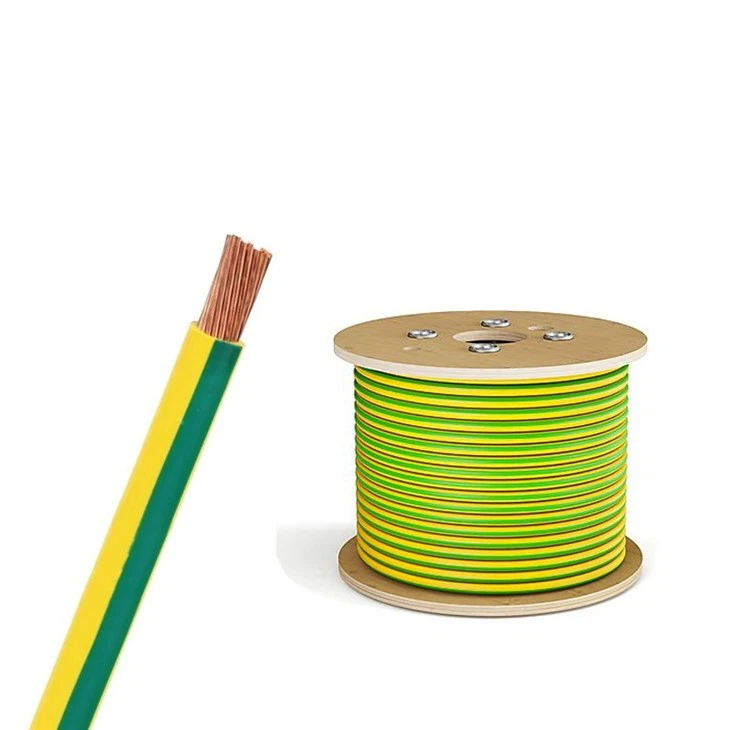
For this scenario, we equipped the project with Earthing Cable, providing two conductor materials (bare copper) according to different installation scenarios: bare copper is used for earthing indoor equipment in the power distribution room, with excellent conductivity, which can quickly conduct fault current; tinned copper is used for earthing outdoor PV brackets, which can effectively resist corrosion from the outdoor humid environment and extend the service life. All earthing cables adopt 25mm² cross-section, which can meet the earthing needs of all equipment and brackets in the power station, ensuring that the earthing resistance meets the local safety standards in Kenya and building a solid safety line for the power station. This cable has passed relevant certifications and complies with the earthing specifications of Kenyan PV power stations. Our technical team provided on-site guidance to construction workers on earthing installation, ensuring that the earthing is firm and standardized, and avoiding potential safety hazards caused by non-standard earthing.
III. Full-Process Service
The smooth implementation of the Alten Kenya PV Power Station is not only due to our scenario-based product adaptation but also inseparable from our full-process professional services. From the initial demand docking, product production and delivery, to on-site installation guidance and grid connection assistance, we followed up the whole process, accurately solved every problem of the project party, and fulfilled the commitment of "one-stop solution".
In the early stage of the project, we sent professional technical consultants to the Kenyan project site to conduct on-site inspections of the local climatic conditions, construction environment, and project layout. We had in-depth communication with the Alten project team to understand their core demands and actual difficulties. Combined with the power station design plan, we tailor-made a complete set of wire supply and service plans, clarifying the specifications, quantity, delivery time, and installation guidance plan of each type of cable, avoiding the "one-size-fits-all" product supply model.
In the product production stage, we gave priority to ensuring the delivery progress of the project, set up an exclusive production team, optimized the production process, and completed the production, testing, and packaging of all cables in only 30 days. All cables passed strict factory inspections, including conductor resistance testing, insulation performance testing, UV resistance testing, high-temperature resistance testing, etc. Each batch of cables was accompanied by a detailed test report to ensure that the product quality meets the standards. According to the transportation characteristics of Kenya, we adopted moisture-proof and damage-proof packaging to avoid cable damage caused by bumps and moisture during long-distance transportation. At the same time, we cooperated with professional international logistics service providers to optimize the transportation route. The cables were shipped from Dongguan, China, and safely delivered to the project site in only 15 days, ensuring that the project construction progress was not affected.
In the construction stage, considering that local electricians lack experience in PV wire installation, we sent 2 senior technical engineers to the construction site to carry out a 7-day installation training, guiding the local construction team to operate hand-in-hand. We focused on explaining the key points such as the distinction between positive and negative poles of H1Z2Z2-K Cable, the wiring specifications of YJV Cable, and the earthing requirements of Earthing Cable. At the same time, we compiled detailed construction manuals and quick reference guides for construction workers to consult at any time. We established a 24-hour remote technical support channel. During the construction process, if any problems were encountered, the technical team could respond in real time and provide solutions through video, voice, and other methods, avoiding potential safety hazards and equipment failures caused by improper installation.
In the grid connection acceptance stage, our technical team fully assisted the project party in docking with KETRACO, preparing the cable certification documents, test reports, and other materials required for grid connection. At the same time, we conducted a comprehensive review of the cable installation quality, promptly corrected non-standard operations, ensured that the project met local laws and regulations and grid access requirements, and helped the project successfully pass the grid connection acceptance.
IV. Cooperating with Alten to Develop the East African PV Market
With the joint efforts of both parties, the Alten Kenya 44MW PV Power Station was successfully put into operation at the end of 2024. Up to now, the power station has been operating stably, all cables have no quality problems, the monitoring data is accurate, and the grid connection operation is smooth. The daily power generation can reach 1.8 million kWh, which effectively alleviates the power supply gap in central Kenya, provides stable clean energy for local industrial production and residents' lives, and has been highly recognized by the Kenyan government and local people.
For the Alten Group, the successful commissioning of this project not only achieved its strategic breakthrough in the East African PV market but also accumulated valuable experience for its subsequent layout of more PV projects in East Africa. The scenario-based product adaptation and full-process professional services we provided effectively solved the core problems of the project party in cable selection, construction, grid connection, etc., reduced project costs and operational risks, and shortened the project commissioning cycle, which has been highly praised by the Alten project team. The project party stated that they chose our company not only because of our complete product certifications and reliable quality but also because we can deeply understand the actual needs of the project and provide scenario-appropriate solutions and efficient services. Especially in dealing with the local high-temperature and strong UV environment, the weather resistance advantage of our products is extremely prominent, providing a strong guarantee for the long-term stable operation of the power station. They will continue to carry out in-depth cooperation with us in the future to jointly develop the East African PV market.
For us, the success of this project not only demonstrates the professional strength of our company in the fields of wire export and PV cable supply but also accumulates valuable experience in East African PV projects, further consolidating our competitiveness in the East African PV market. We deeply recognize that the cooperation in international PV projects is not only the export of products but also the output of services and values. Only by deeply understanding the project scenarios and meeting customer needs can we win the trust and recognition of customers.
V. Cooperation Invitation
As the most mature PV market in East Africa, Kenya has a friendly policy and active investment. In addition to large and medium-sized ground-mounted PV power stations, microgrid and rural PV projects are also advancing rapidly, with huge market potential. As a professional wire export enterprise, our company has complete authoritative certifications, rich international PV project experience, efficient delivery capacity, and a professional technical service team, focusing on providing scenario-based wire solutions for global PV projects.
Whether you are advancing any type of PV project in Kenya and East Africa, facing problems such as outdoor cable weather resistance, construction professionalism, and grid connection compliance, we can provide you with a tailor-made solution. With high-quality cables certified by authoritative organizations, scenario-appropriate product adaptation, and full-process professional services, we will help your project be successfully implemented and operate stably.
Welcome to contact us at any time to join hands and win new opportunities in the East African PV market!
Contact Information:
Tel/WhatsApp/WeChat: +86 135 1078 4550 / +86 136 6257 9592
Email: manager01@greaterwire.com
 Ethiopia Oromia 400MW Photovoltaic Park



 Building 2, No. 40 Luxi 2nd Road, Liaobu Town, Dongguan City, Guangdong Province, China