


 Home
HomeAbout Type THHN / MTW / THWN-2 / T90 Copper Conductor 600V
 GERITEL
 Mar 25,2026

In real-world electrical projects, the biggest mistake buyers and even engineers make is not a lack of product knowledge, but the failure to clearly connect parameter changes with actual application scenarios, differences versus alternative cable types, and most importantly, the usage boundaries, because many cables appear “technically usable” during installation but gradually fail under long-term operating conditions, which is why a proper selection approach must follow a structured logic of parameter → scenario → comparison → boundary rather than simple specification matching.
Temperature Rating: Not Just Heat Resistance, but Hidden Ampacity Capacity
When the insulation rating increases from 75°C to 90°C, as seen in THHN electrical cable UL listed / THWN-2 / T90 cables, this change does not simply mean the cable can withstand higher temperatures, but more importantly that it can carry higher current under real installation conditions, especially in environments where multiple cables are bundled together inside conduits or cable trays, because heat accumulation becomes the dominant limiting factor, and compared to 75°C cables, a 90°C-rated conductor maintains higher usable ampacity with less derating, which makes it significantly more reliable in electrical rooms, vertical risers, and industrial facilities.
From a comparison standpoint, while 75°C cables may perform adequately in single runs or low-load applications, they quickly lose capacity in dense installations, whereas 90°C cables retain performance under the same conditions, effectively increasing system stability.
However, the boundary is critical: if terminals, breakers, or equipment are rated only for 75°C, then the entire system must be designed based on 75°C limits, meaning that using a 90°C cable does not automatically increase usable capacity, and misunderstanding this often leads to overestimating system performance while increasing unnecessary cost.
Wet vs Dry Rating: The Difference Between Temporary Use and Long-Term Survival
The fundamental difference between THHN and THWN-2 is not whether the cable can tolerate occasional moisture, but whether it can survive long-term exposure to wet or humid environments without degradation, because in underground conduits, outdoor installations, or high-humidity industrial plants, moisture does not cause immediate failure but gradually penetrates insulation, reducing dielectric strength over time until failure occurs.
Compared to basic PVC-insulated or dry-rated THWN-2 wires are specifically designed to maintain stable electrical properties under continuous moisture exposure, whereas non-wet-rated cables may appear functional initially but degrade slowly and unpredictably.
The boundary here is absolute: in any environment with potential long-term moisture exposure, such as underground routing, outdoor raceways, or condensation-prone facilities, THHN-only cables should never be used as a substitute for THWN-2, because the risk is delayed rather than immediate, making it more dangerous and costly.
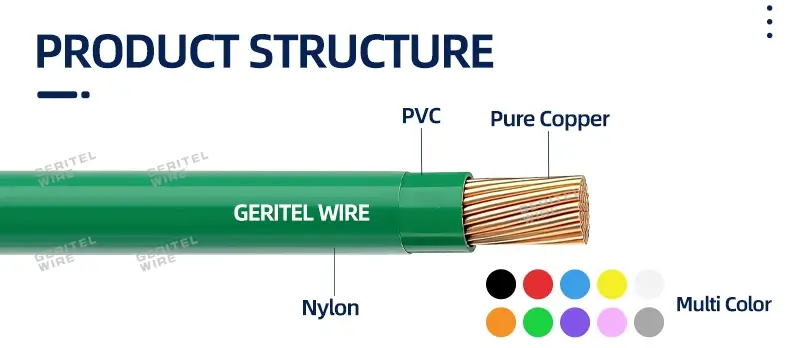
Nylon Jacket: From Installation Protection to Hidden Failure Prevention
The nylon jacket used in THHN and THWN-2 cables is often underestimated, yet it plays a critical role not during operation, but during installation, because in long conduit runs with multiple bends, cables experience significant friction, and without a protective jacket, the insulation layer can be scratched or weakened during pulling, creating microscopic defects that do not cause immediate issues but evolve into failure points over time.
Compared to non-jacketed wires, nylon-jacketed cables provide lower pulling friction, better abrasion resistance, and improved protection against oils and chemicals, making them more reliable in complex routing conditions.
However, the boundary must be clearly understood: nylon provides surface protection, not flexibility, meaning that in applications involving continuous movement, such as drag chains or robotic systems, THHN/THWN-2 cables are not suitable, and misuse in these conditions will result in rapid insulation fatigue and cracking.
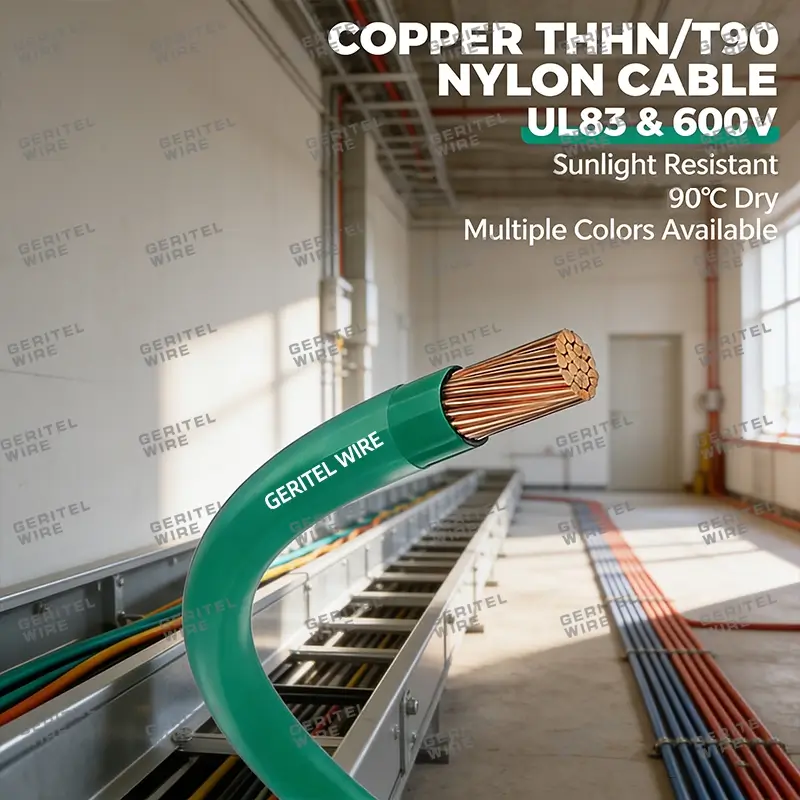
MTW Rating: The Threshold for Industrial Application
MTW certification is not an optional enhancement, but a defining factor that determines whether a cable can be used inside industrial equipment, because machinery environments introduce oil exposure, vibration, and mechanical stress that standard building wires are not designed to handle.
Compared to standard THHN-only wires, MTW-rated cables offer improved oil resistance, better flexibility, and stronger structural integrity, allowing them to perform reliably in machine tools, automation systems, and control panels.
However, the boundary is often misunderstood: MTW does not mean high-flex capability, and in applications involving continuous bending or dynamic motion, such as robotics or moving cable carriers, even MTW cables will fail prematurely, making it essential to select specialized flexible cables instead.
Conductor Size (AWG): From Load Carrying to System Stability
Wire size selection is not just about whether a cable can carry a certain current, but whether it can maintain stable operation over time, because smaller conductors increase resistance, leading to higher heat generation and voltage drop, which become critical in long-distance runs or high-load systems.
When compared to undersized cables, properly sized conductors ensure stable voltage and controlled temperature rise, while oversized cables, although more expensive, provide additional safety margin and improved efficiency.
The boundary lies in the common misconception of reusing previous project specifications, because changes in load, distance, or ambient temperature can invalidate earlier sizing decisions, and relying on experience instead of calculation often results in hidden overheating risks.
Multi-Rating: Reducing Selection Risk, Not Eliminating Application Limits
The combination of THHN / MTW / THWN-2 / T90 ratings allows a single cable to perform across multiple environments, which significantly reduces selection errors and simplifies inventory management in complex projects involving indoor, outdoor, and industrial conditions.
Compared to single-rated cables, multi-rated conductors offer greater flexibility and tolerance for mixed installation environments, making them a preferred choice for modern electrical systems.
However, the boundary is critical and often misunderstood: multi-rating does not mean universal applicability, and these cables cannot replace:
- Direct burial cables
- Armored cables for mechanical protection
- High-voltage cables above 600V
- Continuous-flex cables for dynamic motion
Misinterpreting multi-rating as “all-purpose” is a major design mistake that can lead to system failure or costly rework.
Conclusion
The true value of THHN / MTW / THWN-2 /T90 nylon insulated copper wire does not lie in their specifications alone, but in how well you understand the relationship between parameter changes, real-world application differences, competitive alternatives, and strict usage boundaries, because in electrical systems, reliability is not defined by where a cable can be used, but by clearly knowing where it cannot be used without risk.
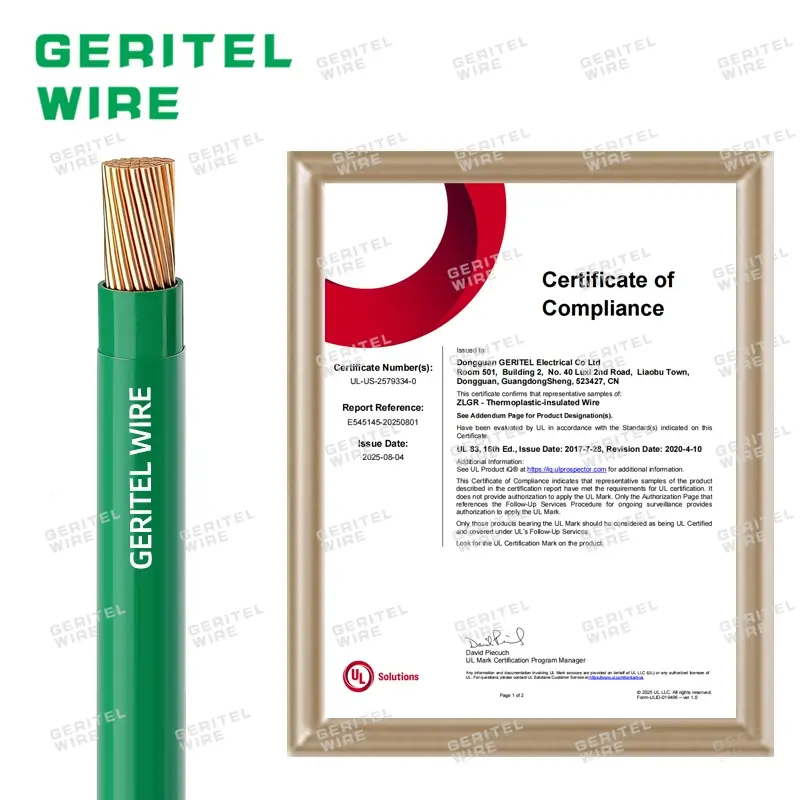
Dongguan GERITEL Electrical Co., Ltd. offers a full range of UL84 rated building wires, engineered for superior durability and dependable operation across industrial, commercial, and machinery applications, helping clients reduce risk and improve long-term system performance.
Contact us:
Dongguan GERITEL Electrical Co., Ltd.
Email: manager01@greaterwire.com
Tel/WhatsApp/WeChat: +86 135 1078 4550 / +86 136 6257 9592
Feel free to contact us for compliant, high-quality THHN / MTW / THWN-2 / T90 cables solutions tailored to your project needs.
 THHN/THWN-2 Cable in High-Temperature Environments: Cases and Precautions



 Building 2, No. 40 Luxi 2nd Road, Liaobu Town, Dongguan City, Guangdong Province, China