


 Home
HomeAA8000 Aluminum XHHW-2 Wire: Benefits for Commercial and Industrial Power Distribution
 GERITEL
 Jul 10,2026

Copper prices have been climbing. Project budgets are under pressure. And the demand for new commercial and industrial buildings continues to grow. For many project buyers and contractors, the question is no longer “should we consider aluminum?” but “why haven't we switched yet?”
But not all aluminum is the same. The aluminum used in modern building wire is AA8000 series alloy—a material specifically developed for electrical applications and required by the National Electrical Code for stranded aluminum conductors.
This article explains what AA8000 aluminum is, why it is superior to older aluminum alloys, and how AA8000 aluminum XHHW-2 wire delivers cost-effective, reliable power distribution for commercial and industrial projects.
1. What Is AA8000 Aluminum and Why Does It Matter?
AA8000 series aluminum alloy is a family of electrical-grade aluminum alloys specifically developed for building wire applications. Since 1987, the NEC has required that all aluminum conductors used in building wiring—both solid and stranded—must be made of an AA-8000 series electrical grade aluminum alloy conductor material.
Why AA8000 matters: Older aluminum alloys (like AA1350) had problems. They were prone to creep (slow deformation under stress), which caused connections to loosen over time. Creep created high resistance at terminations, which generated heat, which accelerated creep—a vicious cycle that gave aluminum wire a bad reputation.
AA8000 solves these problems. The alloy composition provides:
- Superior creep resistance. AA8000 does not deform under long-term stress like older aluminum alloys
- Excellent strength and ductility
- Good thermal stability
- Improved flexibility for easier installation
- Fully annealed —very strong and flexible
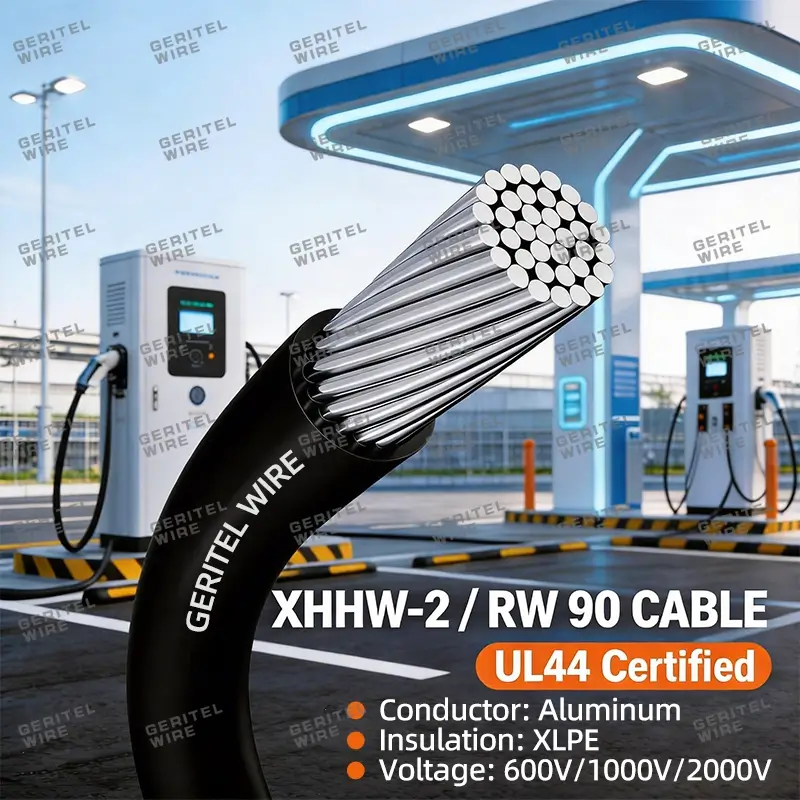
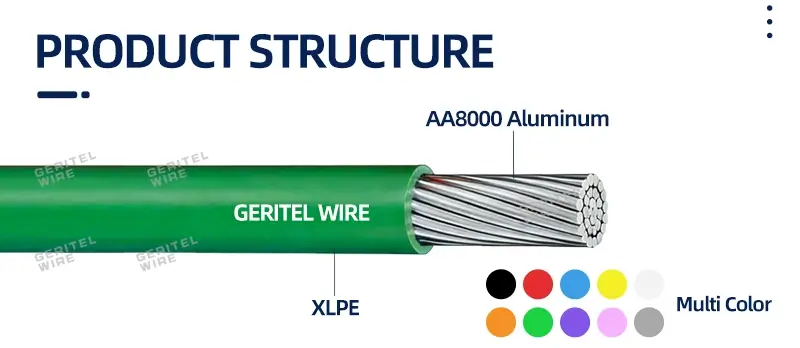
AA8000 aluminum XHHW-2 wire combines this proven alloy with XLPE thermoset insulation, rated 90°C in both wet and dry locations. The UL 44 certification ensures the wire meets rigorous safety standards.
2. AA8000 vs. Older Aluminum Alloys: The Difference
Understanding the difference between AA8000 and older aluminum alloys is key to understanding why modern aluminum wire is reliable.
|
Characteristic |
AA1350 (Older Alloy) |
AA8000 (Modern Alloy) |
| Creep resistance | Poor — connections loosen over time | Excellent — stable connections |
| Flexibility | Stiff, difficult to install | Flexible, easy to install |
| Thermal stability | Moderate | Good |
| NEC compliance | Not permitted for building wire | Required by NEC |
| Reliability | Poor track record | Proven, reliable |
The physical properties of AA8000 series aluminum alloys are significantly different from the previously used AA1350 aluminum conductors. AA8000 is a fully annealed aluminum alloy conductor that is very strong and flexible. This means it handles bending, pulling, and termination stress much better than older aluminum.
For commercial and industrial power distribution, AA8000 aluminum XHHW-2 wire represents a mature, proven product. When specified and installed correctly, it delivers years of reliable service at significant cost savings.
3. Cost-Effectiveness: Why Aluminum Makes Financial Sense
The most obvious advantage of AA8000 aluminum wire vs copper cost is material savings.
AA8000 aluminum typically costs 40-50% less than copper. For large projects with substantial conductor quantities, the savings can be substantial. A 750 kcmil aluminum conductor can deliver the ampacity needed for large feeders at a fraction of the cost of equivalent copper.
Weight is another major factor. Aluminum weighs about one-third as much as copper for the same ampacity. This translates to:
- Lower shipping costs
- Easier handling on site
- Lower labor costs during installation
- Less strain on cable trays and support structures
The tradeoff: Aluminum conductors must be upsized to match copper's ampacity. For example, where a 4/0 AWG copper XHHW-2 carries approximately 230A at 75°C, an aluminum equivalent would require 350 kcmil to safely handle the same current. The larger conductor reduces some of the material cost advantage but still delivers significant savings.
Total cost of ownership. The true cost extends beyond the initial purchase price. Aluminum's lower weight reduces installation labor. Modern AA8000 alloys and proper termination practices ensure long-term reliability. For large-scale power distribution where budget is a primary concern, AA8000 aluminum XHHW-2 wire delivers exceptional value.
4. Installation: Termination and Best Practices
AA8000 aluminum XHHW-2 wire requires proper installation techniques to ensure reliable connections.
Use the right connectors. Aluminum wire requires lugs and connectors rated for aluminum conductors. Look for connectors marked "AL/Cu" or "AL7CU." Using copper-only lugs is a safety hazard and code violation.
Apply anti-oxidant compound. At terminations, apply a compound that prevents oxidation and improves contact. While the NEC does not explicitly require oxide inhibitor at all aluminum terminations, it is a standard best practice for aluminum connections.
Follow torque specifications. Over-tightening or under-tightening connections is a common cause of termination failures. Use a torque wrench set to the lug manufacturer's specifications. Section 110.14 requires terminals designed for aluminum conductors to be explicitly identified for that use.
Use stranded conductors. For conductors 8 AWG and larger installed in a raceway, the NEC requires stranded conductors. AA8000 aluminum XHHW-2 wire is available in compact stranded construction, providing excellent flexibility for installation.
AA8000 aluminum XHHW-2 wire for industrial power distribution should always be installed by qualified electricians familiar with aluminum termination practices. Proper installation ensures the wire performs reliably for decades.
5. Three AA8000 Aluminum XHHW-2 Sizes for Commercial and Industrial Applications
Here are three AA8000 aluminum XHHW-2 sizes commonly used in commercial and industrial power distribution.
4/0 AWG AA8000 Aluminum XHHW-2 Wire
This size serves 175-200A feeders in commercial buildings and light industrial facilities. Typical applications include sub-panels in retail spaces, small industrial equipment feeders, and main distribution in smaller commercial buildings. The 4/0 AWG size provides good ampacity while remaining manageable for installation crews. For AA8000 aluminum XHHW-2 wire for industrial power distribution, this is a common entry-level size for aluminum feeders.
350 kcmil AA8000 Aluminum XHHW-2 Wire
This size handles 250-280A loads at 90°C. Typical applications include main feeders in mid-sized commercial buildings, large HVAC equipment, and industrial distribution panels. The 350 kcmil size balances high ampacity with manageable installation characteristics. In many projects, 350 kcmil aluminum XHHW-2 replaces 4/0 AWG copper, delivering the same ampacity at significantly lower material cost. The XLPE insulation provides 90°C wet/dry performance in both underground conduits and exposed tray installations.
750 kcmil AA8000 Aluminum XHHW-2 Wire
This size handles 380-425A at 90°C. Typical applications include large commercial service entrances, utility feeders, main distribution panels in industrial plants, and connections to large transformers. The 750 kcmil aluminum conductor provides the ampacity needed for heavy loads with minimal voltage drop over long runs. A XHHW-2 aluminum wire ampacity 750 kcmil chart shows this size carrying 380A at 75°C terminations. For large-scale commercial and industrial power distribution, 750 kcmil AA8000 aluminum XHHW-2 offers substantial cost savings over copper while delivering the performance required for critical infrastructure.
FAQ
Q1: Is AA8000 aluminum wire required by the NEC?
Yes. The NEC requires that both solid aluminum conductors (8 AWG, 10 AWG, and 12 AWG) and stranded aluminum conductors must be made of an AA-8000 series electrical grade aluminum alloy conductor material.
Q2: Can AA8000 aluminum XHHW-2 be used outdoors?
Yes. XHHW-2 is rated 90°C in both wet and dry locations. The wire is sunlight-resistant and can be installed in outdoor conduits, cable trays, and direct burial applications.
Q3: Does AA8000 aluminum have the same temperature rating as copper?
Yes. Both AA8000 aluminum and copper XHHW-2 are rated 90°C in wet and dry locations. However, most terminations are rated 60°C or 75°C, which limits the circuit ampacity in both cases.
Q4: Can AA8000 aluminum wire be terminated on standard copper lugs?
No. Aluminum requires lugs rated for aluminum conductors. Use connectors marked "AL/Cu" or "AL7CU".
Need AA8000 Aluminum XHHW-2 Wire for Your Project?
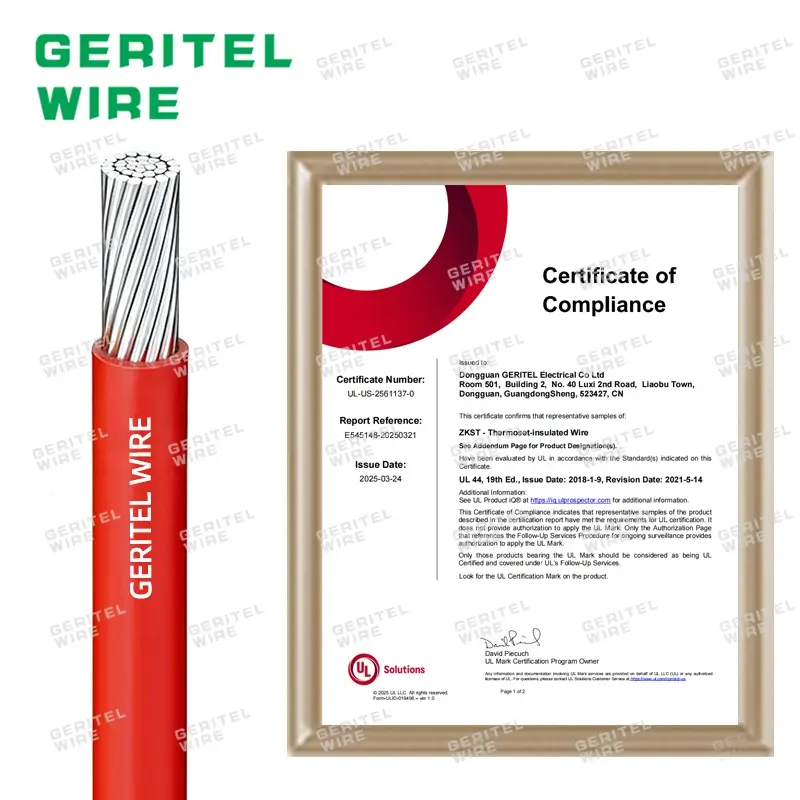
When your project requires cost-effective power distribution, the choice of conductor material and manufacturer matters. Our AA8000 aluminum XHHW-2 building wire is UL 44 certified, tested and approved by Underwriters Laboratories to meet rigorous safety and performance standards. Whether you need 4/0 AWG for sub-feeders, 350 kcmil for main distribution, or 750 kcmil for large service entrances, our UL 44 certified AA8000 aluminum XHHW-2 wire delivers the cost savings and reliability your installation requires.
Tell us about your project—application, load requirements, and budget. We will recommend the right conductor material and wire size and provide the documentation you need.
Contact us
Dongguan GERITEL Electrical Co., Ltd.
Tel/WhatsApp/Wechat: +86 136 6257 9592
Tel/WhatsApp/Wechat: +86 135 1078 4550
Email: manager01@greaterwire.com
Website: www.geritelgroup.com
 XHHW-2 Wire for Conduit Wiring: Voltage Ratings, Applications, and Selection Guide



 Building 2, No. 40 Luxi 2nd Road, Liaobu Town, Dongguan City, Guangdong Province, China