


 Home
HomeXHHW vs XHHW-2 Wire: Key Differences You Should Know
 GERITEL
 Mar 23,2026

In modern commercial and industrial wiring systems, XHHW and XHHW-2 wires have become two of the most widely specified options due to their durability, heat resistance, and compliance with UL standards, yet many electricians, contractors, and procurement professionals still face confusion when selecting between them, often assuming they are interchangeable without fully understanding their performance differences; this article breaks down the key distinctions between XHHW and XHHW-2 wire, helping you make informed, code-compliant decisions that align with both project requirements and long-term cost efficiency.
1. Understanding XHHW and XHHW-2: What Do the Letters Mean?
Before diving into technical comparisons, it is essential to understand the naming convention, as both XHHW and XHHW-2 follow a structured designation that reflects their material composition and application suitability.
- X indicates cross-linked polyethylene insulation (XLPE insulation), known for its excellent thermal and chemical resistance
- HH stands for high heat resistance, meaning the conductor can withstand elevated operating temperatures
- W denotes suitability for wet locations, making these wires applicable in environments exposed to moisture
- -2 in XHHW-2 signifies an upgraded temperature rating, particularly in wet conditions
From a positioning perspective, XHHW serves as a reliable general-purpose building wire, while XHHW-2 represents an enhanced version designed for more demanding environments where higher thermal tolerance and durability are required.
2. Structural and Material Comparison
When evaluating XHHW vs XHHW-2, the differences begin at the structural and material level, where both similarities and critical upgrades become evident.
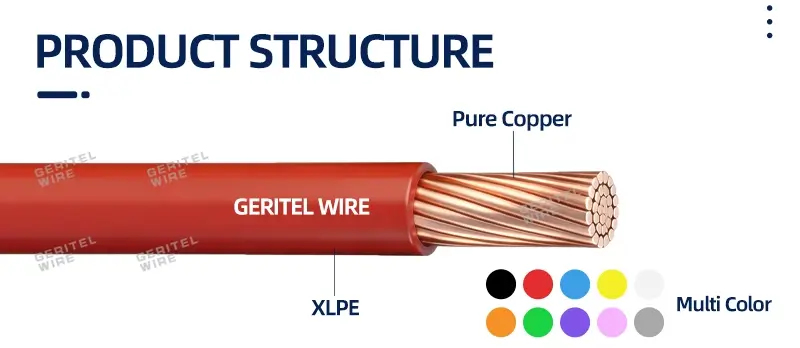
Both wire types typically use copper or aluminum conductors, offering flexibility in cost and conductivity requirements, while their insulation is based on XLPE insulation, which provides superior resistance to heat, moisture, and abrasion compared to traditional thermoplastic materials.
However, the distinction lies in insulation performance and processing quality, as XHHW-2 electric wire feeder cable are manufactured with enhanced cross-linking technology that improves thermal stability and long-term aging resistance.
Key structural parameters include:
- Conductor Material: Copper or aluminum (same for both, depending on application needs)
- Insulation Material: XLPE insulation with improved formulation in XHHW-2
- Jacket Characteristics: Typically no outer jacket, but insulation is thicker and more robust in XHHW-2
- Rated Voltage: Both are rated at 600V, suitable for low-voltage power distribution
- Temperature Rating:
- XHHW: 90°C dry, 75°C wet
- XHHW-2: 90°C dry and wet
- Water Resistance & Anti-Aging: XHHW-2 demonstrates superior moisture resistance and longer service life due to improved insulation integrity
These structural enhancements make XHHW-2 particularly suitable for environments where consistent performance under thermal and environmental stress is critical.
3. Quick Comparison Table (XHHW vs XHHW-2)
To help you quickly visualize the differences, the table below summarizes the most critical parameters:
|
Parameter |
XHHW Wire | XHHW-2 Wire |
| Standard | UL 44 | UL 44 |
| Conductor | Copper / Aluminum | Copper / Aluminum |
| Insulation | XLPE insulation | Upgraded XLPE insulation |
| Voltage | 600V | 600V |
| Temp (Dry) | 90°C | 90°C |
| Temp (Wet) | 75°C | 90°C |
| Wet Location | Limited | Full performance |
| Direct Burial | Acceptable | Recommended |
| Durability | Good | Superior |
| Service Life | Standard | Longer |
| Cost (Initial) | Lower | Slightly higher |
| Cost (Long-Term) | Higher | Lower |
4. UL 44 Certification and Compliance Value
Both XHHW and XHHW-2 wires are manufactured in accordance with UL 44 standards, which define the safety, construction, and performance requirements for thermoset-insulated wires and cables used in electrical installations.
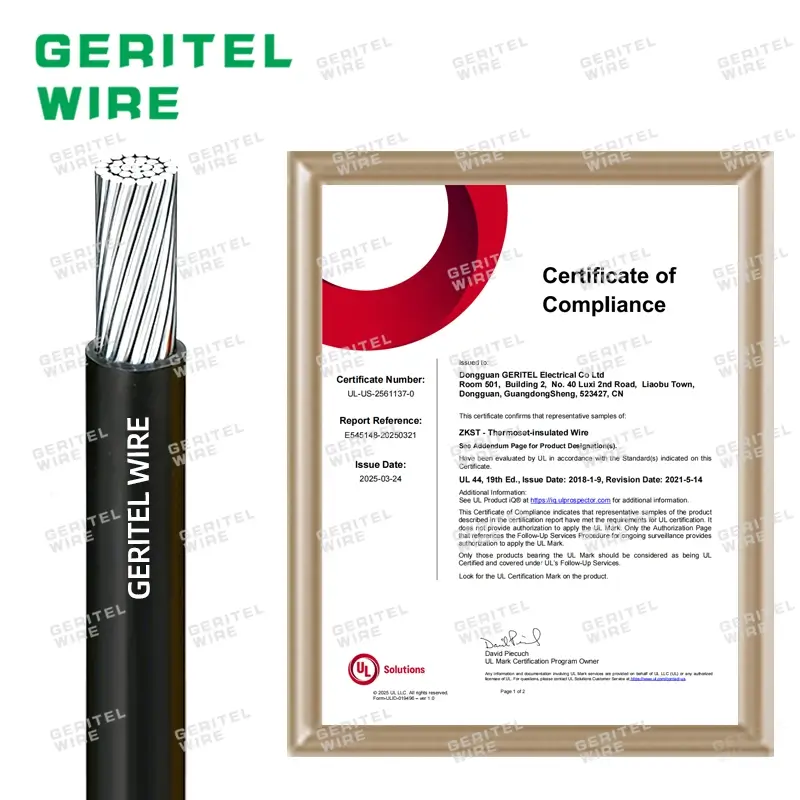
UL certification markings on these cables provide essential information, including:
- Wire type designation (XHHW or XHHW-2)
- Conductor material
- Voltage rating (600V)
- Temperature ratings for dry and wet locations
- Manufacturer identification
Compliance with UL 44 ensures that the wire meets stringent safety benchmarks, which is critical for project approvals, inspections, and insurance requirements.
While both types meet UL 44, XHHW-2 offers an upgraded compliance advantage, as its 90°C rating in both wet and dry locations allows for greater design flexibility and often simplifies engineering calculations, particularly in high-load or temperature-sensitive installations.
5. Core Differences That Impact Real-World Performance
Understanding the practical differences between XHHW and XHHW-2 is essential for making the right selection, especially when considering installation conditions and lifecycle costs.
- Temperature Limits:
XHHW is limited to 75°C in wet locations, whereas XHHW-2 maintains 90°C in both wet and dry environments, making it significantly more versatile
- Wet Location Performance:
XHHW-2 building wire power cable is specifically engineered for sustained performance in wet locations, reducing the risk of insulation degradation over time
- Direct Burial Capability:
Both can be used in conduit systems for underground installations, but XHHW-2 is generally preferred for direct burial scenarios due to its enhanced moisture resistance
- Application Environment:
XHHW suits standard indoor and controlled environments, while XHHW-2 excels in outdoor, industrial, or high-humidity conditions
- Service Life and Reliability:
Thanks to improved XLPE insulation, XHHW-2 typically offers a longer operational lifespan with reduced maintenance risks
- Long-Term Cost Efficiency:
Although XHHW-2 may have a slightly higher upfront cost, it often delivers better value over time by minimizing replacement and downtime
6. Application-Based Selection Guide
Choosing between XHHW and XHHW-2 should always be based on actual installation scenarios rather than assumptions, as different environments impose different performance demands.
6. 1 Standard Indoor Applications
For typical commercial or residential indoor wiring in dry locations, XHHW remains a cost-effective and compliant choice, especially when temperature conditions are stable and moisture exposure is minimal.
6. 2 Wet, High-Temperature, or Outdoor Environments
In environments such as industrial plants, rooftops, or areas exposed to sunlight and moisture, XHHW-2 is the preferred option due to its 90°C wet rating and superior environmental resistance, ensuring stable performance under fluctuating conditions.
6. 3 Underground and Direct Burial Projects
For infrastructure projects involving underground conduits or direct burial installations, XHHW-2 provides enhanced durability and moisture protection, making it a safer and more reliable long-term investment.
7. Conclusion: Choosing the Right Wire for Compliance and Performance
Selecting between XHHW and XHHW-2 is not simply a matter of specification, but a decision that directly affects system safety, durability, and lifecycle cost, especially in commercial and industrial applications where environmental conditions can vary significantly.
By understanding their differences in temperature ratings, wet location performance, and UL 44 compliance, professionals can avoid common selection mistakes and ensure that their wiring systems meet both regulatory requirements and operational expectations.
Contact us today:
If you are evaluating wiring solutions for your next project and need expert guidance on selecting the most suitable XHHW or XHHW-2 cable, our team at Dongguan GERITEL Electrical Co., Ltd. is ready to support you with high-quality products, technical consultation, and reliable supply.
Tel / WhatsApp / WeChat: +86 135 1078 4550 / +86 136 6257 9592
Email: manager01@greaterwire.com
Reach out today to get detailed specifications, competitive pricing, and tailored solutions that align with your project needs.
 How to Choose a Reliable XHHW-2 Wire Manufacturer?



 Building 2, No. 40 Luxi 2nd Road, Liaobu Town, Dongguan City, Guangdong Province, China