


 Home
HomeXHHW-2 Wire vs MC Cable: Key Differences Explained
 GERITEL
 Jul 08,2026

If you have spent any time looking at electrical specifications, you have probably seen both “XHHW-2” and “MC Cable” on project drawings. And you may have wondered: are these two different things? Or are they the same?
The short answer is: they are different products at different levels of classification.
XHHW-2 is a type of insulation—cross-linked polyethylene (XLPE) rated 90°C wet and dry. MC Cable (Metal-Clad Cable) is a type of cable construction—conductors enclosed in an interlocked metal armor.
Here is the key: MC cable can use XHHW-2 conductors. When it does, it is often called “XHHW-2 MC Cable”. But XHHW-2 wire is also available as individual building wire for conduit installation—without armor.
This article explains the differences between XHHW-2 building wire and MC cable (whether it uses XHHW-2 conductors or not), so you can choose the right product for your project.
1. What Is XHHW-2 Building Wire?
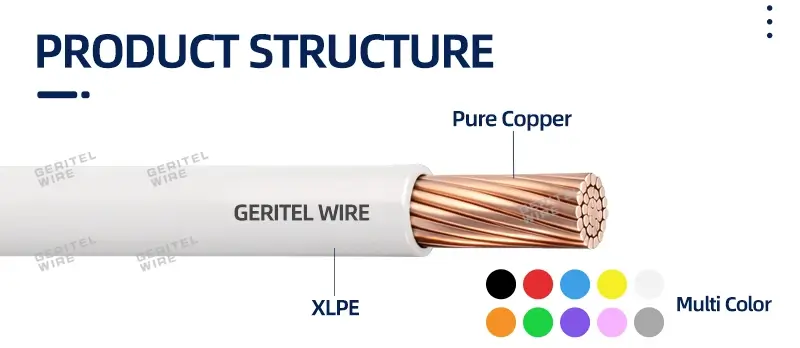
XHHW-2 building wire is a single insulated conductor. It consists of a copper or aluminum conductor with XLPE thermoset insulation. It does not have armor, a jacket, or multiple conductors pre-assembled.
Key characteristics of XHHW-2 building wire:
- Insulation type: XLPE (cross-linked polyethylene) thermoset
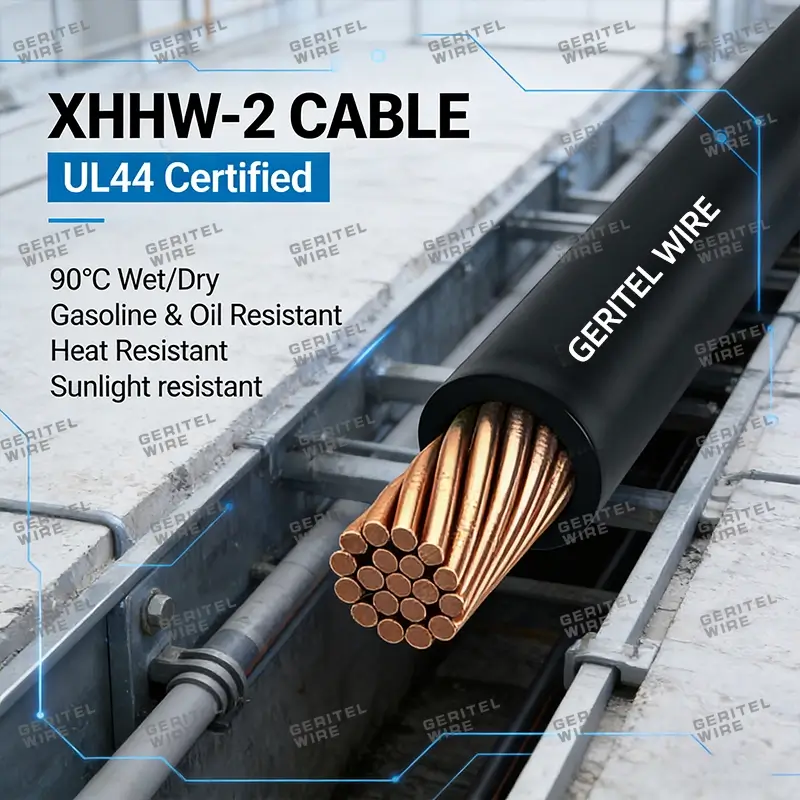
- Temperature rating: 90°C in both dry and wet locations
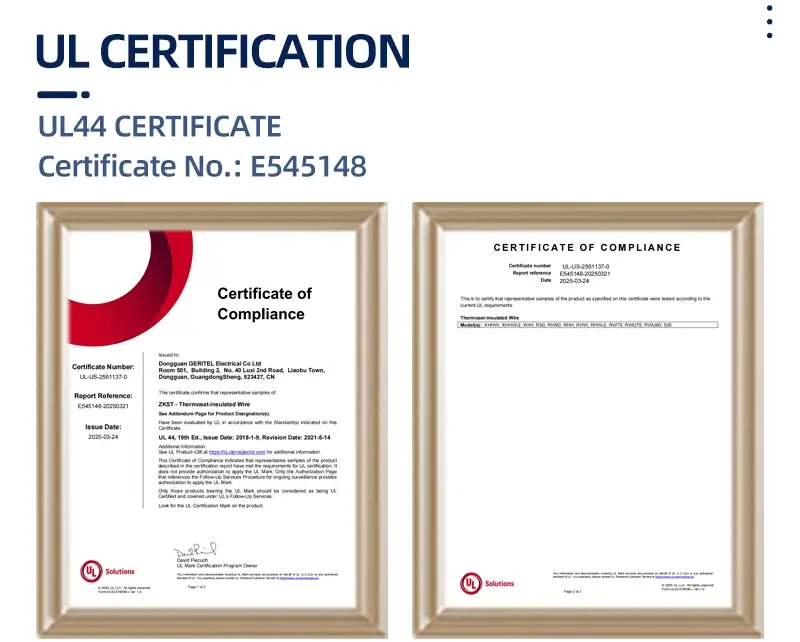
- Certification: UL 44 (Thermoset-Insulated Wires and Cables)
- Construction: Single conductor, no armor, no overall jacket
- Installation: Pulled through conduit, installed in raceways, or run in cable trays
- Typical use: Commercial building wiring, feeders, branch circuits, industrial power distribution
XHHW-2 building wire is the classic “pull it through conduit” product. It is flexible, lightweight (compared to armored cable), and cost-effective for installations where conduit or tray provides the mechanical protection.
2. What Is MC Cable?
MC Cable (Metal-Clad Cable) is a complete cable assembly. It contains multiple insulated conductors—typically THHN/THWN-2 or XHHW-2—enclosed in an interlocked metal armor, with or without an outer PVC jacket.
Key characteristics of MC cable:
- Construction: Multiple conductors + metal armor (+ optional PVC jacket)
- Armor material: Aluminum interlocked armor or galvanized steel armor
- Certification: UL 1569 (Metal-Clad Cables)
- Installation: Installed as a complete assembly—no need to pull individual conductors through conduit
- Typical use: Branch circuits, feeders, service power distribution in commercial, industrial, and multi-residential buildings
MC cable is a pre-assembled solution. The armor provides mechanical protection, and the cable can be installed exposed (without conduit) in many applications.
When MC cable uses XHHW-2 conductors, it combines the 90°C wet/dry performance of XHHW-2 with the mechanical protection of metal armor. This is a common combination for demanding applications.
3. The Core Difference: Insulation Matters
The single most important performance difference between XHHW-2 building wire and MC cable is not about the cable construction—it is about the insulation type of the conductors inside.
XHHW-2 building wire uses XLPE thermoset insulation. Rated 90°C in both dry and wet locations. It resists UV, moisture, oil, and chemical corrosion. It is purpose-built for harsh outdoor and industrial environments.
MC cable with THHN/THWN-2 conductors uses thermoplastic PVC insulation with a nylon jacket. It is rated 90°C dry but drops to 75°C in wet locations. It works well indoors and in sheltered areas, but outdoor exposure causes faster aging.
MC cable with XHHW-2 conductors combines the best of both: the mechanical protection of metal armor with the 90°C wet/dry performance of XHHW-2 insulation.
A XHHW-2 vs MC cable comparison must start with this question: what insulation is inside the MC cable?
4. Installation Comparison: Conduit vs. Exposed Run
The biggest practical difference between XHHW-2 building wire and MC cable is how they are installed.
XHHW-2 building wire is installed in conduit, raceways, or cable trays. The conduit provides mechanical protection. This is the traditional “pipe and wire” approach. It requires:
- Installing conduit (EMT, rigid, PVC)
- Pulling individual conductors through the conduit
- Terminating each conductor separately
MC cable is installed as a complete assembly. It does not require conduit in most applications. It can be:
- Installed exposed on surfaces
- Run in cable trays
- Direct buried (when jacketed)
- Installed indoors or outdoors, concealed or exposed
The labor difference is significant. MC cable eliminates the conduit installation step—which can reduce installation time by up to 50% compared to pipe and wire. This makes MC cable attractive for large projects with tight schedules.
However, XHHW-2 building wire offers more routing flexibility in tight spaces because individual conductors are smaller and more flexible than a complete MC cable assembly.
5. Physical Protection: Armor vs. Conduit
Both XHHW-2 building wire and MC cable provide physical protection—but through different means.
XHHW-2 building wire relies on conduit or raceway for mechanical protection. The conduit protects against impact, abrasion, and environmental exposure. If the conduit is damaged, the wire inside is protected—but repairing the conduit is labor-intensive.
MC cable has built-in armor. The interlocked metal armor provides mechanical protection without conduit. If the armor is damaged, the conductors inside are still protected—but replacing a section of MC cable requires cutting and re-terminating.
Which is more protective? For severe impact and crushing, rigid conduit with XHHW-2 wire offers the highest protection. For moderate mechanical protection with faster installation, MC cable is the better choice.
6. Application Guide: Which One Should You Choose?
Here is a practical guide for selecting between XHHW-2 building wire and MC cable.
Choose XHHW-2 building wire when:
- The installation is in conduit or raceway
- The project requires maximum routing flexibility in tight spaces
- Cost is a primary concern (individual wire is cheaper than complete cable assemblies)
- The installation is in a dry or wet location where XHHW-2's 90°C rating is needed
- The project is a traditional “pipe and wire” installation
For a XHHW-2 building wire vs MC cable decision, this is the conventional choice for most commercial conduit work
Choose MC cable when:
- The installation is exposed (no conduit)
- Fast installation is critical (MC cable installs faster than pipe and wire)
- The project is in a location where mechanical protection is needed but conduit is impractical
- The cable will be run in cable trays
- The project is in a wet or outdoor location and you need the 90°C wet rating of XHHW-2 conductors with armor protection
For MC cable with XHHW-2 conductors, this combination is ideal for harsh environments where both moisture resistance and mechanical protection are required
A 10 AWG XHHW-2 wire is a common choice for branch circuits in conduit installations. When the same circuit needs to run exposed without conduit, a 10 AWG MC cable with XHHW-2 conductors provides the ampacity with built-in armor protection.
A 4 AWG XHHW-2 wire is typical for sub-feeders in conduit. For exposed feeder runs in industrial settings, MC cable with XHHW-2 conductors offers the same 90°C wet/dry rating with the added benefit of metal armor.
A 250 kcmil XHHW-2 wire is used for large feeders in conduit. In applications requiring armor protection without conduit—such as exposed runs in industrial plants—MC cable with XHHW-2 conductors in 250 kcmil provides the ampacity with interlocked aluminum armor.
7. Cost Considerations
Cost is always a factor in product selection.
- XHHW-2 building wire has lower material cost per conductor. However, you must add the cost of conduit, fittings, and the labor to install them. For long runs with many bends, the labor cost can be significant.
- MC cable has higher material cost per foot (the armor adds cost). But it eliminates the conduit, fittings, and the labor to install them. For exposed runs and large projects, the total installed cost of MC cable is often lower than pipe and wire.
The cost equation:
- Short runs with simple conduit paths → XHHW-2 building wire may be cheaper
- Long runs, exposed installations, or complex routing → MC cable may be cheaper overall
- Projects with labor constraints or tight schedules → MC cable saves time
For XHHW-2 vs MC cable comparison, the total installed cost—not just the material cost—should drive the decision.
FAQ
Q1: Is XHHW-2 wire the same as MC cable?
No. XHHW-2 is a type of insulation for individual conductors. MC cable is a complete cable assembly with metal armor. However, MC cable can use XHHW-2 conductors inside the armor.
Q2: Which is more durable—XHHW-2 building wire or MC cable?
It depends on the installation. MC cable provides mechanical protection through its armor. XHHW-2 building wire relies on conduit for protection. Both use XHHW-2 insulation (90°C wet/dry) when specified.
Q3: Can XHHW-2 building wire be installed without conduit?
XHHW-2 building wire is designed for installation in conduit, raceways, or cable trays. For exposed installations without conduit, MC cable is the better choice.
Q4: What does “XHHW-2 MC Cable” mean?
It means Metal-Clad Cable that uses XHHW-2 insulated conductors inside the armor. This combines the 90°C wet/dry performance of XHHW-2 with the mechanical protection of metal armor.
Need Help Choosing Between XHHW-2 and MC Cable?
Tell us about your project—installation method, environment, and load requirements. We will recommend the right product and send a quick quote.
Contact us
Dongguan GERITEL Electrical Co., Ltd.
Tel/WhatsApp/Wechat: +86 136 6257 9592
Tel/WhatsApp/Wechat: +86 135 1078 4550
Email: manager01@greaterwire.com
Website: www.geritelgroup.com
 XHHW-2 Wire for Electrical Conduit Systems: Installation Tips



 Building 2, No. 40 Luxi 2nd Road, Liaobu Town, Dongguan City, Guangdong Province, China