


 Home
HomeWhy XHHW-2 Wire Is Preferred in North American Power Distribution Systems
 GERITEL
 Jul 06,2026

Walk through any commercial building, manufacturing plant, solar farm or municipal power facility in the United States and Canada, and you will find one wiring solution everywhere: XHHW-2 wire. At the core of its industry-leading reputation is Copper XHHW-2 Wire XLPE insulation, the thermoset cross-linked polyethylene layer that differentiates it from basic thermoplastic building wires. As standardized XLPE insulation XHHW/XHHW-2 Copper Wire, it is manufactured with two mainstream conductive options: bare copper conductor Copper XHHW-2 Wire and solid copper conductor Copper XHHW-2 Wire, fully meeting strict NEC and UL standards for all North American power distribution work. Its stable insulation performance, flexible conductor selection and universal temperature rating make it the top choice for electrical contractors, engineering firms and project owners across the continent.
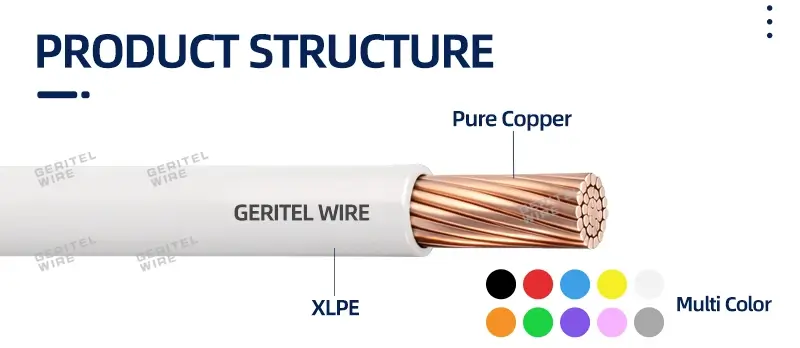
1. XLPE Insulation: The Core Competitive Edge of XHHW/XHHW-2 Copper Wire
The biggest advantage that pushes XHHW-2 to dominate North American power grids is premium Copper XHHW-2 Wire XLPE insulation, a cross-linked polyethylene material that far outperforms PVC and nylon composite insulation used in THWN cables. As professional XLPE insulation XHHW/XHHW-2 Copper Wire, its molecular cross-linked structure delivers three irreplaceable strengths for regional power distribution:
Permanent heat resistance: It maintains stable insulation under continuous 90°C operation without melting or softening, suitable for heat-generating machinery rooms, sun-exposed outdoor trays and long-distance feeder circuits.
Chemical and oil barrier property: XLPE repels industrial coolant, hydraulic oil and mild corrosive vapors, avoiding insulation swelling and cracking that shortens wire service life in factory distribution hubs.
UV and weather stability: Unlike thermoplastic wire, the XLPE layer resists sunlight aging, making XLPE insulation XHHW/XHHW-2 Copper Wire eligible for open-air tray runs, rooftop solar wiring and direct underground burial across all North American climate zones.
This single insulation advantage eliminates inspection rejection risks and reduces long-term maintenance costs for large-scale power distribution projects.
2. Two Main Conductor Types for Copper XHHW-2 Wire
Manufacturers produce two mainstream core versions of Copper XHHW-2 Wire XLPE insulation, tailored for different North American construction and power demands: solid copper conductor Copper XHHW-2 Wire and bare copper conductor Copper XHHW-2 Wire.
2.1 Solid Copper Conductor Copper XHHW-2 Wire
Copper XHHW-2 Wire solid copper conductor adopts one-piece solid bare copper core, featuring rigid structure, low contact resistance and low material cost.
Best-fit scenarios: Short-distance indoor branch circuits, residential wall conduit wiring, low-current lighting distribution systems.
Core merit: Stiff core shape keeps wire stable inside narrow conduits, simplifying fixed indoor layout for small commercial and residential projects.
2.2 Bare Copper Conductor Copper XHHW-2 Wire
Bare copper conductor Copper XHHW-2 Wire uses compressed multi-strand bare copper bundles, the most widely selected option for large North American power distribution infrastructure.
Best-fit scenarios: Main feeder lines, long-distance underground burial, industrial cable tray layouts, solar power transmission circuits, airport and municipal core power loops.
Core merit: Superior bending flexibility allows smooth pulling through long conduits and tight bends, while multi-strand design disperses thermal stress under heavy continuous load, greatly lowering terminal overheating risks for high-current power distribution.
Both conductor types are wrapped with identical Copper XHHW-2 Wire XLPE insulation, so engineers only need to select cores based on circuit length, load current and installation complexity.
3. Full Compliance With North American Electrical Codes
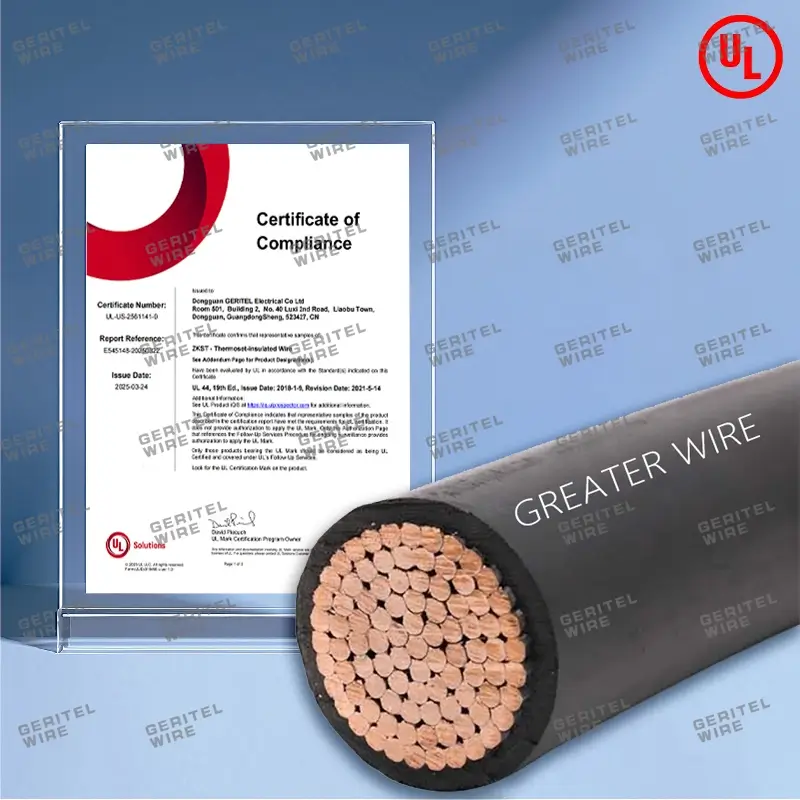
All grades of XLPE insulation XHHW/XHHW-2 Copper Wire carry UL44 certification and fully comply with NEC Article 310, the mandatory standard for North American power distribution wiring.
Whether you pick bare copper conductor Copper XHHW-2 Wire or solid copper conductor Copper XHHW-2 Wire, the product holds official 90°C wet/dry dual temperature rating, universally recognized by electrical inspectors in every U.S. state and Canadian province.
No extra derating paperwork is required when deploying the wire across dry indoor rooms, damp underground conduits and open outdoor trays, drastically accelerating project inspection and handover progress.
Wires without Copper XHHW-2 Wire XLPE insulation often fail chemical and UV resistance testing, and cannot be approved for industrial, solar and municipal power distribution projects.
4. Wide Application Coverage Across North American Power Segments
Thanks to versatile Copper XHHW-2 Wire XLPE insulation and optional conductor designs, XLPE insulation XHHW/XHHW-2 Copper Wire covers every mainstream power distribution field in North America:
Commercial Construction
High-rise offices, shopping malls, hotels and medical facilities use solid copper conductor Copper XHHW-2 Wire for indoor branch circuits, and bare copper conductor Copper XHHW-2 Wire for main power feeders.
Industrial Manufacturing
Production lines, heavy equipment power loops and processing plants rely on oil-resistant XLPE insulation XHHW/XHHW-2 Copper Wire, with bare copper strands to withstand long-term heavy current loads.
Solar & Renewable Energy
Ground-mount solar farms and rooftop PV systems select bare copper conductor Copper XHHW-2 Wire, as its UV-stable Copper XHHW-2 Wire XLPE insulation adapts to year-round outdoor exposure.
Municipal Public Infrastructure
Airports, schools, water treatment plants and highway lighting systems specify XLPE insulation XHHW/XHHW-2 Copper Wire to meet strict public safety electrical standards, mixing solid and bare stranded copper conductors for different circuit layers.
5. Long-Term Lifecycle Cost Advantage
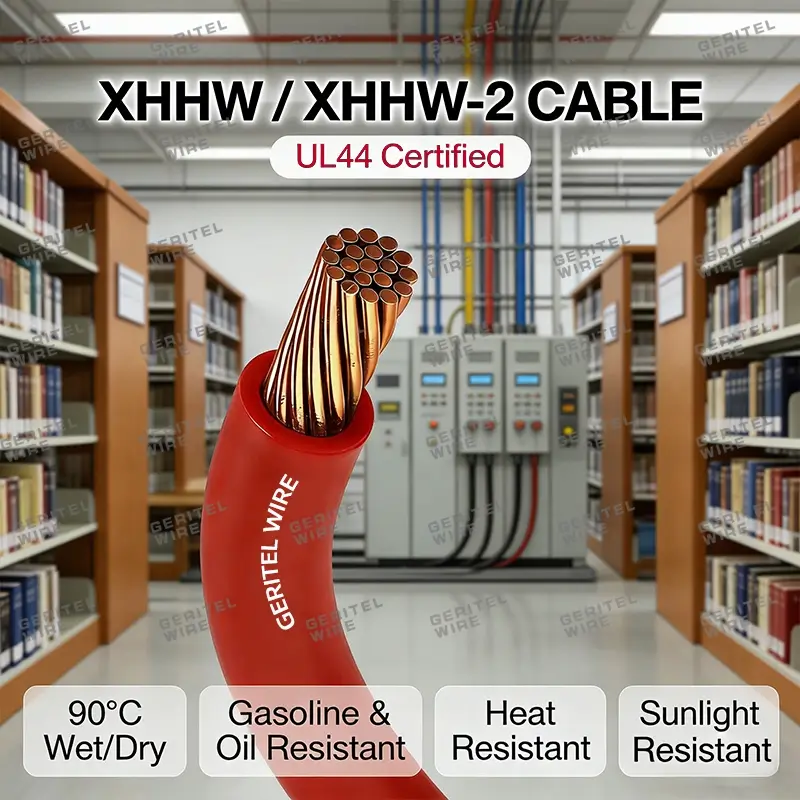
Though the upfront cost of bare copper conductor Copper XHHW-2 Wire is slightly higher than solid copper variants, XLPE insulation XHHW/XHHW-2 Copper Wire delivers better overall economic value for permanent North American power distribution projects:
30–50 year service life of Copper XHHW-2 Wire XLPE insulation cuts wire replacement frequency for municipal and industrial infrastructure.
XLPE’s anti-aging property eliminates frequent inspection and maintenance fees caused by insulation damage.
One wire series (with two conductor options) covers all installation environments, reducing contractor inventory and material planning costs.
Frequently Asked Questions
Q1: What makes Copper XHHW-2 Wire XLPE insulation better than ordinary PVC insulation?
PVC is thermoplastic and will soften under high heat or oil contact, while XLPE insulation XHHW/XHHW-2 Copper Wire features cross-linked thermoset insulation. It resists heat, oil, UV and chemical corrosion, which is the non-negotiable standard for long-term North American power distribution.
Q2: What is the difference between solid copper conductor Copper XHHW-2 Wire and bare copper conductor Copper XHHW-2 Wire?
Solid copper conductor Copper XHHW-2 Wire uses single solid copper core for short, low-current indoor wiring. Bare copper conductor Copper XHHW-2 Wire consists of multi-strand bare copper bundles, with better flexibility and heat dissipation for long-distance, high-load main feeder power circuits. Both share identical Copper XHHW-2 Wire XLPE insulation performance.
Q3: Can XLPE insulation XHHW/XHHW-2 Copper Wire be installed exposed on cable trays in North American factories?
Yes. UL-listed Copper XHHW-2 Wire with XLPE insulation meets NEC exposed run standards. Bare copper conductor Copper XHHW-2 Wire is the most popular choice for open tray industrial power distribution due to its easy pulling property.
Q4: Which conductor type of Copper XHHW-2 Wire is recommended for large solar farm power distribution?
Bare copper conductor Copper XHHW-2 Wire is the top choice. Its stranded core handles long-distance transmission, and the durable Copper XHHW-2 Wire XLPE insulation withstands continuous outdoor sunlight and temperature fluctuations for PV power circuits.
Conclusion
The global popularity of XHHW-2 wire in North American power distribution systems originates from its core technical advantage: stable, all-weather Copper XHHW-2 Wire XLPE insulation. As a unified product line, XLPE insulation XHHW/XHHW-2 Copper Wire provides two mature conductive solutions — bare copper conductor Copper XHHW-2 Wire and solid copper conductor Copper XHHW-2 Wire — to match all residential, commercial, industrial and municipal wiring demands. Combined with full UL and NEC code compliance, long service lifespan and low overall lifecycle cost, it remains the irreplaceable standard wiring solution for power infrastructure across the United States and Canada.
Marketing Closing & Company Contact
If you need bulk UL-certified Copper XHHW-2 Wire XLPE insulation products for North American power distribution projects, Dongguan GERITEL Electrical Co., Ltd. is your reliable professional supplier. We supply full-gauge XLPE insulation XHHW/XHHW-2 Copper Wire, including solid copper conductor Copper XHHW-2 Wire and bare copper conductor Copper XHHW-2 Wire, with complete UL44 certification, strict quality control, customizable spool lengths and dedicated electrical engineering technical support. Our cables are widely exported to the U.S. and Canada, fully compliant with local NEC inspection standards.
Dongguan GERITEL Electrical Co., Ltd.
Tel/WhatsApp/Wechat: +86 136 6257 9592
Tel/WhatsApp/Wechat: +86 135 1078 4550
Email: manager01@greaterwire.com
Website: www.geritelgroup.com
 What Does XHHW-2 Wire Mean in Electrical Wiring Systems



 Building 2, No. 40 Luxi 2nd Road, Liaobu Town, Dongguan City, Guangdong Province, China