


 Home
HomeWhat Is Wire Thhn Used For ?
 GERITEL
 Mar 25,2026

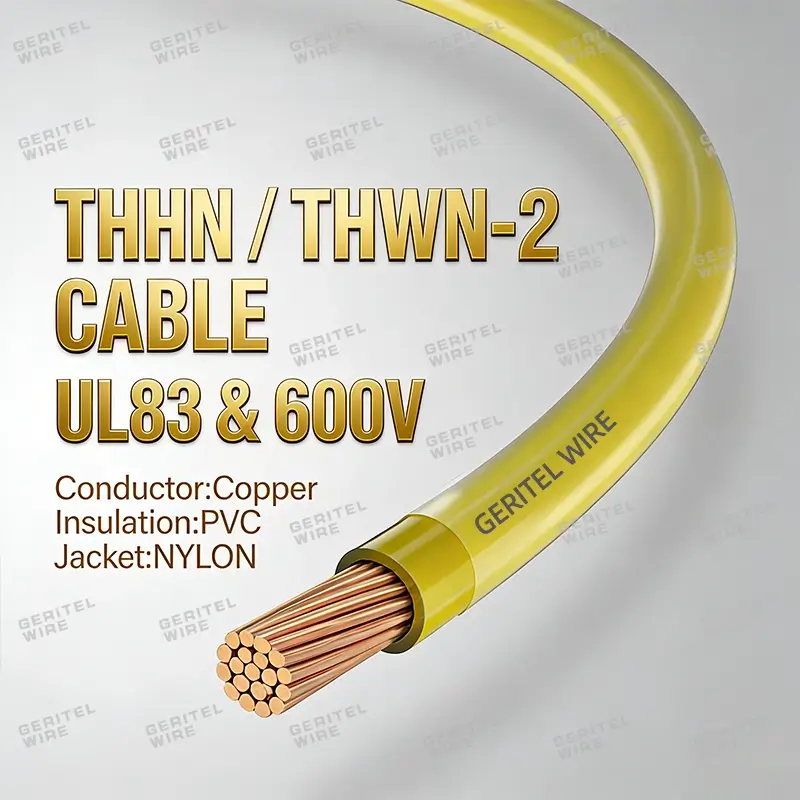
When contractors, engineers, or procurement managers search for a versatile, cost-effective, and code-compliant building wire, THHN nylon insulated copper wire (Thermoplastic High Heat-resistant Nylon-coated) wire is often one of the first choices, not because it is universal, but because it performs reliably across a wide range of real-world electrical installation scenarios where heat resistance, mechanical durability, and installation efficiency must all be balanced in a single solution.
Core Application Logic: Where THHN Fits Best
THHN wire is primarily designed for dry and damp locations inside conduit systems, which means it is not typically exposed directly but installed within raceways, conduits, or cable trays, making it ideal for structured electrical distribution environments rather than open or outdoor direct-burial conditions.
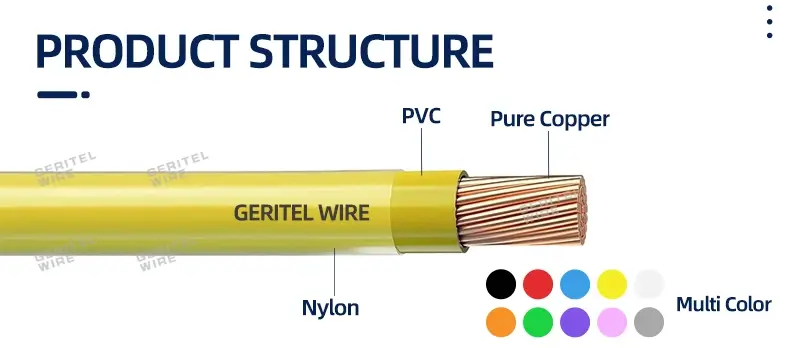
From a practical standpoint, its usage is driven by three key properties:
- 90°C heat resistance (dry environments)
- Nylon jacket for abrasion and chemical protection
- Relatively thin insulation for easier pulling through conduits
These characteristics directly translate into specific application scenarios.
Commercial Building Power Distribution
One of the most common and critical use cases for THHN wire is in commercial building electrical systems, where large volumes of circuits must be installed efficiently within limited conduit space.
Typical scenario:
Imagine a multi-floor office building under construction—electricians are routing hundreds of circuits from the main distribution panel to lighting systems, HVAC units, and office equipment. In this case:
- THHN wires are pulled through EMT or PVC conduits
- Multiple conductors are bundled together
- Heat buildup becomes a concern due to circuit density
Here, THHN’s high temperature rating and compact insulation allow more conductors per conduit while maintaining safety margins, significantly improving installation efficiency and reducing material costs.
Industrial Equipment and Control Panels
In industrial environments, THHN copper conductor PVC nylon is widely used for internal wiring of control panels and machinery connections, especially where mechanical wear and oil exposure are possible.
Typical scenario:
Inside a manufacturing plant, a control cabinet managing motors, sensors, and automation systems requires wiring that:
- Can withstand tight bending and routing
- Resists abrasion from vibration
- Handles moderate heat from equipment operation
THHN’s nylon coating acts as a protective barrier against oil and chemicals, making it suitable for these semi-harsh environments, provided it remains within conduit or enclosed systems.
Residential Building Wiring (Advanced Installations)
While standard residential wiring often uses NM cable, THHN becomes relevant in higher-end or more complex residential projects, particularly in conduit-based systems.
Typical scenario:
In a luxury home or apartment complex:
- Electrical systems may be installed in metal conduits for added protection
- Basements or utility areas require more durable wiring
- Long conduit runs demand easy pulling performance
THHN cable industrial wiring using is preferred here because its smooth nylon surface reduces friction, allowing electricians to pull longer distances without damaging insulation.
Lighting Systems and Retrofit Projects
THHN is also widely used in lighting circuits, especially in retrofit or upgrade projects where existing conduit infrastructure is reused.
Typical scenario:
In a commercial renovation project:
- Old wires are replaced without changing conduits
- Space inside conduits is limited
- Installation time is critical
THHN’s thin insulation and flexibility allow it to be installed quickly into existing pathways, minimizing labor time and avoiding costly structural modifications.
HVAC Systems and Mechanical Equipment
Heating, ventilation, and air conditioning systems often rely on THHN wire for power and control connections.
Typical scenario:
On a rooftop HVAC unit (with proper conduit protection):
- Wires must handle elevated temperatures
- Installation pathways may be complex
- Equipment vibration is constant
THHN performs well because of its heat resistance and mechanical durability, ensuring stable operation over time.
Conduit-Dense Environments (High Fill Efficiency)
Another often overlooked but highly valuable use case is in projects where conduit space is limited, and maximizing conductor count is essential.
Typical scenario:
In a data center or electrical room:
- Multiple circuits must run in parallel
- Conduit sizes are fixed
Expansion flexibility is required
THHN’s smaller outer diameter compared to some alternative insulations allows engineers to increase conductor density without exceeding fill limits, making it a strategic choice in space-constrained designs.
Specification-Based Use: Matching Size to Scenario
THHN is available in a wide range of AWG sizes, and each size corresponds to a different application level:
14–12 AWG: lighting and general-purpose circuits
10–8 AWG: small equipment and dedicated circuits
6–2 AWG: feeders and medium loads
1/0 and above: main distribution and heavy industrial loads
Choosing the correct size is not just about current capacity, but also about:
- Voltage drop over distance
- Conduit fill limitations
- Thermal conditions in bundled installations
Where THHN Should NOT Be Used
Understanding limitations is just as important as knowing applications.
THHN alone is not suitable for:
- Direct burial underground
- Continuous wet environments (unless dual-rated as THWN or THWN-2)
- UV-exposed outdoor installations without protection
Using THHN incorrectly in these conditions can lead to:
- Insulation degradation
- Short circuits
- Premature system failure
Practical Insight: Why Engineers Still Choose THHN
In real-world procurement decisions, THHN is rarely chosen randomly. It is selected because it offers a balanced combination of cost, performance, and installation efficiency, especially in projects where:
- Conduit systems are already planned
- Installation speed affects project timelines
- Thermal and mechanical reliability are required
It is not the most rugged wire, nor the most specialized, but it is often the most practical choice across multiple standard scenarios.
Contact us
If you are evaluating cable options for your next project, feel free to contact us for technical support, datasheets, or a competitive quotation, and let us support your success with reliable, compliant, and cost-effective cable solutions.
Dongguan GERITEL Electrical Co., Ltd.
Tel / WhatsApp / WeChat: +86 135 1078 4550 / +86 136 6257 9592
Email: manager01@greaterwire.com
 Fire Resistance of THHN/THWN-2 Cables and UL83 Requirements



 Building 2, No. 40 Luxi 2nd Road, Liaobu Town, Dongguan City, Guangdong Province, China