


 Home
HomeWhat Is Thhn Wire & All You Need to Know About It
 GERITEL
 Mar 25,2026

When planning an electrical installation, whether for a residential upgrade or a large-scale commercial project, one of the most common challenges lies in selecting a wire that can balance safety, durability, and cost efficiency while remaining easy to install, and this is exactly where THHN wire has become a preferred choice for electricians, contractors, and procurement professionals across global markets.
1. Understanding THHN Wire: Meaning and Market Relevance
THHN stands for Thermoplastic High Heat-resistant Nylon-coated, which directly reflects both the material composition and the functional performance of this widely used building wire, and it is specifically designed to operate reliably in environments where heat resistance, mechanical protection, and installation flexibility are essential.
In practical applications, many users encounter issues such as insulation aging under high temperatures, damage caused by friction during wire pulling, or difficulty navigating conduits due to rigid cable structures, and THHN wire effectively addresses these pain points by combining heat-resistant insulation with a durable and smooth outer layer that improves handling and longevity.
As a result, THHN wire has become a standard solution for internal wiring in buildings, control circuits, and power distribution systems, especially in markets where THHN wire for conduit installation is widely adopted.
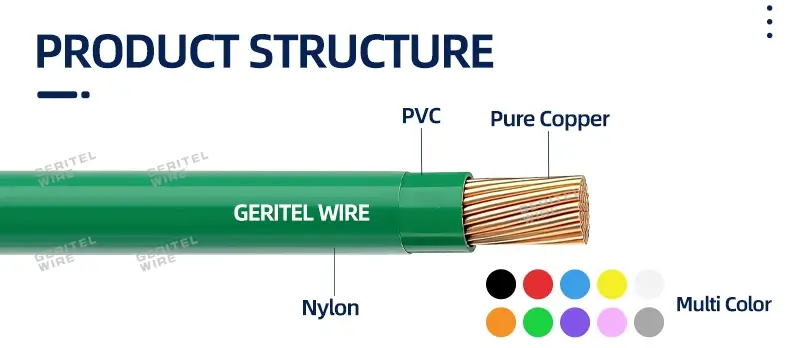
2. THHN Wire Structure: Materials and Performance Explained
To fully understand the performance advantages of THHN wire, it is important to examine its structure in detail, as each layer is engineered to deliver specific electrical and mechanical benefits that contribute to overall reliability.
2. 1 Conductor: Copper or Aluminum Core
At the core of THHN wire is typically a bare or tinned copper conductor, although aluminum options are also available depending on project requirements and budget considerations, and copper is generally preferred due to its excellent conductivity, corrosion resistance, and long-term stability—making THHN nylon insulated copper wire a top choice for most high-performance applications.
A high-quality conductor ensures efficient current transmission with minimal energy loss, which is critical for maintaining both system performance and safety.
2. 2 Insulation Layer: PVC (Polyvinyl Chloride)
Surrounding the conductor is a layer of PVC insulation, which provides strong dielectric properties while also offering resistance to moisture, oil, and various chemicals, making it suitable for a wide range of environments.
The PVC insulation used in THHN wire is designed to withstand temperatures up to 90°C in dry locations, ensuring reliable operation under continuous electrical load conditions.
2. 3 Outer Jacket: Nylon Coating
The outermost layer of THHN wire is a nylon (polyamide) jacket, which plays a crucial role in enhancing mechanical protection and durability, and its smooth surface significantly reduces friction during installation, making it easier to pull the wire through conduits without damage.
In addition, the nylon coating improves resistance to abrasion, gasoline, oil, and other industrial substances, which makes THHN wire particularly suitable for commercial and light industrial applications.
3. UL Certification: Why UL 83 Matters
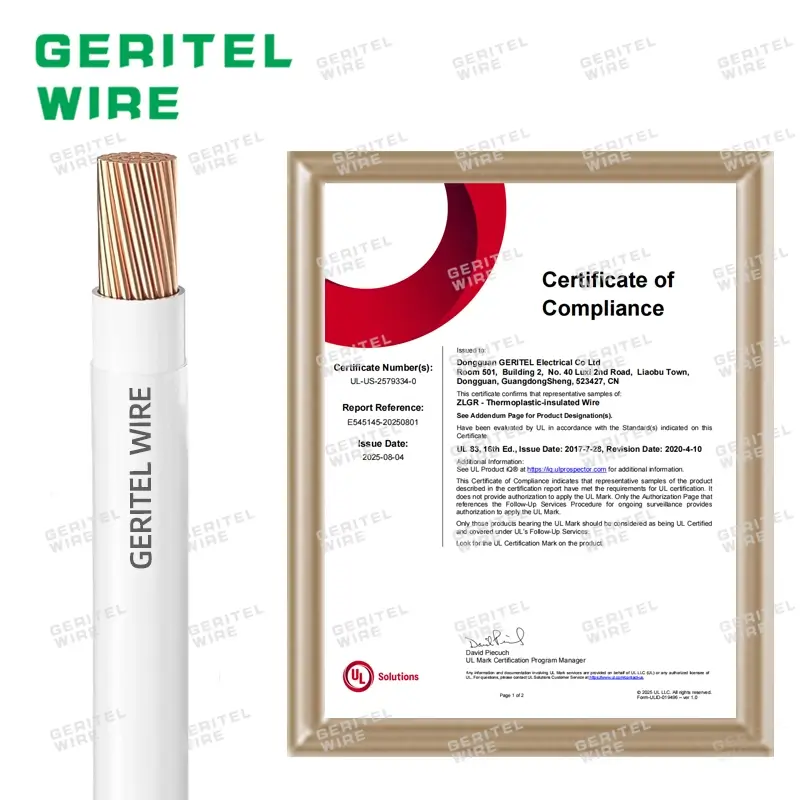
In any electrical project, compliance with recognized safety standards is essential for ensuring both performance and regulatory approval, and this is why UL certification, especially compliance with UL 83, is a key consideration when selecting THHN electrical cable UL listed.
UL 83 is the standard that governs thermoplastic-insulated wires and cables, including THHN, and it specifies strict requirements for insulation thickness, temperature ratings, voltage capacity, flame resistance, and overall construction quality.
Choosing THHN wire that meets UL 83 provides several important benefits:
- Enhanced safety assurance, as the product has undergone rigorous testing under standardized conditions
- Regulatory compliance, helping projects meet electrical codes and pass inspections
- Market credibility, since UL-listed products are widely trusted by engineers and contractors worldwide
For buyers and project managers, UL-certified THHN wire reduces risk, ensures consistency, and supports long-term system reliability.
4. Applications and Advantages: Where THHN Wire Excels
One of the strongest advantages of THHN wire is its versatility, as it can be used across a wide range of environments while consistently delivering reliable performance.
4. 1 Residential Wiring
In residential applications, THHN wire is commonly used for branch circuits, lighting systems, and general power distribution, where its flexibility and heat resistance simplify installation and improve safety.
4. 2 Commercial Buildings
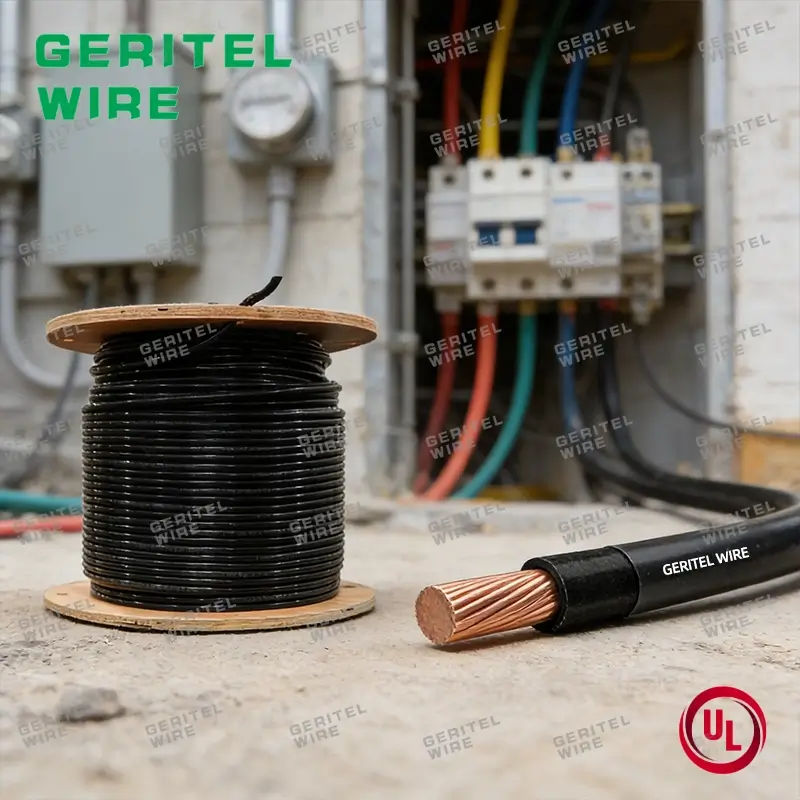
In commercial settings such as office buildings, shopping centers, and public infrastructure, THHN wire is widely used in conduit systems, distribution panels, and equipment connections due to its ability to handle higher loads and more complex layouts.
4. 3 Industrial Applications
In industrial environments, where wires may be exposed to mechanical stress, oils, or chemicals, the nylon jacket provides additional protection, making THHN wire suitable for control panels and machinery wiring.
4. 4 Key Advantages Over Standard Wires
Compared to general-purpose electrical wires, THHN offers several notable advantages:
- High heat resistance, supporting operation up to 90°C in dry conditions
- Excellent abrasion resistance, reducing damage during installation
- Smooth surface for easy pulling, improving installation efficiency
- Flame-retardant properties, enhancing overall safety
- Long service life, helping reduce maintenance and replacement costs
These features make THHN wire an ideal choice for both new construction and retrofit projects.
5. Selection and Installation Tips
To ensure optimal performance and safety, it is important to select the correct THHN wire specification and follow proper installation practices, as even high-quality materials require correct application to achieve the best results.
5. 1 Selecting the Right Wire Gauge
Wire size should be determined based on current load and circuit length, as undersized wires may overheat while oversized wires can increase unnecessary costs, so referring to standard ampacity charts is essential.
5. 2 Checking Voltage Ratings
Most THHN wires are rated for 600V, which is suitable for the majority of building applications, but verifying compatibility with your system requirements is still recommended.
5. 3 Using Proper Conduit Systems
THHN wire is primarily designed for installation in conduits, and selecting appropriate conduit types not only protects the wire but also ensures compliance with installation standards.
5. 4 Installation Best Practices
- Avoid excessive bending to prevent insulation damage
- Use lubricants when pulling wires through long conduits
- Ensure tight and secure connections to avoid overheating
- Always follow local electrical codes and safety regulations
By following these guidelines, users can maximize both safety and service life.
6. Conclusion: Choosing Reliable THHN Wire for Your Projects
As electrical systems continue to demand higher levels of performance, durability, and compliance, selecting the right wiring solution becomes increasingly important, and THHN wire stands out as a reliable option that delivers a strong balance of safety, flexibility, and long-term value.
Whether you are an electrical contractor, distributor, or project owner, choosing high-quality THHN wire will help ensure smoother installation, improved system performance, and reduced long-term risks.
Contact Us
If you are looking for a reliable THHN wire manufacturer with strong export experience and consistent product quality, Dongguan GERITEL Electrical Co., Ltd. is ready to support your business with competitive pricing, stable delivery, and professional service.
Dongguan GERITEL Electrical Co., Ltd.
Tel / WhatsApp / WeChat: +86 135 1078 4550 / +86 136 6257 9592
Email:manager01@greaterwire.com
Feel free to contact us for quotations, technical support, or customized cable solutions for your next electrical project.
 Heat and Moisture Resistance of UL83 THHN/THWN-2 Cables Explained



 Building 2, No. 40 Luxi 2nd Road, Liaobu Town, Dongguan City, Guangdong Province, China