


 Home
HomeWhat Are the Advantages of XLPE Insulated Building Wire?
 GERITEL
 Mar 24,2026

In modern construction projects, whether residential apartments, commercial complexes, or industrial facilities, electrical wiring is no longer judged solely by its ability to conduct current, but increasingly by its safety, durability, and long-term reliability under demanding conditions. Traditional PVC-insulated wires, while widely used, often face limitations in heat resistance, aging performance, and environmental adaptability, which can lead to higher maintenance costs and potential safety risks over time.
Against this backdrop, XLPE insulated building wire has emerged as a preferred solution for engineers, contractors, and procurement professionals, offering a well-balanced combination of electrical performance, mechanical strength, and environmental resilience. The following sections will walk you through its structure and the key advantages that make it an ideal choice for modern construction wiring systems.
1. Core Structure of XLPE Insulated Building Wire
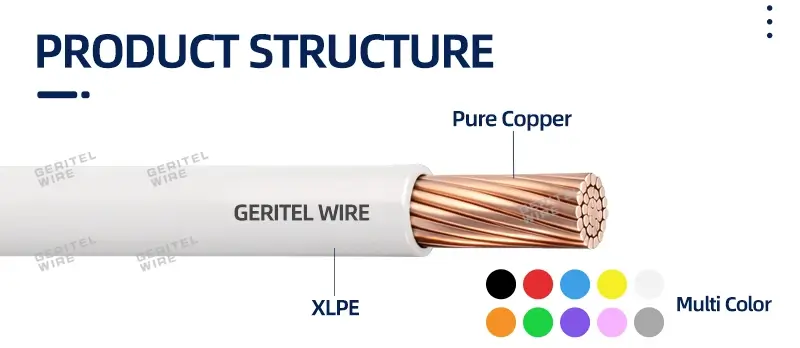
To fully understand the performance benefits, it is essential to first examine the structure of XLPE insulated building wire, which is typically composed of three main layers working together to ensure safety and efficiency.
The conductor is usually made of high-purity copper or aluminum, carefully selected for its excellent conductivity and flexibility, ensuring stable current transmission across both short-distance residential circuits and large-scale commercial installations. Surrounding the conductor is the XLPE (cross-linked polyethylene) insulation layer, which is formed through a cross-linking process that significantly enhances thermal resistance, electrical insulation properties, and resistance to deformation under load.
Depending on application requirements, an optional outer sheath—commonly made from PVC or low-smoke halogen-free materials—can be added to provide additional protection against mechanical damage, moisture ingress, and environmental exposure, making the wire suitable for concealed wiring, conduits, and cable trays.
2. Key Advantages of XLPE Insulated Building Wire
2. 1 Superior Heat Resistance and Long Service Life
One of the most significant advantages of XLPE insulated building wire lies in its ability to withstand higher operating temperatures compared to traditional PVC wires, allowing continuous operation typically up to 90°C without compromising insulation integrity. This enhanced thermal stability not only reduces the risk of insulation breakdown under heavy loads but also extends the overall service life of the wiring system, making it particularly suitable for high-demand environments such as commercial buildings and industrial facilities. For instance, XHHW electric cable for HVAC systems relies on this superior heat resistance to operate reliably in the high-temperature environments of heating, ventilation, and air conditioning systems.
2. 2 Excellent Electrical Insulation Stability
The cross-linked molecular structure of XLPE provides outstanding dielectric strength, ensuring minimal energy loss and stable electrical performance even under fluctuating voltage conditions. For projects requiring consistent and reliable power distribution, such as data centers or office buildings, XLPE wire for construction offers a dependable solution that minimizes the risk of leakage currents and electrical faults.
2. 3 High Mechanical Strength and Damage Resistance
Compared with PVC-insulated alternatives, XLPE insulation exhibits stronger resistance to abrasion, impact, and deformation, which is especially valuable during installation where cables may be pulled through conduits or exposed to bending stress. This mechanical robustness helps reduce installation damage and enhances long-term reliability in both concealed and exposed wiring systems.
2. 4 Resistance to Chemicals and Environmental Factors
In complex construction environments where exposure to oils, chemicals, or moisture is common, XLPE insulated building wire demonstrates excellent resistance to corrosion and environmental degradation. Whether installed in humid basements, industrial workshops, or outdoor conduits, the material maintains its structural integrity and performance over time.
2. 5 Low Smoke, Halogen-Free and Fire Safety Performance
When paired with appropriate sheath materials, XLPE cables can be designed to meet low-smoke, halogen-free (LSZH) standards, significantly reducing the emission of toxic gases and dense smoke in the event of a fire. This feature is increasingly important in public buildings, hospitals, and high-rise developments, where evacuation safety and compliance with fire regulations are critical considerations.
2. 6 Convenient Installation and Versatile Application
Despite its enhanced strength and durability, XLPE insulated building wire remains flexible enough for efficient installation, allowing contractors to handle routing, bending, and termination with ease. Its adaptability makes it suitable for a wide range of applications, including residential wiring, commercial electrical systems, and industrial infrastructure projects.
3. UL Certification: Ensuring Safety and Compliance
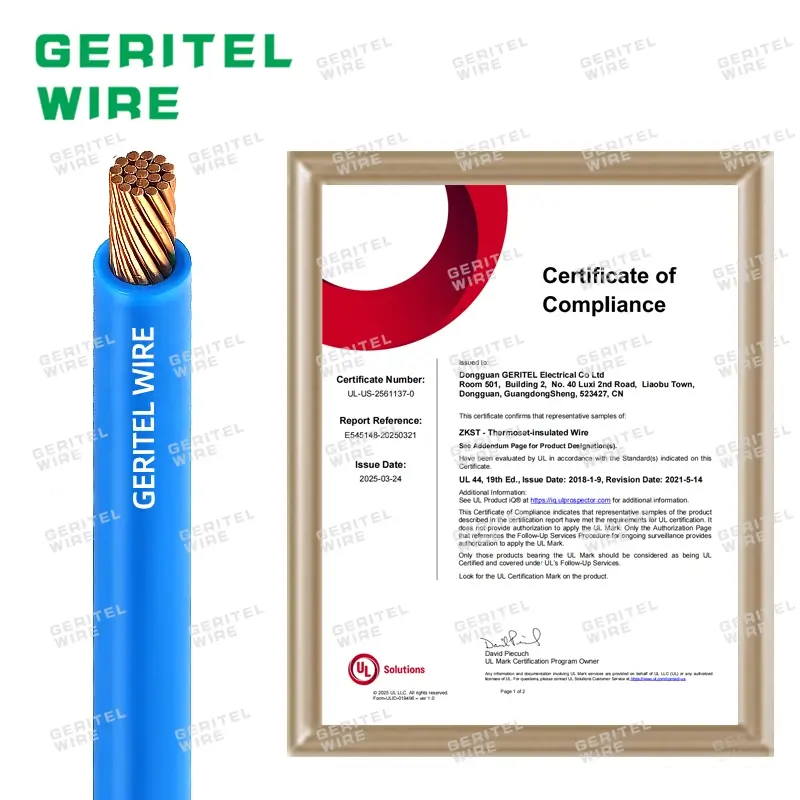
When selecting building wires for international projects, certification plays a crucial role in ensuring both safety and regulatory compliance. UL certified XLPE building wire undergoes rigorous testing by UL (Underwriters Laboratories), covering aspects such as flame resistance, insulation performance, and overall product reliability.
For developers, contractors, and electrical engineers, UL certification provides several key advantages. It simplifies project approval processes, supports compliance with local and international electrical codes, and enhances confidence during inspection and final acceptance stages. More importantly, it demonstrates a commitment to safety and quality, which is essential for protecting both property and human life.
4. XLPE vs. Traditional PVC Insulated Wire
While PVC-insulated wires remain common in basic applications, the transition to XLPE insulated building wire represents a clear upgrade in performance. XLPE offers higher temperature tolerance, better aging resistance, and improved electrical stability, while also supporting environmentally friendly, low-smoke formulations. For modern construction projects that prioritize long-term efficiency and safety, this upgrade is increasingly becoming a necessity rather than an option.
5. Conclusion: A Smarter Choice for Modern Construction Wiring
As building standards continue to evolve toward higher safety, efficiency, and sustainability requirements, XLPE insulated building wire stands out as a reliable and future-ready solution. Its advanced material structure, combined with superior thermal, electrical, and mechanical performance, makes it an excellent choice for a wide range of construction scenarios, from residential buildings to specialized applications requiring XHHW electric cable for utilities.
Contact us today:
If you are looking to upgrade your wiring systems or source UL certified XLPE building wire for your next project, our team at Dongguan GERITEL Electrical Co., Ltd. is ready to support you with professional guidance, customized solutions, and competitive quotations.
Tel / WhatsApp / WeChat: +86 135 1078 4550 / +86 136 6257 9592
Email: manager01@greaterwire.com
Feel free to contact us today to request samples, technical specifications, or pricing details, and let us help you build safer and more efficient electrical systems.
 RW90 vs XHHW-2 Cable: UL vs cUL Wire Comparison



 Building 2, No. 40 Luxi 2nd Road, Liaobu Town, Dongguan City, Guangdong Province, China