


 Home
HomeVanuatu Tourism Infrastructure Project (VTIP) Waterfront & Cruise Tourism Upgrade
 GERITEL
 Apr 10,2026

It was a Monday morning in February 2023 when an email landed in our inbox at Dongguan GERITEL Electrical. The subject line read simply: "URGENT: VTIP Cable Inquiry." The sender was a procurement officer from Vanuatu's Ministry of Infrastructure, and the attachment was a seventeen-page technical specification that would consume our attention for the next six weeks.
Vanuatu. For many in the manufacturing world, the name conjures little more than a scattered archipelago on the map. Eighty-three volcanic islands strung across the South Pacific, seventeen hundred kilometers east of Australia's coast. The capital, Port Vila, had served cruise ships for over four decades, but its rusted bollards and crumbling concrete berths had long since fallen behind the demands of modern ten-ton vessels.
The Vanuatu Tourism Infrastructure Project (VTIP), funded by the World Bank, aimed to change that. A new waterfront promenade, floating passenger bridges, visitor terminals, and deep-water berths capable of hosting two large cruise ships simultaneously. All of it needed power. All of it needed cable.
The catch? Vanuatu's electrical codes are inherited directly from Australia and New Zealand. The AS/NZS standards stood as an invisible gate, filtering out most Asian suppliers. And the lead times quoted by European manufacturers were keeping the project director awake at night.
Salt Spray, UV, and Category Four Winds
Pull up a satellite image. Lock your view on seventeen degrees south, one hundred sixty-eight degrees east. You'll see Port Vila curled inside a horseshoe-shaped natural harbor. The bay shields the wharf from the direct force of the southeast trades, but it offers no protection against the tropical cyclones that arrive like clockwork between November and April.
The 2023 construction schedule was a gamble against nature. Principal electrical installation had to finish before the dry season began in May. Full commissioning by October. That meant all cables needed to clear customs in Port Vila by late April, leaving us less than sixty days from order to delivery.
The client's anxiety bled through during our first video conference. The Australian project engineer—we later learned he had lived through Cyclone Yasi in Cairns—kept returning to one detail: Aerial Cable 2×16 mm². This was the overhead feeder running from the substation to the passenger bridge, spanning fifty meters of fully exposed coastline.
"When we inspected the old lines last year, the copper was black with oxidation. The PVC sheathing crumbled like biscuit." He made a snapping motion with his hands. "When the cyclone hit, the whole span whipped like a jump rope. Snapped at the joints. We don't just need cable. We need cable that survives twenty-five years in this place."
The Devil in the Certification Numbers
SAA certification. Those three letters dominated the following two weeks.
Many suppliers treat the SAA mark as a sticker to be applied. When we sent our complete documentation package, the client's surprise was palpable—not just certificates, but test reports for every product, raw material traceability records, factory audit documentation, and cross-referenced compliance matrices mapping our products to AS/NZS 5000.1 and 5000.2 clauses.
TPS 2×2.5 mm² + E, TPS 2×1.5 mm² + E, TPS 2×4 mm² + E, TPS 2×6 mm² + E. These flat sheathed cables would run through ceiling cavities and wall chases in the visitor center, feeding lighting and socket circuits. We highlighted the chlorine content in the sheath compound—a subtle but critical difference between Australian and European standards that determines smoke toxicity during fire.
Building Cable 3×6 mm² and Building Cable 3×10 mm² would handle the heavy power distribution. For Port Vila's humidity, we added anti-fungal agents to the standard PVC formulation—an enhancement not mandated by SAA certification, but born from our experience in previous South Pacific projects.
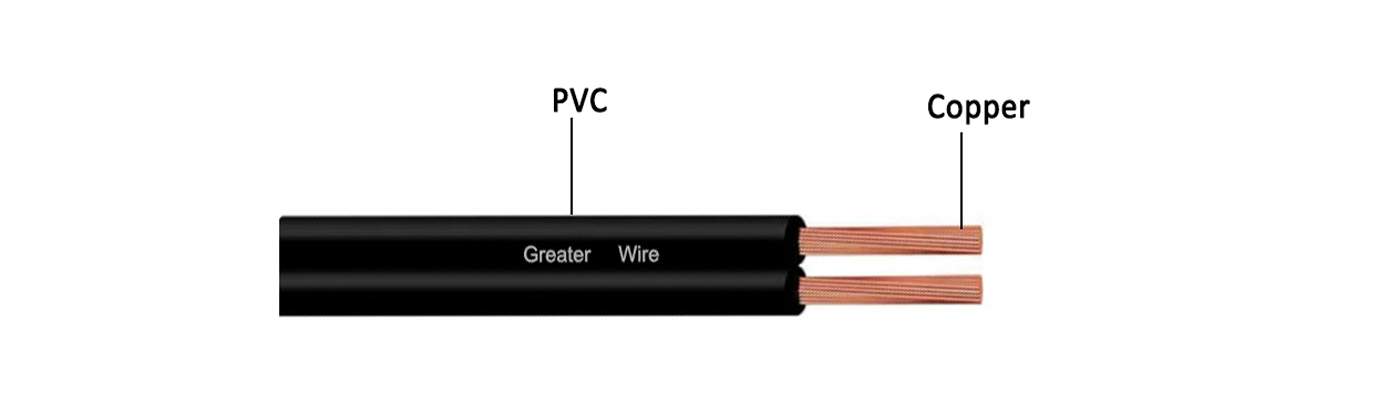
Then there was the Aerial Cable 2×16 mm² that had captured so much attention. We provided the details that ultimately secured the order: high-purity copper stranded conductor, flexible and oxidation-resistant; uniformly thick PVC insulation layer protecting the conductor like a second skin; parallel twin-core design making overhead installation intuitive and stable. No exotic composite materials. No expensive imported compounds. Just proven, reliable construction—after one thousand hours in salt spray testing, insulation resistance degradation measured less than five percent.
The Earthing Cable formed the safety foundation of the entire system. Beneath the green-and-yellow PVC sheath lay bare or insulated copper conductors ranging from sixteen to one hundred twenty square millimeters. In cyclone-prone islands, low-impedance grounding means lightning currents and fault currents have a safe path to dissipate, rather than seeking routes through building structures.
One Month of Factory Symphony
Three days after contract signature, the dedicated SAA production line at our Dongguan facility hummed to life.
It was choreography. Existing stock of TPS 2×2.5 mm² + E and TPS 2×4 mm² + E was prioritized for allocation. Shortfall quantities were scheduled for production within two weeks. Quality control compressed their routine cycle by half—not by skipping steps, but by adding shifts, ensuring every cable drum carried a batch number traceable beside its SAA mark.
The logistics plan evolved through three iterations. Initial routing via Sydney was abandoned over concerns about Australian customs inspection delays. Direct air freight to Port Vila was considered and rejected when cargo hold dimensions couldn't accommodate the drum sizes for Building Cable 3×10 mm². The final solution: direct sailing from Shenzhen Port on a weekly express service, supported by our advance preparation of Vanuatu biosecurity permits and certificates of origin. The shipment cleared Port Vila customs within one month of order confirmation.
The Aerial Cable 2×16 mm² received special treatment—reinforced wooden drums, outer wrapping of moisture barriers and UV-resistant fabric. When the client unwrapped them on site, the sheathing remained smooth and pristine, showing none of the humidity staining common to tropical sea voyages.
A Handwritten Note on the Acceptance Form
October 2023. The final acceptance meeting. The project director scribbled a line in the margin of the payment release form: "Cable installation completed without a single rejection. Rare in this region."
Translation: zero cable returns. In these waters, that is rare indeed.
The more convincing test came four months later. January 2024. Tropical Cyclone Kiril passed eighty kilometers north of Port Vila. Peak gusts reached one hundred forty kilometers per hour. Rainfall exceeded three hundred millimeters. Photos from the contractor showed the Aerial Cable 2×16 mm² suspended stable between two poles, sag variation within tolerance, joints dry and intact.
The Australian engineer's email afterward read simply: "Your cables danced, but they didn't break."
From Supplier to Co-Conspirator
This project changed how we relate to clients.
No longer the mechanical exchange of quotation and purchase order. When that same client began asking about expansion plans at Suva Port in Fiji, we provided not just product catalogs but interpretation of the local utility's approval processes. When a new client in Samoa worried about galvanic corrosion between Earthing Cable and steel structures, we shared installation details from the Vanuatu project—combinations of hot-dip galvanized clamps and sacrificial anode blocks.
The essence of this transformation was our finally understanding how the South Pacific engineering market operates. Here, brand recognition matters less than a mobile number that answers at midnight. Price competitiveness yields to disaster resilience. And a complete SAA certification file builds more trust than any sales pitch.
Why does TPS 2×6 mm² + E require 0.3 millimeters more sheath thickness than the 2.5 variant? Because this affects conduit fill ratio calculations, which in turn determine heat dissipation and long-term current capacity. These details never appear on certification documents, but they appear in the technical memoranda we prepare for site electricians.
Final Words
The Vanuatu project taught us one thing: in infrastructure, the best marketing is not promise. It is product that survives the test of time.
If you are planning electrical works in the South Pacific region—cruise terminals, coastal resorts, mining facilities—we should talk. Not about our production capacity or export history, but about oxidation rates of Aerial Cable 2×16 mm² in salt spray environments, derating factors for Building Cable 3×6 mm² in tropical heat, and how to maintain low impedance in Earthing Cable during lightning strikes.
These topics may sound overly technical. But when you are standing on a construction site awaiting twelve-scale winds, you discover that these details are precisely what keep the lights burning after the storm passes.
Dongguan GERITEL Electrical Co., Ltd.
Tel/WhatsApp/WeChat: +86 135 1078 4550 / +86 136 6257 9592
Email: manager01@greaterwire.com
Send your project requirements. We typically respond within twenty-four hours—with specific technical proposals, not template quotations.
 Federated States of Micronesia ARISE Renewable Energy & Solar Microgrid Expansion



 Building 2, No. 40 Luxi 2nd Road, Liaobu Town, Dongguan City, Guangdong Province, China