


 Home
HomeTuvalu Nui Island Microgrid Construction
 GERITEL
 Apr 08,2026

In 2024, our team partnered with the Tuvalu Nui Island local energy authority to deliver a critical microgrid construction project, a key initiative to upgrade the island’s outdated power supply system and transition to clean energy. As a professional cable exporter with years of experience in overseas new energy projects, we provided tailored cable solutions that solved the client’s core pain points, ensuring the stable and efficient operation of the microgrid. This case details how we used high-quality Medium Voltage Cable, Elastomer Cable, and PV Cable, along with our professional capabilities, to support Tuvalu Nui Island’s energy transformation, highlighting our advantages in product quality, cost-effectiveness, and project execution.
1. Tuvalu Nui Island’s Microgrid Dilemma and Demand
Tuvalu, a small island nation in the South Pacific, faces unique challenges in its energy infrastructure due to its remote location, harsh marine environment, and limited economic resources. Nui Island, one of Tuvalu’s outer islands, relied on an aging diesel-powered power system that was inefficient, costly to maintain, and vulnerable to frequent outages. With the global push for renewable energy and Tuvalu’s commitment to reducing carbon emissions, the local government launched a microgrid construction project in early 2024, aiming to integrate solar energy into the power system and improve energy supply stability, reliability, and sustainability.
The client’s core needs were clear: to source high-quality, durable cables that could withstand the island’s harsh conditions—high humidity, salt spray, strong UV radiation, and extreme temperature fluctuations. They also faced three critical pain points: first, the lack of experience in selecting cables suitable for marine and tropical island environments, leading to concerns about product durability and service life; second, tight project timelines and limited budgets, requiring cost-effective solutions without compromising quality; third, the need for cables that comply with international standards and local certification requirements to ensure project compliance and safety.
After researching multiple cable suppliers, the client chose us for our proven track record in similar island microgrid projects, our strict quality control system, and our competitive pricing. They particularly valued our ability to provide customized solutions and timely technical support, which addressed their concerns about project risks and execution efficiency.
2. Choosing the Right Cables for the Island’s Unique Needs
Based on the project’s specific requirements and the client’s pain points, we conducted a detailed on-site investigation (via remote collaboration with local partners) to assess the environmental conditions, power load requirements, and installation scenarios. We then designed a comprehensive cable solution centered on three core products: Medium Voltage Cable, Elastomer Cable, and PV Cable, with specific specifications tailored to the island’s microgrid system.
The Medium Voltage Cable we provided is of the XLPE-insulated type, specifically the 12kV 3-core 150mm² model, which is ideal for the microgrid’s main power transmission line. Compared to traditional PVC-insulated medium voltage cables, our XLPE-insulated Medium Voltage Cable offers superior electrical insulation performance, higher temperature resistance (long-term operating temperature up to 90°C), and better resistance to salt spray and moisture—critical for Nui Island’s marine environment. Its three-layer co-extrusion structure (conductor shielding layer + XLPE insulation layer + insulation shielding layer) ensures uniform electric field distribution, reducing the risk of partial discharge and improving long-term reliability. This cable was chosen over other options because it can withstand frequent load changes in the microgrid and has a service life of over 30 years, significantly reducing maintenance costs for the client.
For the microgrid’s connection lines in harsh outdoor and wet areas, we selected Elastomer Cable (EPR insulation, 0.6/1kV 4-core 25mm²), which is known for its excellent flexibility, wear resistance, and resistance to chemical corrosion. Unlike ordinary rubber cables, our Elastomer Cable maintains flexibility even at low temperatures (-40°C) and can resist UV radiation and salt water erosion, making it suitable for installation in coastal areas and underground trenches on the island. Its flame-retardant properties (compliant with IEC 60332-1) also ensure safety in case of fire, a key requirement for the island’s dense residential and public areas.
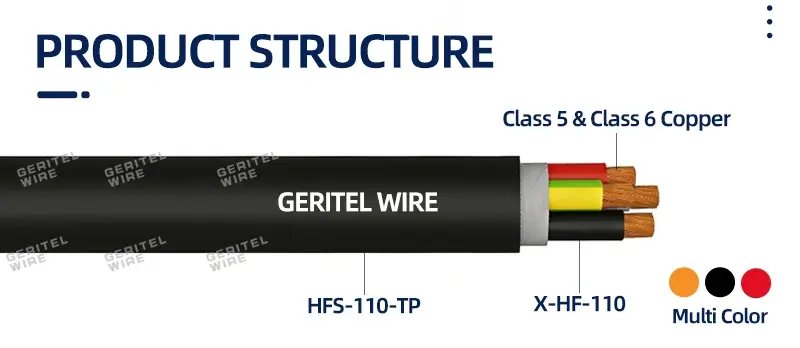
To support the solar energy integration part of the project, we supplied PV Cable (1kV 2-core 4mm² and 6mm² models), which is specially designed for photovoltaic systems. Our PV Cable uses irradiated cross-linked polyolefin insulation and sheath, with a long-term operating temperature of up to 120°C, making it suitable for direct exposure to sunlight. Compared to ordinary power cables, it has lower power loss (dc resistance reduced by 3%), higher conductivity, and better weather resistance—ensuring efficient energy transmission from solar panels to the microgrid inverter. The 4mm² model was used for short-distance connections between solar panels, while the 6mm² model was used for longer-distance transmission from the solar array to the control room.
All cables we provided are customized to meet the project’s specific size and performance requirements, ensuring perfect compatibility with the microgrid’s other equipment and installation scenarios. Our solution not only addressed the client’s concerns about durability and reliability but also optimized costs by selecting the most suitable cable models and specifications, avoiding unnecessary expenses.
3. Certifications and Strict Quality Control
Safety is the top priority for any power project, especially in remote island areas where maintenance is difficult. To ensure the safety and reliability of our cables, we strictly adhere to international standards and hold a full set of authoritative certifications, which was a key factor in the client’s decision to choose us. Our Medium Voltage Cable (XLPE Cable), Elastomer Cable, and PV Cable all comply with IEC 60502 (International Electrotechnical Commission) standards, as well as SAA, CE, FCC, and ISO 9001 certifications—qualifications that are recognized by Tuvalu’s local regulatory authorities and ensure hassle-free market access.
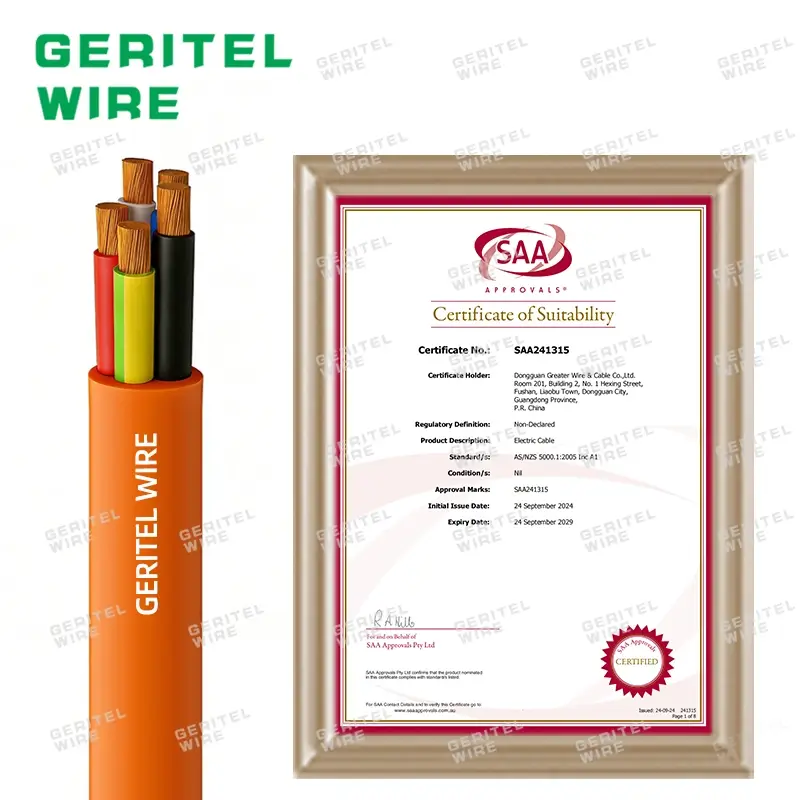
Before delivery, all cables underwent rigorous quality testing, including insulation resistance testing, voltage withstand testing, flame retardant testing, and environmental resistance testing (salt spray, UV, and temperature cycle tests). For example, our XLPE-insulated Medium Voltage Cable passed a 30.5kV/5min power frequency withstand test without breakdown, confirming its excellent insulation performance. We also provided detailed test reports and certification documents to the client, ensuring full transparency and compliance with the project’s safety requirements.
In addition, we offered professional technical guidance to the client’s installation team, including cable laying specifications, joint processing methods, and maintenance tips. This helped avoid installation errors that could affect cable performance and safety, further ensuring the long-term stable operation of the microgrid.
4. Overcoming Challenges to Meet Project Timelines
The remote location of Tuvalu Nui Island posed significant challenges for delivery, including long shipping times, complex customs clearance procedures, and potential delays due to adverse weather conditions. The client required all cables to be delivered within 45 days to avoid delaying the microgrid construction schedule—a tight timeline that many suppliers struggled to meet.
To ensure on-time delivery, we optimized our supply chain and production schedule: we started production immediately after confirming the order, prioritizing the manufacturing of the cables for this project. We chose a reliable shipping partner with experience in delivering goods to remote Pacific islands, and we prepared all necessary customs clearance documents (including commercial invoices, packing lists, certification documents, and origin certificates) in advance to speed up the customs process. We also kept the client updated on the production and shipping progress in real time, providing tracking information so they could monitor the cargo status.
Despite a temporary delay caused by a tropical storm during shipping, we worked closely with the shipping company to adjust the route and ensure the cables arrived on the island fastly after the order was confirmed—two days ahead of the scheduled deadline. Upon arrival, our team coordinated with local partners to inspect the cables, ensuring no damage occurred during transportation, and provided on-site support for unloading and storage.
5. Transforming Nui Island’s Energy Landscape
With our high-quality cables and professional support, the Tuvalu Nui Island microgrid project was completed in October 2024, one month ahead of schedule. The project has achieved remarkable results, fundamentally transforming the island’s energy supply system:
First, the microgrid now operates stably with an average power supply reliability rate of 99.8%, a significant improvement from the previous 85% with the diesel-powered system. The Medium Voltage Cable (XLPE Cable) ensures efficient transmission of electricity from the solar array and backup generators to all parts of the island, while the Elastomer Cable and PV Cable maintain stable performance even in harsh environmental conditions, reducing the frequency of power outages.
Second, the integration of solar energy has reduced the island’s reliance on imported diesel fuel, lowering energy costs by 40% and reducing carbon emissions by approximately 150 tons per year—aligning with Tuvalu’s commitment to renewable energy and environmental protection. Our PV Cable’s low power loss ensures that more solar energy is converted into usable electricity, improving the overall efficiency of the photovoltaic system.
Third, the durability of our cables has reduced maintenance costs significantly. The client estimates that the service life of our cables will exceed 30 years, meaning they will not need to replace the cables for decades—saving a substantial amount of money in long-term maintenance and replacement costs.
6. Cooperation Value and Client Feedback
This cooperation not only helped the client successfully complete the microgrid construction project but also established a long-term cooperative relationship based on trust and mutual benefit. The client recognized our professional capabilities in several key areas: our deep understanding of island microgrid projects, our ability to provide customized solutions that address specific pain points, our strict quality control system that ensures product reliability, and our efficient delivery and after-sales support.
The client emphasized that choosing our cables was a critical decision for the project’s success. Compared to other suppliers, our products offered a better balance of quality and cost-effectiveness, and our certifications and test reports provided the confidence they needed to proceed with the project. They also noted that our technical guidance and real-time communication throughout the project helped avoid potential risks and ensure smooth execution.
Beyond the project itself, our cooperation has contributed to Tuvalu’s energy transformation goals, helping Nui Island move toward a more sustainable and reliable energy future. The client has expressed interest in cooperating with us on future microgrid projects in other Tuvalu islands, recognizing our expertise and commitment to quality.
7. Choose Us for Your Cable Export Needs: Let’s Build a Reliable Energy Future Together
If you are undertaking a microgrid, solar energy, or power transmission project—whether in remote island areas, harsh industrial environments, or urban settings—we are your trusted partner for high-quality cable solutions. Our experience in the Tuvalu Nui Island project demonstrates our ability to deliver tailored, reliable, and cost-effective cables that meet the most demanding requirements.
We specialize in exporting Medium Voltage Cable, Elastomer Cable, PV Cable, and XLPE Cable, all of which are certified to international standards and customized to your specific needs. Our advantages include: proven experience in overseas new energy projects, strict quality control and authoritative certifications (SAA, CE, FCC, ISO 9001, IEC), competitive pricing that balances quality and cost, efficient delivery even to remote locations, and professional technical support and after-sales service.
Don’t let cable quality, delivery delays, or compliance issues hinder your project’s success. Contact us today to discuss your cable needs, and our team will provide you with a customized solution that meets your requirements and helps you achieve your project goals.
Contact Us
Dongguan GERITEL Electrical Co., Ltd.
Tel/WhatsApp/WeChat: +86 135 1078 4550 / +86 136 6257 9592
Email: manager01@greaterwire.com
 Nauru Anibare Bay Tuna Aquaculture Base Cable Export



 Building 2, No. 40 Luxi 2nd Road, Liaobu Town, Dongguan City, Guangdong Province, China