


 Home
HomeTurkey Karapinar Solar Power Plant Cable Solution
 GERITEL
 Apr 17,2026

In March 2019, an inquiry landed in our inbox from Istanbul. The sender was a procurement manager at Kalyon Enerji. The technical specification attached ran forty pages, yet the email itself contained only one sentence: "We are building a large-scale solar plant in Konya Province. We need cables that can survive the desert for 25 years. Do you have experience supplying similar environments?" The project brief tucked inside those attachments made us realize this was no ordinary request—a 1.35 GWp installation sprawling across 20 square kilometers, constructed in phases with grid connection at each stage, destined to become Europe's largest single-site photovoltaic facility upon completion, targeting 2.6 billion kWh annually to power 2 million households. But more striking than these figures was a remark highlighted in red: "All cables must withstand extreme climatic conditions of the Konya Plateau—historical maximum temperature 48.6°C, annual precipitation below 300mm, frequent sandstorms."
The First Conversation: Understanding What "Desert Survival" Really Means
Two weeks later, during a video conference, their project engineer walked us through a slideshow of pain points from previous projects—cable jackets that turned to powder after eighteen months of exposure, medium-voltage insulation suffering thermal aging and partial discharge, and most troubling of all, the fine wires inside control cabinets that fractured under persistent electromagnetic vibration and thermal cycling. These failures hadn't occurred under laboratory extremes impossible to replicate; they had happened during perfectly "normal" Anatolian summers. As their technical director concluded the meeting: "We don't want the lowest price. We want the certainty of 'install it and never climb back up to replace it.'"
From Module to Combiner Box: The Capillaries of the Array
During our site survey, we walked nearly three kilometers along the planned module rows, our feet sinking into loose sandy soil, the sun overhead offering no shade. The EPC contractor's technical lead explained how the array layout had to account for terrain undulation and shadow masking, meaning cable runs would vary from standard dozens of meters to over a hundred, with all routing either surface-laid or shallow-buried, fully exposed to ultraviolet radiation and mechanical damage risks. For this first leg of the journey—from photovoltaic modules to combiner boxes—we proposed H1Z2Z2-K solar-rated cable, sizing it at 1×4mm² for standard string loops and 1×6mm² for longer runs or high-power modules demanding greater current capacity.
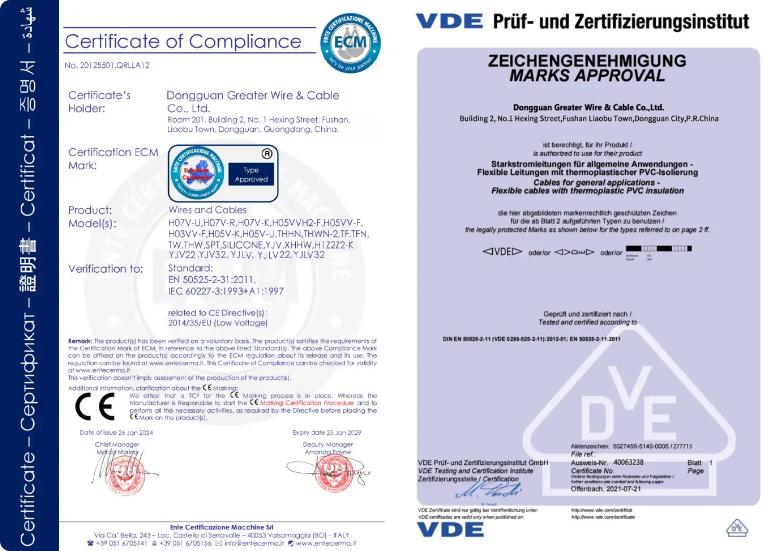
Our selection hinged on this product's electron-beam cross-linked dual-layer insulation—an inner layer of cross-linked polyolefin providing fundamental dielectric strength, sheathed by an outer jacket formulated specifically for UV resistance and ozone immunity, capable of withstanding photoxidative degradation under continuous exposure. This construction maintains mechanical integrity across a temperature span of -40°C to +90°C, which in a landscape where surface temperatures exceed 50°C means no risk of insulation softening and short-circuiting, no pathway for sand intrusion through cracked jackets. We presented the complete TÜV certification test reports—certificate numbers available upon request—alongside UL 4703 documentation, coverage extending from EN 50618 through IEC 62930 protocols. For a project company with international capital backing, this dual certification streamlined technical due diligence and facilitated future asset transactions by giving prospective buyers immediate confidence in compliance pedigree.
Beyond the Inverter Station: The Medium-Voltage Trek
Standing at the planned location for a centralized inverter station, the client's chief electrical engineer unfolded the single-line diagram and traced a three-kilometer path to the substation, explaining how voltage drop along this medium-voltage route, if poorly controlled, would directly erode generation revenue. Desert ampacity calculations cannot simply transpose standard handbook values, he noted, because those manuals assume 30°C baseline temperatures, whereas here summer baselines must be calculated from 50°C, and soil thermal resistivity—given the sandy structure—runs significantly higher than ordinary terrain.
For this 18/30kV medium-voltage transmission leg, we supplied XLPE-insulated medium-voltage cable, selecting 3×150mm² and 3×240mm² sizes based on load-flow calculations and voltage-drop optimization, with conductor material—aluminum or copper—flexibly assigned according to economic-technical comparison for each specific circuit. XLPE's advantage over conventional PVC insulation lies in its superior thermal aging resistance and treeing retardance—where PVC begins softening and deforming around 70°C, XLPE remains stable at 90°C and beyond, which for a desert plant's summer peak generation conditions translates to either achieving higher ampacity with economically sized conductors, or operating at lower temperatures with extended insulation life for any given cross-section. Our engineers participated in cable trench routing discussions, providing snaking-layout recommendations with expansion loops to accommodate thermal expansion stresses from the desert's dramatic day-night temperature swings.
Inside the Cabinets: Where Space Is Tight and Vibration Never Stops
Stepping into the temporary showroom housing an inverter prototype, we observed a scenario easily overlooked yet critically important—the connections between power modules and terminal blocks inside inverters, between breakers and busbars in DC distribution panels, and between PLCs and various sensors in control cabinets. These locations offer cramped space, dense wiring, and persistent electromagnetic vibration coupled with thermal cycling. The client's technical staff specifically mentioned their historical frustrations: rigid conductors loosening terminals under vibration, fine wires suffering fatigue fractures from insufficient bending radii.
For internal power connections within inverters, we provided YJV series cable, ranging from 3×240mm² to 3×400mm² according to specific current-carrying requirements, its cross-linked polyethylene insulation paired with PVC sheath delivering excellent electrical and mechanical performance in cabinet environments, rated 0.6/1kV with 90°C continuous operating temperature and 250°C short-circuit tolerance—parameters offering ample safety margins for handling high-power inverter output currents.
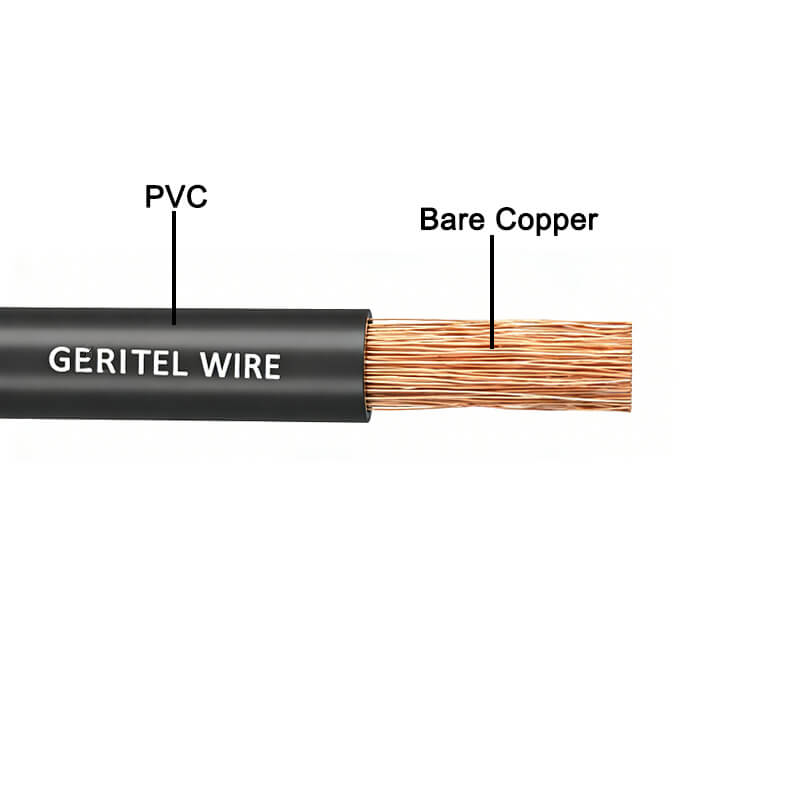
For control cabinets, sensor junction boxes, and secondary circuits within distribution panels, we supplied H07V-K single-core flexible wire, sized from 1×1.5mm² to 1×6mm² according to specific current-carrying needs and installation space constraints. This cable employs IEC 60228 Class 5 fine-stranded copper conductors, hundreds of thin copper wires twisted together, achieving bending radii as small as four times the outer diameter—allowing installation technicians to route wiring easily through crowded cabinets without conductor damage. Its 450/750V rating and 70°C continuous operating temperature fully satisfy internal power and control circuit demands, while the PVC insulation provides good dielectric resistance and flame retardance meeting IEC 60332-1. As an EN 50525-2-31 harmonized European-standard cable, it underpins the project's overall CE conformity declaration.
We provided color-coding in yellow-green (protective earth), blue (neutral), and red/black/brown (phase identification) to facilitate rapid circuit identification by field electricians. Specifically for this fine-gauge wire, we additionally provided bending-radius guidance for cabinet routing and crimping process recommendations to avoid conductor damage or contact resistance elevation from improper installation.
The Monitoring Network: Protecting Weak Signals in a Loud Electromagnetic Environment
Inside the substation control room, the project automation engineer displayed their monitoring network architecture—temperature sensors, irradiance monitors, module-level monitoring units scattered across the plant, their signal cables needing to traverse strong electromagnetic environments, running parallel to power cables or crossing within the same cable trays. For such weak-current transmission scenarios, we supplied 1×2.5mm² and 1×4mm² control cables with braided copper screening, effectively suppressing high-frequency electromagnetic interference from power-electronic devices and ensuring signal transmission integrity. For a large plant relying on precise environmental monitoring to optimize generation efficiency, such infrastructure details prove indispensable. We provided detailed installation guidance on shield grounding methods, minimum separation distances from high-voltage cables, and segregated routing within trays.
Building Trust: From Samples to Millions of Meters
During the sample testing phase of summer 2019, the client submitted our cables alongside three competitors' products to their laboratory. Test protocols extended beyond standard electrical and mechanical performance to include an accelerated aging regimen of their own design—500 hours at 85°C followed by insulation resistance and tensile strength verification. Our H1Z2Z2-K and H07V-K samples remained stable through these trials, while one competitor's specimens exhibited jacket embrittlement and conductor oxidation post-aging. This testing became the decisive turning point.
The client subsequently visited our factory, focusing their inspection on conductor stranding process stability, insulation extrusion temperature control precision, and finished-product test coverage. They paid particular attention to one detail: whether we could guarantee that every reel across millions of meters would match the samples' electrical performance. Our quality manager presented three years of batch test data for the same product models, demonstrating process stability sufficient to support such scale without quality fluctuation.
Two Years of Delivery: Dancing with Pandemic and Shipping Crisis
From the first container departing our Dongguan factory in early 2020 to the final batch of medium-voltage cable arriving on site in late 2022, this Eurasian supply chain collaboration spanned nearly three years. We navigated violent swings in global maritime markets—container freight spiking fivefold at one point, bookings requiring two-month advance reservations; surges in raw material copper and aluminum prices—mitigated by the price-adjustment mechanisms written into our contracts that protected both parties' interests during this extraordinary period; and COVID-19's impact on production scheduling—the early 2020 resumption delay forcing us to resequence manufacturing priorities to ensure critical-path medium-voltage cables delivered first.
Through close communication with the procurement team and flexible production planning, we maintained delivery alignment with construction progress, supporting the project's "build-as-you-generate" phased grid-connection strategy. In May 2023, when the final inverter completed commissioning, the Karapınar Solar Power Plant entered full commercial operation, stabilizing at 2.6 TWh+ annual generation, becoming a landmark project in Turkey's energy transition.
Post-Commissioning Verification: The Answer Time Provides
Through eighteen months of operation since commissioning, our cable system has weathered two complete desert summers. The client's technical team conducted infrared thermography inspections during peak summer periods, finding all connection points operating within design temperature ranges with no overheating indications; insulation resistance tests following sandstorm season showed all readings maintained above 95% of initial values, with no degradation from sand intrusion. This zero-failure record, and the maintenance costs and downtime losses it saved the client, became our passport to subsequent participation in their G24-Karapınar 385 MW expansion project.
If You Are Planning a Similar Project
The Karapınar experience offers several reference points: when evaluating cable suppliers, authenticity of certification outweighs quantity—request verifiable TÜV or UL certificate numbers and confirm these certifications cover your specific planned specifications and voltage classes; examine suppliers' track records in similar climatic conditions, since laboratory data proves potential while bulk application history proves reliability; assess the depth of technical support—excellent suppliers should understand your single-line diagrams and provide professional advice on conductor sizing and installation optimization, not merely quotations; finally, supply chain resilience cannot be ignored, as production base configuration, inventory strategy, and logistics coordination directly determine whether your project connects on schedule.
Dongguan GERITEL Electrical Co., Ltd. specializes in international-standard cable solutions for renewable energy projects. From desert photovoltaic array DC collection to substation medium-voltage aggregation, from inverter internal power connections to control cabinet signal transmission, we provide not merely cables, but reliability validated under the Anatolian sun and engineering-grade technical partnership.
Contact us to discuss your next project:
Tel/WhatsApp/WeChat: +86 135 1078 4550 / +86 136 6257 9592
Email: manager01@greaterwire.com
 Beirut Solar Street Light Project



 Building 2, No. 40 Luxi 2nd Road, Liaobu Town, Dongguan City, Guangdong Province, China