


 Home
HomeTHHN Wire for Commercial Buildings
 GERITEL
 Mar 27,2026

Selecting the right electrical wiring for commercial buildings is a critical decision that directly affects safety, efficiency, and long-term maintenance costs, and among the most reliable options, THHN (Thermoplastic High Heat-resistant Nylon-coated) wire has emerged as a preferred solution due to its exceptional durability, versatile specifications, and compliance with industry standards, offering a dependable choice for architects, electrical engineers, and contractors tasked with designing and maintaining modern commercial infrastructure.
High Heat Resistance and Safety in Commercial Installations
Commercial environments such as office complexes, shopping centers, hospitals, and educational facilities often feature high-density electrical systems, frequent load fluctuations, and long conduit runs that can generate localized heat, which makes thermal performance a critical factor in wire selection; THHN copper wire high temp rating, rated for up to 90°C in dry locations, maintains its insulation integrity under high-temperature conditions, ensuring that essential circuits, including HVAC systems, elevators, and high-intensity lighting, operate safely without risk of insulation failure, overheating, or short circuits, which could lead to fire hazards or costly downtime.
Wide Range of Specifications for Diverse Applications
THHN wire is available in multiple gauges, ranging from 14 AWG to 8 AWG and above, allowing it to accommodate varying load requirements across commercial buildings; for example, 14 and 12 AWG THHN wires are suitable for general-purpose lighting and outlet circuits, while 10 AWG or 8 AWG wires can handle feeders for HVAC systems, sub-panels, or larger machinery, ensuring sufficient current capacity without excessive voltage drop or overheating. In addition, THHN/THWN-2 dual-rated wires provide flexibility for installation in both dry and damp environments, making them suitable for utility corridors, parking garages, and service rooms where occasional moisture exposure occurs, while maintaining compliance with NEC and UL standards.
Installation Flexibility and Ease for Complex Systems
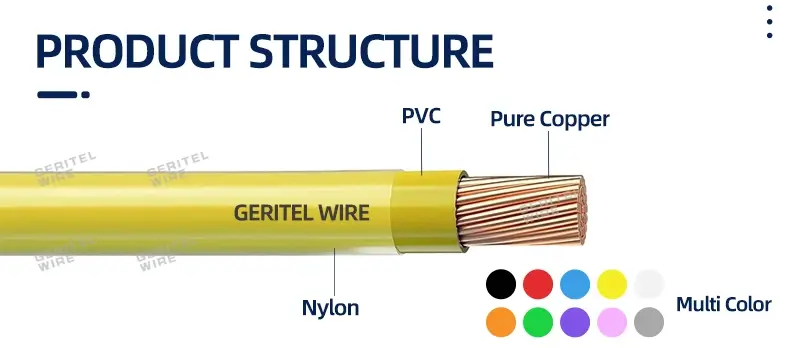
Commercial projects often involve long cable runs, multi-story conduit risers, and tight spaces, which can challenge electricians during installation; THHN wire’s lightweight and flexible thermoplastic construction allows for easier pulling through conduits and smooth termination at panels, junction boxes, and equipment terminals, reducing labor time, minimizing stress on connectors, and preventing damage to insulation. This characteristic is particularly valuable in buildings with complex layouts such as hospitals, high-rise offices, and shopping malls where electrical reliability is paramount and installation efficiency directly affects project timelines and cost.
Risks of Improper Selection
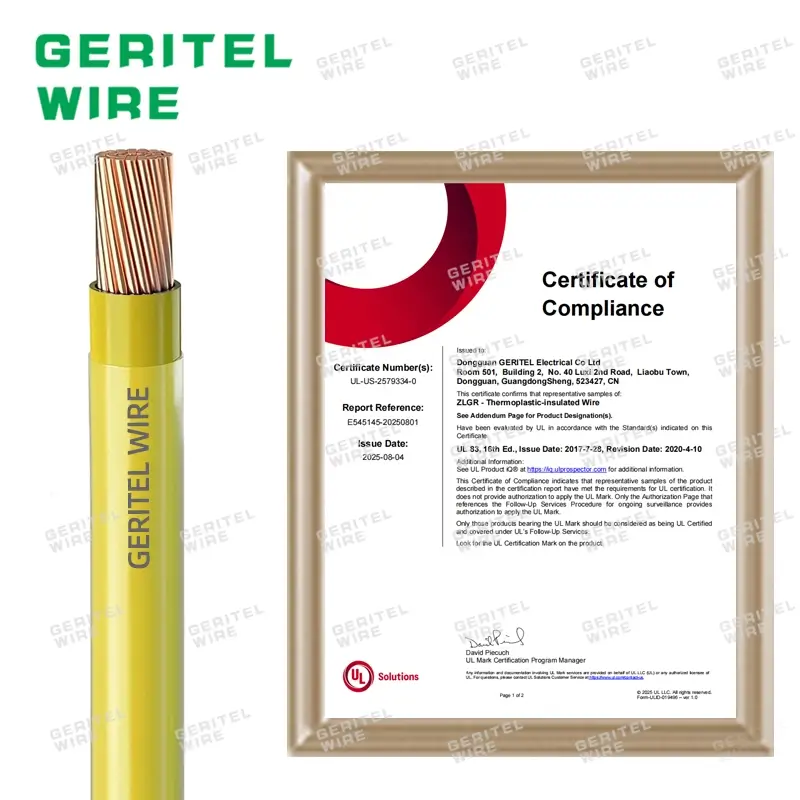
Using the wrong wire type, size, or rating in commercial projects can have severe consequences, including insulation degradation, overheating, repeated breaker trips, and even fire hazards; for instance, a 60°C-rated wire in a high-load HVAC application may fail prematurely due to thermal aging, while under-sized wires can experience excessive voltage drop, reducing equipment efficiency and reliability, and wires with inadequate mechanical protection in high-traffic areas are vulnerable to abrasion or chemical exposure, potentially compromising safety and code compliance. Therefore, selecting UL-certified THHN wire with the appropriate gauge, temperature rating, and environmental suitability is critical for ensuring the safety and longevity of commercial electrical installations.
Practical Applications in Commercial Buildings
Office Buildings: 12 AWG THHN wire for lighting and general outlets, and 8 AWG for HVAC feeders and sub-panels, providing a balance of safety, performance, and installation convenience.
Shopping Centers: 10 AWG THHN wire powering escalators, security systems, and food court equipment, with dual-rated THHN/THWN-2 allowing safe placement in damp utility areas.
Hospitals: 8 AWG or larger THHN wires supporting high-demand equipment such as MRI machines, sterilizers, and emergency lighting circuits, ensuring reliable operation in critical environments.
Educational Facilities: 14 AWG for classroom circuits, 12 AWG for laboratories and lecture hall lighting, ensuring code-compliant, durable installations that withstand years of use.
Advantages Over Alternative Wires
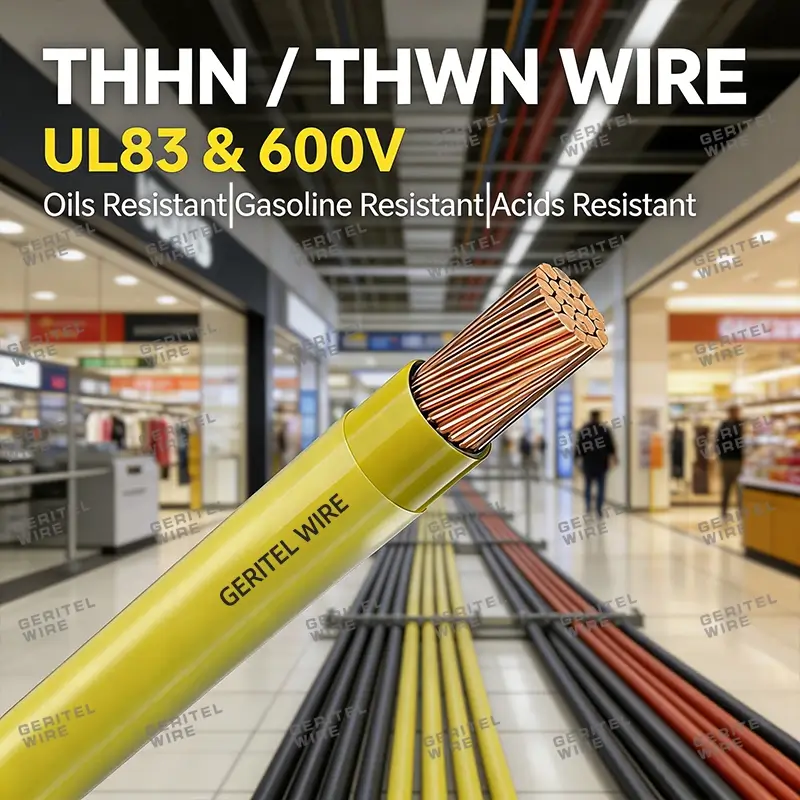
Compared to PVC-insulated or basic THWN wires, THHN offers superior heat resistance, mechanical durability, and installation versatility; its dual-rated feature allows use in dry and damp locations, while its UL certification provides contractors and building managers with confidence that performance, safety, and compliance requirements are consistently met, making it a cost-effective, long-term solution for commercial buildings.
Conclusion
For commercial buildings, where electrical reliability is crucial, THHN wire represents an optimal choice by combining thermal resistance, mechanical durability, flexible installation, and regulatory compliance; selecting the correct gauge and certified product minimizes operational risks, reduces maintenance costs, and ensures uninterrupted power supply for lighting, HVAC systems, machinery, and other essential infrastructure, making THHN wire a dependable, future-proof investment for modern commercial electrical installations.
Contact Us
Dongguan GERITEL Electrical Co., Ltd. provides UL-certified THHN wire in various gauges and lengths suitable for all commercial applications. For personalized guidance based on your building load, conduit type, and environmental conditions, contact our technical team today.
Tel/Wechat/WhatsApp: +86 136 6257 9592
Email: manager01@greaterwire.com
Website: www.greaterwire.com
 Modesto Méndez Substation Project in Guatemala



 Building 2, No. 40 Luxi 2nd Road, Liaobu Town, Dongguan City, Guangdong Province, China