


 Home
HomeSamoa Renewable Energy Expansion Initiative
 GERITEL
 Apr 07,2026

In the heart of the South Pacific, the Samoa Renewable Energy Expansion Initiative stands as a testament to modern infrastructure development meeting environmental stewardship. This ambitious government-backed project, launched in early 2023 and completed in mid-2024, aimed to reduce Samoa's dependence on imported fossil fuels by expanding solar farm capacity and upgrading the national power distribution network across the island nation.
The project scope encompassed the construction of three new solar generation facilities, the rehabilitation of existing diesel power stations for backup capacity, and the complete overhaul of 47 kilometers of medium and low-voltage distribution lines serving both urban centers and rural communities. For our team at Dongguan GERITEL Electrical Co., Ltd., this represented not merely a cable supply contract, but an opportunity to demonstrate how 0.6/1kV Orange Circular Cable solutions could resolve critical infrastructure challenges in one of the world's most demanding maritime environments.
Why Standard Solutions Fall Short in Tropical Island Grids
When the project engineering consortium first approached us in late 2022, they presented a scenario familiar to Pacific Island infrastructure development: a previous supplier had delivered cables that failed to withstand the unique environmental stresses of Samoa's climate. The existing installation suffered from accelerated sheath degradation due to intense UV exposure, moisture ingress during the wet season, and mechanical damage from tropical vegetation growth.
The client's engineering team had developed specific concerns based on their field assessments. They needed Building Cable solutions that could handle the transition from outdoor solar array connections to indoor switchgear without compromising safety standards. The Fire Rated Cable requirements for public facilities—including the national hospital and government administration buildings—demanded compliance with stringent flame retardancy protocols given the limited fire response resources available on the island.
Most critically, the Distribution Cable specifications for the main feeder lines required a balance between current-carrying capacity and installation practicality. The terrain varied dramatically from coastal installations exposed to salt spray to inland routes crossing volcanic rock formations. Standard European or North American cable configurations simply wouldn't meet the dual requirements of AS/NZS compliance for the Australian-funded portions of the project and practical durability in a tropical marine environment.
Matching Cable Specifications to Real-World Demands
Our technical consultation process began with a detailed analysis of the project's electrical load profiles and environmental exposure classifications. For the solar farm interconnections and main distribution feeders, we recommended 0.6/1kV Orange Circular Cable in multiple configurations: 2.5mm² and 4mm² sizes for control circuits and instrumentation, 10mm² and 16mm² variants for sub-main distribution, and 35mm² and 50mm² cross-sections for the primary feeder lines connecting generation assets to the 11kV distribution network.
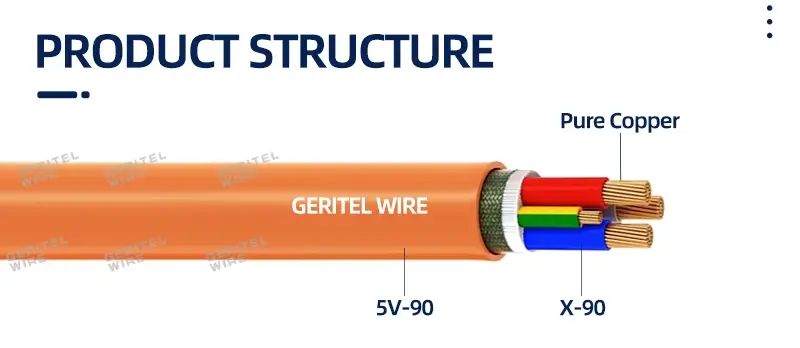
The decision to specify 0.6/1kV Orange Circular Cable rather than alternative building wire configurations stemmed from three critical performance advantages. First, the circular profile with concentric layer stranding provides superior flexibility during installation in confined conduit systems—essential given the existing infrastructure's limited capacity for cable pulling. Second, the orange PVC sheath color coding aligns with Australian and New Zealand electrical identification standards, ensuring clear phase discrimination during maintenance operations in multi-circuit installations. Third, the AS/NZS 5000.1 compliance built into our manufacturing process guarantees that the XLPE insulation system maintains dielectric integrity at continuous operating temperatures up to 90°C, with short-circuit withstand capabilities reaching 250°C.
For the building installations, particularly the hospital and administrative facilities, we supplied Fire Rated Cable meeting enhanced flame retardancy requirements. These cables incorporate halogen-free insulation systems that minimize toxic smoke emission during combustion events—a critical safety consideration for enclosed public spaces where evacuation routes may be limited. The fire performance testing under IEC 60332-1-2 standards ensures self-extinguishing characteristics that prevent flame propagation along cable runs, protecting both property and occupants.
The Distribution Cable selection for underground and overhead reticulation required careful balancing of mechanical protection and installation efficiency. We provided 25mm² and 35mm² four-core configurations with steel wire armoring for direct burial sections crossing agricultural land, while unarmoured 16mm² and 25mm² variants served aerial bundled conductor installations along existing pole routes. Each specification incorporated UV-stabilized sheathing formulations containing titanium dioxide and hindered amine light stabilizers to combat the intense equatorial sun exposure that had degraded previous installations.
Certification and Quality Assurance: The Foundation of Trust
The client's insistence on SAA certification reflected hard-learned lessons from previous procurement experiences. Our manufacturing facility maintains full compliance with AS/NZS 5000.1:2005 Inc A1:2006 standards through rigorous third-party auditing and continuous factory surveillance. This certification isn't merely a document—it's embedded in our production protocols through batch testing of insulation resistance (exceeding 1000 MΩ/km at 500V DC), high-voltage withstand testing at 3.5kV AC for five minutes, and conductor resistance verification against AS/NZS 1125 specifications.
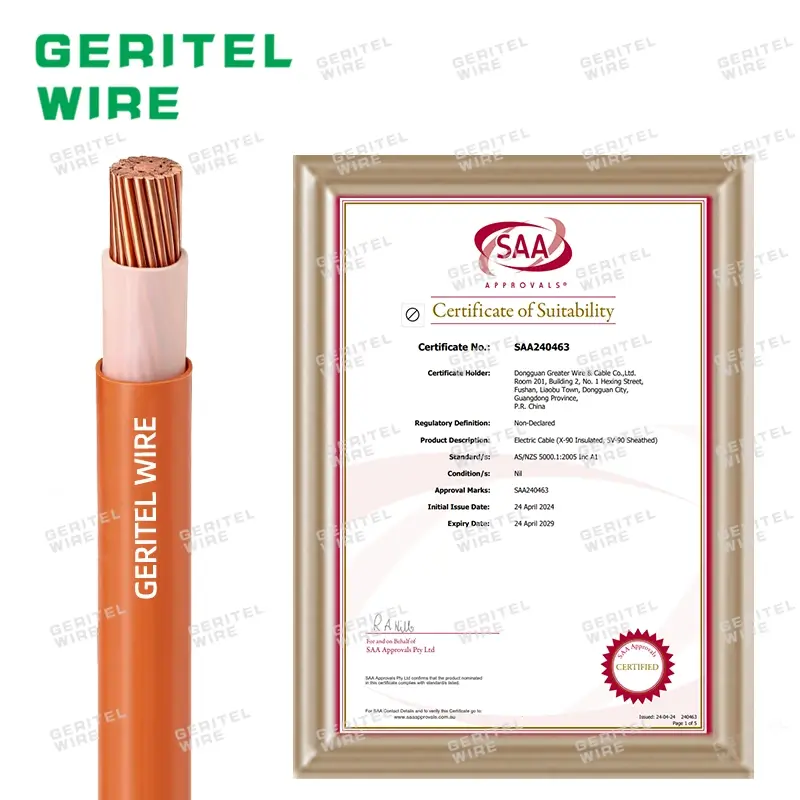
What distinguished our proposal from competing suppliers was our ability to demonstrate three concrete advantages beyond certification compliance:
Proven Pacific Project Experience: Our portfolio includes completed cable supply contracts for Fiji's Vuda Power Station upgrade and Tonga's outer island electrification program. These references provided the client with confidence that we understood the logistical complexities of island nation deliveries, including container consolidation strategies, port handling requirements, and coordination with local electrical contractors familiar with AS/NZS installation practices.
Integrated Quality Traceability: Every cable drum shipped to Samoa carried laser-marked identification at one-meter intervals, complete with SAA approval marks, manufacturing date codes, and batch test report references. This traceability system enabled the client's quality assurance team to verify compliance documentation against physical product markings without destructive testing—a practical necessity when receiving mixed container loads across multiple vessel arrivals.
Accelerated Production and Delivery Scheduling: Recognizing the project timeline's sensitivity to seasonal weather windows, we maintained finished goods inventory of standard 0.6/1kV Orange Circular Cable sizes while scheduling production of specialized Fire Rated Cable configurations within 21-day manufacturing cycles. Our logistics coordination ensured that critical path materials arrived at Apia Port ahead of installation crew mobilization, preventing the costly standby time that had plagued previous infrastructure projects in the region.
Execution and Installation: Translating Specifications into Infrastructure
The cable delivery phase spanned March through June 2023, with three container shipments synchronized to the construction schedule. Our technical support team provided on-site consultation during the initial installation phases, working alongside the Samoan Electrical Contractors Association members to address specific installation challenges.
For the solar farm DC-to-AC conversion stations, the 0.6/1kV Orange Circular Cable flexibility proved essential when routing through the compact inverter housing enclosures. The 10mm² 3-core and earth configurations allowed tight bending radii (7.5 times cable diameter for fixed installations) without compromising insulation integrity, while the orange sheath color maintained clear identification against the black DC cabling throughout the array fields.
The underground distribution cable installation presented the most demanding technical challenge. Crossing volcanic terrain required armored cable specifications with galvanized steel wire armor (GSWA) providing crush resistance against the sharp basalt fragments prevalent in Samoan soil profiles. Our 35mm² 4-core armoured distribution cables underwent additional factory testing for sheath integrity under mechanical stress, simulating the 1500N crush forces anticipated during direct burial installation and subsequent soil settlement.
In the hospital's critical care wing, the Fire Rated Cable installation required specialized termination techniques to maintain fire barrier continuity at penetration points. We provided technical documentation and training support for the local installation teams, ensuring that fire-stopping materials and cable tray separation protocols met the enhanced safety requirements for healthcare facility electrical systems.
Project Outcomes: Measurable Performance in a Demanding Environment
By project completion in August 2024, the cable infrastructure we supplied had demonstrated performance characteristics validating our technical specifications. Post-installation testing conducted by the Samoa Electric Power Corporation confirmed that insulation resistance values remained above 1000 MΩ/km across all cable runs, with no evidence of the moisture ingress issues that had compromised previous installations. The UV-stabilized sheathing on outdoor installations showed less than 5% color fading after twelve months of exposure, indicating long-term material stability under equatorial sun conditions.
The renewable energy integration objectives were achieved ahead of schedule, with the upgraded distribution network successfully handling the variable output from the expanded solar generation capacity without the voltage stability issues that had constrained previous renewable integration attempts. The 0.6/1kV Orange Circular Cable distribution circuits demonstrated stable performance across the full load range, from overnight standby currents to peak afternoon generation periods exceeding 85% of rated capacity.
Most significantly, the project established a reference standard for subsequent Pacific Island renewable energy initiatives. The engineering consortium's project documentation specifically cited the cable infrastructure performance as a factor in the system's overall reliability, noting that the SAA-certified materials provided assurance of long-term operational integrity without requiring the extensive maintenance interventions that tropical environments typically demand.
Partnership Value and Client Perspective
Reflecting on the collaboration, the project stakeholders consistently emphasized three elements that distinguished our engagement from conventional supplier relationships. The technical consultation phase provided genuine engineering value—our team didn't simply quote to specifications but identified optimization opportunities that reduced installation complexity and material waste. The documentation and certification support streamlined the approval process with Australian development financing authorities, avoiding the compliance verification delays that often extend Pacific Island project timelines. Finally, the responsive communication and logistical coordination demonstrated respect for the client's operational constraints, delivering materials when and where needed without the premium pricing typically associated with expedited international supply.
The success of this engagement has established Dongguan GERITEL Electrical Co., Ltd. as a preferred cable supplier for ongoing Pacific Island infrastructure development, with active discussions for similar renewable energy expansion projects in neighboring island nations.
Your Next Project Deserves Proven Performance
The Samoa Renewable Energy Expansion Initiative demonstrates that cable selection in challenging environments requires more than competitive pricing—it demands technical expertise, certification integrity, and supply chain reliability that understands local conditions. Whether your project involves tropical island grids, coastal industrial facilities, or any environment where standard cable specifications prove inadequate, our team stands ready to engineer solutions that perform.
Dongguan GERITEL Electrical Co., Ltd.
• Tel/WhatsApp/WeChat: +86 135 1078 4550 / +86 136 6257 9592
• Email: manager01@greaterwire.com
 Nauru Anibare Bay Tuna Aquaculture Project



 Building 2, No. 40 Luxi 2nd Road, Liaobu Town, Dongguan City, Guangdong Province, China