


 Home
HomeRHW-2 vs XHHW-2 Cable: Differences in Temperature Ratings
 GERITEL
 Mar 23,2026

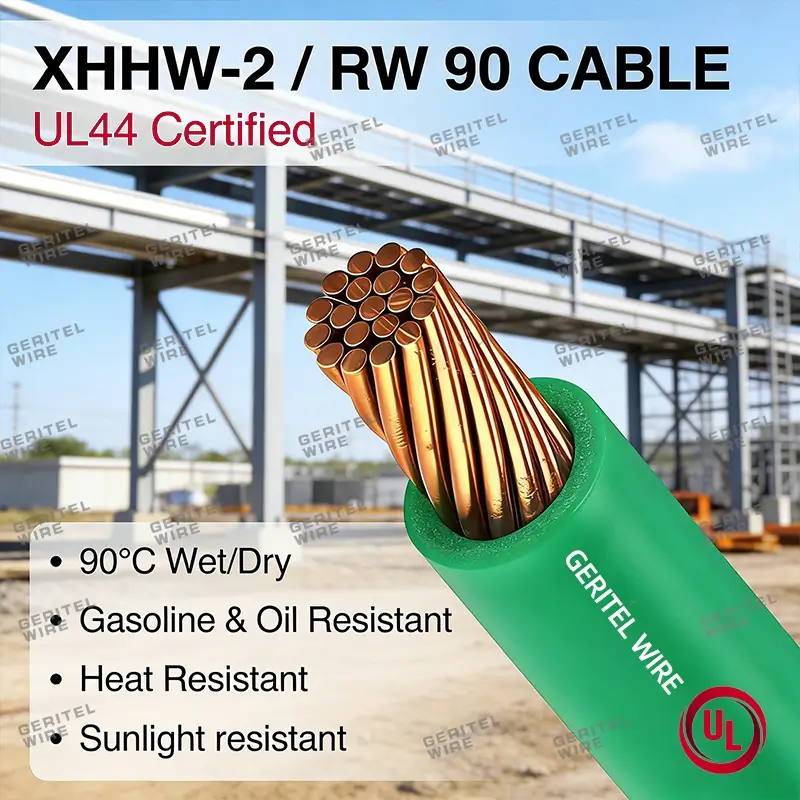
When selecting electrical cables for industrial or building applications,RHW-2 and XHHW-2 are two widely used options. At first glance, they may seem similar—both are designed for wet and dry environments and rated for 90°C—but their materials, structure, and performance characteristics lead to important differences.
This guide is designed to help buyers clearly understand not only the structural differences, but also how temperature ratings impact real-world performance and selection.
Start From the Real Decision: What Are You Powering and Where Is It Installed
When customers search RHW-2 vs XHHW-2 cable, the real question is not “which is better,” but “which one fits my load, environment, and installation method,” because even though both cables are rated 90°C in wet and dry locations, choosing the wrong type or the wrong size can directly lead to overheating, insulation damage, or even system failure in high-load electrical systems such as commercial distribution panels, underground feeders, or industrial machinery.
If your project involves long conduit runs, tight bending spaces, or fast installation schedules, XHHW-2 is often the more practical choice due to its lighter weight and better handling, while if your installation is underground, exposed to moisture, or in harsh industrial environments where mechanical durability matters more than flexibility, RHW-2 becomes the safer option despite being harder to install.
Core Difference: Same Temperature Rating, Different Thermal Behavior
Although both cables meet 90°C temperature rating, the difference lies in how they behave under real operating conditions, which is what experienced buyers focus on when searching XHHW-2 vs RHW-2 performance.
RHW-2 uses rubber-based thermoset insulation, which provides excellent moisture resistance and mechanical strength, making it stable in harsh environments but slightly less efficient in long-term thermal aging under fluctuating loads.
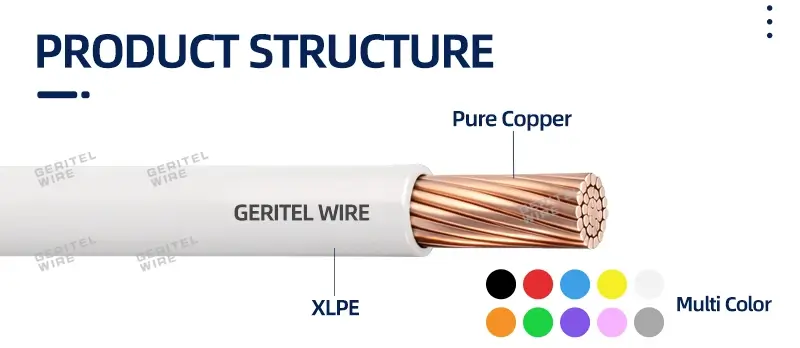
XHHW-2, on the other hand, uses cross-linked polyethylene (XLPE), which offers better dielectric strength, lower insulation loss, and superior resistance to heat aging, meaning that under continuous load or frequent load cycling, XHHW-2 maintains performance more consistently and reduces the risk of insulation degradation over time.
This is why, in real-world projects, RHW-2 is often chosen for “survival in tough environments,” while XHHW-2 is chosen for “stable long-term performance.”
Going Deeper: Same Cable Type, Different Sizes = Completely Different Use Cases
One of the most overlooked but critical decision factors is that even within the same cable type, different AWG sizes serve entirely different customers and applications, which is why many searches like XHHW electric cable XLPE insulation sizes and applications or RHW-2 ampacity chart are actually about matching load to conductor size rather than choosing the insulation type alone.
For example:
14 AWG XHHW-2 → suitable for lighting circuits, control wiring, and low-load branch circuits in residential or light commercial buildings
2 AWG XHHW-2 → used in high-load feeders, panel connections, and industrial equipment where current demand is significantly higher
Similarly:
12 AWG RHW-2 → may be used in general-purpose circuits but already leans toward more durable environments
4/0 AWG RHW-2 → typically used in heavy industrial feeders, underground distribution, or utility-level installations
This means that choosing the right cable is a two-step decision: insulation type (RHW-2 vs XHHW-2) + conductor size (AWG), and getting either one wrong can compromise the entire system.
What Happens If You Choose the Wrong Cable
Many buyers underestimate the consequences of mismatch, but in practice, selecting the wrong cable—either in type or size—can create serious operational and safety risks, which is why searches like what happens if wire is undersized or wrong cable type risks are so common.
If you choose RHW-2 where flexibility and heat dissipation under continuous load are required, installation difficulty increases and long-term efficiency may drop.
If you choose XHHW-2 in an environment with extreme mechanical stress or moisture exposure without proper protection, insulation lifespan may be reduced.
More critically:
Undersized cable → overheating, voltage drop, insulation failure, fire risk
Oversized cable → unnecessary cost, difficult installation, wasted resources
Wrong insulation type → premature aging, cracking, or failure in specific environments
In high-load systems, these mistakes are not minor—they can lead to downtime, maintenance costs, or even safety incidents.
Decision Logic: How Professionals Actually Choose
From a customer decision perspective, the logic is clear and practical rather than theoretical:
If the environment is harsh, wet, or underground → prioritize RHW-2
If the system requires long-term thermal stability and easier installation → prioritize XHHW-2
If the load is high → increase conductor size (AWG), regardless of type
If the installation is complex → consider flexibility and handling, favoring XHHW-2
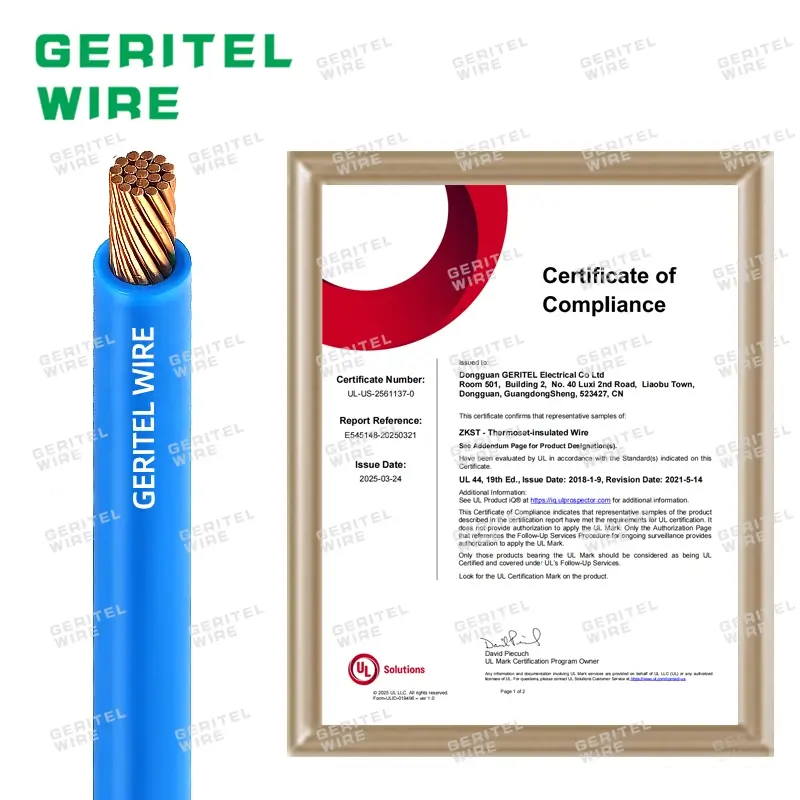
This is why experienced contractors don’t just search RHW-2 vs XHHW-2 cable, but also best cable for XHHW-2 commercial power distribution or UL certified building wire supplier, because they understand that product quality and certification directly affect whether the cable can truly handle its rated temperature in real conditions.
Final Conclusion: The Right Choice Is About Matching Conditions, Not Just Specs
In conclusion, RHW-2 and XHHW-2 may look identical in temperature ratings, but they serve different priorities: RHW-2 is built for durability in harsh environments, while XHHW-2 is optimized for performance stability and installation efficiency, and the final decision must also consider conductor size, load demand, and installation conditions; choosing correctly ensures long-term reliability and safety, while choosing wrong can lead to overheating, failure, and costly rework—making it essential to work with certified, professional manufacturers who can guarantee both compliance and consistent performance.
If you are evaluating options for an upcoming project and need clarity on performance differences, sizing strategy, or compliance requirements, you can share your application details with us, and our team will provide a tailored recommendation along with certified product options to ensure your system operates safely, efficiently, and with long-term stability.
Contact Us
Dongguan GERITEL Electrical Co., Ltd. offers high-quality XHHW, THHN, and THWN wires, providing reliable and customized solutions for industrial, commercial, and residential projects.
Phone: +86 136 6257 9592
Email: manager01@greaterwire.com
Website: www.greaterwire.com
 XHHW-2 vs RHW-2 vs USE-2: Best XLPE Cable for Power Distribution



 Building 2, No. 40 Luxi 2nd Road, Liaobu Town, Dongguan City, Guangdong Province, China