


 Home
HomePVC Jacketed MC Cable vs Conduit Wiring: Which Option Fits Your Project?
 GERITEL
 May 27,2026

When planning an electrical project – whether it is a wastewater treatment facility, a multi‑family residential building, or a hazardous location – one of the first decisions you face is how to route and protect your conductors. Two common approaches are PVC Jacketed MC Cable and traditional conduit wiring (EMT, rigid, or PVC pipe with individual THHN/THWN conductors).
Both methods have their place. But which one fits your project? This article compares them head‑to‑head across key factors: installation speed, mechanical protection, environmental resistance, and cost. We will also look at specific scenarios where one clearly outperforms the other, with real cable models you would use on the job.
1.At a Glance: PVC Jacketed MC Cable vs Conduit Wiring
| Factor | PVC Jacketed MC Cable | Conduit + Wire |
| Installation speed | Fast – one assembly to pull | Slow – bend, couple, pull wires |
| Environmental protection | Excellent (PVC jacket blocks moisture, UV, mild chemicals) | Depends on conduit type (PVC good; EMT poor) |
| Flexibility in tight spaces | High (interlocked aluminum armor bends easily) | Low (needs fittings or factory bends) |
| Total installed cost | Lower (50–70% labor savings) | Higher (more labor hours) |
| Typical applications | Branch circuits, feeders, exposed runs, wet/outdoor areas | Service entrances, high‑impact areas, custom raceways |
2.Key Differences Explained
Installation Speed & Labor
PVC Jacketed MC Cable wins this category hands down. You pull one reel, cut to length, strip, and terminate. No conduit bending, no threading, no pulling individual wires. Contractors report 50–70% labor savings compared to pipe and wire.
Conduit wiring requires multiple steps: measure, cut, bend, ream, couple, secure, then pull fish tape, then pull wires. Each step adds time.
Example model: 12/3 aluminum armor MC cable PVC jacket – ideal for 20A multi‑wire branch circuits in apartments. One person can install hundreds of feet per day.
Mechanical & Environmental Protection
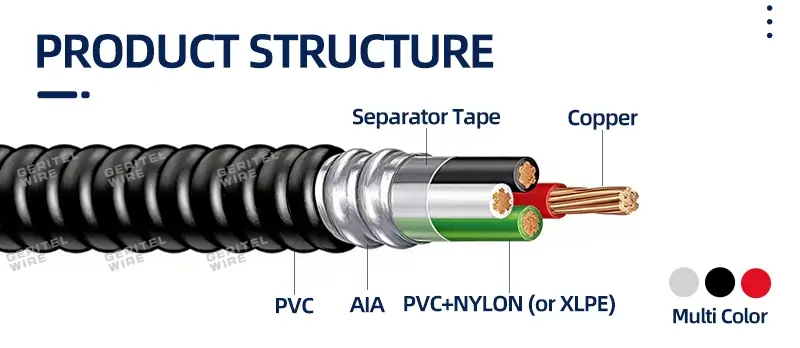
PVC Jacketed MC Cable offers interlocked aluminum armor (about 30% lighter than steel) plus a PVC outer jacket. The armor resists crushing and impact; the jacket blocks moisture, UV, and many chemicals. It is suitable for wet locations, outdoor exposure, and areas with mild chemical contact.
Conduit wiring protection varies: rigid galvanized steel is very strong but heavy and costly; EMT is light but offers little corrosion resistance; PVC conduit is chemical‑resistant but can sag and requires solvent welding. For hazardous locations (Class I, Div. 2), rigid conduit is often required, though special MC cable (MC‑HL) can also be used – always check the specific listing.
For wastewater treatment: 10/4 PVC jacketed MC cable carries power and neutral for pumps, while the PVC jacket resists humidity and diluted chemicals.
Flexibility in Tight Spaces
PVC Jacketed MC Cable – especially with aluminum armor – is highly flexible. It can bend around corners, through studs, and into junction boxes without additional fittings. The minimum bend radius is typically 7 times the cable diameter.
Conduit requires factory or field bends, which take time and add resistance to wire pulling. In retrofits or crowded ceilings, conduit can be a nightmare.
Example: 14/3 PVC jacketed MC cable – perfect for lighting control circuits in multi‑family residential buildings, weaving through metal studs without extra elbows.
Cost Considerations
Material cost: On a per‑foot basis, PVC Jacketed MC Cable is more expensive than bare THHN wire. However, when you add conduit, fittings, and supports, the total material cost often favours MC cable for branch circuits and short feeder runs.
Total installed cost (material + labor): MC cable is almost always cheaper – sometimes by a wide margin – because labor is the dominant cost in electrical construction.
3.Scenario‑by‑Scenario: Which to Choose?
Wastewater & Water Treatment Facilities
Challenges: Constant humidity, pooled water, chemicals (chlorine, H₂S), and occasional impacts.
Recommendation: PVC Jacketed MC Cable. The PVC jacket seals out moisture and resists many chemicals. Aluminum armor does not rust. Internal ground ensures reliable fault path.
Model to use: 8/2 aluminum armor MC cable PVC jacket – 40A feeder to a small pump control panel.
Conduit alternative: PVC conduit with THWN‑2 wires works, but installation is slower and you still need to seal conduit ends.
Multi‑Family Residential Buildings (Apartments, Condos)
Challenges: Fast construction, many branch circuits, wall penetration, fire safety.
Recommendation: PVC Jacketed MC Cable (or standard MC without jacket). Speed is everything. Contractors pull MC cable directly through drilled studs – no conduit needed.
Models: 12/2 aluminum armor MC cable PVC jacket for outlets; 14/3 PVC jacketed MC cable for shared neutral circuits (kitchen, laundry).
Conduit alternative: Only used where local code requires it (e.g., Chicago). Otherwise, MC is the industry standard.
Hazardous Locations (Class I Div. 2 – flammable gases/vapors)
Challenges: Strict code requirements; need to prevent arcs or sparks from igniting atmosphere.
Recommendation: Special MC cable (MC‑HL or Type MC with gas‑tight sheath) is approved for Class I Div. 2. Standard PVC jacketed MC may not be rated.
Conduit (rigid steel, IMC, or PVC with seals) is also common. Do not guess – check the specific product listing.
Note: Our standard PVC Jacketed MC Cable is not marketed for hazardous locations. For such projects, consult a certified supplier.
4.Selection Reminder – What Project Suppliers Care About
Project suppliers and electrical contractors focus on four things:
- Total installed cost – MC cable usually wins for branch circuits and feeders up to 200A.
- Schedule – MC cable is faster. When time is tight, choose MC.
- Environmental conditions – Wet, UV, or chemical exposure? PVC jacket is your friend.
- Code compliance – Always verify that your chosen product (MC or conduit) meets local amendments and specific area classifications.
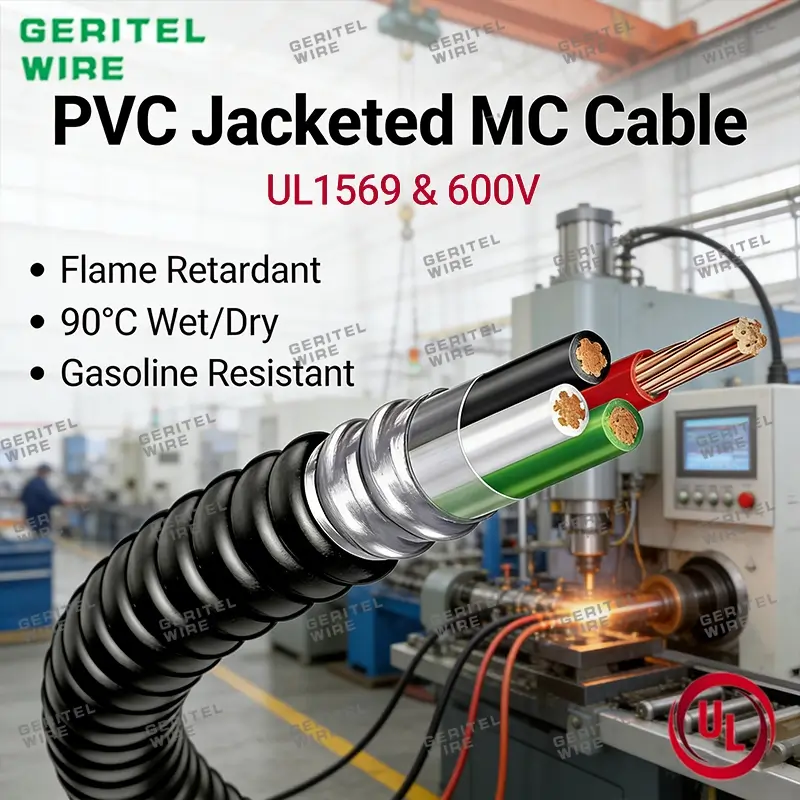
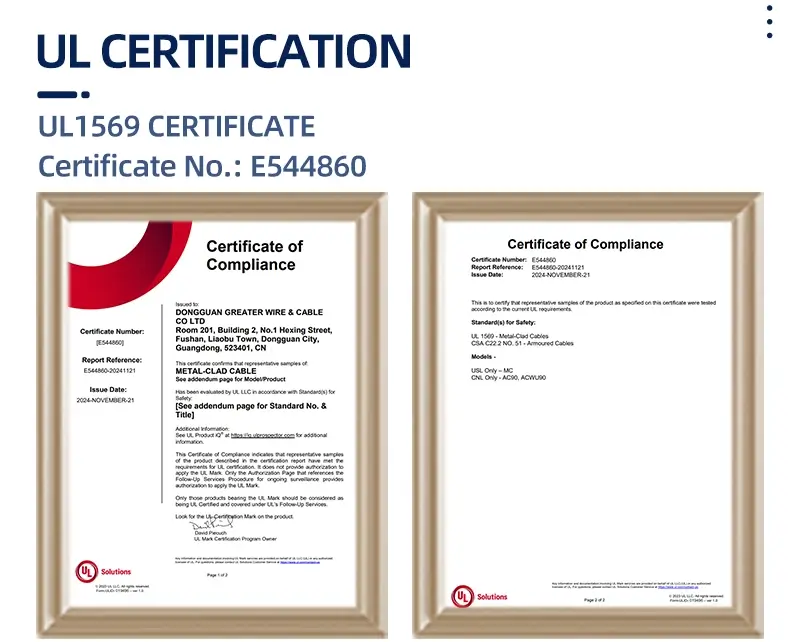
Our UL Certification: Our PVC Jacketed MC Cable is manufactured under UL 1569. We can provide certificates upon request.
FAQ
Q: When should I choose conduit over PVC Jacketed MC Cable?
A: Choose conduit when you need very high mechanical strength (rigid steel), when running service entrance conductors, or when local codes do not permit MC cable in certain building types (e.g., some high‑rise fire codes). Also for custom raceway systems with many bends.
Q: Is PVC Jacketed MC Cable approved for wet locations?
A: Yes, provided the jacket is marked “sunlight resistant” and the insulation is wet‑rated (THHN/THWN or XHHW‑2). Our cables meet these requirements. Always verify the specific product marking.
Q: Can I use MC cable in place of conduit for a wastewater treatment plant?
A: In most areas, yes. The PVC jacket provides the necessary moisture and chemical resistance. Check with your local inspector – many approve jacketed MC cable for exposed and concealed runs in such facilities.
Choose the Right Wiring Method for Your Project
Between PVC Jacketed MC Cable and conduit wiring, there is no single “best” – only what fits your project’s budget, schedule, and environment. For fast, cost‑effective branch circuits in multi‑family residential, wastewater, and many industrial settings, PVC Jacketed MC Cable is the clear winner. For high‑impact areas or strict hazardous location requirements, rigid conduit or special MC cable may be needed.
Tell us your application. We will recommend the right cable and provide a quote.
Contact Us
Dongguan GERITEL Electrical Co., Ltd.
Tel/WhatsApp/Wechat: +86 136 6257 9592
Tel/WhatsApp/Wechat: +86 135 1078 4550
Email: manager01@greaterwire.com
Website: www.geritelgroup.com
Honest price, good quality, fast reply.
 600V PVC Jacketed MC Cable with THHN/THWN-2: Specs Contractors Ask About



 Building 2, No. 40 Luxi 2nd Road, Liaobu Town, Dongguan City, Guangdong Province, China