


 Home
HomePeru Tambo de Mora Anchovy Processing Plant Project
 GERITEL
 Apr 07,2026

January 15, 2024. 2:17 AM. My phone shattered the silence of winter night. On the other end, Carlos Mendez, technical director of a Lima-based engineering consultancy, sounded like he'd aged ten years in ten hours.
"Arc flash incident. MCC room. Tambo de Mora," he rasped. "The cable didn't just fail—it committed suicide. And we need to prove why, before the insurance company blames installation error instead of design flaw."
The facility was one of Peru's largest fishmeal and fish oil processing plants, located in Tambo de Mora, Chincha Province, Ica Region. Three months earlier, Carlos's client had awarded the electrical infrastructure contract to a competitor offering prices 15% below our quote. Now, six weeks before the 2024 fishing season peak, they faced catastrophic failure.
The stakes were brutal: $8.2 million in export contracts if they missed the season. Worse, the arc flash had injured two maintenance personnel—non-fatally, but enough to trigger a full regulatory investigation. Carlos needed more than replacement cables. He needed a forensic engineering report that would stand up in insurance litigation and Peruvian court.
When Theory Meets Desert Soil
Seventy-two hours later, I stood in the burned-out electrical room, 2.3 kilometers from the Pacific Ocean. The air still carried the acrid scent of vaporized insulation mixed with fishmeal dust—a peculiar odor I'd come to associate with industrial coastal failures.
The physical evidence told a story of thermal violence. The MV90 350 MCM cable had suffered phase-to-ground breakdown at a point 127 meters from the substation—precisely where the cable trench passed through a drainage depression that accumulated moisture during the brief Peruvian winter rains.
But the smoking gun wasn't in the charred remains. It was in the original engineering calculations, which I reconstructed from surviving PDF fragments on the project engineer's laptop.
The Fatal Assumption
The original designer had used standard ampacity tables with thermal resistivity ρ = 90 K·cm/W. This is the textbook value for "average soil." But Tambo de Mora sits in Peru's coastal desert, where:
• Natural soil thermal resistivity ranges 120–150 K·cm/W in dry conditions
• Cable heat flux causes moisture migration, creating a desiccated zone around the conductor
• Critical heat flux rates drop to 28 W/m—far below standard assumptions
The cable had been effectively running at 125–130% of rated ampacity for months. The XLPE insulation experienced accelerated thermal aging, water tree formation, and ultimately, electrical tree breakdown leading to the arc flash.
I photographed the soil samples, recorded thermal probe measurements, and documented moisture content gradients. This wasn't just a cable failure. It was a thermal engineering failure masquerading as an electrical fault.
The Reconstruction: Engineering from First Principles
Phase 1: Forensic Specification
We didn't simply upsize the cable. We redesigned the thermal management strategy.
From MV90 350 MCM to MV105 500 MCM
The specification change was radical, not incremental:
• Thermal headroom: MV105's 105°C continuous rating (vs. MV90's 90°C) provided 15°C safety margin against soil thermal variation
• Overload survivability: 140°C emergency rating for the seasonal processing peaks when refrigeration compressors cycle simultaneously
• Current density reduction: Larger conductor cross-section lowered operating temperature by 18°C, halving XLPE thermal aging rate
We specified copper tape shielding with longitudinal water-blocking tapes. Not because the cable would run underwater, but because coastal Peru's fluctuating water table could create longitudinal moisture paths—a failure mode invisible to standard testing but devastating to medium-voltage integrity.
Phase 2: The Hidden Enemy in Low-Voltage Systems
While investigating the medium-voltage failure, we discovered a secondary crisis in the 480V distribution. The original design used THHN/THWN-2 in EMT conduit throughout the processing areas.
Desert coastal environments create a phenomenon called "conduit sweating." Day-night temperature differentials (35°C day, 18°C night) cause condensation inside supposedly dry conduits. THHN's nylon jacket absorbs this moisture, creating a gradual insulation resistance decline that manifests as mysterious control signal drift—not cable failure, but production quality degradation.
I showed Carlos the insulation resistance logs from the six months pre-failure. The trend was unmistakable: 500 MΩ dropping to 80 MΩ, then 40 MΩ. The plant had been compensating with PLC recalibration, never suspecting the root cause.
We specified XHHW-2 cable electrical engineering for all power and control circuits below 600V. The cross-linked polyethylene insulation doesn't absorb moisture and resists the chlorinated sanitizers used in daily washdowns. For high-impact areas—forklift corridors, equipment maintenance zones—we used MC cable with aluminum interlocked armor, maintaining XHHW-2 insulation inside the mechanical protection.
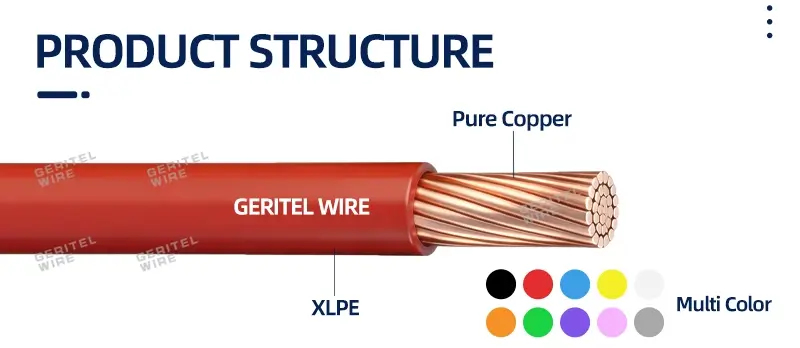
TC-ER tray cable connected remote pump stations, exploiting its exposed-run rating to eliminate transition junctions where moisture could accumulate. The grounding system used Bare Copper—2/0 AWG for the main grid, 6 AWG for equipment bonding—selected for corrosion resistance in saline soil conditions.
Phase 3: The Six-Week Sprint
Insurance litigation required technical evidence. The fishing season required operational equipment. We executed parallel workflows:
Week 1: Soil thermal characterization using ASTM D5334 protocols. Neher-McGrath ampacity calculations with site-specific ρ values. Insurance technical report submission.
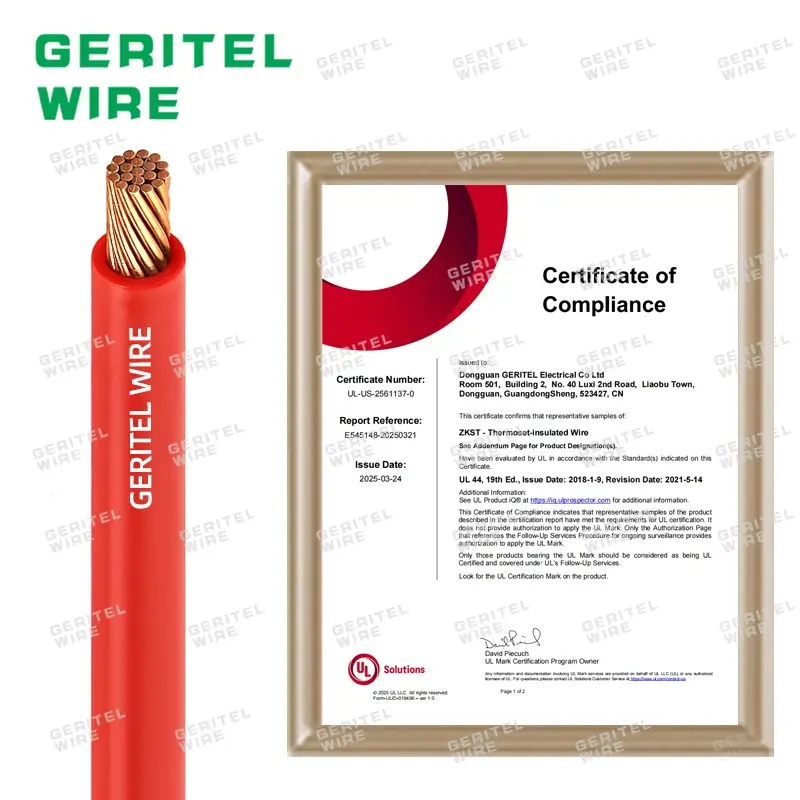
Week 2–3: Emergency manufacturing with full UL certification documentation—MV105 (UL 1072), XHHW-2 (UL 44), MC (UL 1569), TC-ER (UL 1277). The certification package became legal evidence of engineering due diligence.
Week 4: Vacuum-sealed, nitrogen-purged cable reels. Ocean freight with corrosion-prevention protocols.
Week 5–6: Installation supervision with forensic precision:
• Tension monitoring: Cable tension meters preventing >50 N/cm² sidewall pressure on XLPE insulation
• Bend radius verification: 15× cable O.D. minimum, checked with go/no-go templates at every elbow
• MC cable grounding continuity: Verified armor resistance below EMT conduit equivalent
The Innovation: What We Delivered Beyond Cable
Distributed Thermal Sensing (DTS)
Standard cable delivery ends at the reel. We proposed—and Carlos's client funded—a fiber-optic DTS system integrated with the MV105 feeders. This provided real-time temperature mapping along the entire cable route, compensating for seasonal soil thermal variation.
The system paid for itself in six months by preventing a potential overload condition during an unseasonal heat wave.
Modular MC Cable Architecture
Fishmeal plants reconfigure processing lines seasonally. Traditional hard-wired MC cable requires complete replacement during layout changes. We designed pre-terminated MC assemblies with industrial connectors, reducing future electrical modification time from 8 hours to 45 minutes per circuit.
This wasn't in the original scope. It was engineering insight applied to operational reality.
Total Cost of Ownership Truth
We presented a brutal 10-year economic reality that reframed the initial price difference. The original supplier's solution carried an initial capital cost of $287,000 compared to our $339,000—an 18% premium. However, the actual accident cost from the cable failure reached $450,000, a hit our solution avoided entirely. When factoring replacement cycles of 8 years versus 20 years, and annual downtime risk dropping from $180,000 to $12,000, the ten-year total cost of ownership told a different story. Their approach would consume $1.67 million over a decade while ours required $1.10 million—a 34% savings despite the higher upfront investment.
The math was honest and undeniable. The client accepted it.
Six Weeks Later: Dawn of a Different Outcome
March 28, 2024. The reconstructed system energized at 06:15 hours. Thermal imaging showed MV105 surface temperature at 68°C under full production load—22°C below alarm threshold. XHHW-2 insulation resistance measured above 1000 MΩ post-washdown.
Carlos sent a message I keep framed: "Insurance accepted 80% liability on original designer. Client asked why we didn't choose you first. I said: 'Because you hadn't seen the value of never needing this phone call.'"
The Lessons: Engineering Insights from Failure
Soil Thermal Resistivity: The Invisible Killer
IEEE Std 835 states: "When soil thermal resistivity is unknown, ρ=90 has been used for cable rating, but buried cable ratings are significantly affected by the earth thermal circuit, therefore knowledge of effective soil thermal resistivity and thermal stability is essential."
Most projects skip the $3,000 soil test. This one paid $450,000 for that omission.
MC Cable: Misunderstood Economics
Industry perception positions MC cable as premium-priced against EMT conduit. The reality is more nuanced.
Installation labor tells the first part of the story. MC reduces field labor by half to seventy percent by eliminating conduit bending, wire pulling, and fitting installation. In Peruvian labor markets, this offset forty percent of the material cost premium.
Future flexibility reveals the second advantage. MC's bend radius and connectorized design allow circuit reconfiguration without building demolition. For facilities with five-year equipment rotation cycles, this capability proves decisive.
Fault location offers the third benefit. MC armor provides continuous ground path, enabling faster fault location than EMT systems where ground continuity depends on individual couplings.
XHHW-2 vs. THHN: Chemical Reality
THHN's PVC/nylon construction suffers plasticizer migration when exposed to sodium hypochlorite sanitizers standard in HACCP-compliant food processing. The insulation hardens, cracks, and fails—not from electricity, but from chemistry.
XHHW-2's XLPE insulation is chemically inert to these environments. This isn't specification superiority. It's materials science inevitability.
The Question We Ask Before You Buy
Every project inquiry receives the same forensic scrutiny.
Has your soil thermal resistivity been measured in situ? Not assumed. Measured.
Do you have thermal imaging records of your actual load cycles? Not nameplate ratings. Reality.
What chemicals are in your sanitation protocol? Not "standard cleaning." Specific chemistry.
What's your five-year equipment modification roadmap? Not current layout. Evolution.
These questions cost engineering hours. They save millions in prevented failure.
Your Project Deserves a Different Ending
The Tambo de Mora incident wasn't unique. It was typical of what happens when electrical infrastructure is procured as commodity rather than engineered as system. In coastal environments, chemical processing facilities, high-humidity operations, the margin between "meets code" and "survives reality" is where we operate.
We don't compete on price. We compete on certainty.
If your next project cannot fail, let's ensure it never needs to:
Dongguan GERITEL Electrical Co., Ltd.
Tel/WhatsApp/WeChat: +86 135 1078 4550 / +86 136 6257 9592
Email: manager01@greaterwire.com
From MV105 medium-voltage distribution to XHHW-2 control systems, from MC armored solutions to TC-ER tray applications and Bare Copper grounding infrastructure—we deliver engineered certainty, not just cable on reels.
 Modesto Méndez Substation Project in Guatemala



 Building 2, No. 40 Luxi 2nd Road, Liaobu Town, Dongguan City, Guangdong Province, China