


 Home
HomeNiue High School Multipurpose Classroom & Solar Power Installation(2022‑2023)
 GERITEL
 Apr 08,2026

January 2023. Niue's strongest storm of the year. When our engineer received the WeChat photos from site, he didn't look at the lightning rods first—he looked at the cables. They sat quietly in the inverter room. No burn marks on the sheaths. No oxidation at the terminals. No heat discoloration on the earthing conductors.
That photo went into our "silent evidence" folder. In the cable industry, absence of trace is the best trace.
But this story begins earlier, with a different kind of failure.
The First Call: What the Client Didn't Say
The initial March 2022 call lasted 18 minutes. Fifteen minutes of technical requirements. Three minutes of real anxiety: "The previous supplier doesn't reply to emails anymore."
We later understood the weight of that sentence. In the South Pacific, supplier "presence" matters more than product specs. When rooftop cables fail after a typhoon, when an inspector questions a marking, when logistics delays by two weeks—you need an engineer who responds within 24 hours, not a beautiful warranty certificate.
Our response was simple: we wrote the technical contact's personal mobile number into the contract appendix.
Design Paradoxes: Why "Over-Engineering" Is Proper Engineering
Paradox One: The "Waste" of Tinned Copper
The client's initial calculation: bare copper cable + waterproof tape = 35% cost saving.
Our calculation: Niue electrician daily rate NZD $380 (~USD $230). Helicopter lift rental NZD $1,200/hour. If terminal oxidation requires rework in 18 months, material savings evaporate within 4 hours of labor.
The hidden risk: bare copper oxidation is a positive feedback loop—contact resistance rises → heating → accelerated oxidation → further resistance rise. On the PV DC side, this can initiate arc faults.
Final selection: Tinned copper conductor solar cable. Not because we convinced the client to accept higher price, but because we calculated total cost of ownership to Year 25.
Paradox Two: The "Stiffness" of TPS Cable
The client wanted flexible cable: "RVV is so soft, your TPS is rigid."
We walked them through a thought experiment: imagine a cable at a tray edge, wind blowing, equipment vibrating. Soft cable sheath molecular chains fatigue under repeated flexing, eventually cracking. The "stiffness" of TPS comes from higher molecular cross-link density—it trades elastic modulus for fatigue life.
Another factor the client hadn't considered: compliance is insurance. AS/NZS 3000 has explicit restrictions on cable types for fixed wiring. If judged non-compliant at inspection, rectification could miss the grid subsidy application window. The "flexibility" of RVV soft cord doesn't exist in the political sense.
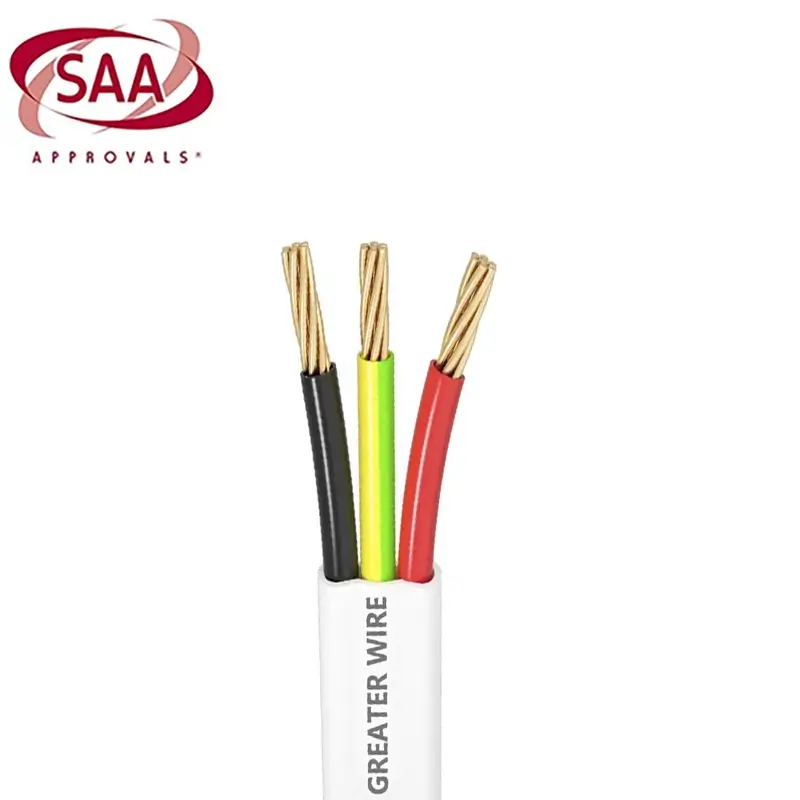
Final selection: 6 mm² 3-core TPS Cable. Three-core structure (active/neutral/earth) provides complete earth continuity. 6mm² cross-section ensures <1.5% voltage drop at 15 meters.
Paradox Three: The "Bulk" of SWA Cable
"YJV22 steel tape armored is half the weight, price looks better too."
We didn't argue directly. We asked one question: "Do you know Niue's soil pH?"
5.2-5.8. Slightly acidic. Steel tape in this environment is a catalyst for electrochemical corrosion. More troubling: the termite activity found on site—they favor the gaps in steel tape wrapping structures, where it's warm, humid, and has electromagnetic fields.
The "bulk" of SWA (steel wire armored) is actually a gap-free mechanical barrier. XLPE insulation resists chemical corrosion. Steel wire armoring resists compression and rodents. PVC outer sheath waterproofs.
Final selection: 4-core 16mm² SWA Cable. We wrote "25-year design life" into the contract—not marketing speak, but a number calculated from materials science.
A Neglected Design Dimension: Smoke
The client initially didn't mention fire requirements. We asked proactively: "What does this classroom do at night?"
"Community gatherings, sometimes movie nights. Can fit 200 people when crowded."
We said nothing. We just played two burning test videos. Left screen: PVC cable burning, visibility drops to 0.5 meters within 30 seconds, smoke contains hydrogen chloride gas. Right screen: LSZH fire-rated cable burning, low smoke density, no corrosive gas release.
The client was silent for one minute: "Corridors and exits with LSZH, other areas... budget really can't stretch."
This risk-tiering approach later became our standard recommendation—not wholesale upgrade, but putting the best material where the danger is greatest.
Final selection:
• Escape routes: LSZH Fire-Rated Cable (2.5/4mm²)
• General areas: PVC Building Cable (2.5/4/6mm²)
The "Redundancy" Controversy of Earthing Systems
Original design: Single-point earthing, 16mm² earthing conductor.
Our escalation: 50mm² main earthing electrode + 25mm² sub-main earthing + 16mm² equipment earthing, ring earthing network replacing single-point.
Client's challenge was direct: "Code doesn't require this much."
Our response was equally direct: "Code is the floor, not the optimum. Niue's lightning density is 2x New Zealand's. Your PV array is the highest metal object on the roof. If main earthing impedance is too high, lightning current seeks alternative paths—like punching through the inverter PCB. How much is that board worth?"
The January 2023 storm validated this "redundant investment." Client's later email: "Neighbor's satellite receiver fried. Our lights didn't flicker."
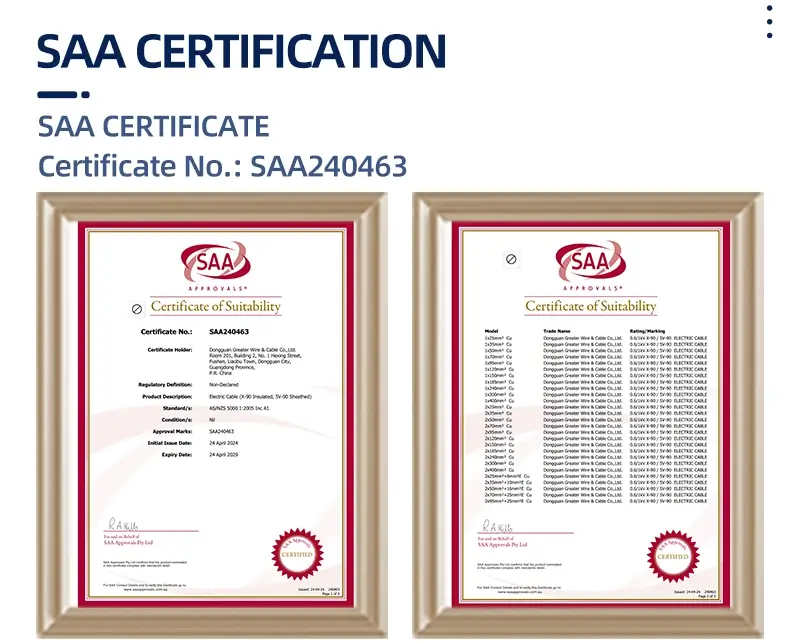
SAA Certification: Three Realities of One Paper
When the client verified our SAA Certification, we explained three things behind that paper:
Reality One: Admission Rights
Niue grid company regulations: non-SAA certified equipment requires additional third-party test reports, NZD $8,000 fee, 6-8 week cycle. Certification let us skip this bureaucratic trap.
Reality Two: Credit Backing
SAA means ongoing factory audits and batch sampling. Client didn't need to fly to China for factory inspection. Our batch test certificates were accepted directly by inspectors.
Reality Three: Risk Transfer
Certified product liability insurance has broader coverage. Client's long-term operational risk partially transfers to the certification system.
Logistics: When "Backup" Becomes Primary
Niue has no regular shipping line. Cargo typically transships via Auckland, New Zealand—unpredictable timing.
We designed a dual-track paradox:
• Main cable shipment by sea, 6 weeks advance dispatch
• Critical small batches (special glands, seals) by air, as "backup"
• Technical documents original by DHL courier, electronic version pre-sent
Actual result: Sea freight arrived on time. Air backup returned unopened. But the client said, knowing the backup existed, they "slept better" during those waiting weeks.
Sometimes, insurance value lies not in claims, but in anxiety elimination.
18-Month Follow-Up: No News Is Good News
Mid-2024. We commissioned local electricians for site photos. Inverter room temperature 8°C above design (Niue summer), but cable sheaths showed no softening deformation. Rooftop PV cable tinned terminals showed no oxidation. SWA cable armoring showed no corrosion underground.
Client's WeChat message: "You're the only supplier I haven't had to call for trouble."
We interpret this as: when products don't need service, service has truly succeeded.
Three Uncertainty Principles for Your Next Project
1. Environmental Uncertainty Principle
Don't transplant inland experience directly to maritime climates. Salt mist, UV, humidity require material-level responses, not simply thicker sheaths.
2. Compliance Uncertainty Principle
AS/NZS standard value lies not only in safety, but in avoiding bureaucratic delay. Certification is time insurance.
3. Supplier Uncertainty Principle
If a supplier says "yes" to all specification changes, be wary. Professional technical insistence often means lower long-term risk.
Start the Conversation
We don't provide "quotations." We provide technical assessments.
Send your project drawings or requirements. Within 24 hours you'll receive:
• Compliance risk point annotations
• Cable specification optimization suggestions (if any)
• Logistics timing and backup options
Dongguan GERITEL Electrical Co., Ltd.
Tel/WhatsApp/WeChat: +86 135 1078 4550 / +86 136 6257 9592
Email: manager01@greaterwire.com
 Typhoon Recovery Project in Chuuk, Micronesia



 Building 2, No. 40 Luxi 2nd Road, Liaobu Town, Dongguan City, Guangdong Province, China