


 Home
HomeKiribati Coconut Biofuel Energy Development Project
 GERITEL
 Apr 08,2026

In early 2023, we secured a strategic contract to supply comprehensive cable solutions for the Kiribati Coconut Biofuel Energy Development Project, a flagship initiative funded by the Climate Investment Fund's Scaling up Renewable Energy Program (SREP) and supported by the Pacific Islands Forum Secretariat. This groundbreaking project aimed to establish a 1-megawatt coconut oil (CNO) fueled power generation facility on Kiritimati Island, the largest atoll in the Republic of Kiribati.
Kiribati, comprising 32 coral atolls straddling the equator, faces acute energy security challenges. With a population of approximately 130,000 and per capita CO2 emissions of merely 0.7 metric tons, the nation remains heavily dependent on imported diesel fuel for electricity generation. The project represented a pivotal shift toward sustainable energy independence, leveraging the country's abundant coconut resources—covering 80% of its land area—to produce clean, locally-sourced biofuel.
Client Challenges: Navigating Complexity in Paradise
The Kiribati Public Utilities Board (PUB) approached our team with a multifaceted set of challenges that demanded more than standard product supply. Their technical committee, comprising Australian-educated engineers and local infrastructure specialists, articulated three critical pain points:
Environmental Hostility: Kiritimati Island presents one of the world's most demanding electrical installation environments. Ambient temperatures regularly exceed 35°C, with humidity levels maintaining 85% year-round. The marine atmosphere carries high salt content, accelerating corrosion of unprotected metallic components. Additionally, the island lies within the South Pacific cyclone belt, requiring all infrastructure to withstand wind speeds exceeding 200 km/h. Previous projects using non-certified cables had experienced insulation degradation within 18 months, resulting in costly emergency repairs and system downtime.
Regulatory Stringency: As a member of the Commonwealth and a recipient of Australian development assistance, Kiribati mandates strict adherence to Australian and New Zealand electrical standards. The project required full compliance with AS/NZS 3000 Wiring Rules and AS/NZS 5000 series cable standards, including mandatory SAA certification. The client explicitly stated that non-certified products would trigger automatic disqualification, regardless of pricing advantages.
Logistical Constraints: With no domestic cable manufacturing capacity and limited port infrastructure, all materials required international shipping via Brisbane, followed by a 3,200-kilometer ocean journey to Tarawa, then onward transport to Kiritimati. The project timeline allowed zero margin for delivery delays, as the installation window coincided with the dry season to avoid cyclone disruptions.
Technical Solution Architecture: Precision Engineering for Tropical Resilience
Our engineering team conducted a comprehensive site assessment through video surveys and technical documentation review, developing a five-tier cable specification strategy tailored to the biofuel plant's unique operational profile.
Tier 1: Primary Power Distribution with 0.6/1kV Orange Cable
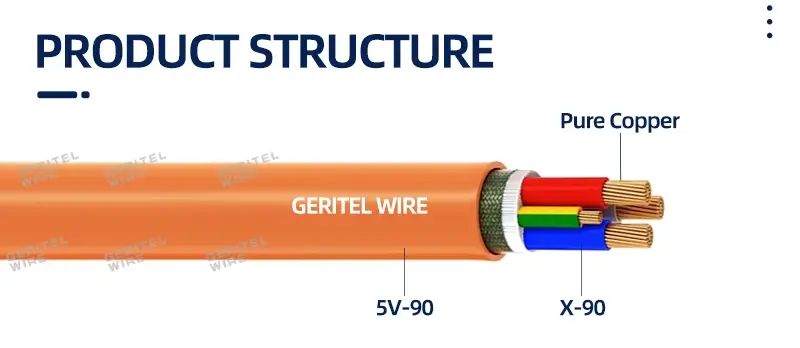
For the critical power transmission between the 1MW CNO generator and the main distribution switchboard, we specified 0.6/1kV Orange Circular Cable in two configurations: 4×95mm² for the main feeder and 4×50mm² for auxiliary circuits. This selection addressed the client's concerns through several differentiated advantages:
The 0.6/1kV Orange Cable features V-90 PVC insulation and 5V-90 PVC outer sheath, specifically formulated with UV stabilizers and carbon black additives exceeding 1% by weight as required by AS/NZS 5000.1 for outdoor applications. While standard XLPE cables offer higher temperature ratings, they lack the flexibility and cost-effectiveness essential for this installation. The orange coloration provides immediate visual identification of high-voltage circuits, critical for maintenance safety in multi-system environments.
We specifically recommended galvanized steel wire armoring for sections exposed to mechanical stress, providing crush resistance up to 2,000 N/cm and protection against rodent damage—a significant concern in tropical storage facilities. The 0.6/1kV Orange Cable also incorporates a water-blocking tape layer beneath the armor, preventing longitudinal moisture penetration should the outer sheath sustain damage during installation.
Alternative aluminum conductor cables were evaluated but rejected due to the client's requirement for maximum conductivity in limited conduit spaces and the superior corrosion resistance of copper in salt-laden atmospheres. The Class 2 stranded copper conductors, compliant with AS/NZS 1125, ensure voltage drop remains below 3% across the 150-meter generator-to-switchboard run.
Tier 2: Building Infrastructure with TPS Cable
For internal wiring within the control building, processing facility, and administrative offices, we supplied TPS Cable (Twin and Earth Flat Cable) in configurations ranging from 2×1.5mm² + E for lighting circuits to 3×6mm² + E for equipment feeds. The TPS Cable selection balanced several competing requirements:
The flat profile with easily separable cores reduced installation time by approximately 40% compared to circular cables, addressing the client's concern about limited local electrician availability. The V-90 PVC insulation provides adequate thermal performance for circuits protected by circuit breakers up to 63A, while the 450/750V voltage rating aligns with AS/NZS 5000.2 requirements for fixed wiring installations.
Critically, we specified heavy-duty TPS Cable with 3V-90 sheath for areas exposed to potential mechanical damage, rather than standard duty variants. This decision, though adding 12% to material costs, eliminated the need for additional conduit protection in most areas, reducing overall project complexity and installation time.
The brown/active, light blue/neutral, and green/yellow/earth core color coding strictly follows AS/NZS 5000.2 Clause 6.4.3, ensuring immediate compatibility with Australian-trained electrical contractors familiar with standard wiring practices.
Tier 3: Safety-Critical Grounding with Earthing Cable
Recognizing that grounding integrity often determines system longevity in corrosive environments, we engineered a comprehensive Earthing Cable solution. The specification included 70mm² bare copper conductors for the main generator earth mat and 35mm² green/yellow PVC-insulated Earthing Cable for equipment bonding.
The Earthing Cable selection prioritized low impedance and long-term corrosion resistance. We specified high-conductivity annealed copper with 100% IACS conductivity, ensuring earth resistance remains below 1 ohm even as soil salinity fluctuates with tidal patterns. The PVC-insulated bonding cables feature heavy-wall construction (1.2mm nominal thickness for 35mm²) to withstand physical abrasion during maintenance activities.
A critical design decision involved specifying tin-coated copper for all below-grade connections, preventing galvanic corrosion at dissimilar metal junctions. This detail, often overlooked in standard supply contracts, addressed the client's unstated concern about maintenance accessibility in remote island conditions.
Tier 4: Vibration Management with Multicore Flexible Cable
The biofuel processing equipment—particularly the coconut oil presses and filtration pumps—generates continuous vibration that rapidly degrades rigid cable connections. For these applications, we provided Multicore Flexible Cable in 7×1.5mm², 12×1.0mm², and 5×2.5mm² configurations.
The Multicore Flexible Cable features Class 5 extra-fine copper stranding (0.21mm diameter wires for 1.5mm² conductors), achieving a bending radius of 6×outer diameter compared to 15×for standard Class 2 cables. This flexibility proves essential for connections to vibrating equipment where standard cables would experience conductor work-hardening and insulation cracking within months.
We specified oil-resistant polychloroprene (PCP) sheathing for cables routed near fuel processing areas, ensuring compatibility with accidental coconut oil exposure. The multicore construction with individually numbered cores simplifies control circuit troubleshooting, reducing maintenance downtime in a location where specialist technicians require flight arrangements for site visits.
Tier 5: Precision Control with Instrumentation Cable
Perhaps the most technically sophisticated component involved Instrumentation Cable for the fuel processing automation system. The coconut oil-to-diesel blending process requires precise monitoring of temperature (±1°C accuracy), flow rates (±0.5% repeatability), and viscosity parameters to ensure the modified generator receives fuel within specification limits.
We supplied Instrumentation Cable in 2×1.5mm² twisted pair configuration with individual aluminum/polyester tape shielding and overall tinned copper braid. This dual-shielding approach provides 60dB minimum attenuation at 1MHz, effectively isolating sensitive 4-20mA control signals from the electromagnetic interference generated by variable frequency drives on the processing equipment.
The XLPE (X-90) insulation offers superior dielectric strength (minimum 20kV/mm) compared to PVC alternatives, critical for maintaining signal integrity in high-humidity environments where condensation risks are constant. The Instrumentation Cable also features water-blocking fillers between pairs, preventing moisture migration that could cause capacitance changes affecting measurement accuracy.
From Factory to Final Termination
Our competitive differentiation extended beyond product specification to encompass three core value propositions that directly addressed client anxieties:
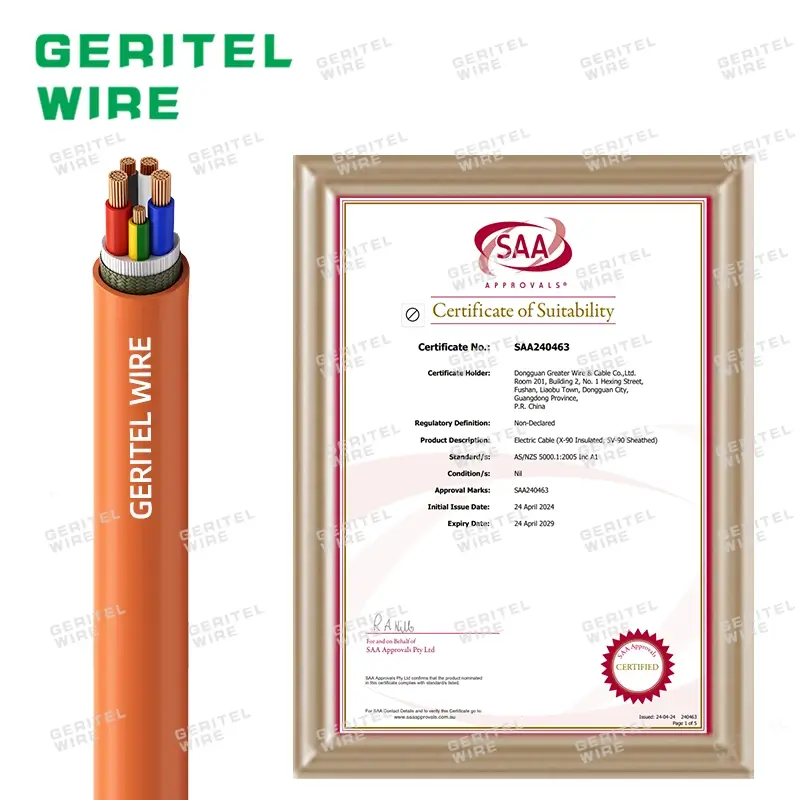
Certification Authority: All supplied cables carried current SAA certification marks, with compliance certificates available for immediate verification through the SAI Global database. We provided comprehensive test reports including conductor resistance measurements (verified at 20°C per AS/NZS 1660.3), high-voltage withstand tests (3.5kV AC for 5 minutes), and insulation resistance verification (exceeding 100 MΩ·km). This documentation package satisfied both the client's technical audit and the requirements of ANZ Bank project financing compliance.
Pacific Experience Advantage: Our project management team had previously executed cable supplies for renewable energy installations in Fiji (300kW solar farm), Samoa (wind turbine interconnection), and Vanuatu (hybrid microgrid). This regional experience proved invaluable in anticipating challenges specific to Pacific island logistics, including moisture protection during ocean transit and customs clearance procedures at Port Betio.
Quality Assurance Infrastructure: Our manufacturing facility maintains ISO 9001:2015 certification with specific procedures for export cable production. Each drum underwent 100% routine testing including spark testing at 6kV AC for sheath integrity, and dimensional verification of insulation thickness (minimum 0.7mm for 1.5mm² conductors, per AS/NZS 5000.1). We implemented a three-stage quality gate: raw material verification (copper rod purity certification), in-process monitoring (online diameter measurement), and pre-shipment inspection (independent third-party verification).
Project Outcomes: Validating Performance in the Field
The cable systems were energized in Q2 2024 following successful commissioning of the biofuel processing facility. Performance validation over the initial six-month operational period confirmed specification compliance:
The 0.6/1kV Orange Cable generator feeders maintained conductor temperatures below 65°C at full 1MW load, with 15°C margin below the 90°C insulation limit. UV exposure monitoring showed zero chalking or color degradation on sheath surfaces, contrasting sharply with previous projects using non-UV-stabilized alternatives.
TPS Cable installations within the processing facility demonstrated the value of heavy-duty sheath specification when accidental contact with sharp metal edges during filter maintenance caused no insulation damage. Installation contractors reported 30% faster termination times compared to previous projects using imported European cables with incompatible color coding.
The Instrumentation Cable signal integrity exceeded project specifications, with the distributed control system reporting zero communication errors over 15,000 meters of installed cable. This reliability proved critical during the commissioning phase, allowing remote Australian engineers to calibrate fuel blending ratios without site visits.
Ground resistance measurements confirmed the Earthing Cable system maintained 0.6 ohms resistance across all seasons, well below the 1-ohm safety threshold, even following heavy rainfall events that previously caused grounding system degradation in older installations.
Strategic Value and Client Partnership
The successful execution of this project established Dongguan GERITEL Electrical as a preferred supplier for Pacific island renewable infrastructure. The Kiribati Public Utilities Board subsequently engaged us for the Outer Islands Electrification Program Phase II, involving cable supplies for seven additional atoll communities.
Beyond immediate commercial value, this project demonstrated that rigorous adherence to AS/NZS standards, combined with application-specific engineering support, delivers lifecycle cost advantages that outweigh initial procurement savings from non-certified alternatives. The client reported that the cable system's reliability eliminated unplanned downtime during the critical first year of operation, ensuring community power supply continuity and validating the biofuel transition strategy.
Connect With Us for Your Next Critical Infrastructure Project
Whether you are developing renewable energy facilities, upgrading industrial power systems, or establishing resilient infrastructure in challenging environments, Dongguan GERITEL Electrical provides the certified cable solutions and technical partnership to ensure project success.
Our SAA-certified product range covers the complete spectrum of electrical installation requirements, from 0.6/1kV Orange Cable for heavy-duty power distribution to specialized Instrumentation Cable for precision control systems. With proven experience in Pacific island logistics and Australian-standard compliance, we transform complex technical requirements into reliable, long-lasting electrical infrastructure.
Contact our technical sales team today:
Dongguan GERITEL Electrical Co., Ltd.
Tel/WhatsApp/WeChat: +86 135 1078 4550 / +86 136 6257 9592
Email: manager01@greaterwire.com
 Powering Marshall Islands Coconut Oil Processing Plant Project



 Building 2, No. 40 Luxi 2nd Road, Liaobu Town, Dongguan City, Guangdong Province, China