


 Home
HomeJawaharlal Nehru Hospital Rooftop Solar PV Project, Mauritius (2021–2024)
 GERITEL
 Apr 18,2026

In 2021, when the International Solar Alliance (ISA) allocated $50,000 in technical assistance to Mauritius's Ministry of Health, the rooftop solar retrofit project for Jawaharlal Nehru Hospital officially commenced. This public hospital in the island nation of Mauritius consumes 141,800 kWh monthly, with electricity bills reaching 1.2 million Mauritian Rupees (approximately $27,000 USD).
As a typical Small Island Developing State (SIDS), Mauritius presents distinct characteristics in its solar market: with a land area of only 2,040 km², there is no room for large-scale ground-mounted power stations. Solar applications concentrate on rooftop distributed systems—factory roofs, hotel buildings, commercial complexes, and public healthcare facilities. The government has set an ambitious target of achieving 60% renewable energy generation by 2030.
However, the harshness of the island environment far exceeded expectations. High humidity and salt-laden atmospheric conditions have been classified as C5—the highest corrosion grade under ISO 9223 standards—with extremely high chloride ion concentrations. In such environments, copper conductors in standard PV cables oxidize rapidly, and conventional grounding systems can suffer severe corrosion within three years, leading to increased contact resistance and potential safety hazards. Though modest in scale (only 26.4kW), this project served as a demonstration under the ISA Cares initiative for African SIDS countries, where zero-defect quality was mandatory—any rework would incur prohibitive logistics costs and schedule delays.
Client Pain Points: When "Small and Refined" Meets "Strict and Severe"
The EPC team responsible for this project faced a classic dilemma during cable selection. On one hand, the budget was limited and cost control essential. On the other, as critical public infrastructure, the hospital demanded the highest safety and reliability standards, tolerating no downtime risks from cable failures.
Through site surveys, we identified three core challenges:
First, the hidden threat of environmental corrosion. Mauritius maintains 75–85% humidity year-round, with sea breezes carrying salt spray particles that form conductive films on cable surfaces, accelerating electrochemical corrosion of metal components. Field data shows that ordinary copper-core cables in similar environments experience terminal oxidation and contact failure rates of up to 30% after three years.
Second, quality risks from fragmented procurement. The local cable market contains mixed brands, with some products lacking certifications specific to marine environments. Insulation materials can crack under alternating UV exposure and humidity.
Third, long-term operational cost considerations. The hospital roof offers limited space; any cable issues requiring replacement would disrupt normal operations, with implicit costs far exceeding material price differences.
The client needed not the cheapest product, but the solution with optimal lifecycle cost—install once, operate worry-free for 25 years.
Technical Evaluation Phase: Comparison of Certification Documents and Measured Data
Based on this analysis, we designed a three-layer protection cable solution for this project, with core products from GERITEL Electrical's high-weatherability PV cable series.
Core Component Connections
Model: H1Z2Z2-K (TÜV-certified PV-specific cable)
Specifications: 4mm² (primary) / 6mm² (high-current circuits)
Technical Parameters:
• Rated voltage: DC 1.5kV (system voltage up to 1.8kV DC)
• Continuous operating temperature: -40°C to +90°C (conductor), 120°C short-circuit
• Insulation: Cross-linked polyolefin (XLPO), UV-resistant, ozone-resistant, flame-retardant
• Conductor: Tinned copper, 1000+ hours salt spray test without corrosion
• Color coding: Black (negative) / Red (positive) for easy field identification
Why 4mm² as the primary specification? The 26.4kW system uses string inverters with single-string currents typically in the 10–15A range. The 4mm² cross-section achieves optimal balance between safe current-carrying capacity and voltage drop. Given the short distance from roof array to combiner box (average 15–20 meters), line loss with 4mm² is controlled within 1.5%, meeting technical specifications while optimizing material costs. Only sections with suboptimal orientation and higher string currents used 6mm².
The essential difference between H1Z2Z2-K and ordinary building wire lies in its double-layer insulation structure and halogen-free flame retardancy. The inner layer ensures electrical performance; the outer sheath provides mechanical strength of 15N/mm², resisting pulling during installation and friction at roof edges. Critically, the halogen-free insulation releases no toxic gases in case of fire—essential for high-traffic public buildings like hospitals.
Inverter Output
Model: XLPE insulated copper power cable (0.6/1kV) / NYY type building cable
Specifications: 4mm², 6mm² (inverter to distribution box) / 10mm² (main grid-connection line)
The three-phase AC output from inverters transmits via XLPE insulated cables to the distribution box. We selected 90°C-rated cross-linked polyethylene insulation, which offers 20°C higher continuous operating temperature than standard PVC, with approximately 25% higher current-carrying capacity. The 10mm² main grid-connection cable uses multi-strand fine copper wire construction, more flexible than single-strand hard wire for easier routing in confined rooftop electrical rooms.
Safety Assurance
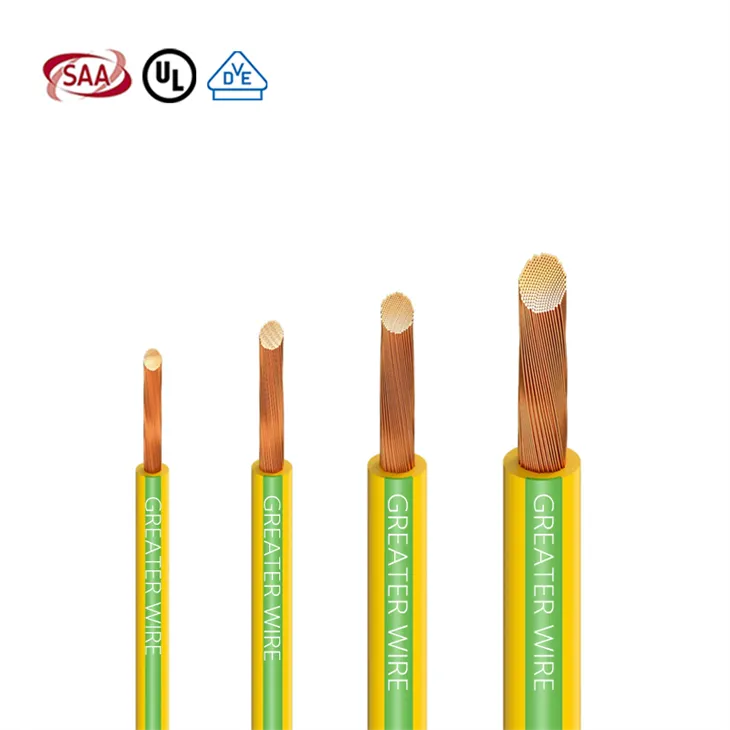
Model: Yellow-green grounding wire (XLPE sheath)
Specifications: 6mm² (structure and equipment grounding) / 10mm² (main grounding electrode)
This is the most easily overlooked yet critical system component. We specified 6mm² dedicated grounding wire with tinned conductor, heat-shrink sealed crimp terminals to prevent salt-mist ingress at connection points. The main grounding electrode uses 10mm² cable reliably bonded to the building's existing grounding network, ensuring safe dissipation of lightning and fault currents.
Coordination of Shipping Cycles and Construction Windows
Q4 2023 marked the peak equipment procurement phase. Our supply chain team developed a sea + air hybrid solution for Mauritius's geographic position (approximately 8,000 km from China's southern coast): bulk cables shipped from Shenzhen Port to Port Louis, with urgent replenishment materials air-freighted directly, ensuring rooftop construction completion before the 2024 rainy season.
All cables underwent 100% electrical performance testing and visual inspection before shipment, accompanied by complete documentation: original TÜV and UL certificates, factory test reports, and packing lists for customs clearance. Considering limited warehousing conditions in island nations, we used moisture-resistant wooden crates with desiccant, ensuring product integrity during high-humidity sea transport.
During field installation, our technical team guided local electricians via video conference on H1Z2Z2-K cable MC4 connector crimping and grounding system installation, emphasizing special handling for tinned copper conductors—though highly oxidation-resistant, the tin coating still requires protection from scratches during installation.
First-Year Operation Records and Maintenance Logs
On June 3, 2024, the Jawaharlal Nehru Hospital PV system was officially grid-connected. The system achieves peak generation of 3,200 kWh hourly, projected to save over 150,000 Mauritian Rupees annually in electricity costs. More significantly, since commissioning, the cable system has recorded zero faults, zero maintenance, withstanding the test of Mauritius's humid summer season (December–March 2024).
This project became a benchmark case for the ISA Cares initiative in Small Island Developing States, directly prompting the Mauritian government to incorporate rooftop solar into retrofit plans for additional public healthcare facilities. For the EPC contractor, using a verified reliable cable brand provided demonstrable quality credentials for subsequent bids, creating a virtuous cycle.
Subsequent Project Invitations and Supplier List Adjustments
Reviewing this three-year project, the client valued most not individual product specifications, but the overall experience of "controlled risk." In premium niche markets like Mauritius, where projects are small-scale but quality demands are high, brand reputation and continuous service capability prove more persuasive than price discounts.
The client's project lead later explained their selection logic simply: "When evaluating suppliers, we first check for international certifications like TÜV and UL—that's the baseline. Second, we look for delivery experience in similar environments—that's confidence. Finally, responsiveness matters; small projects are often neglected by major manufacturers, but your professional coordination made us feel valued."
This trust-based relationship has already extended to additional commercial rooftop projects for this client in Mauritius.
Technical Recommendations for Cable Selection in High-Corrosion Environments
If you are planning projects in Small Island Developing States, coastal high-corrosion environments, or high-quality distributed PV applications, do not let cables become your system's weak link. GERITEL Electrical specializes in R&D and manufacturing of high-weatherability PV cables. The H1Z2Z2-K series, built on TÜV certification (B 126326 0001 Rev.00) and UL4703 certification (E552397), provides global customers with complete DC cable specifications from 4mm² to 35mm², XLPE AC cables, and grounding system solutions.
We do not pursue one-time transactions, but commit to becoming your long-term trusted cable supply chain partner—from selection design and certification support to precise delivery, safeguarding your project success throughout.
Contact our technical team today for customized cable solutions and quotations tailored to your project environment:
Dongguan GERITEL Electrical Co., Ltd.
Tel/WhatsApp/WeChat: +86 135 1078 4550 / +86 136 6257 9592
Email: manager01@greaterwire.com
 Noor IV Solar PV Plant (Ouarzazate, Morocco)



 Building 2, No. 40 Luxi 2nd Road, Liaobu Town, Dongguan City, Guangdong Province, China