



 Home
HomeCan Orange Power Cables Be Used in Cable Trays and Conduits?
 GERITEL
 Mar 19,2026

When it comes to electrical installations, choosing the right cable is one of the most critical decisions you’ll make. For electrical engineers, procurement personnel, and contractors, the stakes are high. Choosing the wrong cable can not only compromise safety but also lead to compliance issues, project delays, or costly reworks. A common question that often arises is: Can orange power cables be used in cable trays and conduits?
In this blog, we’ll provide a comprehensive answer to this question while also exploring the characteristics, applications, and standards of orange power cables. We will analyze it from several dimensions, including compliance, safety, practicality, applicable scenarios, and taboo scenarios, and provide practical guidelines for cable selection and installation.
1. Understanding Orange Power Cables
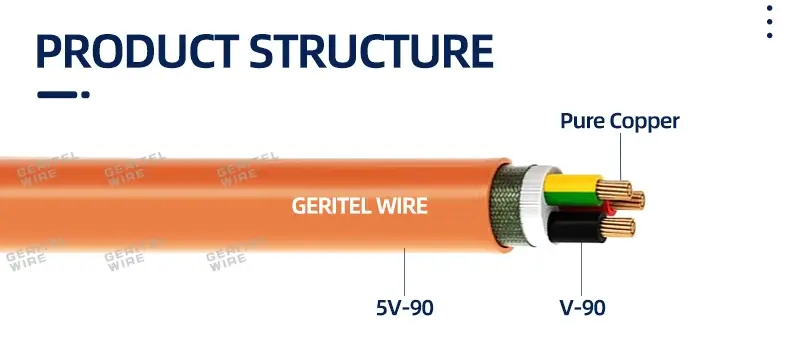
Industrial cable are widely used in electrical systems, primarily due to their high visibility and distinctive color coding. The color orange typically signifies that the cable is intended for high-voltage applications, making them common in industrial, commercial, and residential electrical wiring systems.
The insulation of orange power cables is typically made from durable, flame-retardant materials such as PVC (Polyvinyl Chloride) or XLPE (Cross-Linked Polyethylene). These materials not only provide excellent electrical protection but also ensure that the cables can withstand harsh environmental conditions.
When selecting cables for installation in cable trays or conduits, it is vital to understand both the practical and regulatory aspects of these cables.
2. Cable Trays and Conduits: What Are They?
Before answering the core question, let’s first understand what cable trays and conduits are.
- Cable Trays: These are systems designed to support electrical cables used for power distribution, control, and communication. They are widely used in commercial and industrial applications and provide easy access for maintenance, expansion, and future cable additions.
- Conduits: Conduits are tubes or channels designed to protect electrical cables. Made from materials such as metal or plastic, conduits protect cables from mechanical damage, moisture, and exposure to extreme temperatures.
With a clear understanding of these components, we can now analyze whether orange power cables are suitable for use in cable trays and conduits.
3. Key Considerations: Compliance, Safety, and Practicality
When deciding whether pvc cable can be used in cable trays or conduits, several factors need to be evaluated. We’ll analyze this from five key dimensions: compliance, safety, practicality, applicable scenarios, and taboo scenarios.
3. 1 Compliance
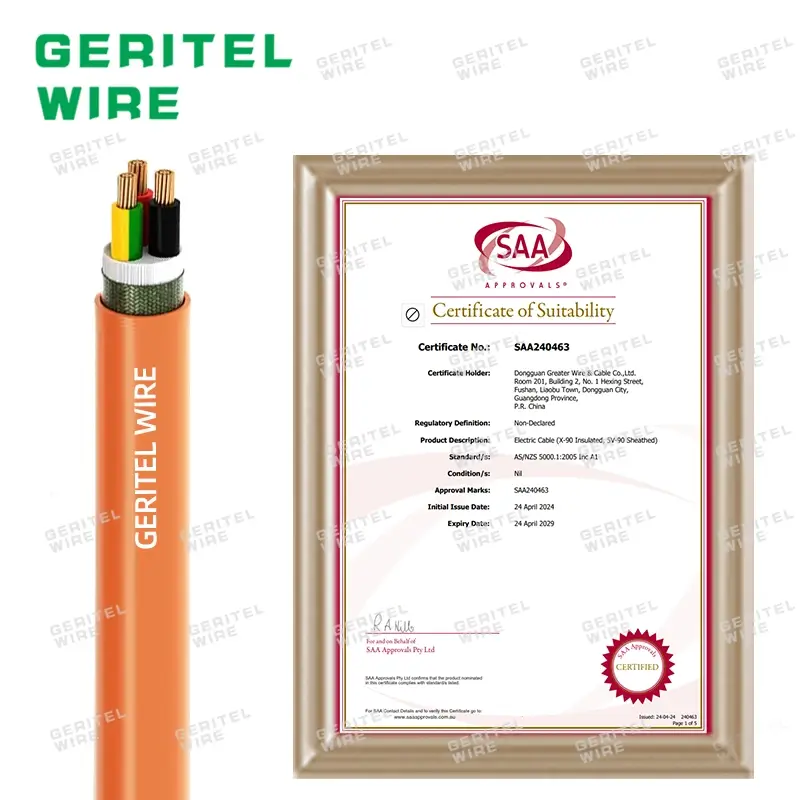
One of the most crucial factors when selecting any electrical cable is ensuring compliance with international standards. For orange power cables, it’s essential to verify that they meet specific regulatory requirements such as:
SAA Certification: Our orange power cables are fully compliant with SAA standards, ensuring they meet safety and performance requirements for use in Australia and New Zealand.
If your orange power cables meet the SAA certification standard, they are well-suited for installation in cable trays and conduits.
3. 2 Safety
The safety of electrical installations is paramount. Orange power cables offer several safety advantages that make them ideal for use in cable trays and conduits:
- Flame-Retardant Insulation: High-quality orange power cables come with flame-resistant or fire-retardant insulation, reducing the risk of fire hazards in the event of electrical faults.
- High Voltage Resistance: These cables are designed to handle higher voltage loads, making them suitable for power-intensive applications.
- Easy Identification: The distinct orange color makes it easier to identify the cables, reducing the risk of miswiring during installation or maintenance.
3. 3 Practicality
From a practical standpoint, orange power cables are highly versatile. When installed in cable trays and conduits, they provide several benefits:
- Durability: The tough insulation ensures that the cables can withstand physical wear and tear while being protected within the cable tray or conduit.
- Ease of Installation: The flexibility of these cables allows for easy routing through trays or conduits, ensuring smooth and efficient installation.
- Space Efficiency: Cable trays and conduits help organize wiring, improving airflow and reducing the risk of overheating in densely packed systems.
3. 4 Applicable Scenarios
Orange power cables are most often used in:
- Industrial Applications: These cables are ideal for factories, plants, and other industrial environments where high power is required, and the installation needs to be neat and easily maintainable.
- Commercial Buildings: They can also be used in commercial buildings for HVAC, lighting, and power systems, ensuring a reliable and well-organized electrical distribution network.
- Renewable Energy Projects: With the rise in solar and wind power, orange cables are increasingly used in renewable energy projects where efficient power distribution and long-lasting cable performance are essential.
5. 5 Taboo Scenarios
While orange power cables are versatile, there are some scenarios where they may not be suitable:
- Outdoor Use Requires Additional Protection: If you plan to run cables in exposed outdoor environments, make sure the cables are rated for such conditions. UV exposure and extreme weather may require additional insulation protection.
- Not Ideal for Low-Voltage Circuits: Orange power cables are generally used for high-voltage applications. For low-voltage systems, consider cables with different color coding and insulation specifications.
6. Guidelines for Cable Selection and Installation
To ensure the safe and compliant installation of orange power cables in cable trays or conduits, follow these practical guidelines:
- Verify the Cable’s Voltage Rating: Always ensure the cable’s voltage rating matches the electrical requirements of your system.
- Check Environmental Ratings: Make sure the cables are rated for the environment in which they will be installed.
- Select the Right Size: Choose the appropriate size for the cable tray or conduit to avoid overcrowding, which can cause heat buildup and reduce the cable's lifespan.
- Ensure Proper Support: Ensure the cable trays or conduits are adequately supported to prevent unnecessary strain on the cables.
- Follow Local Codes: Adhere to local codes and standards to avoid compliance issues. It’s always recommended to consult a qualified electrician for installation.
7. Why Choose Our Orange Power Cables?
At Dongguan GERITEL Electrical Co., Ltd., our orange power cables offer the perfect combination of compliance, safety, and practicality. Here’s why you should consider our cables for your next project:
- SAA Certification: Our cables are fully compliant with SAA certification, ensuring reliable and safe operation.
- Flame-Retardant Insulation: We use high-quality materials to ensure our cables have excellent flame-retardant properties, providing superior safety and durability.
- Easy Identification: The distinctive orange color makes our cables easy to identify, streamlining installation and future maintenance.
- Cost-Effective: Our cables provide excellent value without compromising on quality, ensuring a long-lasting solution for your electrical wiring needs.
Contact us today:
Dongguan GERITEL Electrical Co., Ltd.
Tel / WhatsApp / WeChat: +86 135 1078 4550 / +86 136 6257 9592
Email: manager01@greaterwire.com
If you're ready to move forward with your cable selection, contact us today for a quote, detailed selection guide, or to request a sample of our high-quality orange power cables. Let us help you power your projects with confidence.
 What Is The Difference Between XHHW And XHHW-2 Wire?



 Building 2, No. 40 Luxi 2nd Road, Liaobu Town, Dongguan City, Guangdong Province, China